Brown patches in July, crabgrass in bare spots, and turf that peels back like carpet in late summer are familiar Connecticut lawn problems. Humid summers, a mix of sun and shade, and soil that swings between wet and dry can set these problems up.
Lawn Pests and Diseases in Connecticut
Crabgrass in Thin Spots

Crabgrass shows up as coarse, pale green clumps that sprawl flat across bare or thinning turf, usually along driveways and sun-baked edges. It sprouts as the soil warms in spring. A preventer applied in April stops the seedlings before you see them, and March or May still works if April slips by.
Dollar Spot Straw Spots
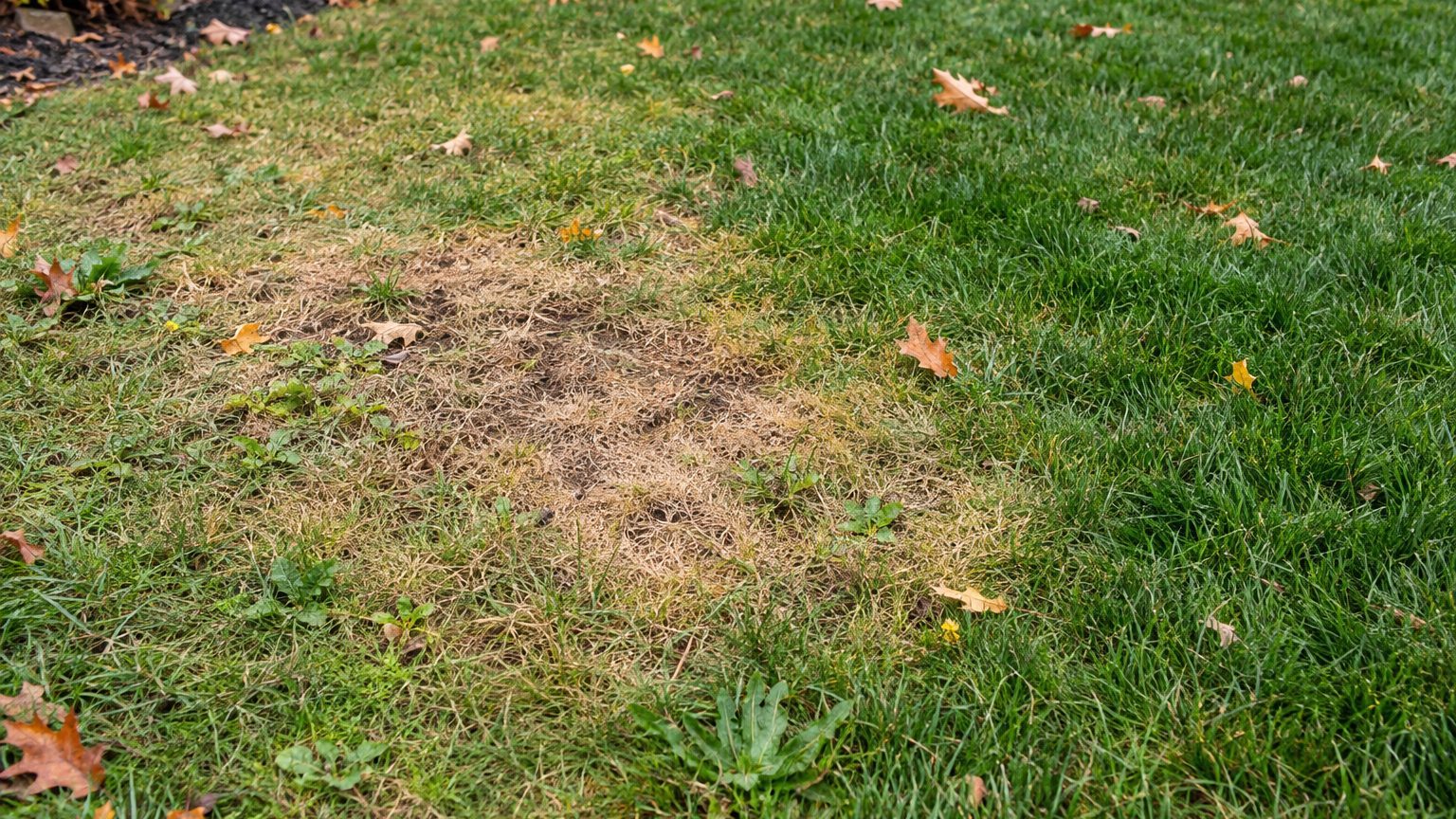
Dollar spot leaves small, bleached, straw-colored patches, often about the size of a silver dollar, that can merge into bigger blotches. It tends to follow lean, dry soil and heavy dew. Feeding in May and September can support recovery, while deep morning watering helps the blades dry sooner.
Brown Patch in Humid Heat
Brown patch makes irregular tan circles, sometimes with a dark, smoky ring at the edge on early-morning grass. Connecticut’s muggy summer nights suit it, especially on tall fescue and ryegrass. Water only when the lawn needs it, skip heavy nitrogen in the heat, and let the blades dry before evening.
White Grubs Under Loose Turf
Grubs are fat, C-shaped, creamy white larvae that chew grass roots in late summer. The telltale sign is turf that lifts and rolls back like a rug, often with skunks or birds tearing at it. Damaged areas can be reseeded in August or September, which also gives new roots time to establish before cold.
Moss and Thin Grass in Shade
Moss shows up as a soft green mat where grass thins under maples and oaks or on compacted, damp ground. It is a symptom more than a cause. Core aeration in August or September loosens the soil, and shade-tolerant seed sown then fills in what moss would otherwise take.
Connecticut — the year and the numbers
- State
- Connecticut
- USDA zones
- 6a-7b
- Last spring frost
- April 2 to April 12
- First fall frost
- October 28 to November 10
- Annual rain
- 44 in
- Lawn type
- cool-season
- Source
- NOAA NCEI 1991-2020 Climate Normals, 32F freeze probabilities · Bridgeport
How to Tell Which Lawn Problem You Have
A clue rarely settles the diagnosis. Pair what the patch looks like with where it sits and when it appeared, then give the blades a gentle tug. Grass that pulls up easily with damaged roots suggests an underground pest; grass that stays anchored calls for a closer look at the blades, soil and recent weather.
| What you see | Where and when | Likely problem |
|---|---|---|
| Turf lifts like carpet, no roots | Late summer, any sun level | White grubs |
| Coarse pale clumps spreading flat | Sunny edges, spring into summer | Crabgrass |
| Tan rings with a dark edge | Muggy summer nights, grass stays wet | Brown patch |
| Small bleached straw spots | Late spring into summer, lean soil | Dollar spot |
| Green mat, thin grass | Under trees, damp or packed soil | Shade and compaction with moss |
Dull, crunchy grass that improves after a good soak may be showing drought stress rather than disease. If the same spot fails every year and nothing above fits, a soil test is the next move.
Where Lawn Problems Are Worst in Connecticut
Connecticut is small, but the lawn season shifts between the shore and the hills, and USDA hardiness zones run from 6a to 7b across the state.
- Connecticut shoreline: Around Bridgeport, spring starts earlier than it does inland, so watch for crabgrass sooner.
- Connecticut River Valley: Sandy, fast-draining soils dry out quickly in summer, which invites drought stress and grub damage in thin turf.
- Litchfield Hills: Cooler, later springs delay crabgrass, but shade, heavy clay and moss are more common, and frost arrives earlier in fall.
- Quiet Corner: Rocky, acidic soil and wooded lots make thin grass under trees and moss frequent complaints.
Adjust timing to your own spot, leaning a little later in spring and earlier in fall as you move inland and uphill.
Lawn Care Mistakes That Invite Problems in Connecticut
Mowing Too Short
Scalped grass has shallow roots and leaves open soil for crabgrass seed to land on. Mow regularly from April through November, take off only a small portion of the blade each time, and keep the mower set high so the turf shades its own soil.
Watering Lightly and Often
Frequent sprinkles keep the surface wet, which is exactly what brown patch and dollar spot want. Water deeply and less often during June, July and August, early in the morning, so blades dry in the sun and roots chase moisture downward.
Feeding at the Wrong Time
Heavy nitrogen in midsummer feeds disease and builds thatch. Fertilize in May and September instead, with April or November as fallbacks. A thatch layer up to 1/2 inch is healthy. Above that, core aerate in August or September.
Where to Get Lawn Advice in Connecticut
When a patch does not match anything above, local expertise saves guesswork. Connecticut has solid, free sources that know the state’s soils and weather.
- University of Connecticut Extension offers lawn guides and help identifying weeds and diseases, so check it before you buy any treatment.
- Your local Extension center can point you to soil testing and answer county-specific questions, ideally before a fall seeding.
Common Questions
When Should You Seed a Lawn in Connecticut?
August and September are the strongest window, because warm soil and cooler air help seedlings root. April and May also work if fall gets away from you. In Bridgeport, the last spring freeze usually lands between April 2 and April 12, and inland it comes later.
Is May Too Late for Crabgrass Preventer?
April is the target, but March and May still give some protection. Put it down before seedlings appear, because a preventer will not kill crabgrass that has already sprouted. Seeding in the same spring can conflict with a preventer, so plan the applications separately.
When Should You Core Aerate a Connecticut Lawn?
August and September suit cool-season grasses best, and April or May are the backup. Aerate when the soil is moist but not soggy, then overseed right away so seed drops into the holes.