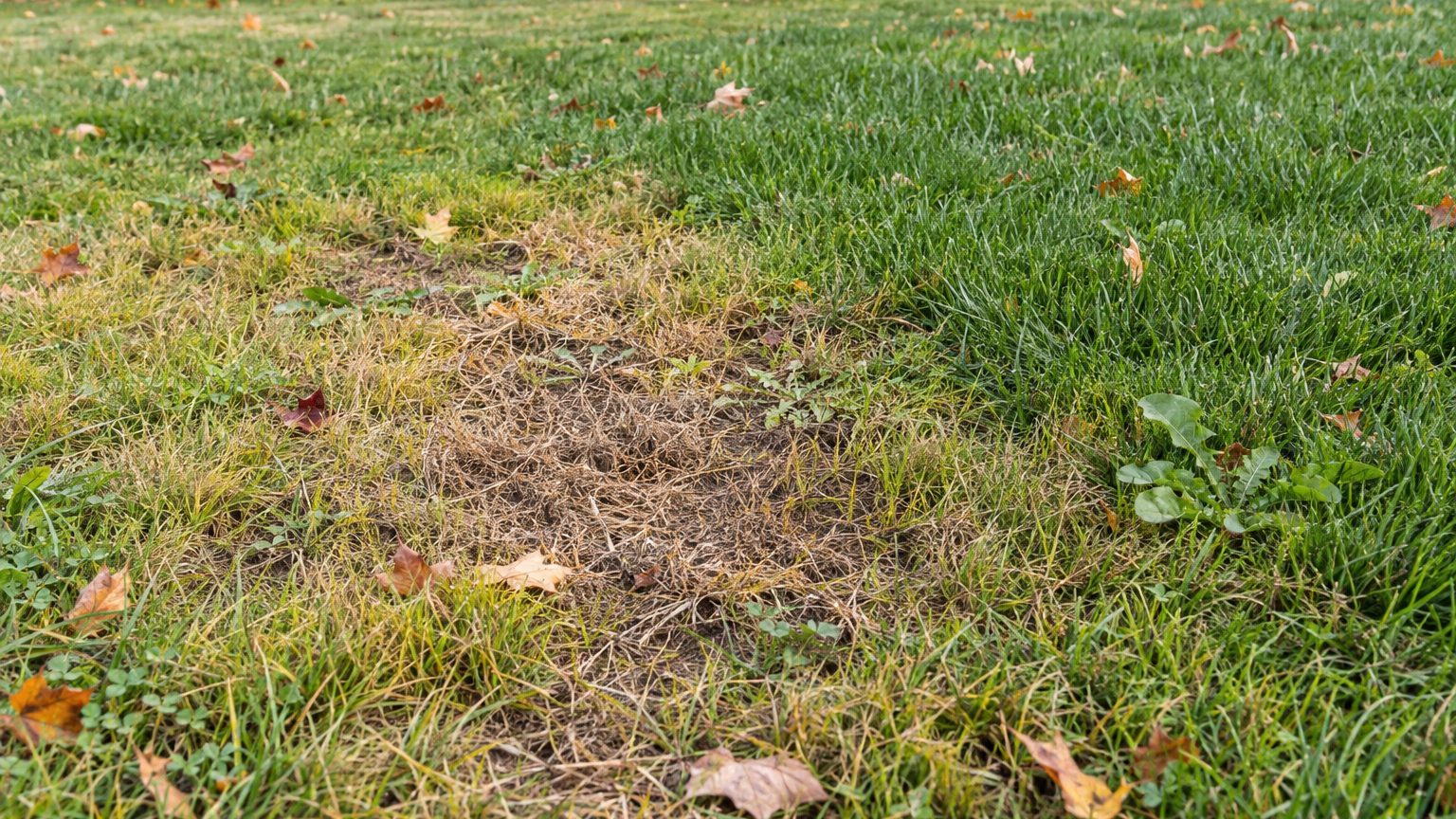
Matted, grayish patches after the snow melts, thin grass under a maple, and crabgrass along the driveway are familiar sights on New Brunswick lawns. Most trace back to long snow cover, cool damp weather and a short growing season. Telling them apart is easy once you know what to look for.
Lawn Pests and Diseases in New Brunswick
Snow Mold

Long, steady snow cover over unfrozen ground lets fungus grow under the drift. When the snow melts you find circular, straw-colored or grayish patches, sometimes with a web of matted blades on top.
Rake the patches gently to lift the blades and let air in. Most lawns recover on their own as the weather warms, and only badly thinned spots need reseeding.
Moss in Damp Shade
Moss moves in where grass is already struggling: under spruce and maples, on compacted ground, in spots that stay wet after the thaw. It forms a soft green mat that crowds out thin turf.
Removing moss without changing the conditions only buys a short reprieve. Let in more light, loosen compacted soil with core aeration in September (May also works), then reseed the bare ground.
Crabgrass
Crabgrass is a coarse, pale green annual that spreads in flat rosettes along sunny edges, driveways and thin turf. It sprouts once the soil warms and leaves bare brown patches after the first frost kills it.
A pre-emergence preventer goes down in May, before seeds germinate. A thick lawn shades the soil and leaves little room for seedlings to start.
Red Thread
Red thread shows up in cool, humid summer weather as pinkish patches with thin, coral-colored strands sticking out of the leaf tips. It favors lawns short on nutrients, and it rarely kills the grass.
A balanced feeding in September (May and October also work) usually makes the difference. Mowing with a sharp blade keeps the tips from tearing and holding moisture.
White Grubs
White grubs are plump, C-shaped larvae that chew grass roots in late summer. The turf turns brown, feels spongy, and peels back like a loose carpet. Skunks and crows tearing up the lawn are another sign.
Pull back a flap of sod to check for the grubs before treating anything. Healthy, deep-rooted grass tolerates a few, and only a lawn with many grubs needs action.
Thick Thatch
Thatch is the spongy layer of stems and roots between the green blades and the soil. Up to 1.3 cm (1/2 inch) is healthy, and above that you should dethatch or core aerate. Water and fertilizer run off a thick layer instead of reaching the roots.
Dethatching works best in August or September, while the grass is growing strongly enough to fill in the gaps.
New Brunswick — the year and the numbers
- State
- New Brunswick
- Hardiness zones
- 5a
- Last spring frost
- May 23
- First fall frost
- October 2
- Annual rain
- 47 in
- Lawn type
- cool-season
- Source
- Environment and Climate Change Canada — Canadian Climate Normals 1981-2010, station MONCTON · Moncton
How to Tell Which Lawn Problem You Have
A clue is rarely enough. Pair what the patch looks like with where it sits and when it appeared, then try a simple test: tug the grass, or lift a corner of turf.
A patch that tugs up easily with no roots points to insects, while grass that holds fast points to disease or stress.
| What you see | Where and when | Likely cause |
|---|---|---|
| Matted gray or tan circles | Right after snowmelt, spring | Snow mold |
| Soft green carpet, thin grass | Shade, wet or compacted ground | Moss |
| Coarse pale rosettes | Sunny edges, summer | Crabgrass |
| Pink patches with coral threads | Cool, humid summer weather | Red thread |
| Brown turf that rolls back like a rug | Late summer, roots eaten | White grubs |
| Spongy feel, water beads on top | Anywhere, builds over years | Thick thatch |
Patches that match none of these, or that appear in a perfect circle around a tree, may come from dog urine, salt from winter roads or a compacted spot. A local garden centre can look at a sample of the turf.
Where Lawn Problems Are Worst in New Brunswick
The last spring frost arrives on average May 23 in Moncton, and in half of all years it comes later than that. Other parts of the province differ from the southeast, so problems shift with the landscape.
- Bay of Fundy coast: Cool fog and slow spring warming keep turf damp for long stretches, which favors snow mold, red thread and moss.
- Saint John River Valley: Warmer inland summers and sandy, free-draining soil in places stress the grass, so late-summer drought and grub damage show up more here.
- Northern and upland districts, such as the Edmundston area and the Restigouche: Snow lies longer and the soil warms later, which raises the risk of snow mold and delays everything from mowing to seeding.
Wherever your lawn sits, shade from mature trees and heavy clay soil matter as much as location.
Lawn Care Mistakes That Invite Problems in New Brunswick
Mowing Too Short
Cutting the grass very short weakens the roots and lets sunlight reach weed seeds, which is how crabgrass gets started. Mow regularly from May through October, and if you start in April or finish in November, that works too.
Set the mower high, keep the blade sharp, and cut only a small part of the leaf each time.
Shallow Daily Watering
A light sprinkle every day keeps the surface wet and the roots shallow. That invites red thread and moss, and leaves the lawn with no reserve when a dry spell arrives.
Water deeply and less often during June, July and August, which suits this climate. Water in the early morning so the blades dry before evening.
Heavy Spring Feeding
A big dose of fertilizer in a cold, wet spring pushes soft, fast top growth and feeds weeds and disease more than roots. Many lawns do better with their main feeding in September, when the grass is storing energy for winter.
If you skipped it, a light feeding in May or October is a fair second chance.
Where to Get Lawn Advice in New Brunswick
New Brunswick has no county extension offices, so local advice comes from a few other places. Start with the one that matches your question, whether a diagnosis, a soil issue or a product choice.
- The provincial agriculture department and Agriculture and Agri-Food Canada publish turf and pest information, useful when you want to confirm what you are seeing.
- Local master gardener groups answer questions about shade, moss and bare patches.
- A nearby garden centre can identify a turf sample if you bring a plug with roots and soil.
Common Questions
What Hardiness Zone Is New Brunswick Lawn Country?
Moncton sits in zone 5a on the Canadian hardiness system. That is not a USDA zone, and the two systems do not convert, so use it only as a Canadian reference.
Can You Seed a Lawn in November in New Brunswick?
Yes, as a dormant seeding. The seed goes onto cold soil and sprouts in spring. It is a fallback, and a lawn seeded earlier gets a stronger start.
When Should You Seed Bare Patches in New Brunswick?
August and September give new grass the best start before winter. May also works if you missed the fall window.