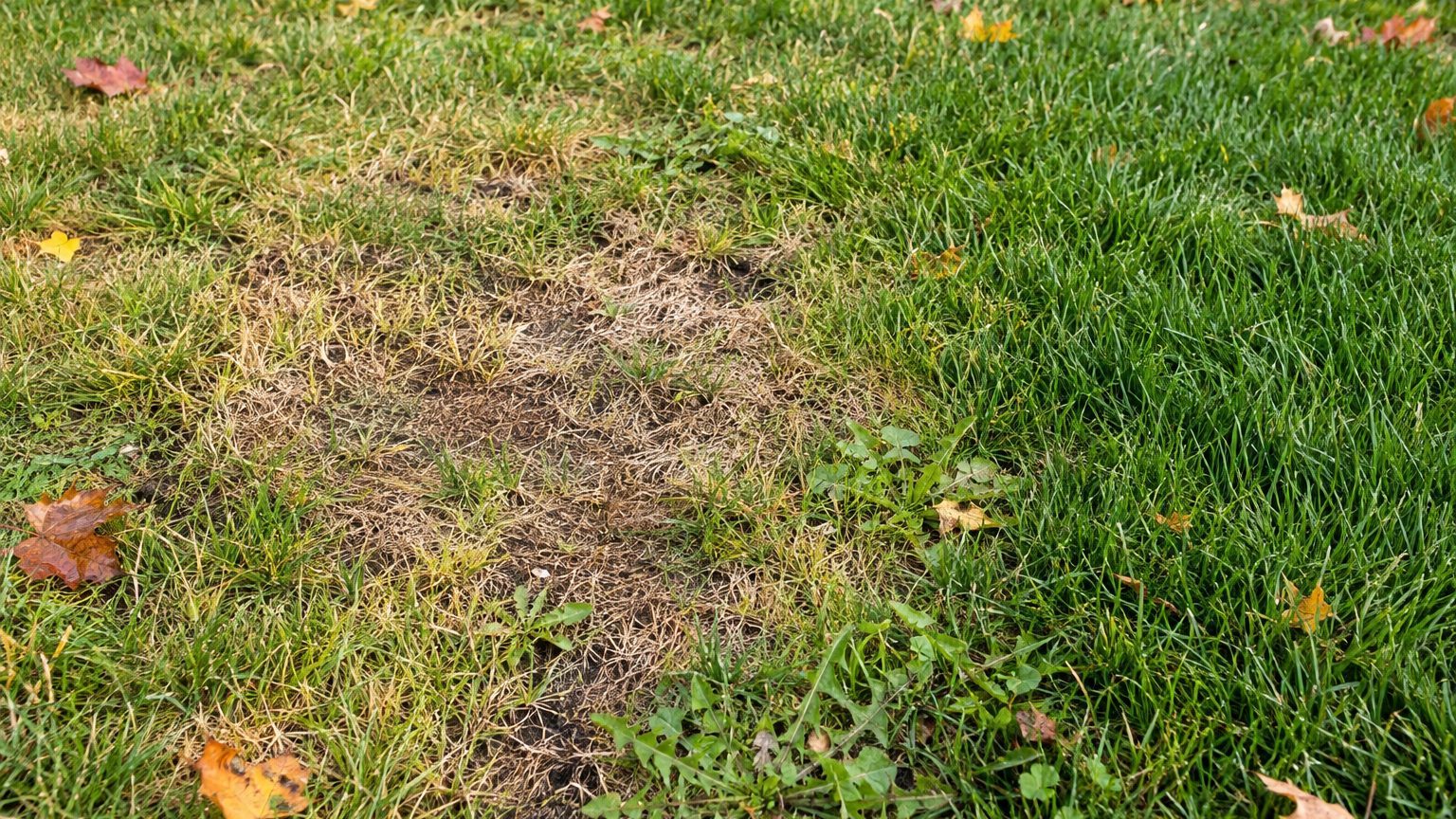
When the snow melts off a Nova Scotia lawn, matted grey patches, bare spots and green moss are often waiting underneath. Most of these problems come from the same few causes: a cool, damp Atlantic climate, shade, compacted soil and a handful of mowing and feeding habits. Knowing which problem you have tells you what to do and when.
Lawn Pests and Diseases in Nova Scotia
Snow Mold

Snow mold shows up as circular grey or pinkish patches of matted, crusty grass right after the snow leaves. It thrives where deep snow sat on unfrozen ground. Rake the patches gently to lift the blades and let air in. Most lawns recover on their own once the weather warms.
Crabgrass
Crabgrass sprouts as pale, coarse tufts that sprawl outward in sunny, thin turf once the soil warms. It dies with frost but leaves seed behind for next year. Stopping it is a matter of timing, since a pre-emergence preventer works best when applied in May, before the seedlings appear. A thick lawn shades out most of the rest.
Moss
Moss forms a soft green carpet where grass has given up, usually under trees, on the north side of the house or in low, soggy corners. It follows the conditions rather than causing them. Rake it out, then fix what favored it: open up the canopy, loosen compacted soil and reseed with a shade-tolerant mix.
Red Thread
Red thread appears as pinkish-tan patches with fine red strands poking from the blade tips, most often in cool, humid weather along the coast. It tends to strike lawns that are short on nutrients, so it looks worse than it is. A September feeding usually thickens the turf enough that the disease fades without further treatment.
White Grubs
White grubs are plump, C-shaped larvae that chew grass roots in late summer and fall. You will see patches of turf that pull up like loose carpet, often with crows, raccoons or skunks digging for the larvae. Water the lawn through summer dry spells to help roots hold on, and reseed damaged areas in August or September.
Nova Scotia — the year and the numbers
- State
- Nova Scotia
- Hardiness zones
- 6b
- Last spring frost
- May 7
- First fall frost
- October 18
- Annual rain
- 55 in
- Lawn type
- cool-season
- Source
- Environment and Climate Change Canada — Canadian Climate Normals 1981-2010, station HALIFAX STANFIELD INT'L A · Halifax
How to Tell Which Lawn Problem You Have
One clue is rarely enough. Pair what the grass looks like with where and when it happens, then run a simple test: tug the turf, press it underfoot or push a screwdriver into the soil. Each combination below points to a different fix.
| Signs to compare | Likely problem | When to act |
|---|---|---|
| Coarse pale tufts spreading in full sun, thin turf beneath | Crabgrass | May, with a preventer before it sprouts |
| Spongy feel underfoot, thatch layer thicker than 1.3 cm (1/2 inch) | Thatch buildup | Dethatch in August or September, or core aerate in September |
| Thin or bare patches that stay empty after summer | Worn or damaged turf | Reseed in August or September |
Other problems have their own tells. Grey crusty circles right after snowmelt mean snow mold, while turf that lifts like a rug with animals digging nearby means grubs. Pink strands on the blades in damp weather point to red thread, and a green mat in a shady, soggy corner means moss.
Where Lawn Problems Are Worst in Nova Scotia
Halifax sits in Canadian hardiness zone 6b, but the province is not one climate, and the Atlantic Ocean shapes each corner differently.
- South Shore and Halifax coast: Fog and damp air keep turf wet for long stretches, which favors red thread and moss. Granite-based soils drain unevenly, so low spots stay soggy.
- Annapolis Valley: Sheltered from the sea and warmer in summer, the valley dries out faster. Drought stress may be more noticeable on fast-draining lawns.
- Cape Breton Highlands: Spring arrives later and deep snow lingers, so snow mold is a regular visitor. On higher ground, seasonal growth runs behind Halifax.
If your lawn sits inland or on higher ground, expect your spring to start later than a coastal neighbor’s.
Lawn Care Mistakes That Invite Problems in Nova Scotia
Mowing Too Short
Cutting the grass low stresses it, thins the canopy and lets crabgrass and moss move in. Raise the mower deck and avoid removing too much of the blade at once. Mowing runs from May through October, with April and November as fallback months in mild years.
Watering Lightly and Often
Frequent shallow watering keeps the surface wet, which invites disease and keeps roots near the top where grubs can reach them. Water deeply and let the soil surface begin to dry before watering again. June, July and August are the months when a lawn most needs supplemental water.
Feeding at the Wrong Time
Skipping fertilizer leaves turf thin, and heavy feeding in midsummer pushes weak growth. September is the right time for fertilizer, because roots are building up before winter. If you miss it, May or October still works. Core aeration pairs well with a September feeding.
Where to Get Lawn Advice in Nova Scotia
Canada has no county extension offices, so advice comes through the province and local gardening groups. A few good places to start:
- The Nova Scotia Department of Agriculture is the provincial source for agricultural and horticultural guidance, so check with it before treating a problem you cannot name.
- A local master gardener group can look at a sample or photo, so contact one in early spring or late summer when symptoms are fresh.
- A neighborhood garden center can tell you which grass seed and soil amendments suit your area, so bring a plug of turf with the roots attached.
Common Questions
Is It Too Late to Seed a Bare Patch After September?
If you miss September, May still works for seeding. Another option is dormant seeding in November, where seed goes down on cold soil and sprouts when spring arrives.
When Should You Rake a Lawn After the Snow Melts?
Wait until the ground firms up and the turf is no longer soggy, then rake lightly to lift matted grass. Raking wet, soft soil tears roots and compacts the surface.
When Is the Right Time to Core Aerate a Lawn in Nova Scotia?
September is the best time, when the grass is still growing and can fill in the holes. May also works if you missed the fall window.