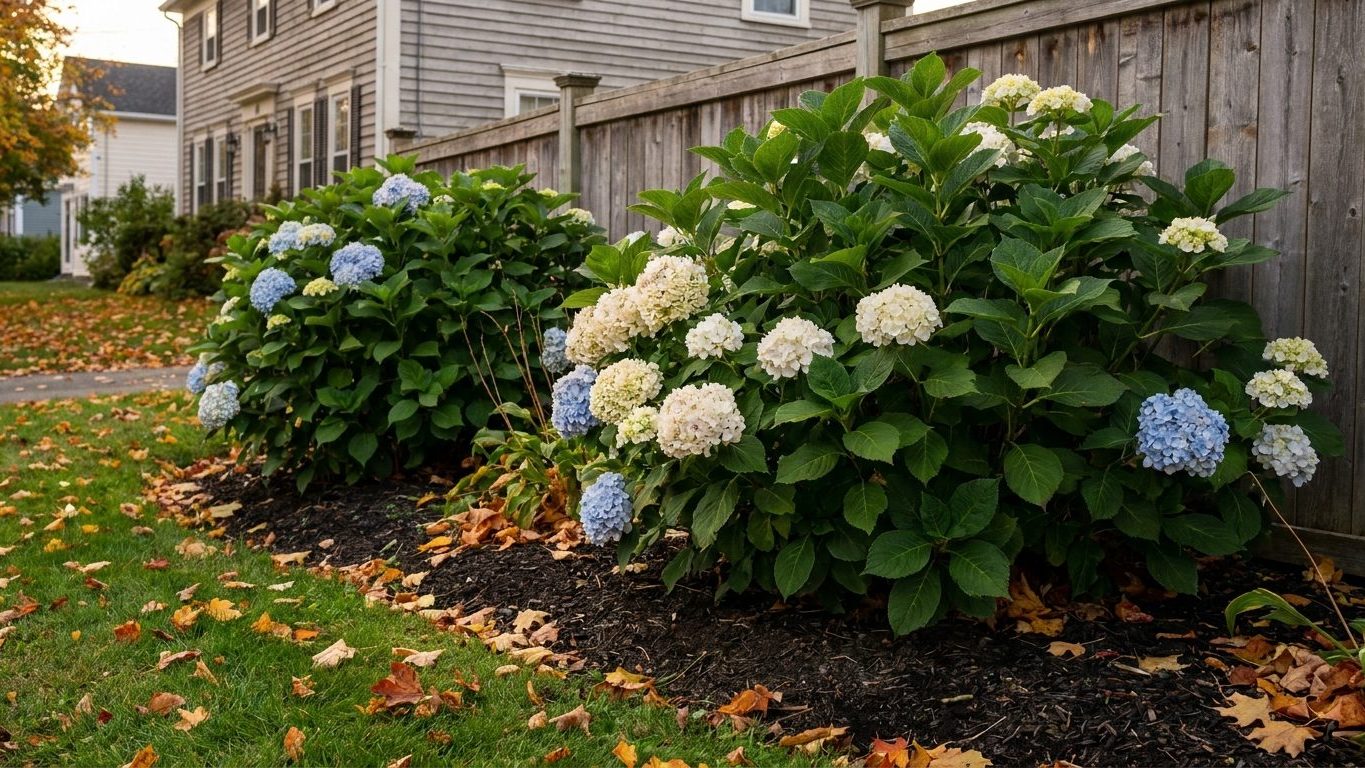
In New Brunswick, hydrangeas mostly struggle with powdery mildew, leaf spot, aphids, and bud loss from late frost, not an exotic pest list. Around Moncton, the season runs roughly from May 23 to October 2, and cool, damp summers push fungal disease ahead of insects. Bigleaf varieties carry the most risk, since the province sits in Canadian zone 5a.
Hydrangea pests and diseases New Brunswick: The Short Answer
Bud blast after a late frost

New growth that browns and drops in spring usually traces to a frost after leaf-out. Environment and Climate Change Canada’s Canadian Climate Normals put Moncton’s average last frost at May 23, but half of all years run later. Cut back watering, cover shrubs on cold nights, and check the calendar page before pruning.
Aphids clustering on new growth
Small green or black insects crowd tender stem tips and curl the newest leaves, usually once the last frost has passed near Moncton. Sticky honeydew and sooty mold often follow within days. Knock them off with a strong jet of water or bring in ladybugs, and recheck weekly through the June pruning window.
Leaf scorch in full afternoon sun

Brown, crispy edges on leaves facing full afternoon sun usually mean heat and wind stress rather than disease, more common on exposed sites than in shaded yards. Move new plantings to morning sun with afternoon shade, and water deeply twice a week during dry spells rather than a light daily sprinkle.
Powdery mildew on the leaf surface

A gray-white dusty coating spreads across leaves during warm, humid stretches once summer settles in, rarely killing the shrub outright but weakening the next season’s flower buds. Space plants for airflow, water the soil rather than the foliage, and strip off badly coated leaves before the fall cleanup.
Cercospora leaf spot climbing the plant

Small purple-brown circles appear on the lowest leaves first and climb the plant through late summer, then those leaves yellow and drop early, thinning the shrub from the bottom up. Rake and discard fallen leaves each fall instead of composting them, since the fungus overwinters in that debris.
Botrytis blight after a cool, wet spell

Gray, fuzzy patches form on flower clusters and soft new growth after an extended damp spell, common during a cool coastal New Brunswick fall. Improve drainage around the roots, avoid watering late in the day, and cut out any infected blooms the moment they appear.
Root rot in soggy soil
Wilting leaves on a shrub sitting in wet, heavy soil usually point to root rot rather than drought, especially after a rainy stretch. Pull back mulch from the base, improve drainage before replanting, and avoid daily watering, since soggy roots invite the fungus faster than dry ones stress the plant.
Deer browsing over winter
Stems get chewed back to bare wood when snow cover is thin and forage is scarce, especially on shrubs left unprotected near woodland edges. Fence young plants or apply repellent before the ground freezes, and expect thinner flowering the following June as the shrub recovers.
New Brunswick — the year and the numbers
- State
- New Brunswick
- Hardiness zones
- 5a
- Last spring frost
- May 23
- First fall frost
- October 2
- Annual rain
- 47 in
- Lawn zone
- cool-season
- Source
- Environment and Climate Change Canada — Canadian Climate Normals 1981-2010, station MONCTON · Moncton
How to Work Out the Dates for Your Own Yard
Working out which hydrangea problem is actually on your shrub takes a short walk around the plant and a glance at the calendar, more than any spray-first approach.
- Note the month before anything else: bud blast and deer damage only show up outside the May through October growing window, while leaf spot and mildew need weeks of summer humidity to take hold, so a June problem and a September problem are rarely the same one.
- Check which leaves carry the marks: lower, older leaves with spreading spots point to Cercospora leaf spot working its way up the plant, while curled or sticky newest growth points to aphids instead.
- Press the soil at the base with a finger: ground that stays soggy for days after rain signals root rot risk, while dry, crumbly soil around a wilting shrub usually points to drought stress or a different culprit entirely.
- Match winter symptoms to the zone: Natural Resources Canada’s Plant Hardiness Site puts the Moncton area at Canadian zone 5a, so bare stem tips after a hard winter are close to normal here and not automatically a disease to treat.
- Track the last two weeks of weather: a cool, wet stretch tips the balance toward botrytis blight on the flowers, while a hot, dry run points back to leaf scorch or aphid stress instead.
- Call the county office when two problems overlap: mixed symptoms on one shrub are common enough that a photo sent to extension settles the question faster than another round of guessing.
None of this replaces an actual look at the shrub, but running through these checks before reaching for a spray keeps most New Brunswick yards from treating the wrong problem.
New Brunswick North to South: How the Dates Shift
New Brunswick’s frost dates and disease pressure don’t sit still across the province, even though the Moncton figures anchor this whole page.
- The Fundy coast (Saint John, St. Andrews): persistent fog and cooler summer nights slow both bud break in spring and fungal pressure in summer, so mildew and leaf spot often show up later than they do further inland.
- The north and the Acadian Peninsula (Bathurst, Edmundston, Campbellton): a shorter growing season and harder winters push bud blast and deer damage higher on the list of yard problems, well ahead of the summer fungal disease that dominates further south.
Whichever part of the province you garden in, start from the New Brunswick page for your own frost window, then use the checks above to sort out which problem actually matches what you’re seeing.
Mistakes New Brunswick Punishes
New Brunswick’s climate is unforgiving of a few habits more than others.
Pruning bigleaf hydrangea outside June and July
Cutting stems back in spring or fall removes the flower buds already set for next year, since bigleaf varieties bloom on last season’s wood. The calendar sets pruning at June and July for that reason. Wait for that window, and only remove wood earlier if it’s clearly dead or broken.
Watering the leaves instead of the roots
Overhead watering in the evening leaves foliage wet overnight, which is exactly the setup powdery mildew and botrytis blight need to spread across a shrub. Switch to a soaker hose or drip line at the base, water in the morning, and save the overhead spray for knocking aphids off new growth.
Skipping winter protection because the zone sounds mild
Canadian zone 5a still brings hard freezes and thin snow cover in some winters, and unprotected stems take the brunt of both bud blast and deer browsing. Mound mulch over the crown before the ground freezes, wrap exposed shrubs in burlap, and check them again after the season’s first heavy snow.
New Brunswick Extension Offices and County Contacts
The Canadian zone 5a figure above is a starting point, not the full picture. New Brunswick’s county offices and the federal agriculture department fill in the specifics for one particular yard.
- Federal extension resources: Agriculture and Agri-Food Canada publishes growing guides and pest alerts that apply across the province, since the provincial department’s own site isn’t reliably reachable for automated checks.
- Your county office: local horticulturists confirm whether a symptom on your shrub matches what other yards nearby are seeing this season.
- Master gardener clinics: bring a photo of the affected leaves or stems to the next volunteer clinic in your county before deciding on a treatment.
Common questions
Do I need to spray hydrangeas every year in New Brunswick?
No. Most New Brunswick yards only see one or two of the problems above in a given season, and many years pass with nothing more than aphids to hose off. Save spraying for a confirmed fungal outbreak rather than a routine schedule.
Is Canadian zone 5a too cold for hydrangeas?
Not for the hardier types. Zone 5a around Moncton supports panicle and smooth hydrangeas without much trouble, while bigleaf varieties need the winter protection and correct pruning window described above to bloom reliably.
What should I do if I can’t identify the problem?
Photograph the affected leaves, stems, or flowers in daylight and bring them to the county extension office or a master gardener clinic rather than guessing with a store-bought spray.