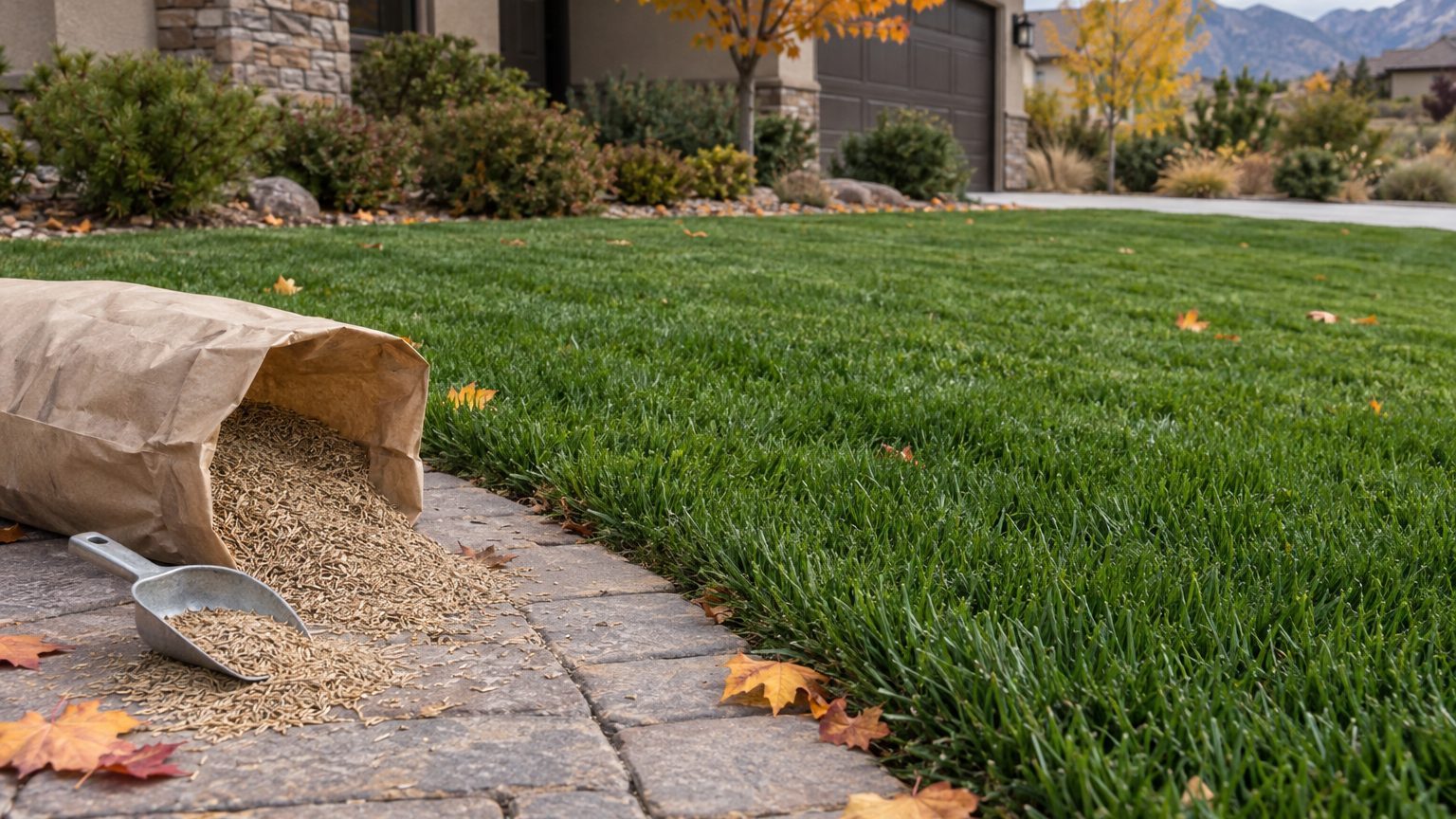
Bare patches show up in a Nevada lawn once summer has done its work, and that is when most people start shopping for seed. The state runs from low desert valleys to snowy mountain towns, so the right grass depends on where the yard sits and how much water it gets. Cool-season grasses carry most lawns here.
Which Grass Grows Best in Nevada?
Cool-season grasses suit Nevada, because they stay green through dry summers when watered and they survive the cold in the north and at elevation. Hardiness zones in the USDA system run from 4a to 10a across the state, and that system only measures the coldest winter nights.
Four species make up the lawn choices here. Each suits a different combination of heat, cold, shade, traffic, and available water.
Tall Fescue
Tall fescue puts down deep roots, so it handles hot, dry stretches better than bluegrass and still tolerates cold winters in Reno and Carson City. It can suit a yard that sees both scorching July afternoons and frozen January mornings.
It grows in clumps rather than spreading, so sow it evenly. Bare spots will not fill in on their own.
Fine Fescues
Creeping red, chewings and hard fescue are the fine-leaved group, and they get by on less water and less fertilizer than other lawn grasses. They also tolerate shade under mature trees, which is useful in older neighborhoods.
Foot traffic wears them down, and they struggle in the hottest low-desert yards. Choose them for quiet corners and mountain lots rather than a play area.
Kentucky Bluegrass
Kentucky bluegrass makes a dense, dark green lawn and repairs itself by spreading underground. It is very cold hardy, so it fits Reno, Carson City and the Tahoe area well.
In the southern valleys it is thirsty and often turns tan in summer heat. Plan on regular watering from June through August, and skip it if your irrigation is limited.
Perennial Ryegrass

Perennial ryegrass sprouts quickly and gives fast green cover, which is why it often appears in blends with bluegrass. Used on its own, it is less tolerant of drought and hard freezes than tall fescue.
Treat it as a helper in a mix, or as a fast patch for thin areas, rather than the main grass of a Nevada lawn.
Nevada — the year and the numbers
- State
- Nevada
- USDA zones
- 4a-10a
- Last spring frost
- January 7 to February 1
- First fall frost
- December 8 to December 23
- Annual rain
- 4 in
- Lawn type
- cool-season
- Source
- NOAA NCEI U.S. Climate Normals 1991-2020, 32F freeze probabilities · Las Vegas
How to Choose Grass Seed for a Nevada Yard
Start with the yard you actually have. Sun, shade, foot traffic and the water you are willing to spend each narrow the list quickly, helping you choose among the grasses described here.
Mowing habits matter too. Every lawn grass here is mowed from April through November, but some need trimming far more often to look tidy.
| Your yard | Grass to look for | Why it fits |
|---|---|---|
| Full sun, regular irrigation | Tall fescue | Deep roots ride out heat spells |
| Shade under trees | Fine fescues | Tolerate low light and little fertilizer |
| Kids and pets, cooler town | Kentucky bluegrass with ryegrass | Dense turf that recovers from wear |
| Limited water | Fine fescues or tall fescue | Need less irrigation than bluegrass |
| Less mowing wanted | Fine fescues | Grow slowly and stay low |
Perennial ryegrass earns a place mainly as a partner in a blend, where its quick sprouting covers soil while the slower grasses fill in. Whichever you choose, expect the thirstiest weeks to fall between June and August.
Which Grasses Grow Where in Nevada
Elevation changes the answer more than anything else in Nevada, and frost arrives months earlier or later depending on where you live.
- Las Vegas Valley: Summer heat is intense and winters are mild, so tall fescue is the usual cool-season choice. Bluegrass generally needs more irrigation than tall fescue.
- Reno and Carson City: Cold winters and warm, dry summers suit tall fescue and Kentucky bluegrass, often with some ryegrass in the blend.
- Lake Tahoe basin: Short seasons and cold soils favor bluegrass and fine fescues, and seeding windows close sooner than in the valleys.
- Elko and the northeast: Hard winters and a late spring favor cold-hardy bluegrass and fine fescues. Tall fescue is a riskier bet here.
Your local frost dates can differ a great deal from a neighbor’s across a ridge, so check with your county before locking in a seeding date.
Grass Seed Mistakes to Avoid in Nevada
Choosing a Thirsty Grass
Kentucky bluegrass looks wonderful in photos, but in a low-desert yard on a tight water budget it browns and thins by midsummer. Match the species to the irrigation you can actually provide, and lean toward tall fescue or fine fescues if water is limited.
Seeding at the Wrong Time
Seed sown in the heat of July dries out before it roots, and seed sown too late meets cold soil. In Nevada the sweet spot is August and September, when soil is still warm and the days are cooling. If you miss that window, April and May still work.
Burying or Skimping on Seed
Grass seed needs close contact with soil and a shallow covering. Cover it with no more than 0.25 inch of soil or compost, then press it down with a roller or your feet so every seed touches the ground.
Follow the rate printed on the bag. Too little leaves gaps for weeds, and too much crowds seedlings so they struggle.
Where to Get Lawn Advice in Nevada
Local conditions vary too much across the state for one rule to fit everyone. Local sources can fill the gaps because they know the soils and weather of your area.
- The state’s land-grant extension service offers lawn and turf guidance written for Nevada conditions, useful before you buy seed.
- Your county extension office can tell you the right seeding dates for your elevation, so call before late summer.
- Bring a soil sample to the county office in the weeks before you plan to seed, and ask what your yard needs.
Common Questions
When Should You Aerate Before Overseeding in Nevada?
Aerate in September to open the soil so new seed reaches it. If you miss that window, April and May still work. Dethatching comes before aeration, in August or September.
When Should You Fertilize a New Lawn in Nevada?
Feed cool-season grass in September and November to help roots build up before winter. May also works if you missed fall. Choose a fertilizer labeled for new lawns and follow its timing directions.
Can You Use Crabgrass Preventer When Planting Grass Seed?
Apply crabgrass preventer in April, or in May if April slips by. It stops grass seed from sprouting along with the weeds, so skip it on any area you plan to seed in spring.