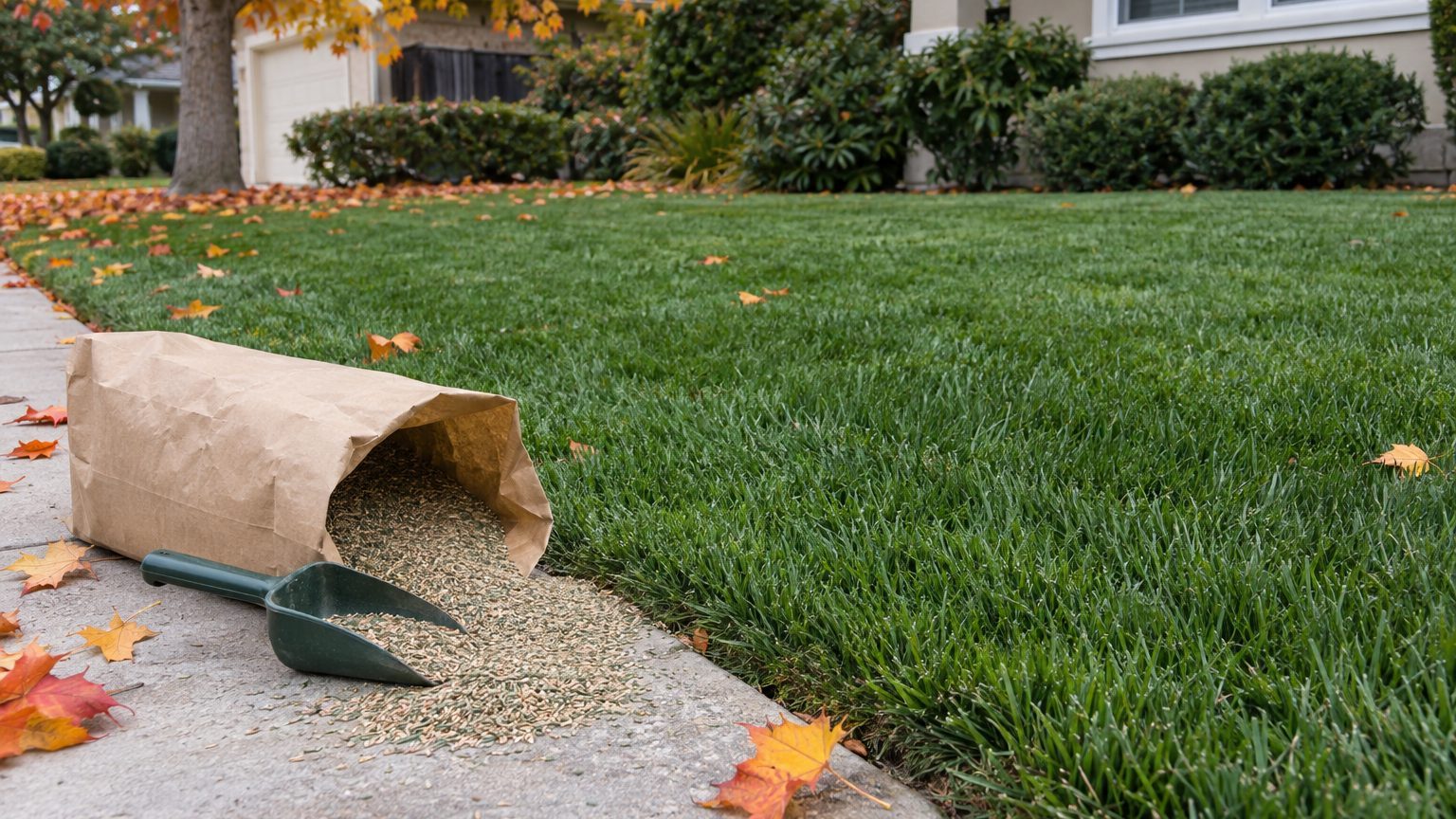
Walk a California lawn in late winter and you will see tall fescue greening up while bermudagrass sits tan and dormant beside it. These grasses live on different schedules, and the right seed depends on which schedule your yard can support. Tall fescue is the usual answer, with a few good exceptions.
Which Grass Grows Best in California?

Cool-season grasses suit many California lawns, while warm-season grasses fit areas where summers run hot and watering is limited. The state is mild enough that coastal and southern yards never see a freeze in an average year, so the limits here are summer heat, drought and water restrictions rather than frost.
Tall Fescue
Tall fescue is the most common California lawn, and for good reason. It stays green through mild winters and tolerates summer heat.
Seed it in September or October, when warm soil and cooler air let it root before winter. March and April also work if you miss the fall.
Bermudagrass
Bermudagrass loves heat, handles drought well and recovers fast from foot traffic. It turns tan in the cooler months, which some homeowners dislike.
It wants warm soil, so seed in April or May rather than fall.
Zoysiagrass
Zoysiagrass forms a dense, soft turf that crowds out weeds once established. It grows slowly, so patience is part of the deal.
Like bermudagrass, it goes in during April or May, when the soil has warmed.
Kentucky Bluegrass and Perennial Ryegrass
These cool-season grasses suit the cooler north and the coast. Away from those areas, summer heat and water demand make them harder to keep looking good.
Seed them in September or October, the same window as tall fescue.
St. Augustinegrass
St. Augustinegrass does well along the coastal south, but it is never sold as seed. You plant it as sod, so it belongs in a sod conversation rather than a seed aisle.
Kikuyugrass
Kikuyugrass is common in California, though more often as a weed than a choice. It spreads aggressively into neighboring lawns and beds, so it is not a grass to buy on purpose.
California — the year and the numbers
- State
- California
- USDA zones
- 5a-11a
- Frost
- none in an average year
- Annual rain
- 12 in
- Lawn type
- cool- and warm-season
- Source
- NOAA NCEI 1991-2020 Climate Normals · Los Angeles
How to Choose Grass Seed for a California Yard
Start with how much water the yard can realistically get and how much sun it receives. Those answers quickly narrow the field.
Then think about traffic and mowing. A lawn that takes kids and dogs needs a different grass than one that is mostly for looking at.
| Your yard | Grass | Why |
|---|---|---|
| Full sun, regular watering | Tall fescue | Common across the state and stays green through winter |
| Hot, dry, heavy traffic | Bermudagrass | Heat and drought tolerant, recovers quickly |
| Full sun, low mowing effort | Zoysiagrass | Dense turf that grows slowly |
| Cool coast or north | Kentucky bluegrass or perennial ryegrass | Suited to cooler conditions |
| Coastal south, sod acceptable | St. Augustinegrass | Does well there but is not sold as seed |
Shade is where fescue earns its place among the cool-season choices, since bermudagrass wants full sun. If you want to mow less, a slow grower like zoysiagrass fits, though it takes longer to fill in. Whatever you pick, mowing runs year-round for cool-season lawns and March through November for bermudagrass and zoysiagrass.
Which Grasses Grow Where in California
California covers coast, valley, desert and mountains, so the best seed shifts with where you live.
- Coastal south: St. Augustinegrass does well here as sod, and no freeze in an average year means warm-season grasses stay active longer.
- Cooler north and coast: Kentucky bluegrass and perennial ryegrass handle the milder summers better than they would inland.
- Central Valley: Summers are hot and winters do freeze, so tall fescue and bermudagrass are the practical choices.
- Sierra: Freezes are a real factor in the mountains, so cool-season grasses suit these yards better than warm-season ones.
Never assume Los Angeles conditions apply across the state, since the Plant Hardiness Zone system runs from 5a to 11a here.
Grass Seed Mistakes to Avoid in California
Seeding Cool-Season Grass in Summer
Fescue or ryegrass seed spread in midsummer struggles against heat and dries out between waterings. Wait for September or October, and keep March and April as your fallback.
Burying the Seed Too Deep
Cover seed with no more than 0.25 inch of soil, and press it down so it touches the ground firmly. Seed buried deeper often never breaks the surface.
Choosing a Grass the Yard Cannot Water
A thirsty grass in a yard under water restrictions fades quickly. Match the species to the water you will really have, and favor bermudagrass or zoysiagrass where summers are hot and dry. Water regularly from April through October while the new lawn establishes.
Where to Get Lawn Advice in California
Local conditions vary enough that a quick check with someone nearby can save a season of reseeding.
- University of California Agriculture and Natural Resources offers lawn care guidance and seeding information, handy before you buy seed.
- Your county extension office can speak to your valley, coast or foothill conditions, so call before the fall seeding window opens.
Common Questions
Can You Seed Bermudagrass in the Fall in California?
Bermudagrass needs warm soil to germinate, so April and May are the months to seed it. Fall seeding suits cool-season grasses instead.
When Should You Fertilize a New Lawn in California?
Fertilizing works best in March, May, September and October for cool-season grasses. Warm-season lawns take it in May, June, September and October, and summer heat is the time to hold back.
Is St. Augustinegrass Available as Seed?
No, it is never sold as seed. You plant it as sod, which is why it appears for coastal southern yards rather than in seed mixes.