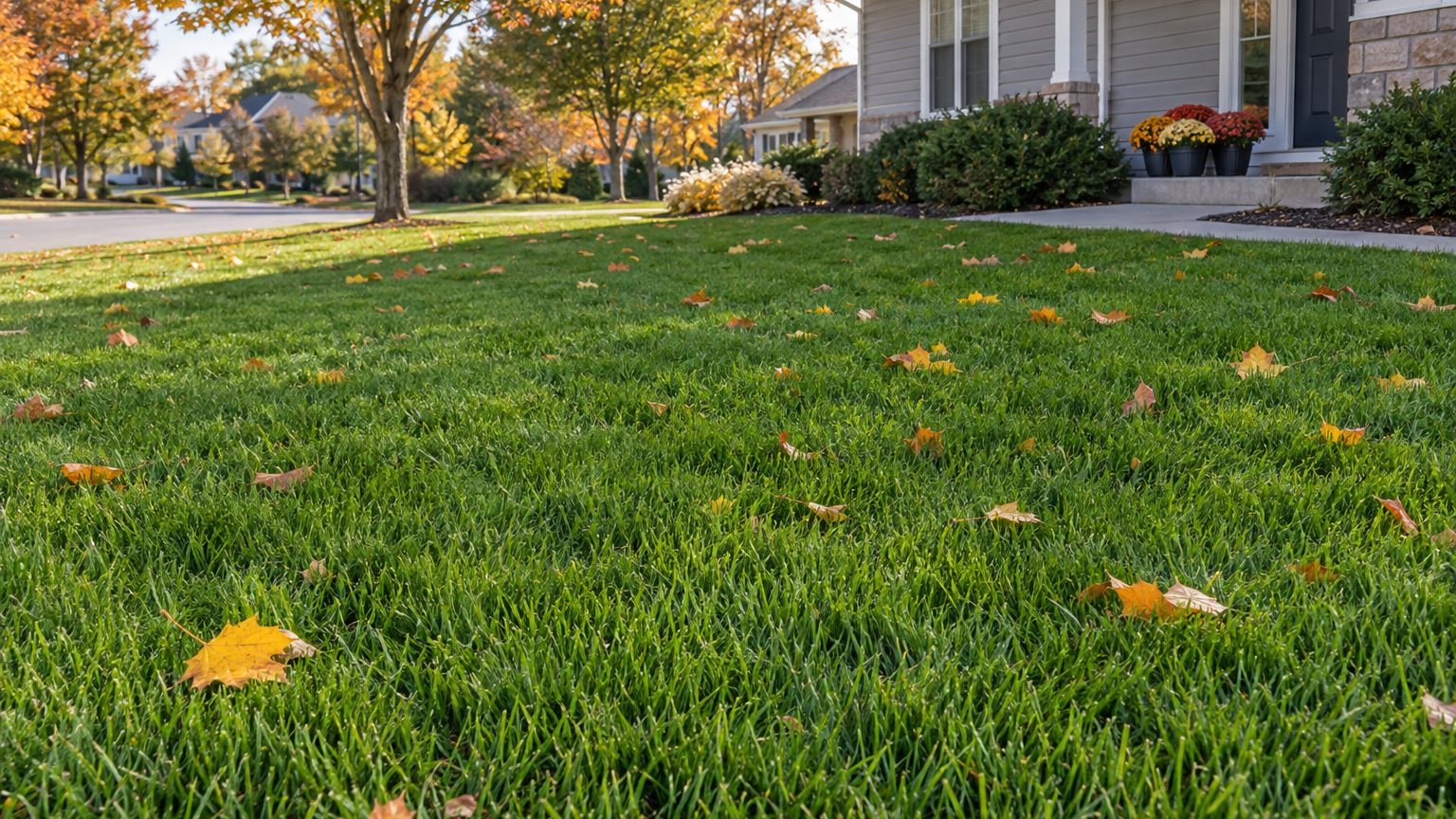
Snow melts off a Minnesota lawn in a gray, matted mess, and the first green flush tends to come before the weather feels settled. The grass here is quiet in winter, then grows actively in spring and again in late summer. A Minnesota lawn care schedule is mostly about matching each chore to those bursts.
What to Do Each Month in a Minnesota Lawn
The year splits into a long rest and a working season that peaks in late summer and early fall. Cool-season turf does its best rebuilding then, so seeding, feeding and weed control cluster in those months.
| Month | In the lawn |
|---|---|
| January | Rest. The grass is dormant under snow. If you missed November, seed scattered on cold soil still sprouts in spring. |
| February | Rest. Keep traffic off frozen turf. Dormant seeding still works now, since the seed waits out the cold. |
| March | The thaw begins and the grass is still asleep. Dormant seeding works through March, and you can watch for bare patches as the snow goes. |
| April | Apply crabgrass preventer before crabgrass sprouts. The first mowing also works in April once the grass has started to grow. |
| May | Mowing and watering settle into a rhythm. Preventer still works in May, and sod goes down well. Seeding, aeration, feeding and broadleaf weed control all work too if spring is your window. |
| June | Mow, water and lay sod. Broadleaf weeds can still be treated in June. |
| July | Heat slows the grass. Keep mowing and watering, and skip fertilizer. Sod can go down in July if you water it faithfully. |
| August | The big renewal starts. Seed, aerate, dethatch and lay sod. Early August also works for a light feeding. |
| September | Peak month for almost everything. Seed, aerate, dethatch, feed, treat broadleaf weeds and lay sod. Minnesota law bars phosphorus fertilizer on lawns unless a soil test shows a need or you are starting a new lawn from seed or sod, and requires fertilizer to be swept off pavement. |
| October | Aerate, feed and treat broadleaf weeds. If you miss September, October still works for all three. Sod and mowing continue until the grass stops growing. |
| November | Seed on cold soil for spring germination. A last mowing also works early in the month. |
| December | Rest. The grass is dormant, and dormant seeding still works until the ground is buried in snow. |
Watering runs from May through October, and new seed and fresh sod need steady moisture. Established turf gets by on less, and it tells you when it is thirsty by turning a dull blue-gray and holding footprints.
Minnesota — the year and the numbers
- State
- Minnesota
- USDA zones
- 3a-5a
- Last spring frost
- April 17 to April 30
- First fall frost
- October 11 to October 23
- Annual rain
- 32 in
- Lawn type
- cool-season
- Source
- NOAA NCEI 1991-2020 Climate Normals, 32F freeze probabilities · Minneapolis
When Does the Lawn Season Start and End in Minnesota?
Growth begins when the soil warms, not when the last frost passes. Cool-season grasses such as bluegrass and fescue wake up and germinate in soil at 50 to 65 °F, which is why spring seeding is a weaker bet than late summer, when the ground is warm and the air is cooling.
Frost dates matter mostly for young seedlings. In Minneapolis, the last spring freeze usually lands between April 17 and April 30, and a lawn started from seed before then can be nipped back.
The first fall freeze in Minneapolis usually arrives between October 11 and October 23. Seed sown in August and September has time to root before that, which is the reason those months are preferred. Mature grass shrugs off a light frost and keeps growing until the soil cools.
How the Lawn Calendar Shifts Across Minnesota
A schedule built around the Twin Cities shifts earlier or later with local soil warmth and grass growth.
- Twin Cities and the Minnesota River valley: Use the Twin Cities dates as a local reference, because conditions elsewhere in the Minnesota River valley can differ.
- Rochester and southeastern Minnesota: Let local soil warmth and grass growth guide the start of crabgrass prevention and mowing.
- Duluth and the North Shore: Lake Superior keeps spring cool and slow, so the lawn wakes late. Fall seeding should happen at the start of its window to beat the first frost.
- Bemidji, International Falls and the northern counties: The season is tighter at both ends. Favor the early part of August for seeding and expect dormant seeding to arrive sooner.
The farther north you live, the more you should lean on soil warmth and the look of the grass instead of the calendar page.
Lawn Care Timing Mistakes to Avoid in Minnesota
Fertilizing in Midsummer Heat

Heat pushes cool-season grass toward dormancy, and feeding it then forces soft growth it cannot support. Do not fertilize during hot midsummer weather. Wait for September and October, when the roots are actively building.
Seeding Too Late in Fall
Seed sown after the best fall window may sprout and then die when hard frost arrives, leaving thin ground in spring. Seed in August or September for fall germination. Once the cold sets in, switch to dormant seeding in November and let spring do the sprouting.
Crabgrass Preventer After the Weeds Sprout
Preventer blocks seeds from germinating and does nothing for plants already up. Apply it in April or May, before crabgrass sprouts, and skip it on any patch you plan to seed, since it stops grass seed too. Those spots are better handled in late summer.
Where to Get Lawn Advice in Minnesota
Soil, shade and grass type vary from one yard to the next, so local help fills in what a statewide schedule cannot.
- The University of Minnesota Extension publishes lawn calendars and weed guides, and it is a good first stop in early spring when you plan the year.
- Your county extension office can answer questions about soil tests and local conditions, so call before you feed in September.
Common Questions
Can You Lay Sod in July in Minnesota?
It can work, but heat is hard on new sod. Water it regularly so the roots knit into the soil, and expect an easier time in May, June, or the late summer months.
Is It Too Late to Mow in October?
No. Keep mowing as long as the grass keeps growing, and put the mower away after the last cut once growth stops. Leaving the grass long into winter invites matting under snow.
Does Dormant Seeding Really Work in Minnesota?
Yes, when the soil is cold enough that the seed stays put. It lies dormant through winter and germinates as the ground warms in spring, though results are usually thinner than a late summer seeding.