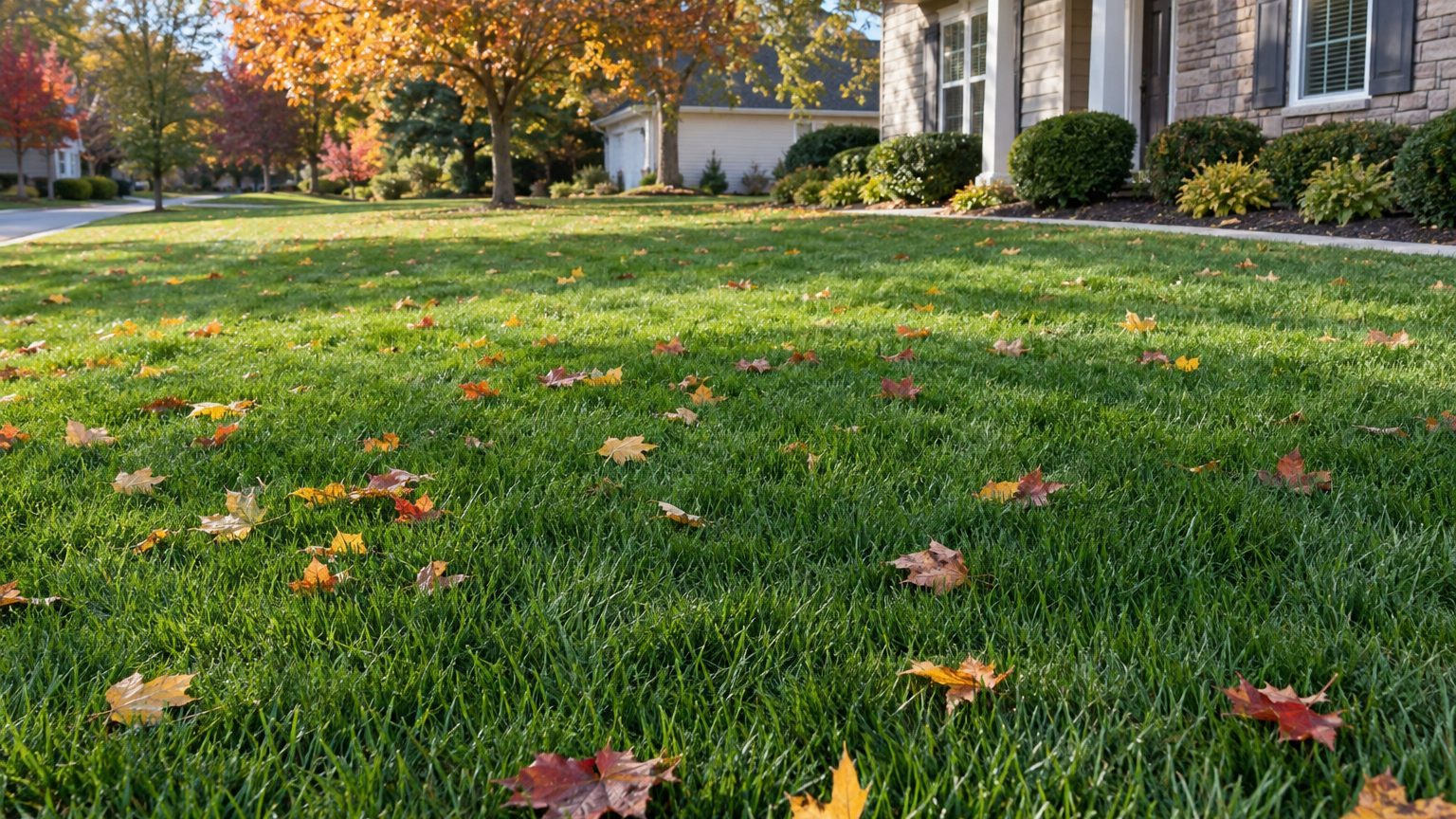
Frost on the grass blades in April, a green flush by May, and a mower that keeps running into November: that is the rhythm of an Iowa lawn. Most Iowa lawns are cool-season grasses such as Kentucky bluegrass, tall fescue and perennial ryegrass, so the big jobs cluster in spring and again from late summer into fall.
What to Do Each Month in an Iowa Lawn

Cool-season grass grows hardest in spring and fall, and it rests in deep cold and in midsummer heat. The months below follow that pattern, so the heavy work lands when the grass can recover fast.
| Month | In the lawn |
|---|---|
| January | Rest. The grass is dormant, so keep heavy foot traffic off frozen turf. |
| February | Rest. Dormant grass needs nothing, and you can sharpen the mower blade now. |
| March | Rest, mostly. Thawing soil turns soft and muddy, so stay off it and watch for matted patches. |
| April | Apply crabgrass preventer before the weeds sprout. Mowing begins as growth picks up. Core aeration, dethatching and seeding also work in April if you want an early start. |
| May | Mow regularly as growth peaks. If April slipped by, preventer still works in May. Fertilizing, aeration and seeding also work this month. |
| June | Keep mowing, and start watering as the weather dries out so the roots stay alive. |
| July | Water deeply in the heat and keep mowing. Cool-season grass slows down, so skip heavy treatments. |
| August | Dethatch and begin seeding as the heat eases. Keep watering and mowing. |
| September | The busiest stretch for repair. Core aerate, seed, dethatch and fertilize while the soil is still warm. Keep mowing. |
| October | Mow as long as the grass grows. |
| November | Fertilize to feed roots over winter, and make the last mowing passes. |
| December | Rest. The grass is dormant, so clear leaves and put the mower away. |
Seeding and aeration go together well, because seed that drops into freshly opened holes touches soil right away. Fall rewards that pairing more than spring does.
Iowa — the year and the numbers
- State
- Iowa
- USDA zones
- 4b-6a
- Last spring frost
- April 12 to April 24
- First fall frost
- October 14 to October 25
- Annual rain
- 37 in
- Lawn type
- cool-season
- Source
- NOAA NCEI 1991-2020 Climate Normals, 32F freeze probabilities · Des Moines
When Does the Lawn Season Start and End in Iowa?
Grass wakes up when the soil warms, not when a date arrives. Seed starts to sprout once the soil sits at 50 to 65 °F, which is why fall seeding works while the ground still holds summer heat, and why spring seeding has to wait for the soil to thaw and warm.
Frost dates only tell you the risk to young grass. In Des Moines, the last spring freeze usually falls between April 12 and April 24, and tender new seedlings can still be nipped until then. Farther from the city, expect freezes to linger a bit later in spring.
The first fall freeze usually arrives between October 14 and October 25 in Des Moines, and it often comes sooner in rural counties. Seed sown in August and September has time to root and thicken before that cold, while mowing carries on until growth stops.
How the Lawn Calendar Shifts Across Iowa
Iowa spans hardiness zones 4b to 6a under the USDA system, so the same job lands a little earlier or later depending on where you live.
- Northern Iowa near Mason City and Spencer: Spring warms later and fall cold arrives sooner, so favor the early part of each seeding window and finish fall work promptly.
- Central Iowa around Des Moines and Ames: This is the middle of the pattern, and the months in the calendar fit well here.
- Southern Iowa near Ottumwa: Soil warms earlier and stays warm longer, giving you a little more room at both ends of the season.
When in doubt, let the soil and the grass guide you, and treat the month as a starting point.
Lawn Care Timing Mistakes to Avoid in Iowa
Preventer Applied Too Late
Crabgrass preventer works only before the weed seeds sprout. Apply it in April, and if that month slips by, May still helps. Wait longer and the seedlings are already up, so the product does little.
Seeding in the Heat
Seed scattered in midsummer dries out before it roots, and the seedlings that do emerge struggle under hot sun. Hold off until August and September, when the soil is warm and the air is cooler, and keep the seedbed damp.
Skipping the Fall Feeding
Many homeowners fertilize only in spring, but Iowa lawns gain the most from September and November feedings. Fall feeding builds roots and stores energy for the next spring, and it does so without pushing the soft, fast growth that spring nitrogen can cause.
Where to Get Lawn Advice in Iowa
Local conditions vary from county to county, and local guidance can help you adjust the schedule to your own yard.
- Iowa State University Extension offers lawn guidance for the state, so check it before you choose seed or plan a fall renovation.
- Your county extension office can answer questions about local soil and weeds, and it is a useful place to start when a patch of lawn looks wrong.
Common Questions
Can You Seed a Lawn in Iowa During Spring?
Yes, April and May both work once the soil has thawed and warmed. Keep the seedbed damp, and expect summer heat to test the young grass, which is why fall is usually easier.
Should You Water an Iowa Lawn in Winter?
No. Dormant grass does not need watering while the ground is frozen. Your watering season runs through June, July and August, when heat and dry spells stress the turf.
When Is the Last Mowing of the Year in Iowa?
Mow through November, as long as the grass keeps growing. Once growth stops and the lawn goes dormant, you can put the mower away until April.