Brown circles in August, yellow blades after a wet spell, a thin patch where the mower scalped the grass: Florida lawns show trouble in every season. Heat, humidity, sandy soil and familiar pests often drive these problems, and the symptoms become easier to recognize once you know what to check.
Lawn Pests and Diseases in Florida
Weeds in Thin Spring Turf
As grass greens up in spring, weeds fill any gap left by a tired winter lawn. In Jacksonville, the last spring freeze usually falls between February 16 and March 7, and weeds often jump ahead of the turf as soon as the cold ends.
A thick, evenly mowed lawn shades the soil and helps keep weed seedlings from taking hold. Pull small clumps by hand, and fix the thin areas before the weeds claim them.
Chinch Bug Patches
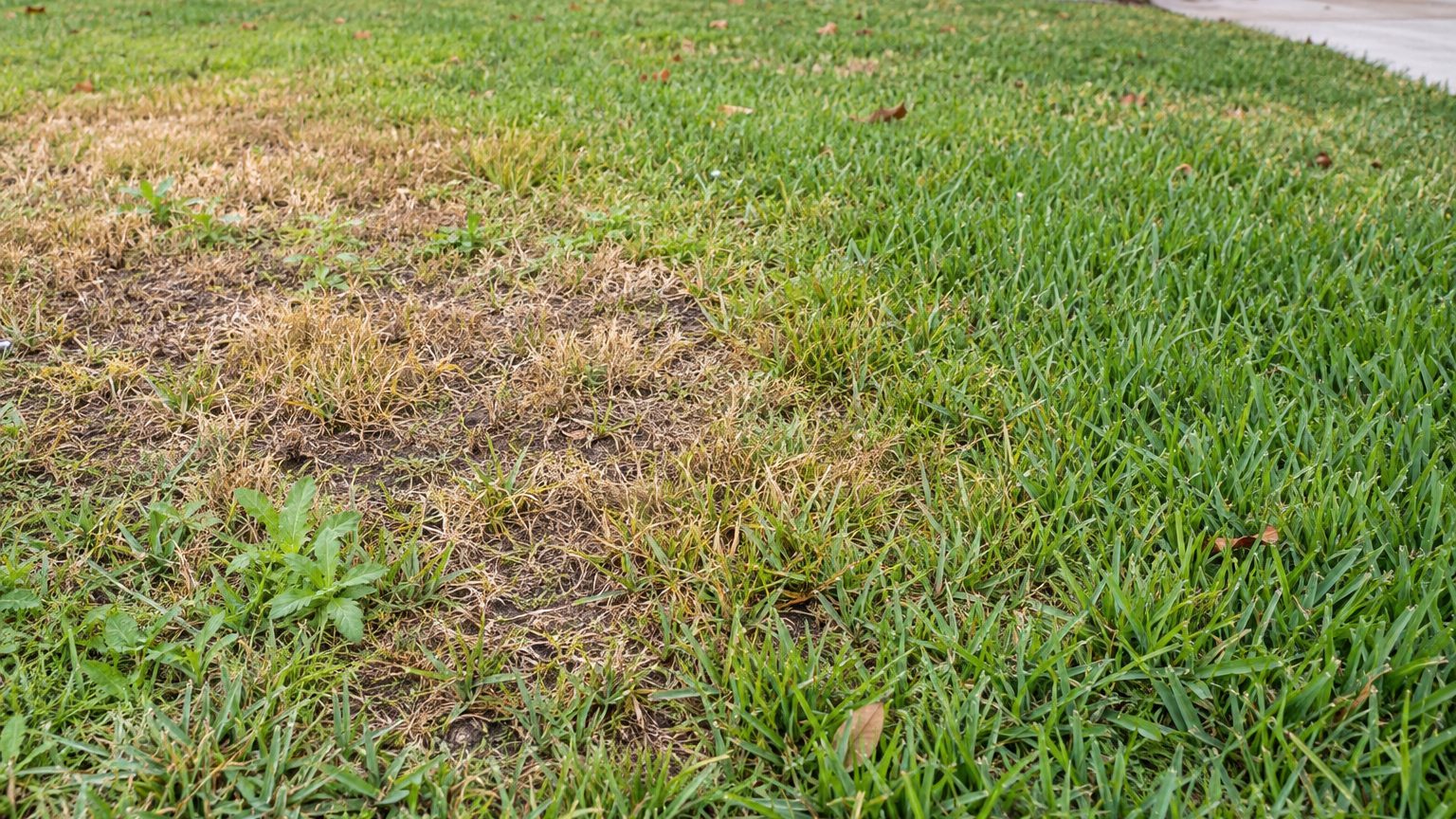
Yellow, then straw-colored patches that spread outward in full sun point to chinch bugs, especially in St. Augustine grass. The damage looks like drought, but watering does not bring the grass back.
Part the blades at the edge of a patch, where green meets brown, and look near the soil for tiny dark insects. Catching them early keeps a small patch from becoming a large one.
Large Patch in Cool, Wet Weather
Round or irregular patches that turn yellow, then brown, appear when weather turns cool and damp, mostly in fall and spring. The blades pull away easily at the base, which separates this from drought.
Water in the morning so the lawn dries during the day, and skip heavy nitrogen when the grass is slowing down.
Sod Webworm Chewing
Ragged, chewed blades and small ragged brown spots that grow over time suggest caterpillars feeding at night. Birds pecking at the lawn in the morning can be another clue.
Look for green droppings and small moths flitting over the grass at dusk. Healthy, regularly mowed turf recovers from light feeding on its own.
Thatch Buildup
A spongy feel underfoot and water that runs off instead of soaking in point to thatch. A layer up to 1/2 inch is healthy, but anything thicker deserves dethatching or core aeration.
In Florida, May and June are the months for dethatching, and April also works, because the grass is growing fast enough to recover.
Florida — the year and the numbers
- State
- Florida
- USDA zones
- 8b-11b
- Last spring frost
- February 16 to March 7
- First fall frost
- November 26 to December 13
- Annual rain
- 53 in
- Lawn type
- warm-season
- Source
- NOAA NCEI 1991-2020 Climate Normals, 32F freeze probabilities · Jacksonville
How to Tell Which Lawn Problem You Have
Start with the shape of the damage, then confirm it with another clue. A patch that looks the same at a glance can come from insects, fungus or a mowing mistake, so inspect the grass before choosing a treatment.
Tug on the blades, check the sun, and note the season before you reach for any treatment.
| What you see | Where and when | Likely cause |
|---|---|---|
| Yellow to straw patches that spread | Full sun, hot weather | Chinch bugs |
| Round patches, blades pull off at the base | Cool, damp weather, fall or spring | Large patch |
| Chewed, ragged blades, birds pecking | Evenings and mornings, warm months | Sod webworms |
| Spongy turf, water runs off | Anywhere, worse in older lawns | Thatch |
| Thin turf with weeds filling in | Spring, after a weak winter | Weeds in thin spots |
Patches that match none of these, especially in shade or along a sprinkler line, often come from uneven water or a dull mower blade.
Where Lawn Problems Are Worst in Florida
Florida’s heat and humidity are everywhere, but the details shift from the Panhandle to the Keys.
- North Florida and the Panhandle: Winter freezes still happen here, so grass goes dormant and weeds move in during spring. Cool, damp spells in fall and spring invite large patch.
- Central Florida, including Orlando: Frost is rare, so the growing calendar flips and summer is the stressful stretch. Chinch bugs and summer fertilizer rules deserve attention here.
- South Florida, including Miami: The grass grows nearly all year, so pest pressure can continue through winter. Heavy summer rain and sandy soil make fungus and nutrient loss common.
Coastal lawns also deal with salt spray and sandy ground that drains fast, so they dry out sooner between rains.
Lawn Care Mistakes That Invite Problems in Florida
Mowing Too Short
Cutting low scalps the grass, stresses the roots and lets weeds sneak in. Mowing is a year-round job here, so the habit matters in every month.
Raise the mower deck and cut often enough that you never remove much blade at once.
Watering in the Evening
Wet grass overnight is an open invitation to fungus like large patch. Watering matters most from April through October, when the grass is growing hardest.
Water early in the morning, deeply and less often, so the blades dry out in the sun.
Feeding in the Summer Rainy Season
Many Florida counties and cities, including Orange, Pinellas, Manatee, Sarasota and Lee, ban nitrogen and phosphorus fertilizer from June 1 to September 30, so check your county before you buy a bag.
Plan the first feeding for April or May, when the grass greens up, and use October as a fallback if you miss spring.
Where to Get Lawn Advice in Florida
Local help is easy to reach, and it knows your soil, your grass and your county’s rules.
- The UF/IFAS Extension offers guides on Florida grasses, pests and fertilizer rules, and can help when a patch appears.
- Your county extension office can help identify a pest from a sample and explain local fertilizer ordinances, so bring a piece of turf with roots when you visit.
Common Questions
Why Does My St. Augustine Lawn Turn Yellow in Summer Even When I Water?
Yellowing that spreads outward in full sun, with insects near the soil at the edge, points to chinch bugs rather than thirst. Water alone will not fix it.
Can You Seed a Lawn in Florida?
Yes, for bahia, centipede and bermuda, with May as the main window and April or June also working. St. Augustine is sold as sod or plugs only.
When Is the Right Time to Lay Sod in Florida?
Sod and plugs go down while the grass is growing, from April through September in North and Central Florida. In South Florida, laying sod works all year.