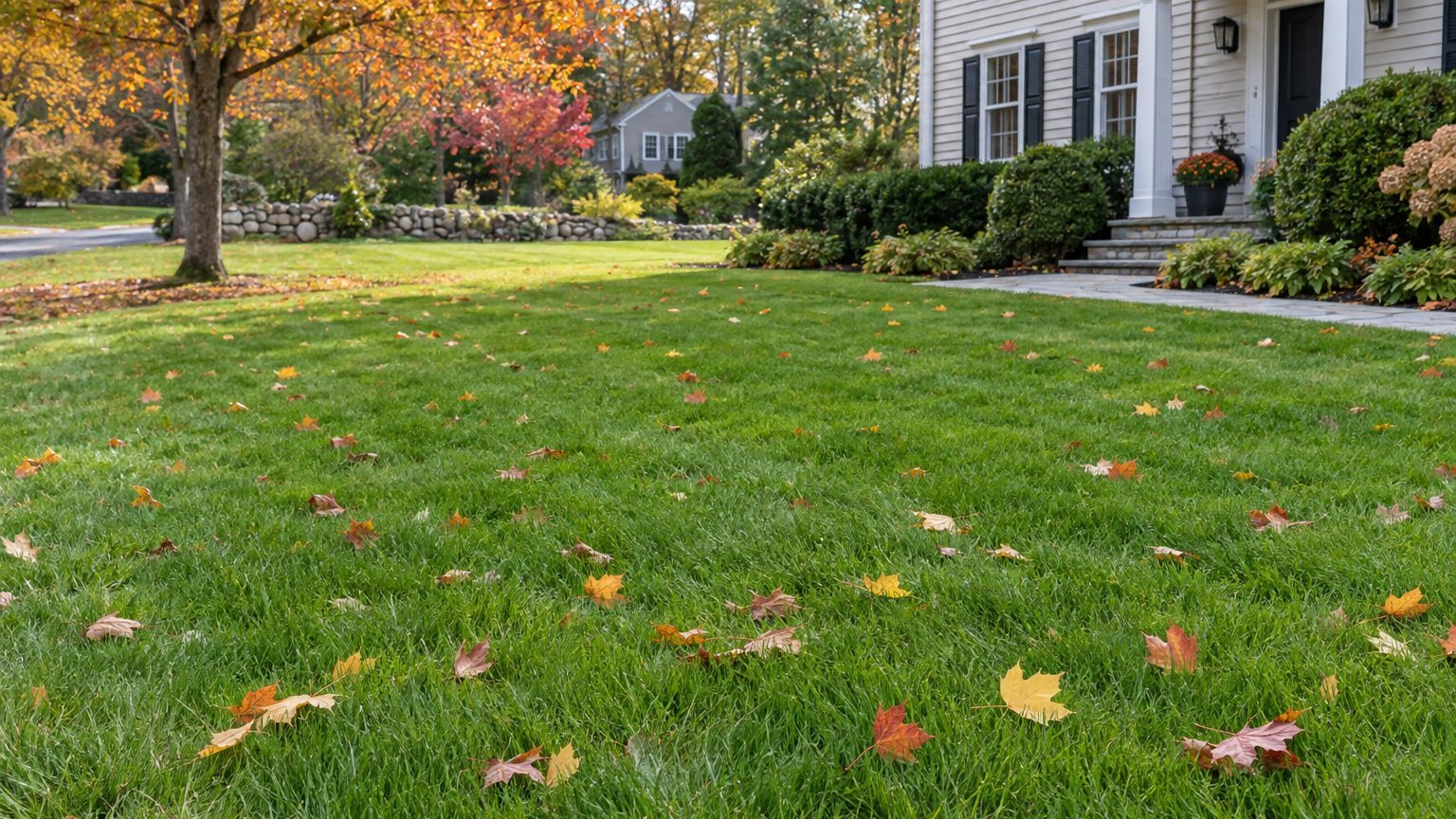
Brown stalks stand still all winter, then mowing in April signals that the lawn is awake. A Connecticut lawn is mostly cool-season grass, so its busiest stretches come in spring and again from late summer into fall. The month-by-month rhythm of feeding, seeding, mowing and watering follows from that.
What to Do Each Month in a Connecticut Lawn
Cool-season grass grows hard in spring and fall and slows in summer heat. Most big jobs cluster in spring and again from late summer into fall, with mowing running through nearly the whole growing season.
| Month | In the lawn |
|---|---|
| January | Rest. The grass is dormant. Stay off frozen or frosted turf so the blades don’t bruise. |
| February | Rest. Still dormant. A good time to sharpen the mower blade and plan the year. |
| March | Crabgrass preventer works if spring comes early. Connecticut law bars fertilizer, compost or soil amendments containing phosphate on lawns from December 1 to March 15, and at any time within 20 feet of a stream, pond or other water. |
| April | Apply crabgrass preventer now, before the weed seed sprouts. Start mowing as growth picks up. Aeration, seeding, sod and a light feeding also work in April, though fall suits them better. |
| May | Feed the lawn while growth is strong. If April slipped by, preventer still works now, and so do aerating and seeding. |
| June | Mow regularly and begin watering deeply as the weather dries. Heat starts to slow the grass. |
| July | Keep watering through dry spells. Grass that browns in a hot stretch may be dormant rather than dead. |
| August | Core aeration, seeding and sod all fit now. Dethatch only if the thatch layer is thicker than about an inch. Keep watering new seed. |
| September | Seed, lay sod, aerate and feed. Warm soil and cooler air give young grass time to root. |
| October | Keep mowing. If you missed September, sod still works this month. |
| November | Mow until growth stops. A late feeding still works if you skipped September. |
| December | Rest. The grass is dormant. Rake leaves off the lawn before snow pins them down. |
Late summer through September is the strongest window for building a lawn. Spring jobs are a fair backup, but young grass then has to face summer heat.
Connecticut — the year and the numbers
- State
- Connecticut
- USDA zones
- 6a-7b
- Last spring frost
- April 2 to April 12
- First fall frost
- October 28 to November 10
- Annual rain
- 44 in
- Lawn type
- cool-season
- Source
- NOAA NCEI 1991-2020 Climate Normals, 32F freeze probabilities · Bridgeport
When Does the Lawn Season Start and End in Connecticut?
Grass wakes up when the soil warms, not when the calendar flips. Seed germinates once the soil sits at 50 to 65 °F, which is why April seeding can work but a warm spell in March rarely helps. Mowing starts when blades visibly grow and ends when they stop.
Frost dates tell you about risk to young seedlings, not about growth. On the Bridgeport shoreline, the last spring frost usually falls between April 2 and April 12. Inland and in the northwest, it comes later, so spring seed there needs a little more patience.
At Bridgeport on the shoreline, the first fall frost tends to arrive between October 28 and November 10. Inland lawns see it sooner. That is the reason August and September seeding pays off, since the roots are established well before frost can stunt them.
How the Lawn Calendar Shifts Across Connecticut
Connecticut is small, but the shoreline and the hills do not run on the same clock.
- Shoreline (Bridgeport, New Haven, Stamford): Long Island Sound keeps the air milder, so lawns green up sooner in spring and hold on later in fall. Spring jobs can start early in the window.
- Litchfield Hills and the Northwest Corner: Elevation brings colder nights, later thaws and an earlier first frost. Wait toward the end of each spring window and finish fall seeding early.
- Quiet Corner (Windham and Tolland counties): Open, inland ground cools off faster than the coast. Treat it like the hills, with fall work done on the early side.
Whatever your town, the soil tells you more than the date, so let it guide you when a neighbor’s lawn runs ahead or behind yours.
Lawn Care Timing Mistakes to Avoid in Connecticut
Crabgrass Preventer Applied Late

Preventer works only before crabgrass seed sprouts. Spread it after the weeds are up and it does almost nothing, so you pay for a product that never earns its keep.
April is the target, and March or May still work in a pinch. Skip it on any patch you plan to seed.
Feeding in Midsummer Heat
A summer dose of fertilizer pushes tender growth just when the grass wants to slow down, and it can scorch stressed turf. It also costs you money when the lawn can’t use it.
Feed in May and September instead, with April or November as backups. In July, put the effort into deep watering.
Seeding in Late Fall
Seed that sprouts in October may not have time to root before hard frost arrives. Many of those seedlings die over winter, and you end up reseeding in spring.
August and September are the window for seeding. If you are late, wait for April or May rather than gambling on a cold fall.
Where to Get Lawn Advice in Connecticut
Local conditions vary from town to town, so it helps to ask people who work with them. UConn Extension offers research-based guidance for Connecticut yards.
- Browse the extension’s lawn and turf resources when you are deciding between seeding and sod, or choosing a grass type for shade.
- Contact your local extension office in late summer if you want help with problem spots before the seeding window opens.
- Ask about soil testing before you fertilize, so you know what your lawn actually needs.
Common Questions
What If You Miss the Fall Seeding Window in Connecticut?
Wait for spring. April and May both work for seeding, and aeration beforehand helps the seed make contact with the soil. Water new seed regularly, since summer heat arrives soon after.
When Should You Stop Mowing in Connecticut?
Mow through November, then stop once growth stops and the grass stiffens with frost. Keep leaves raked off so they do not smother the turf.
How Can You Tell Dormant Grass from Dead Grass in July?
Dormant grass turns straw brown across a wide area after a hot, dry stretch, and the crowns stay firm and tan to pale green at the base. Dead grass pulls up easily with no roots holding. Deep watering often wakes dormant turf.