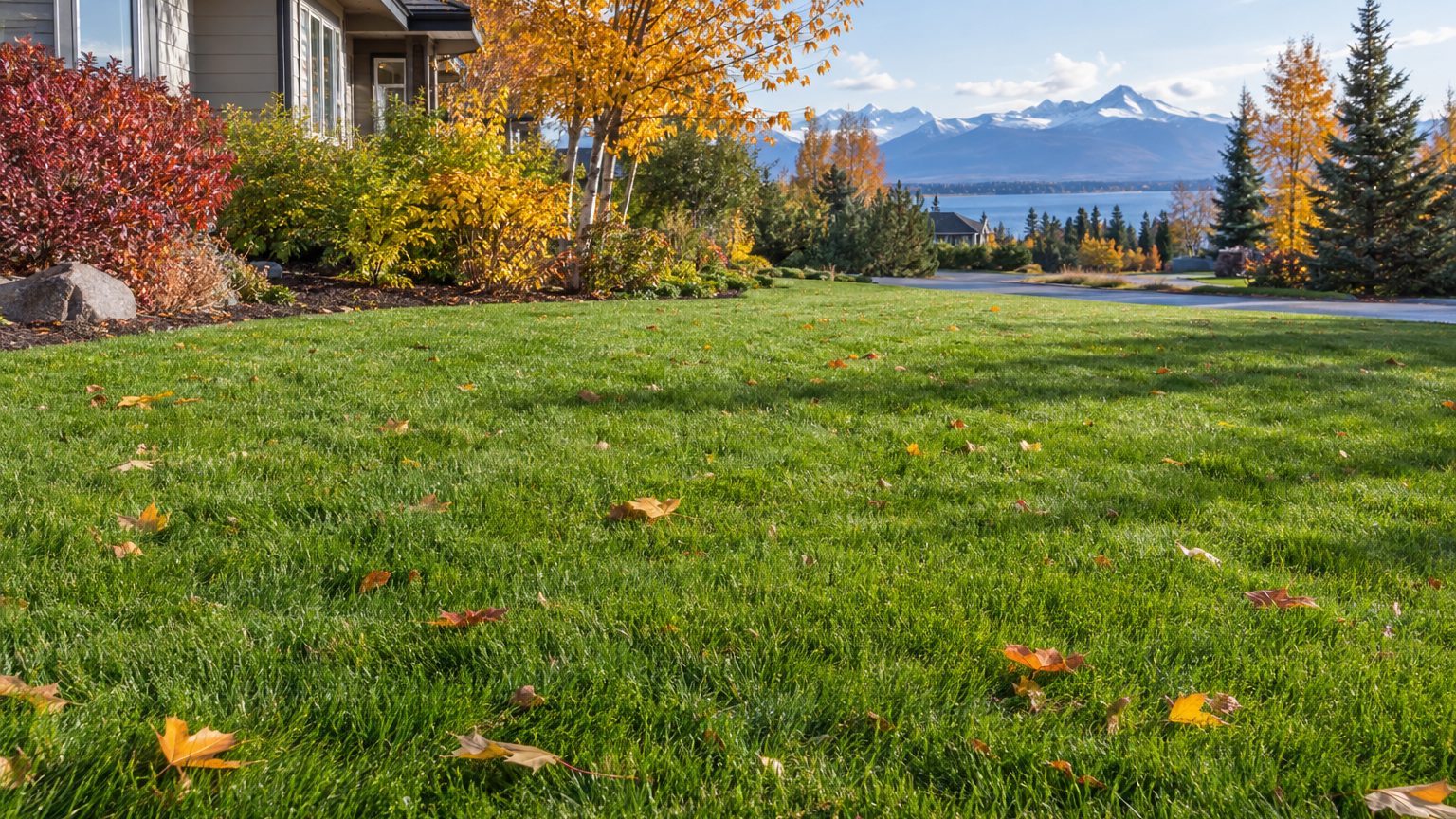
Spring in an Alaska yard begins with meltwater and matted, tan grass, and the lawn year is short enough that every task has to land in a narrow stretch of summer. Most of the work falls between June and September. The rest of the year the grass sleeps under snow or waits for the soil to warm.
What to Do Each Month in a Alaska Lawn

Alaska’s lawn work is packed into summer, so the months that matter are few and the others are for watching. The schedule below uses Anchorage as a reference, and seasons elsewhere may start later or end sooner.
| Month | In the lawn |
|---|---|
| January | Rest. The grass is dormant under snow, and there is nothing to do. |
| February | Rest. The grass is dormant, so keep heavy traffic and plowed snow piles off the turf where you can. |
| March | Rest. The lawn is still asleep, and you only watch how the snow melts and where water pools. |
| April | Rest. Thawing ground is soft, so stay off it and let the roots stay undisturbed. |
| May | Watch. The grass starts to wake, but the soil is cold and frost can still return, so wait before feeding or seeding. |
| June | Seed bare spots now that the ground has thawed. This is also when the first feeding goes on, once the grass is growing, while mowing and regular watering begin. |
| July | Mow and water through the warmest weeks. If you missed June, seeding still works in July. |
| August | Keep mowing and watering. Feeding also works in August, while the grass has time to use it. |
| September | Keep mowing while the grass still grows. Watering has done its job, and the lawn begins to slow down. |
| October | Rest. The grass is going dormant, and the season is too short for fall seeding. |
| November | Rest. Snow cover arrives and the lawn is dormant. |
| December | Rest. The grass is dormant, and the yard needs nothing from you. |
Seeding belongs to spring in Alaska. The season is too short for fall seeding, so a seed sown in autumn has no time to root before the ground freezes.
Alaska — the year and the numbers
- State
- Alaska
- USDA zones
- 1a-8a
- Last spring frost
- May 3 to May 12
- First fall frost
- September 22 to October 1
- Annual rain
- 16 in
- Lawn type
- cool-season
- Source
- NOAA NCEI 1991-2020 Climate Normals, 32F freeze probabilities · Anchorage
When Does the Lawn Season Start and End in Alaska?
Grass starts growing when the soil warms, not on a date. Cool-season lawn grasses wake and germinate with soil at 50 to 65 °F, and that warmth arrives late in Alaska. The snow can be gone for weeks before the ground is ready.
Frost tells you something different: how risky it is for young seedlings. In Anchorage, the last spring freeze usually lands between May 3 and May 12, so seed sown after that has fewer cold nights to survive.
In Anchorage, the first fall freeze usually arrives between September 22 and October 1. That ends the growing season for most lawns, and it is why mowing wraps up in September.
The frost-free stretch in Anchorage is short. Long summer daylight makes up some of what the season lacks in length, which is why a June seeding can still fill in well.
How the Lawn Calendar Shifts Across Alaska
Anchorage is among the mildest inhabited parts of the state, so the dates above shift once you leave Cook Inlet.
- Fairbanks and the Interior: The growing season is far shorter, and spring comes later. Seeding and feeding sit even more tightly in early summer, and the first hard frost comes sooner.
- Juneau and Southeast: The coast is milder and wetter, so the ground thaws earlier and the lawn stays active longer. Rain often covers part of the watering.
- Kenai Peninsula and the Matanuska Valley: These sit close to Anchorage, though cold pockets and higher ground wake later than the valley floors.
- Utqiagvik and the North Slope: Summers are very short and cool, and a lawn here is a challenge to establish at all.
When in doubt, let the soil in your own yard set the start, and treat the Anchorage months as a relatively mild reference rather than a statewide schedule.
Lawn Care Timing Mistakes to Avoid in Alaska
Seeding in Fall
A seed sown in September or October has little warmth left to germinate and almost no time to root. Winter then heaves or kills the seedlings. Seed in June instead, and use July if you miss it.
Feeding on Cold Soil
Fertilizer put down in May sits on soil too cold for the grass to use it, and rain or meltwater can wash it away. Wait until the lawn is visibly growing in June, then feed. Feeding also works in August.
Watering Late in the Season
Regular watering belongs to June through August, when heat and growth draw water. In September the cooling soil keeps moisture longer, and extra water leaves the grass soft heading into freeze-up. Let the rain handle it.
Where to Get Lawn Advice in Alaska
Local conditions vary a great deal, so it pays to ask someone who knows your corner of the state. Local help is worth a call or a visit.
- The University of Alaska Fairbanks Cooperative Extension Service has lawn and soil guidance written for northern conditions, and it is worth checking before the June work begins.
- Your local extension office can tell you how your district differs from Anchorage, so call it in spring before you buy seed or fertilizer.
Common Questions
Does Alaska’s Long Summer Daylight Help a Lawn Grow?
It does. The long days partly make up for the short season, so grass can grow quickly once the soil is warm. The cold at each end of summer still sets the limits.
Is a Brown Lawn in Autumn Dead?
Not usually. If the whole lawn fades evenly after cold nights, it is going dormant. If brown patches stay put in June after the soil warms, and the blades pull away from the soil easily, the grass is likely damaged.
What If You Miss the Seeding Window?
Wait for the following spring. Seed sown after July has too little time to establish, and the short season will not give it a second chance.