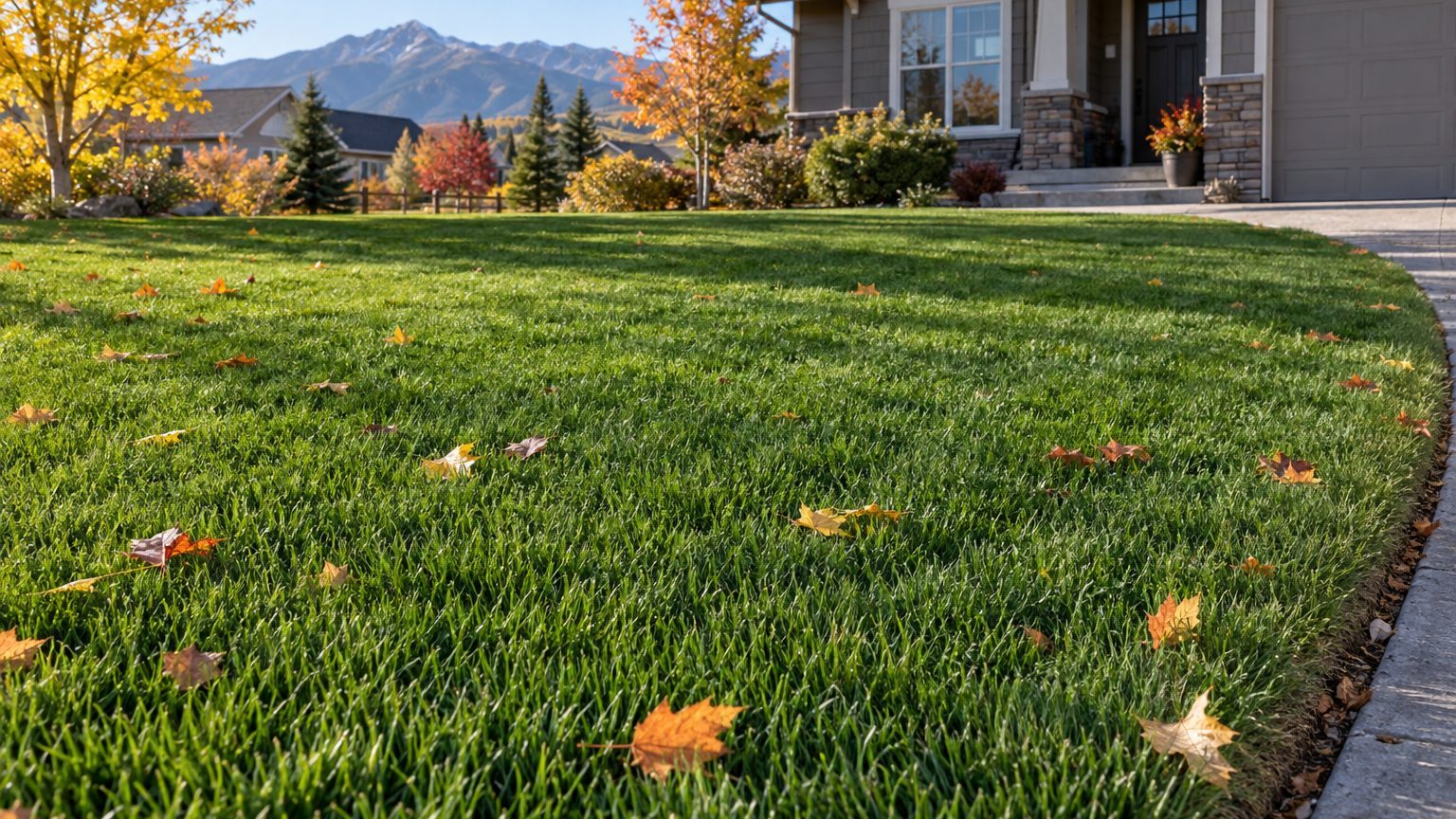
Montana lawns spend a long stretch under snow, then wake slowly once the ground thaws. Kentucky bluegrass and fine fescues handle that rhythm well, and most of the real work happens in late summer, when the soil is warm and the nights turn cool.
Frost Dates and Growing Season in Montana
Montana spans USDA hardiness zones 3a to 6a, and lawn-care dates vary widely across its valleys. For Billings, one of the milder valleys, the last spring frost falls between April 29 and May 10, and the first fall frost arrives between October 1 and October 14. Grass grows when the soil warms, not on a frost date, but those dates tell you when a new seedling is at risk and when seeding runs out of time.
- In early spring, the lawn is still dormant or just greening, and a late freeze will not hurt established grass, though it can nip tender new seedlings.
- Once the soil warms in late spring, growth takes off, mowing becomes regular, and this is the time to put down crabgrass preventer.
- Through June, July and August, watering matters most, because dry summer air pulls moisture from the lawn quickly.
- In late summer, August and September, cooler nights and warm soil make this the strongest window for seeding and for dethatching.
- In autumn, from October into November, the mower keeps working while the grass stores energy, and a final feeding in November helps roots before the ground freezes.
Mountain valleys elsewhere in the state can frost in any month, so treat these dates as a guide and watch your own yard.
Montana — the year and the numbers
- State
- Montana
- USDA zones
- 3a-6a
- Last spring frost
- April 29 to May 10
- First fall frost
- October 1 to October 14
- Annual rain
- 14 in
- Lawn type
- cool-season
- Source
- NOAA NCEI 1991-2020 Climate Normals, 32F freeze probabilities · Billings
Cool-Season or Warm-Season Grass in Montana?
Cool-season grass is the only sensible choice here. Long, hard winters and short summers suit grasses that grow in spring and fall and tolerate deep cold, while warm-season types are unreliable here.
The main cool-season lawn grasses in Montana differ mainly in how they handle wear, shade and dry spells.
| Grass | How it does in Montana | Why |
|---|---|---|
| Kentucky bluegrass | Dense, hardy turf in sun | Spreads by underground stems and fills in thin spots |
| Fine fescues (creeping red, chewings, hard) | Reliable in lean soil and some shade | Fine leaves, modest needs for water and feeding |
| Perennial ryegrass | Quick to sprout, a good mixing partner | Germinates fast and gives a new lawn early cover |
| Tall fescue | Coarser blades, sturdy under traffic | Deep roots cope with dry stretches |
Many Montana homeowners combine bluegrass with fine fescue or ryegrass so the lawn has a backup when one species struggles in a given spot.
When to Seed, Fertilize and Aerate a Lawn in Montana
Late summer carries most of the load. Seeding, aeration and dethatching cluster in August and September, when warm soil helps seed sprout and the coming cool weather lets seedlings root before winter.
Spring works as a fallback for several tasks, though crabgrass preventer is a spring job only. Mowing runs from April through November.
| Task | Best months in Montana | Why then |
|---|---|---|
| Seeding | August to September (April or May also works) | Warm soil and cooling air help seedlings root |
| Core aeration | September (April or May also works) | Grass recovers quickly and fills the holes |
| Dethatching | August to September (April also works) | Active growth repairs the disturbed turf |
| Fertilizing | September and November (May also works) | Roots store the nutrients going into winter |
| Crabgrass preventer | April (May also works) | Applied before weed seeds germinate |
| Watering | June to August | Summer heat and dry air draw down soil moisture |
If you miss the September window for seeding, the spring months still give seed a chance, though summer drought will test those seedlings sooner.
Lawn Problems to Watch for in Montana
Winter Kill and Snow Mold

When snow melts and you see matted, gray or straw-colored circles, or large dead patches that stay brown while the rest greens up, winter has done the damage. Long snow cover and cold, wet ground favor the trouble. Rake the patches gently to lift the matted blades, and reseed bare spots once the soil warms.
Dry Summer Browning
Grass that turns tan from midsummer on, especially along driveways and on slopes, is usually short of water. Dry air and sun dry these areas fastest. Water deeply during the summer months rather than sprinkling lightly, and keep the mower blade high so the soil stays shaded.
Thin Turf in Compacted Soil
Thin grass where foot traffic is heavy, with hard soil that a screwdriver barely penetrates, points to compaction. Core aeration in September opens the soil, and overseeding right afterward fills the gaps with new grass.
How Lawn Care Dates Change Across Montana
Elevation and latitude shift the calendar more than anything else in this large state, and the gap between valleys can be wide.
- Billings and the Yellowstone Valley: Lower elevation brings a longer season, so spring work starts earlier and seeding can run later into autumn.
- Bozeman and the Gallatin Valley: Higher ground and colder nights shorten the season, so spring tasks wait a bit longer and late-summer seeding should start on the early side.
- Flathead Valley and Kalispell: Lake influence and more moisture soften the dry summers, though cold air still settles into the valley and can bring frost late.
- Missoula and the western valleys: Sheltered valley floors warm up sooner than the surrounding hills, but cold air pooling at night can still bring frost outside the usual window.
Watch the soil and the grass in your own yard, and shift the dates earlier or later to match.
Where to Get Lawn Advice in Montana
Local conditions vary so much between valleys that a nearby expert is worth a call. Montana State University Extension supports homeowners across the state.
- The extension website offers research-based lawn guidance for Montana conditions, useful before you choose seed or a fertilizer.
- Your county extension office can help with soil testing and with identifying a problem from a sample or photo.
Common Questions
Can You Grow a Lawn at High Elevation in Montana?
Yes, with hardy cool-season grasses such as Kentucky bluegrass and fine fescues. Expect a shorter season, slower spring growth and more attention to winter damage.
Is Spring a Bad Time to Seed a Montana Lawn?
Spring seeding works in April or May, but summer heat and dry weather arrive soon after, so new grass needs regular water. August and September give seedlings an easier start.
Do You Need to Water a Montana Lawn in Winter?
Watering matters most from June to August. Once the ground is frozen, there is nothing to apply, and winter care focuses on keeping heavy objects and foot traffic off dormant turf.