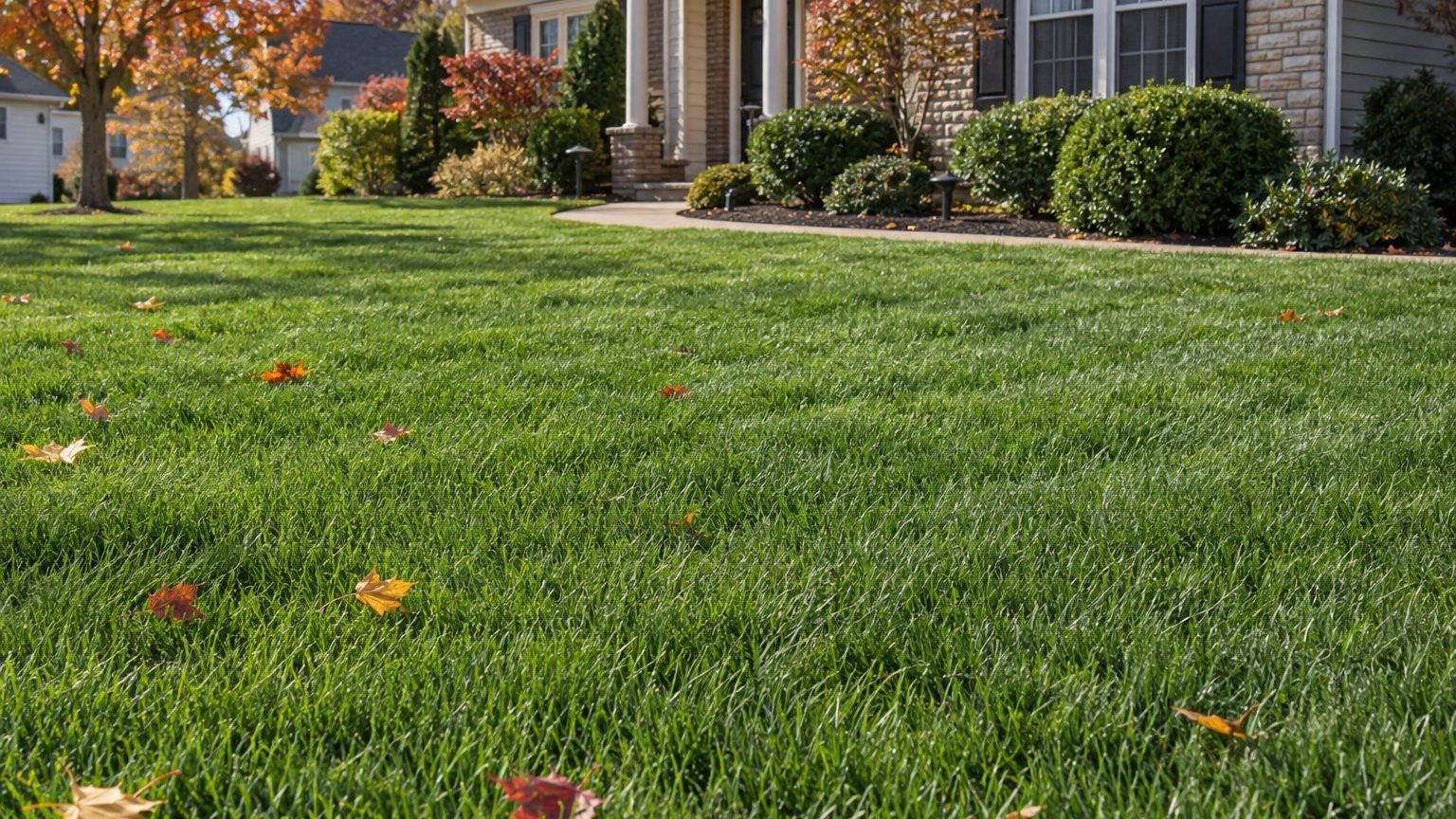
Ohio’s lawn season starts with grass that greens up slowly, races ahead once the soil warms, and finishes with autumn conditions that suit cool-season grass. Lawns in Ohio do best on a calendar built around spring and fall, with summer for mowing and watering and winter for rest.
Frost Dates and Growing Season in Ohio
The frost dates here are for Columbus, in USDA hardiness zone 6a. Across the state, USDA hardiness zones range from 5b to 6b. Grass growth follows soil warmth, not the calendar, but frost dates tell you when a young seedling is at risk and when seeding time runs out.
- In Columbus, in early spring, the last frost usually falls between May 5 and May 15, so a lawn seeded in April can still meet a frost and needs watching.
- Once the soil warms in April and May, grass leaves its slow start behind, mowing begins and crabgrass preventer goes down before weeds sprout.
- Through June, July and August, growth slows in the heat, so water deeply and mow high while keeping up with regular mowing.
- In Columbus, in late summer and early fall, the first frost arrives between October 5 and October 15, so seed sown in August and September has time to root before cold weather.
- From October into November, mowing continues as long as the grass grows, and a final feeding in November prepares roots for winter.
A seeding that misses the fall window can still work in spring, but it faces summer heat with shallow roots.
Ohio — the year and the numbers
- State
- Ohio
- USDA zones
- 5b-6b
- Last spring frost
- May 5 to May 15
- First fall frost
- October 5 to October 15
- Annual rain
- 42 in
- Lawn type
- cool-season
- Source
- Ohio State University Extension — Ohio Gardening Calendar · Columbus
Cool-Season or Warm-Season Grass in Ohio?
Cool-season grass is the answer in Ohio. Cold winters and humid summers favor grasses that grow hard in spring and fall, then rest in July heat. Warm-season grasses would turn brown for much of the year here.
Each of the common choices handles heat, shade and wear a little differently, and mixes are common.
| Grass | How it does in Ohio | Why |
|---|---|---|
| Kentucky bluegrass | Dense, self-repairing lawn | Cool-season grass that thrives in sun and cold winters |
| Tall fescue | Handles summer stress well | Deep roots help it ride out dry spells |
| Perennial ryegrass | Sprouts quickly | Useful for fast cover and often blended with bluegrass |
| Fine fescues | Good in shade and poor soil | Creeping red, chewings and hard fescue need less feeding |
Pick by the light your yard gets, since a shaded lot and a sunny one rarely want the same seed.
When to Seed, Fertilize and Aerate a Lawn in Ohio
Early fall is the busiest stretch for lawn work in Ohio. Warm soil and cooling air help seed sprout, while weeds slow down.
If you miss the fall window, spring works as a fallback for most jobs.
| Task | Recommended timing in Ohio | Why then |
|---|---|---|
| Seeding | August, September (April, May also work) | Warm soil and cool air help seedlings root |
| Core aeration | September (April or May also work) | Grass is growing and recovers quickly |
| Fertilizing | September, November (May also works) | Feeds roots instead of pushing leaf growth |
| Crabgrass preventer | April (May also works) | Goes down before weed seeds germinate |
| Dethatching | August, September (April also works) | Lawn bounces back during active growth |
| Watering | June, July, August | Summer heat dries the soil fastest |
Mowing runs from April through November, so the mower is rarely idle for long.
Lawn Problems to Watch for in Ohio
Brown Patches in Summer Heat

Cool-season grass slows in July and August, and dry spells turn it tan. Watch for patches that stay dry-looking and crunchy underfoot. Water deeply during June, July and August, and mow high so the blades shade the soil.
Thin Grass Under Trees
Bare, sparse turf beneath maples and oaks means shade and root competition. Check whether the thin area sits under the canopy and stays dark most of the day. Fine fescues tolerate it better, and seeding in August or September gives them a head start.
Crabgrass in Thin Areas
Pale green, spreading clumps in sunny, bare spots usually mean crabgrass. A preventer in April stops seeds from sprouting, and a thicker lawn from fall seeding crowds out what is left.
How Lawn Care Dates Change Across Ohio
Ohio is not uniform, and lake influence and latitude move the season a little in either direction.
- Lake Erie shore: Water cools spring air and warms fall air, so greening comes a bit later but fall growth lingers.
- Cleveland and the northeast: Cooler weather and later warming push spring jobs a little later and make early fall seeding more valuable.
- Cincinnati and the Ohio River valley: Warmer soil arrives sooner in spring, and frost holds off a bit longer in autumn.
Watch the soil and the weather in your own yard and adjust the dates to match.
Where to Get Lawn Advice in Ohio
Local experts know your soil and your weather, and they can settle questions that general advice cannot.
- Ohio State University Extension offers lawn guidance for the whole state, so check it before you buy seed or fertilizer.
- Your county extension office can arrange a soil test, which is worth doing before a fall feeding.
- Bring a sample of a struggling patch to the county office for diagnosis.
Common Questions
Can You Seed a Lawn in Ohio in Spring?
Yes, April and May both work, though fall seeding gives roots more time before summer heat arrives.
Should You Stop Mowing in Late Fall?
Keep mowing while the grass grows, which can run through November.
Is Dethatching Necessary Every Year?
Only when the thatch layer gets thick and spongy. If the turf feels firm, skip it. If it feels bouncy, dethatch in August or September.