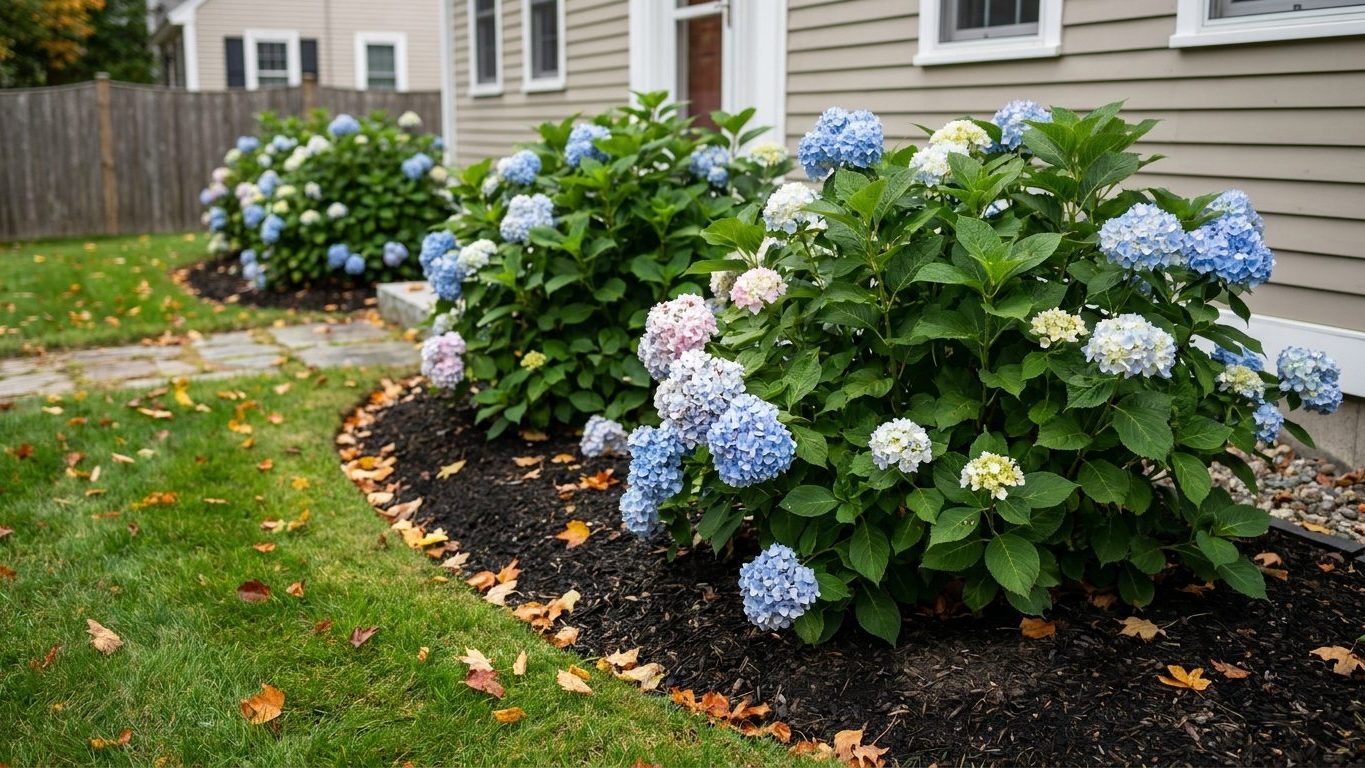
Hydrangeas in New Hampshire go in the ground during April, May, August, or September, and the safe pruning stretch for bigleaf varieties is limited to June and July. Near Manchester, the state’s reference city for frost data, the last spring frost falls between April 16 and April 27, and the first fall frost arrives between October 13 and October 26.
When to prune hydrangeas in New Hampshire: The Short Answer
New Hampshire hydrangea care follows a short growing season bounded by two frost windows, and each month asks for a different job.
- January: The shrub is fully dormant and needs no attention beyond checking that mulch hasn’t blown off the root zone. Skip pruning until the coldest stretch of winter passes.
- February: Buds stay tucked against the wood through this month, so it remains a hands-off period. Look for split bark from freeze-thaw cycles, but wait to act.
- March: This opens the first fertilize window listed for the state, so a balanced feed now gets nutrients into the soil before leaf-out. Hold off on planting since the ground is often still cold.
- April: NOAA NCEI U.S. Climate Normals 1991-2020 puts Manchester’s last spring frost window at April 16 to April 27, and April is also the earliest month on the state’s plant list. Set new shrubs in the ground only once that window has passed in your yard.
- May: May carries both a plant window and a second fertilize window, making it the busiest month for hydrangeas here. Newly planted shrubs need steady watering as they settle into the soil.
- June: June opens the prune-bigleaf window, the only safe stretch to shape bigleaf varieties without cutting off next year’s buds. Wait until stems fully leaf out before cutting anything back.
- July: Pruning bigleaf hydrangeas continues through July, and it’s also the third fertilize month on the calendar. Deep watering matters most now as summer heat peaks.
- August: August reopens the plant window, a good stretch for adding shrubs once the worst heat has eased. Keep new roots moist through any dry spell.
- September: September closes out the plant window, giving roots several weeks to settle before the ground cools. Avoid heavy pruning now since new growth won’t harden off in time.
- October: The first fall frost window runs October 13 to October 26 at the reference station, marking the shift toward dormancy. Stop fertilizing and let the plant wind down naturally.
- November: Once leaves drop, a layer of mulch over the root zone helps buffer the hardest freezes ahead. This is not a month for pruning or feeding.
- December: The shrub sits fully dormant and needs nothing beyond an occasional check that snow load isn’t bending branches. Save any structural work for the coming prune window.
New Hampshire’s frost swings by roughly two weeks in either direction across the state, and the USDA Plant Hardiness Zone Map spans zone 3b to 6a, so a shrub that thrives near Manchester may need extra protection in the White Mountains.
New Hampshire — the year and the numbers
- State
- New Hampshire
- USDA zones
- 3b-6a
- Last spring frost
- April 16 to April 27
- First fall frost
- October 13 to October 26
- Annual rain
- 40 in
- Lawn zone
- cool-season
- Source
- NOAA NCEI U.S. Climate Normals 1991-2020, 32F freeze probabilities · Manchester
How to Work Out the Dates for Your Own Yard
Your yard’s actual dates depend on how far your address sits from the reference weather station, and a few checks close that gap.
- Check your last frost against Manchester’s window: NOAA NCEI U.S. Climate Normals 1991-2020 puts Manchester’s last spring frost window at April 16 to April 27, and inland or elevated yards often run one to two weeks later.
- Push your fall frost earlier if you’re rural: The first fall frost window sits at October 13 to October 26 at the airport station, and suburban or wooded lots typically see frost arrive earlier than that.
- Match your zone to the state range: The state spans hardiness zone 3b to 6a, so a shrub rated for the warmer end may struggle in a colder pocket.
- Count backward from your plant window: The state’s plant windows fall in April, May, August, and September, so choose the slot that lands safely after your local last frost.
- Watch the wood, not the calendar, for pruning: The prune window for bigleaf varieties runs June and July, timed to when new leaves reveal which stems actually survived winter.
Manchester’s frost swings, this state’s zone range, and the plant windows above give you three checks. Line them up and you’ll land on dates that fit your own yard instead of the airport’s.
New Hampshire North to South: How the Dates Shift
Manchester’s numbers are a starting point, but the state’s terrain pulls those windows in different directions depending on where you garden.
- The North Country (high elevation, near the White Mountains): frost lingers latest here, often pushing safe planting toward the back half of the spring window.
- The Lakes Region (shoreline towns around the state’s larger lakes): open water moderates swings, buffering both the last spring frost and the first fall frost by a few days compared with inland yards.
- The Seacoast (coastal towns near the ocean): the mildest corner of the state, where the growing season stretches longest and frost arrives latest in fall.
- The Merrimack Valley and South (nearest the reference city): dates track closest to the Manchester figures used above, since this is where the weather station sits.
For the full zone breakdown and a wider look at frost timing across the state, the New Hampshire hydrangea guide covers the territory-wide picture.
Mistakes New Hampshire Punishes
Pruning bigleaf on the wrong schedule
Cutting back bigleaf hydrangeas in fall or early spring removes the buds that already formed for next year, since bigleaf blooms on old wood. Wait for the June to July prune window listed for this state, once new leaves show which stems survived winter, before removing anything.
Planting before the last frost clears
NOAA NCEI U.S. Climate Normals 1991-2020 puts Manchester’s last spring frost window at April 16 to April 27, and garden centers often stock hydrangeas before that window closes. Hold new shrubs in a sheltered spot until your yard clears frost, then plant during April or May.
Skipping mulch before the ground freezes
Skipping mulch before the first fall frost window of October 13 to October 26 leaves shallow roots exposed to sudden hard freezes, especially in the colder pockets of the state. Pile mulch over the root zone in November, once leaves drop, rather than waiting for the ground to freeze solid.
New Hampshire Extension Offices and County Contacts
Manchester’s frost dates and the state’s zone range are a starting point, not a guarantee for your county.
- Your state page: the frost dates and the pruning window for New Hampshire in one place.
- Which ones hold up here: hydrangea varieties matched to this state’s zone range.
- UNH Extension: county offices for soil tests and local planting advice.
Common questions
Can I plant hydrangeas in New Hampshire in fall?
Yes, September falls inside the state’s plant window, though roots need several weeks of mild soil before the first fall frost window of October 13 to October 26 arrives at the reference station.
Do I need to cover hydrangeas for winter in New Hampshire?
A layer of mulch over the root zone helps across most of the state, and it matters most for bigleaf varieties, which set next year’s buds on wood that has to survive winter intact.
Why didn’t my hydrangea bloom this year?
A late spring frost inside the April 16 to April 27 window, or a prune done outside the June to July window, are the two most common reasons bigleaf hydrangeas skip a bloom season here.