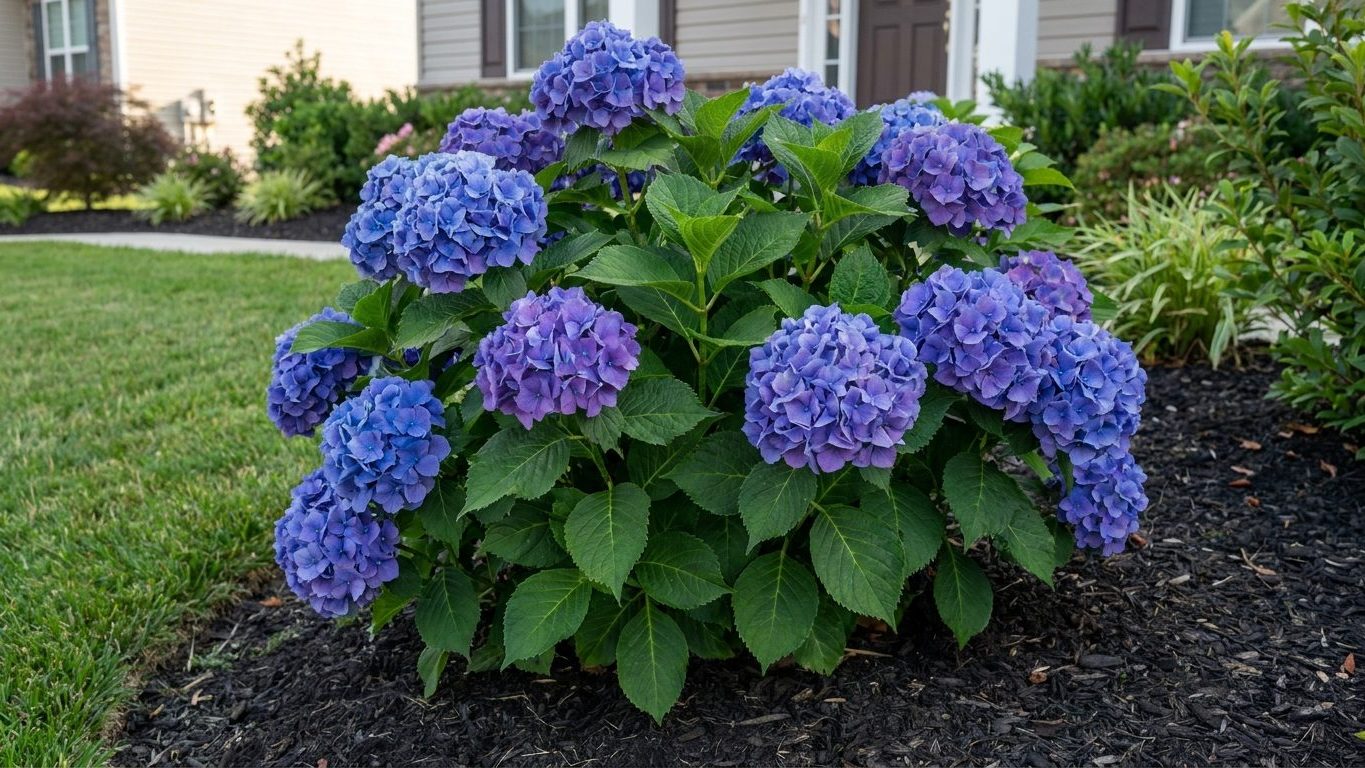
In Wilmington, the safest planting window runs April through May, once the last spring frost has passed, or again in August and September as the fall planting window opens. Pruning bigleaf hydrangeas belongs in June and July, right after bloom, never before. Everything else, soil prep, variety choice, county timing, depends on where in Delaware you garden.
When to prune hydrangeas in Delaware: The Short Answer
NOAA NCEI 1991-2020 Climate Normals put Wilmington’s last spring frost at April 3 to April 14, the hinge every month below turns on.
- January: Hydrangeas sit fully dormant. Skip pruning and planting, and just check that mulch hasn’t washed away from the base.
- February: Order bare-root or potted stock now. The frost window hasn’t closed, so April is still the earliest safe planting date.
- March: This is the first fertilize month of the year. Feed established shrubs once new growth starts, but hold off planting until frost risk clears.
- April: The planting window opens as the last frost passes. Get root balls in the ground early in the month once soil has warmed.
- May: Fertilize and plant both apply this month. It’s the widest window for adding a new hydrangea and feeding older ones at once.
- June: Prune bigleaf hydrangeas now, right after the first flush fades. Cut spent blooms back to the first healthy bud below the flower.
- July: The pruning window closes at month’s end. This is also the second fertilize month, so a light feed can follow any late cuts.
- August: A second planting window opens. New shrubs set roots before fall dormancy without fighting the hardest summer heat.
- September: Planting continues through this month. It’s the last comfortable stretch to get shrubs settled before frost returns.
- October: The first fall frost lands between October 26 and November 7 in Wilmington. Hold off on pruning and let the plant go dormant on its own.
- November: Mulch over the root zone once the ground cools. This matters most for bigleaf varieties, which set next year’s buds on old wood.
- December: Leave the shrub alone. Dormant hydrangeas need no fertilizer, no water beyond rain, and no pruning until next summer.
That’s the state-level rhythm. Your own yard, your soil, and which side of Delaware you’re on can shift these dates by a week or two, which is exactly what the next section works out.
Delaware — the year and the numbers
- State
- Delaware
- USDA zones
- 7a-8a
- Last spring frost
- April 3 to April 14
- First fall frost
- October 26 to November 7
- Annual rain
- 45 in
- Lawn zone
- cool-season
- Source
- NOAA NCEI 1991-2020 Climate Normals, 32F freeze probabilities · Wilmington
How to Work Out the Dates for Your Own Yard
Frost windows are ranges, not single dates, so working out your own planting week means counting from the range that applies to your county.
- Start with the reference window: Wilmington’s last spring frost falls April 3 to April 14, per NOAA NCEI 1991-2020 Climate Normals, so treat mid-April as the safe line for planting in town.
- Add a week or two for outlying yards: suburban and rural gardens away from the airport station typically see frost linger later in spring and arrive earlier in fall, sometimes by one to two weeks.
- Check your USDA hardiness zone: the USDA Plant Hardiness Zone Map puts Delaware between 7a and 8a, and a shrub rated for a lower zone carries more cushion against a stray late freeze.
- Match the gesture to the calendar window: planting fits April, May, August, and September, fertilizing fits March, May, and July, and bigleaf pruning fits June and July only.
- Watch the extended forecast before you commit: a ten-day forecast with lows staying above 40°F is a better planting signal than the calendar date alone, especially in early April.
- Note your microclimate: a south-facing bed against a house wall warms earlier than an open lawn, which can push your personal window a few days ahead of the county average.
None of this replaces watching your own thermometer. The reference dates give you a starting range, and a week of mild nights or one hard freeze can move your actual planting day either direction.
Delaware North to South: How the Dates Shift
Delaware is small, but three counties don’t share one hydrangea calendar, and coastal air behaves differently than inland clay.
- New Castle County and the north (Wilmington, Newark, Bear): closest to the reference station, so the frost dates above apply most directly here.
- Kent County and the middle (Dover, Camden, Smyrna): more open farmland cools faster on clear nights, so treat the spring planting window as starting a few days later than Wilmington’s.
- Sussex County and the coast (Rehoboth Beach, Lewes, Georgetown): ocean proximity moderates both ends of the season, often pushing the first fall frost later than inland counties see.
Whichever county you garden in, the state guide carries the frost-date table and hardiness zone context that these county notes build on.
Mistakes Delaware Punishes
Pruning bigleaf in fall or spring
Cutting back bigleaf hydrangeas outside June and July removes next year’s flower buds, since they set bloom on old wood. Stick to the prune window right after the first flush fades, and skip any cleanup pruning in October or November when the plant should just go dormant.
Planting during the first warm week of April
NOAA NCEI 1991-2020 Climate Normals put the last frost window at April 3 to April 14 in Wilmington, and a shrub planted the first mild weekend can still catch a hard freeze. Wait until the range has fully passed in your county, or hold the plant until May.
Skipping the second fertilize round
Feeding only in spring leaves shrubs short on nutrients through a long Delaware summer. The calendar sets fertilize months at March, May, and July, and missing July often shows up as weak fall color and thin buds the following spring.
Delaware Extension Offices and County Contacts
The frost dates and zone above are a starting point. University of Delaware Cooperative Extension and your county office add soil testing and pest identification specific to your yard.
- Your state page: the frost dates and the pruning window where you live.
- Which ones hold up here: bigleaf, panicle, and other varieties ranked from safest to riskiest for Delaware winters.
- What’s going wrong: the pests and problems that show up on Delaware hydrangeas, season by season.
Common questions
Can I plant hydrangeas in Delaware in early spring?
Wait until Wilmington’s last frost window, April 3 to April 14, has passed. Planting before that risks a young root ball meeting a hard freeze it hasn’t hardened off against yet.
What month should I prune hydrangeas in Delaware?
For bigleaf hydrangeas, prune in June or July only, right after the first bloom fades. Pruning outside that window cuts off next year’s flower buds since they form on old wood.
Do hydrangeas survive Delaware winters without protection?
Most established shrubs handle Delaware’s 7a to 8a hardiness range fine once mulched. A layer of mulch over the root zone before the first fall frost, which lands October 26 to November 7 in Wilmington, protects the roots that carry the plant through winter.