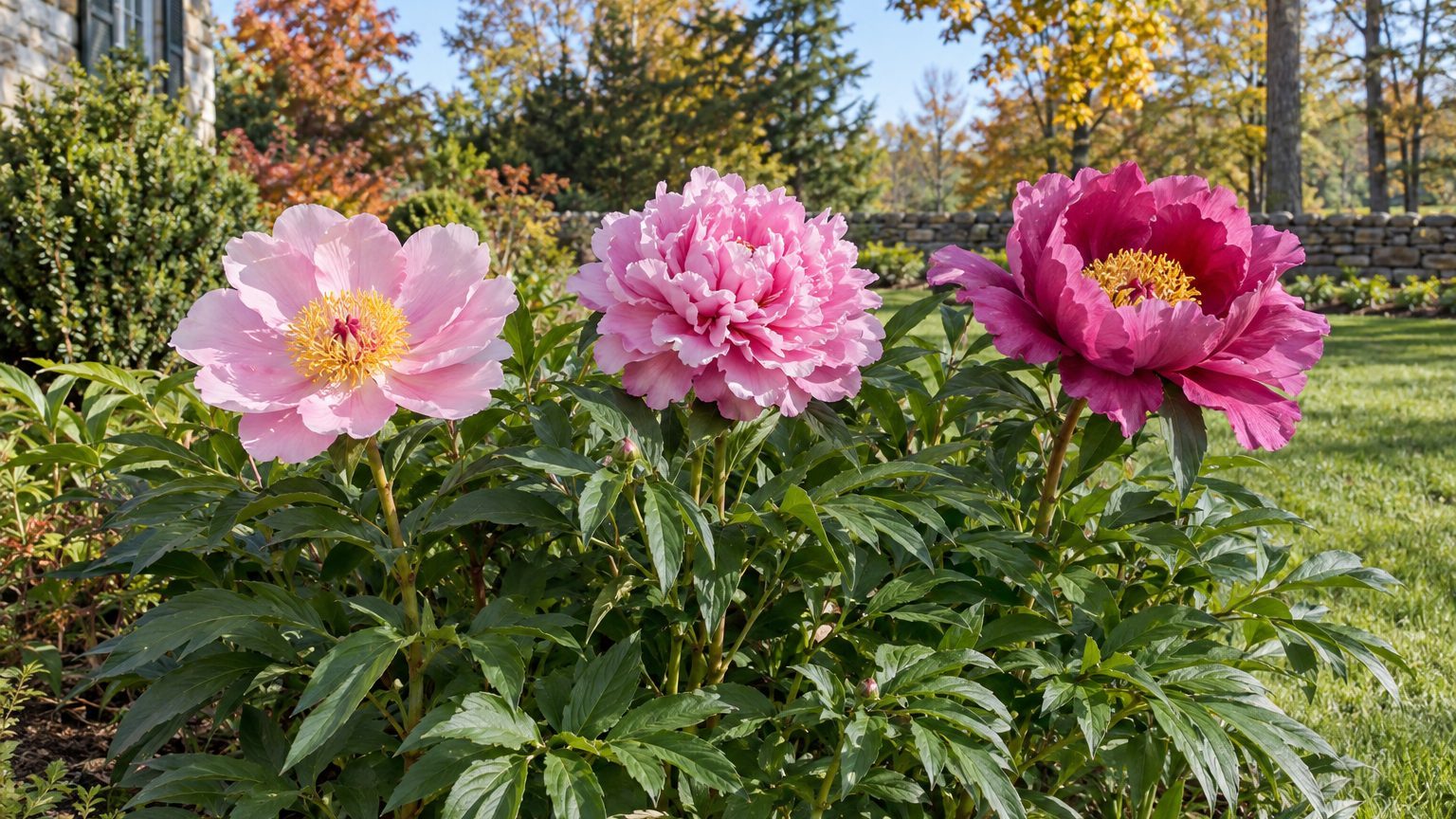
Herbaceous peonies disappear to bare ground each winter, then push new growth up through the soil in spring. Pennsylvania winters give them the cold rest they need, so the real choice is the type: garden, intersectional, tree or woodland. Each one fits a different spot and a different amount of care.
Best Peonies to Grow in Pennsylvania

Pennsylvania suits the common garden peony, intersectional peonies, tree peonies, woodland peonies and the fernleaf peony, because the winters are cold enough to give them the rest they need to flower. Peonies bloom poorly in mild-winter climates, so cold works in your favor here.
Common Garden Peony

The common garden peony (P. lactiflora) is the standard herbaceous form in most home gardens, and it comes in many flower forms and colors.
Each fall it dies back to the ground and new growth emerges in spring. With nothing exposed above the soil, it rides out Pennsylvania cold without fuss.
Intersectional Peony

Also called the Itoh, this peony is a hybrid of the garden and tree peonies. Herbaceous and intersectional types are the easiest to grow and share the same culture, so the same routine works for a mixed planting.
Tree Peony
Tree peonies are woody shrubs that go dormant over winter, then renew their growth each spring on woody stems. They suit a gardener who wants a permanent shrub-like frame in the bed.
A tree peony keeps its woody stems and is never cut back, so leave the framework standing through winter.
Woodland Peony
The woodland peonies (P. japonica and P. obovata) are suited to shade gardeners. If your yard has more dappled light under trees than open sun, this is the group to look at first.
Fernleaf Peony
The fernleaf peony (P. tenuifolia) is noted for finely cut, fern-like foliage and crimson red flowers. It gives a bed texture before and after the bloom.
Red European Peonies
P. officinalis and P. peregrina are native to Europe and are desired for their red flowers. Look for them when a deep red is what you are after.
Pennsylvania — the year and the numbers
- State
- Pennsylvania
- USDA zones
- 5a-7b
- Last spring frost
- March 29 to April 6
- First fall frost
- November 5 to November 16
- Annual rain
- 44 in
- Lawn zone
- transition-season
- Source
- NOAA NCEI U.S. Climate Normals 1991-2020, 32F freeze probabilities · Philadelphia
How to Choose a Peony for a Pennsylvania Garden
Pennsylvania runs from USDA hardiness zone 5a to 7b, so a yard in the northern tier faces a different winter than one near Philadelphia. Match the peony to your light, your time and your winter, and the plant does the rest.
| Your situation | What suits it in Pennsylvania | Why |
|---|---|---|
| Very cold winter | Herbaceous garden peony | It dies back to the ground each fall and regrows in spring |
| Little time for care | Herbaceous or intersectional peony | They are the easiest to grow and share the same culture |
| Shady yard | Woodland peony | P. japonica and P. obovata are suited to shade |
| Want a permanent woody frame | Tree peony | It keeps woody stems and renews growth from them |
| Mildest, warmest corner | Any type, with attention to winter cold | Peonies need a cold winter rest to flower |
Flower shape is a matter of taste. Single, Japanese, anemone, semi-double, double and bomb-double forms all exist, so pick the look you like within the type that fits your yard.
Which Peonies Suit Different Parts of Pennsylvania
Spring arrives on a different schedule across the state, and winter cold varies with it, which shifts what you can expect from the same plant.
- Philadelphia area: Spring arrives earlier here than in the north of the state. Peonies still get the cold winter rest they need here.
- Northern tier: Winters are colder and spring comes later. Herbaceous and intersectional peonies are comfortable here because they retreat underground for the cold months.
- Alleghenies: Elevation brings a later spring, so blooms open later than in the southeast. Woodland peonies fit well in shaded beds here.
Choose by your own microclimate as much as by region.
Peony Buying Mistakes to Avoid in Pennsylvania
Expecting Flowers the First Spring
A newly planted or transplanted peony may not bloom the first spring. Buyers who expect a full show often decide the plant has failed and dig it up. Give the plant time to establish before judging it.
Planting the Eyes Too Deep
Planting too deep can leave a healthy peony leafy but flowerless. Keep the eyes near the soil surface.
Buying a Pot Without Its Adult Size
A small potted peony tells you little about the clump it will become, and peonies are long-lived, so a poor placement lasts for years. Check the mature size on the tag before you buy, and leave room for the full clump, since moving an established peony later can set back flowering.
Where to Get Peony Advice in Pennsylvania
Penn State Extension publishes peony guidance written for Pennsylvania yards, and your county office can answer questions about your own soil and site.
- The extension service’s peony pages describe the main species and garden types, and they are worth reading before you order plants.
- Your county extension office can help with a struggling clump or a placement question, so call before you dig.
- Bring a photo of the planting spot, and ask about shade and drainage before you buy.
Common Questions
When Do Peonies Bloom in Pennsylvania?
Peonies bloom from May into June, depending on the type and the season. Warmer spots in the southeast open earlier than cold northern and mountain yards.
When Should You Plant or Divide Peonies in Pennsylvania?
Plant or divide in September, or October at the latest. Early fall lets the roots settle before the ground freezes, so they can start growth in spring.
When Should You Cut Back Peonies in Pennsylvania?
Cut herbaceous peonies back in October or November, after frost has taken the foliage. Early spring, in March or April, is the other window if you prefer to wait.