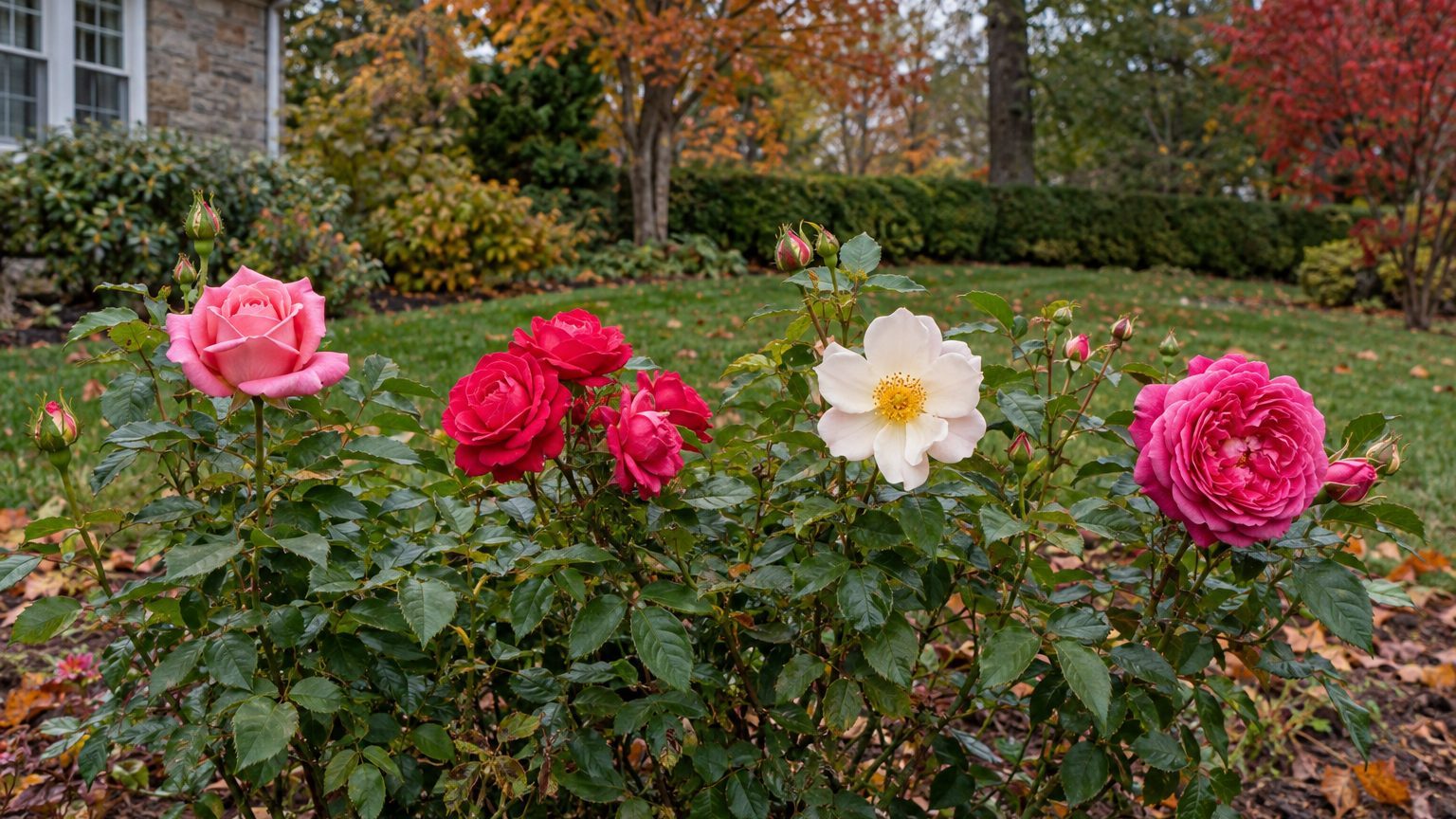
In late winter, the buds on bare rose canes begin to swell, and that is when Oregon gardeners settle what goes into the beds. The roses that hold up here are the hardy kinds: shrub roses, rugosas, species roses and old garden roses. Disease-resistant varieties are a sensible choice west of the Cascades as well.
Best Roses to Grow in Oregon

Hardy shrub roses, species roses and many old garden roses do best in Oregon. They take cold winters in stride, and the more disease-resistant types are useful where black spot is a concern. The state spans USDA hardiness zones 4a to 9b, so the first step is to pick a rose suited to your own zone.
Shrub Roses
Often called hardy shrub roses, these can look like wild roses, with roselike blooms and scent. They do not demand as much care as other roses, which suits a busy yard. Check that the variety is rated for your zone and carries good disease resistance.
Rugosa Roses
Rugosas belong to the same tough shrub group and tolerate cold well. Their plain, wild-rose look fits informal borders and hedges. They are also among the roses that root more easily from cuttings, if you want to share a plant with a neighbor.
Species Roses
Species roses are generally the most disease-resistant roses, which matters where summer humidity invites black spot. They live unharmed through very cold winters. Give them room, since they grow like the wild roses they are.
Old Garden Roses
Many old garden roses are hardy and come through severe winters without damage. Once-blooming types flower on last year’s wood, so prune them right after they bloom, never in early spring. Cutting them in spring removes the buds that would have carried the year’s flowers.
Climbing Roses
A climbing rose builds a framework of stiff, mature wood that is typically permanent, with medium to large flowers carried along it. Many climbers bloom once a year, so they follow the same rule as old garden roses. Plant against a sturdy support and protect the framework through cold spells.
Miniature Roses
Miniatures are more susceptible to black spot than other types, though a few varieties resist it reliably. Choose by resistance, not by flower color alone. Space them about 2 to 2.5 feet apart, depending on variety, so air moves between the plants.
Oregon — the year and the numbers
- State
- Oregon
- USDA zones
- 4a-9b
- Last spring frost
- March 6 to March 21
- First fall frost
- November 11 to November 27
- Annual rain
- 37 in
- Lawn zone
- transition-season
- Source
- NOAA NCEI U.S. Climate Normals 1991-2020, 32F freeze probabilities · Portland
How to Choose a Rose for an Oregon Garden
Start with the worst thing your yard does to a rose, whether that is a hard freeze, a wet summer or a dry bank. Then pick the type that handles it. Hardiness zone and disease resistance should both be on the plant tag before you buy.
| Your situation | What suits it in Oregon | Why |
|---|---|---|
| Very cold winters | Species, shrub and old garden roses | They are hardy and live through severe winters unharmed |
| Sites prone to black spot | Species roses and disease-resistant varieties | Species roses are generally the most resistant to leaf disease |
| Heat and drought | A locally recommended, heat- and drought-tolerant rose | Match the plant to the site’s sun, drainage and summer watering. |
| Little time | Shrub or rugosa roses | They do not require as much care as other roses |
| Small space | Miniature roses | They fit at 2 to 2.5 feet apart, but pick a black spot resistant variety |
Repeat-blooming roses such as hybrid teas, floribundas and modern shrub roses are pruned in February or March, and April works too. West of the Cascades, mid-February to early March is the usual window, and in central Oregon pruning waits until late April. Cutting before a hard freeze can cause die-back that means pruning again.
Which Roses Suit Different Parts of Oregon
Oregon splits into very different rose country, and the main divide runs along the Cascades.
- Willamette Valley: Winters are gentler, and resistance to black spot is worth checking. Repeat-blooming roses are pruned from mid-February to early March, when the weather favors regrowth.
- Western Oregon gardens: Choose roses suited to the site’s winter cold and any history of black spot.
- Central Oregon: This is high desert with a much shorter season, so hardy shrub, rugosa and species roses make the safest picks. Pruning waits until late April, since early growth risks a frost nip.
Eastern Oregon is also high desert, so choose as you would in central Oregon.
Rose Buying Mistakes to Avoid in Oregon
Tender Types in Cold Areas
Buying a fragile rose for a cold part of the state means replacing it after a hard winter. Match the plant to your USDA zone, and lean toward species, shrub or old garden roses where winters bite. Tender shrubs that you keep anyway need protection.
Disease-Prone Varieties
A variety prone to black spot can struggle west of the Cascades, and miniatures are especially susceptible. The cost is yellowing leaves and constant spraying. Look for varieties labeled disease-resistant, and ask for a resistance list before you buy.
Grafted Roses Without Protection
A grafted or tender rose planted in a cold area and left bare can be hurt by freezing weather. In cold areas only, mound loose mulch such as shredded leaves, compost, pine needles or sawdust over the base of the plant. Do it in November or December, after the plant is dormant and before a hard freeze.
Where to Get Rose Advice in Oregon
Oregon State University Extension publishes guides on roses and pruning for western and central Oregon. Your county extension office can match advice to your elevation and soil.
- The extension website has pruning and planting guides, best read in winter before the buds swell.
- Your county extension office answers local questions, including which varieties suit your site.
- Master gardener volunteers can help diagnose problems when a plant looks off in summer.
Common Questions
When Should You Feed Roses in Oregon?
Feed from bud break, with the first application in March, and continue every four to six weeks through July. August is also fine, but stop in late summer as the roses go dormant.
When Can You Plant Roses in Oregon?
Bare-root roses go in during February or March, while the plants are dormant. Potted roses can be planted later, from spring until early summer, before the heat of midsummer arrives.
How Far Apart Should You Plant Roses?
Grandiflora, floribunda and hybrid teas need about 2.5 to 3 feet between plants. Closer spacing traps moisture and invites leaf disease.