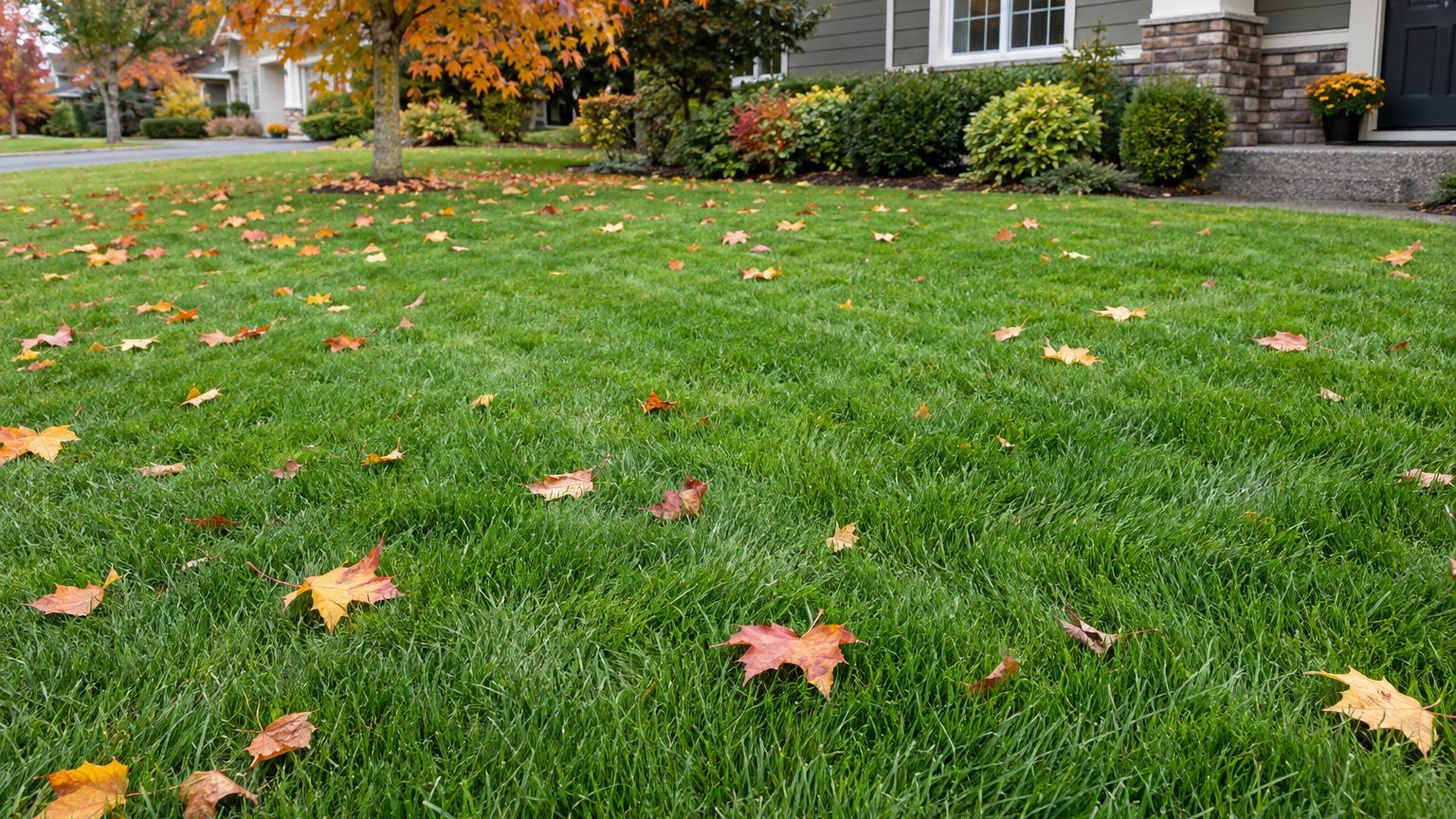
Oregon lawns green up fast in a mild, wet spring and spend the long dry summer asking for water. Lawn work picks up in April and May, then again from August through November.
What to Do Each Month in an Oregon Lawn

Cool-season grass sets the rhythm here, so the big jobs cluster in spring and early fall. Mowing runs from April through November, while feeding, seeding, and aeration have narrower windows.
| Month | In the lawn |
|---|---|
| January | Rest. The grass is dormant or barely moving, so keep foot traffic off soggy, frosty turf. |
| February | Rest. Soils are cold and wet, so wait for the spring seeding window. Clear fallen branches and plan the season. |
| March | Rest, mostly. Growth is just stirring, so hold off on mowing and feeding until the grass is clearly moving. |
| April | Start mowing. Put down crabgrass preventer now, before the weed seed sprouts. Core aeration, dethatching and seeding also work this month if fall slipped by. |
| May | Mow regularly as growth peaks. If you missed April, crabgrass preventer still works, and so does a spring feeding, aeration or patch seeding. |
| June | Mow and begin watering as the dry season sets in. Deep, infrequent soaking builds roots better than light sprinkles. |
| July | Water through the dry stretch and mow. Raise the mower a notch so shade protects the soil. |
| August | Keep watering and mowing. Dethatching and seeding open now, since warm soil starts new seed quickly. |
| September | The busiest month. Core aerate, dethatch, seed and fertilize while soil is warm and rain returns. |
| October | Keep mowing as growth slows. Rake leaves off the grass so they do not smother it. |
| November | Give a last feeding to carry roots through winter, then finish the final mowings. |
| December | Rest. Growth is slow, so stay off frozen or soggy turf and keep leaves cleared. |
West of the Cascades, rain often handles watering outside June through August, so a hose is mainly a summer tool. Missed a fall job? Spring covers seeding and aeration, though fall gives better results.
Oregon — the year and the numbers
- State
- Oregon
- USDA zones
- 4a-9b
- Last spring frost
- March 6 to March 21
- First fall frost
- November 11 to November 27
- Annual rain
- 37 in
- Lawn type
- cool-season
- Source
- NOAA NCEI U.S. Climate Normals 1991-2020, 32F freeze probabilities · Portland
When Does the Lawn Season Start and End in Oregon?
Grass wakes up when the soil warms, not when the calendar says spring. Cool-season seed germinates in soil at 50 to 65 °F, which is why April and May work for spring seeding and August and September work even better. Warm-season grasses need 65 to 70 °F and rarely suit Oregon.
Frost dates matter mostly to young seedlings. In the Portland area, the last spring freeze usually falls between March 6 and March 21, so a seeding in April meets little frost risk. A tender new stand can be hurt by a late freeze, though, so wait for the grass to be growing steadily.
Fall frost arrives later. The first freeze in the Portland area typically comes between November 11 and November 27, which gives September seed plenty of time to root first. Mowing continues into November because cool-season turf keeps growing slowly until then.
How the Lawn Calendar Shifts Across Oregon
The Cascades divide Oregon’s lawn climates, and the Portland-based timing above fits only the west side.
- Willamette Valley: Mild, wet winters and dry summers make this the home of the schedule above. Fall seeding does especially well here.
- Oregon Coast: Cooler summers and frequent coastal moisture slow drying, so you usually water less than in the Willamette Valley. Moss and wet soil are the bigger worries.
- Bend and Central Oregon: High desert elevation brings a far shorter growing season. Spring jobs start later and fall jobs finish sooner, so shift each window toward the warmer months.
- Eastern Oregon: Hot, dry summers and cold winters mean heavier watering and a tighter seeding window than in the valley.
Zones run from 4a to 9b across the state in the USDA system, so a neighbor over the mountains may follow a very different calendar.
Lawn Care Timing Mistakes to Avoid in Oregon
Seeding Too Early in Spring
Seed spread on cold, soggy March soil can rot or wash away. Wait until April, when soil warms into the germination range, or better, save the job for August and September.
Feeding Too Late in Spring
A heavy spring feeding pushes soft, fast growth just before dry weather. Feed in September and November instead, when roots can use the nutrients. If you want a spring feeding, May is the month.
Waiting Past Early Spring for Crabgrass Preventer
Preventer works only before weed seed sprouts. Apply it in April, and if you slip, May still helps. After that you are pulling crabgrass in summer rather than stopping it.
Where to Get Lawn Advice in Oregon
Oregon varies so much from valley to desert that local advice pays off. Oregon State University Extension publishes lawn guidance written for the state, and your county office knows the local soil and weather.
- Browse the extension site for turf guides before you plan a fall seeding or renovation.
- Call your county extension office in spring if you need help with moss, thin patches or weeds.
Common Questions
Is October Too Late to Seed a Lawn in Oregon?
In western Oregon, August and September both work. If you miss that window, wait until April or May.
Do You Need to Water an Oregon Lawn in Winter?
Rarely. Winter rain keeps the grass supplied, and the lawn is dormant or slow. Watering matters mainly from June through August, when the dry season arrives.
Should You Dethatch in Spring or Fall?
Fall is the stronger choice, in August or September, because grass recovers quickly in warm soil. Spring dethatching in April works if thatch is thick, though recovery is slower.