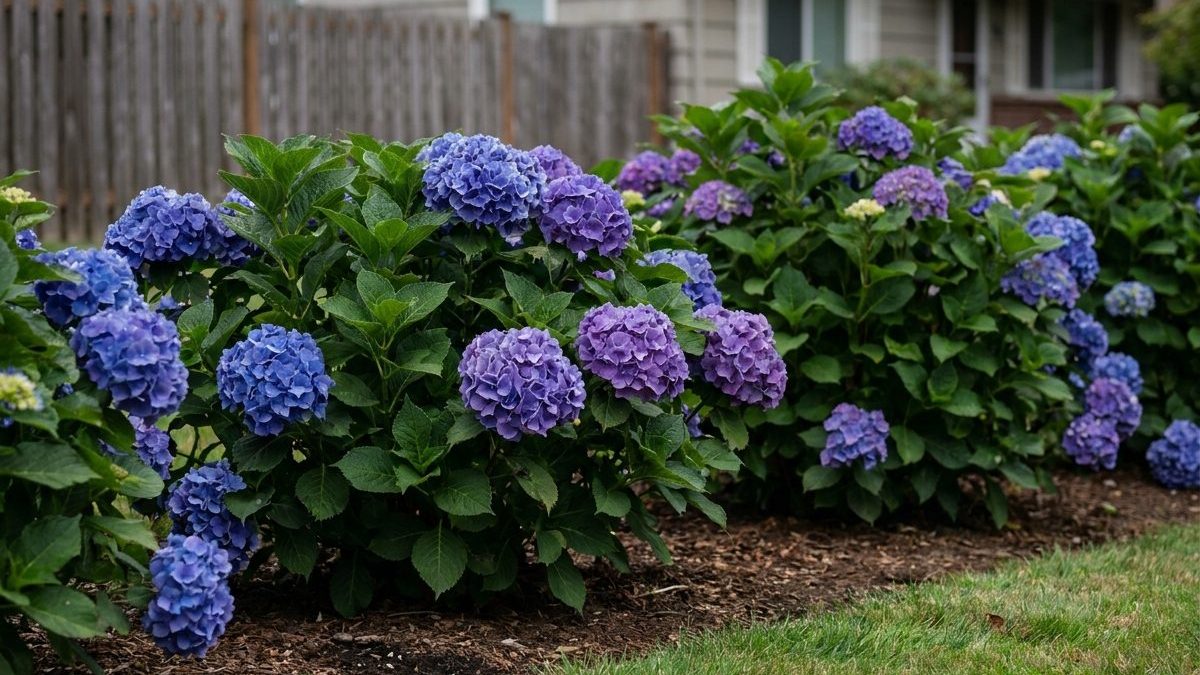
West of the Cascades, hydrangeas face six recurring problems: aphids and bud blast in spring, phytophthora root rot in soggy beds, powdery mildew and leaf spot through summer humidity, and botrytis blight once fall rains return. None of these are exotic. They’re the direct product of Oregon’s mild, wet marine climate, and each has a specific fix.
Hydrangea pests and diseases Oregon: The Short Answer
In the Portland area, hydrangeas run into the same six problems most years, in a fairly fixed order tied to when the soil warms and when the rain returns. Catch each one at its first sign and a healthy bigleaf or panicle shrub shrugs it off without a chemical program.
Aphids on new growth
Small green or amber clusters crowd the soft tips as the shrub leafs out in spring. They curl leaves and leave a sticky residue that draws sooty mold. A hard spray from the hose most mornings, or insecticidal soap, knocks the colony back before it spreads to buds.
Bud blast from a late frost

NOAA NCEI U.S. Climate Normals 1991-2020 puts Portland’s last spring freeze between March 6 and March 21, and any bud pushed before that date can blacken and drop. Delay pruning past that window and skip fertilizer until growth is underway to avoid tender new buds.
Phytophthora root rot in soggy beds

Wilting leaves on a shrub sitting in wet, heavy soil point to root rot, not drought. The crown often smells sour below the soil line. Raise the planting hole, work in coarse compost, and hold off watering until the top two inches dry between soakings.
Powdery mildew in summer humidity

A gray-white film dusts the top of the leaves once nights turn muggy in July. It rarely kills the plant but stalls flowering. Space shrubs for airflow, water the soil rather than the foliage, and strip the worst leaves into the trash, not the compost pile.
Cercospora leaf spot by late summer

Purple-rimmed brown spots appear on the lower, older leaves first and climb upward as August wears on. It thrives where leaves stay wet overnight. Clear fallen leaves at the base each week and switch to a soaker hose to keep foliage dry.
Botrytis blight as fall rain returns

Fuzzy gray mold coats spent blooms and soft stems once the cool, wet pattern sets in around Portland’s first fall freeze, November 11 to 27. Cut out mushy flower heads promptly and thin crowded stems so air moves through the shrub before the wet season locks in.
Oregon — the year and the numbers
- State
- Oregon
- USDA zones
- 4a-9b
- Last spring frost
- March 6 to March 21
- First fall frost
- November 11 to November 27
- Annual rain
- 37 in
- Lawn zone
- transition-season
- Source
- NOAA NCEI U.S. Climate Normals 1991-2020, 32F freeze probabilities · Portland
How to Work Out the Dates for Your Own Yard
Matching a treatment window to your own yard starts with your last frost date, then adjusts for how your specific bed drains and gets sun.
- Mark your last frost window: NOAA NCEI’s 1991-2020 Climate Normals put the west-of-Cascades range at March 6 to March 21, so hold pruning and fertilizer until growth resumes after that closes.
- Check the leaf pattern first: spots on old lower leaves point to Cercospora, a white dust on top points to mildew, and a sudden wilt with normal soil moisture points to root rot.
- Test your drainage: dig a one-foot hole, fill it with water, and if it hasn’t drained within a few hours your bed is a root rot risk regardless of the calendar.
- Fertilize inside the state windows: March, May, and July are the three months the calendar allows, and skipping July leaves the plant weak heading into fall blight season.
- Prune bigleaf types in June or July only: cutting outside that window removes next year’s flower buds along with this year’s disease-damaged wood.
- Recheck after the first fall freeze: once the November 11 to 27 window passes, cut out any blighted stems before winter rain spreads the mold further.
None of these steps require guessing. They just require watching your own bed instead of a generic calendar, since a raised bed on a slope drains and dries on its own schedule.
Oregon North to South: How the Dates Shift
The pest and disease list above holds for the wet side of the state, and conditions shift hard once you cross the Cascades.
- The Willamette Valley and Portland metro (west of the Cascades): mild, wet winters keep root rot and botrytis the top two risks, and the marine air that feeds powdery mildew rarely lets up before October.
- The coast (Astoria to Coos Bay): near-constant humidity pushes leaf spot and mildew pressure higher than inland, but the buffered coastal temperatures cut bud blast risk since hard spring freezes are rarer.
- Central and eastern Oregon (Bend, Pendleton, the high desert): USDA Plant Hardiness Zone Map 2023 places parts of this region as cold as zone 4a against the valley’s 8b to 9b, and the dry air here favors aphids and spider mites over fungal disease.
- Higher elevations anywhere in the state: gardens above roughly 2,000 feet see a shorter frost-free season than the valley floor, which compresses the whole pest and disease calendar into fewer weeks.
Check the state guide for the frost dates that apply to your part of Oregon before you lock in a treatment schedule.
Mistakes Oregon Punishes
Watering overhead in the evening
Wetting the foliage after dinner keeps leaves damp all night, exactly what powdery mildew and Cercospora need to spread. Switch to a soaker hose or water early enough that leaves dry before dusk, and the summer disease pressure common here drops fast.
Planting in a low, heavy spot
Oregon’s wet winters turn any low corner of the yard into standing water by January, and that’s where phytophthora root rot starts. Choose a raised bed or amend heavily with compost before you plant, ideally during the March, April, September, or October planting windows.
Pruning bigleaf hydrangeas in fall
Cutting back bigleaf types after summer removes the buds already set for next year, since they bloom on old wood. Hold pruning for June or July as the calendar allows, and let any fall dieback wait until new growth confirms which stems survived.
Oregon Extension Offices and County Contacts
The USDA Plant Hardiness Zone Map range of 4a to 9b is a starting point, not a diagnosis. Oregon State University Extension and your county office confirm what’s actually on your shrub.
- Your state page: the frost dates and the pruning window where you live.
- Which ones hold up here: the hydrangea varieties bred for wet winters and dry summer heat.
- The 12-month calendar: fertilize, plant, and prune windows laid out month by month.
Common questions
Do hydrangeas get Japanese beetles in Oregon?
Japanese beetle pressure is far lower here than in the Midwest or East Coast, so it rarely ranks among the top problems for Oregon hydrangeas. Aphids, powdery mildew, and root rot are the ones worth watching first.
Is powdery mildew fatal to a hydrangea?
No. It weakens the plant and cuts down on blooms, but a mature shrub usually survives a bad mildew year if you clear infected leaves and improve airflow before the next wet season sets in.
When is the best time to treat for aphids?
Catch them as soon as new growth appears in spring, before colonies build up on the soft tips. A strong water spray every few days often handles a light infestation without any product at all.