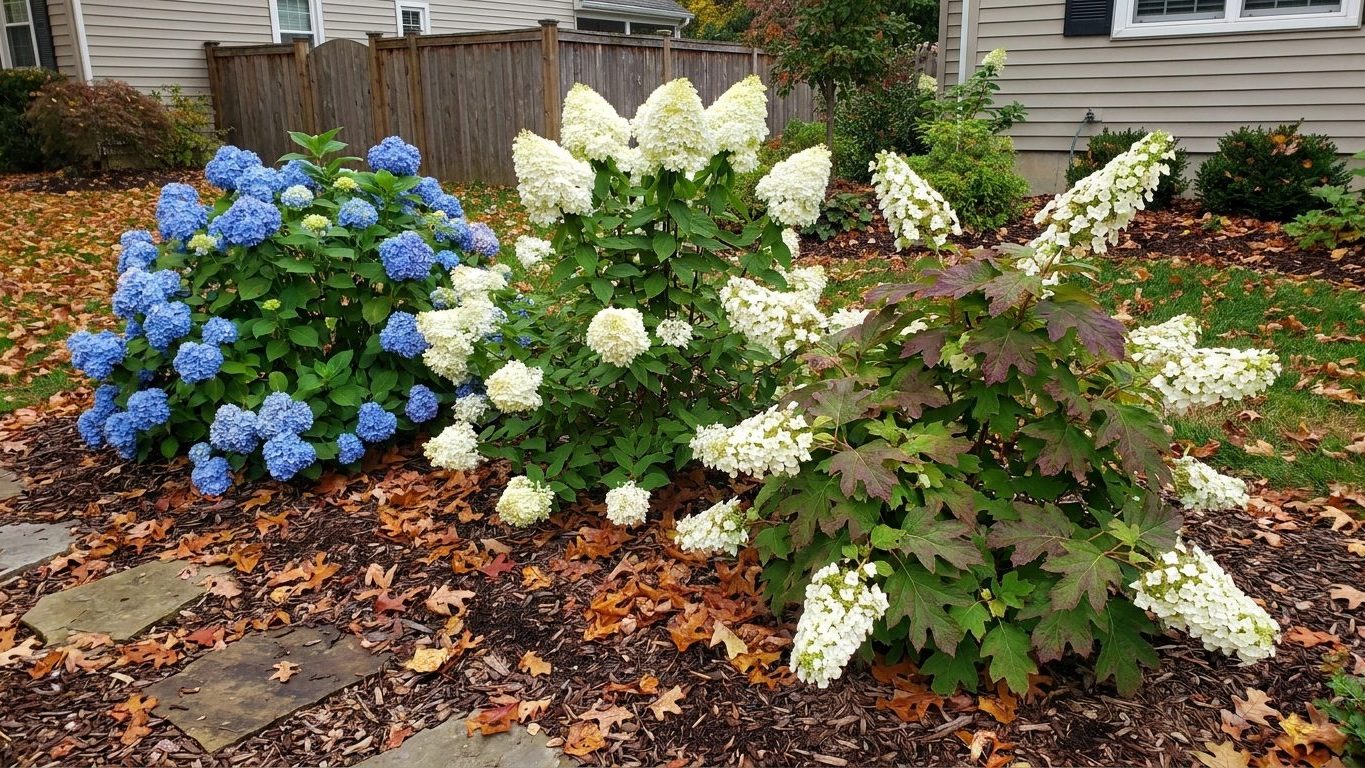
Yellowknife, the reference city for this territory’s climate data, sits at zone 1b on the Canadian hardiness scale, cold enough that few nursery hydrangeas are built to survive planted in open ground. Smooth and panicle hydrangeas, the two types that rebuild their flowers from the roots each spring, come closest to working here, usually with heavy mulch or a container that comes indoors before the first hard freeze.
Hydrangeas that grow well in Northwest Territories: The Short Answer
Natural Resources Canada’s Plant Hardiness Site rates Yellowknife, the reference city for the territory’s climate data, at zone 1b in the Canadian system. That system runs on seven weather variables rather than the single minimum-temperature figure USDA zones use, so there’s no clean conversion to hand you, and a plant tag reading “zone 3” at a big-box store tells you nothing reliable about a Yellowknife winter.
What that number means in practice is this: hydrangeas that bloom on wood grown the previous year are gambling on wood this climate reliably kills. The types that rebuild their flower buds on new wood each spring are the only realistic candidates for open ground, and even those do better with a thick mulch blanket or a pot that spends winter somewhere above freezing.
Smooth hydrangea (Hydrangea arborescens)

This native North American species dies back to the ground most winters here and simply regrows from the root each spring, flowering on that new wood by midsummer. It’s the closest thing to a dependable in-ground hydrangea for this territory, provided the roots get a heavy mulch layer before freeze-up.
Panicle hydrangea (Hydrangea paniculata)

Like smooth hydrangea, panicle types bloom on new wood, so a hard winter that kills the top growth still leaves a flowering plant the next summer. Cultivars bred for shorter, cooler seasons handle the swing between Yellowknife’s brief summer and long winter better than most other hydrangeas sold locally.
Mountain hydrangea (Hydrangea serrata)

Mountain hydrangea blooms on a mix of old and new wood, which makes it a step down in reliability from the two above. In this climate expect it to flower only on the new growth in most years, and treat any bloom on old wood as a bonus rather than the plan.
Oakleaf hydrangea (Hydrangea quercifolia)

Oakleaf hydrangea is grown mainly for its lobed foliage and peeling bark, because its flower buds form on old wood that a Yellowknife winter typically erases. Gardeners here who plant it are usually buying the leaf and stem interest, not a reliable flower show.
Bigleaf hydrangea (Hydrangea macrophylla)

Bigleaf is the florist-shop hydrangea most people picture, and it’s also the least suited to this territory, since its flower buds set on old wood that rarely survives the winter intact. Treated as a container plant that comes indoors, it can work, but left outdoors it’s essentially a foliage plant.
Climbing hydrangea (Hydrangea anomala subsp. petiolaris)

Climbing hydrangea needs several years of undisturbed woody growth before it flowers at all, and this climate resets that clock by killing back stems on a regular basis. It’s the riskiest name on this list for open ground in the territory, and most gardeners here don’t get to the flowering stage.
Northwest Territories — the year and the numbers
- State
- Northwest Territories
- Hardiness zones
- 1b
- Last spring frost
- May 25
- First fall frost
- September 18
- Annual rain
- 11 in
- Lawn zone
- cool-season
- Source
- Environment and Climate Change Canada — Canadian Climate Normals 1981-2010, station YELLOWKNIFE A · Yellowknife
How to Work Out the Dates for Your Own Yard
The mean dates are a midpoint, not a guarantee, so the real work is deciding how much room to leave on each side of them for your own yard.
- Start from the mean frost dates: Environment and Climate Change Canada’s Canadian Climate Normals list Yellowknife’s average last spring frost as May 25 and its average first fall frost as September 18, and because it’s a mean, the frost falls later than that date about half the time.
- Push your planting date back from May 25: treat that date as the earliest edge of the window rather than the safe day, and hold off setting hydrangeas outside until new leaves are actually pushing on nearby trees and shrubs.
- Match your work to the site’s plant window: the calendar for this territory lists May, June, July, and August as plant months, which gives room to wait out a late spring without missing the season entirely.
- Fertilize on the two months the calendar sets: May and July are the only fertilize months listed here, so feeding outside that window mostly feeds growth that won’t harden off before the September frost arrives.
- Prune bigleaf hydrangea only in June or July: pruning earlier risks cutting into wood that hasn’t fully woken up, and pruning later leaves fresh cuts with no time to callus before fall cold sets in.
- Pick new-wood bloomers over old-wood ones: a panicle or smooth hydrangea that loses its top growth to winter still flowers the following summer from the root, while a bigleaf hydrangea that loses its old wood usually skips flowering entirely that year.
Run through that list before buying anything, and the choice between a plant that blooms most years and one that mostly doesn’t gets a lot easier to see.
Northwest Territories North to South: How the Dates Shift
Yellowknife’s numbers are the reference point for this whole territory, but a place this size holds more than one climate, and elevation, big lakes, and distance from the treeline all push the practical planting and frost dates in different directions.
- The North Slave and the Great Slave Lake shore (Yellowknife, Behchoko, Fort Resolution): the lake holds heat late into fall and slows the spring warm-up, so yards right on the shoreline often see a later start to the growing season but also a later first frost than spots just a short drive inland.
- The South Slave (Fort Smith, Hay River): sitting farther south and at lower elevation than Yellowknife, this pocket of the territory is usually the first place the ground firms up enough to plant.
- The Dehcho and the Sahtu river valleys (Fort Simpson, Norman Wells, Tulita): cold air pools in these low valleys on calm, clear nights, so frost can settle here before it reaches higher ground only a short distance away.
- Communities near and above the treeline (Inuvik, Tuktoyaktuk, Sachs Harbour): the growing season compresses further the farther north you go, and a hydrangea grown this far north is realistically a container plant that never sees a real outdoor winter.
None of that changes what the territory-level guide says about your own frost dates and hardiness zone, so start there before adjusting for your specific spot.
Mistakes Northwest Territories Punishes
Planting before the ground softens
Setting hydrangeas out as soon as garden centers stock them means fighting frozen or barely-thawed soil, since Environment and Climate Change Canada lists May 25 as only the average last spring frost for Yellowknife, and the real date often runs later. Wait for real leaf growth on nearby shrubs, and stick to the plant months this calendar lists.
Choosing an old-wood bloomer for open ground
Buying a bigleaf or oakleaf hydrangea and expecting the flower show shown on the plant tag ignores that their buds form on wood this climate typically kills over winter. Choose a smooth or panicle hydrangea instead, or keep the old-wood type in a container that spends winter somewhere it won’t freeze solid.
Skipping mulch before freeze-up
Leaving the root zone bare into the first hard frost after September 18 exposes the crown to cold that can kill the whole plant, not just the top growth. Cover the base with a thick mulch layer before the ground locks up, and pull it back once new growth starts in spring.
Northwest Territories Extension Offices and County Contacts
The territorial number for Yellowknife is a starting point, not the full picture, since a community garden in Hay River or Inuvik faces its own microclimate that no single station fully captures.
- Government of the Northwest Territories, Agriculture: the territorial agriculture services page lists the community garden and greenhouse support that stands in for a county extension office here.
- Your territory page: the frost dates and the hardiness zone for where you live.
- What goes wrong here: the pests and problems this climate causes, hydrangea by hydrangea.
Common questions
Can hydrangeas survive winter outdoors in the Northwest Territories?
Some can, if they bloom on new wood. Smooth and panicle hydrangeas routinely die back to the ground here and still flower the following summer, provided the roots are protected with mulch through the winter.
Which hydrangea is most likely to bloom in Yellowknife?
Panicle hydrangea has the best track record for actually flowering in this climate, since its buds form on the current season’s growth rather than on wood that has to survive the winter intact.
Should I grow hydrangeas in containers in the Northwest Territories?
For bigleaf, oakleaf, or climbing hydrangea, a container that moves somewhere above freezing for winter is usually the only realistic way to see them bloom at all in this territory.