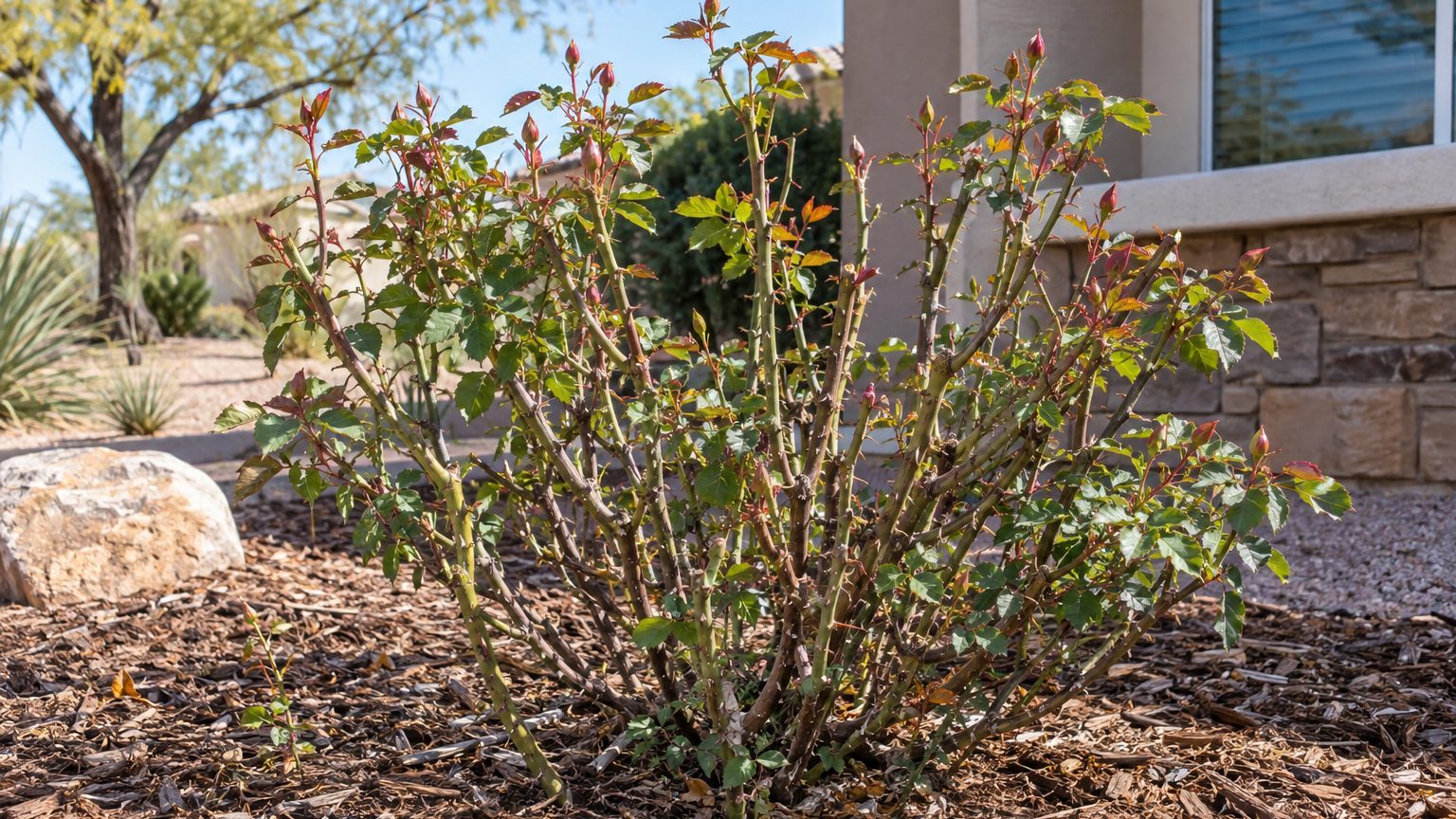
A rose cut at the wrong moment sulks. In Arizona the right moment comes in winter, not spring, and it depends on whether your yard sits in the low desert or up at Prescott altitude. Once-blooming roses follow a different rule from repeat bloomers.
When to Prune Roses in Arizona

Prune repeat-blooming roses in January or February. In the low desert January and February are the target. Around Prescott, where winters are colder, March is the month to cut.
Hybrid teas, floribundas and modern shrub roses all flower on the new canes they send up after pruning. Cutting them back in midwinter sets up that fresh growth. Roses that flower only once a year need different pruning timing, so prune them at a different point in the season than repeat bloomers.
| Type of rose | When to prune in Arizona | Why |
|---|---|---|
| Repeat-blooming roses (hybrid teas, floribundas, modern shrub roses) | January or February in the low desert, March at Prescott altitude. | They bloom on new growth, so a winter cut shapes the canes that will carry the next flowers. |
| Once-blooming roses (old garden roses, once-blooming climbers) | Right after they finish flowering, never in early spring. | They flower once a year on last year’s wood, so a spring cut removes the buds. |
Climbers vary, so check how yours behaves. A climber that blooms once follows the old garden rose rule and waits until the flowers fade. Cutting it in winter along with the hybrid teas would trade a season of bloom for a tidier cane.
Arizona — the year and the numbers
- State
- Arizona
- USDA zones
- 4b-10b
- Frost
- none in an average year
- Annual rain
- 7 in
- Lawn zone
- warm-season
- Source
- NOAA NCEI 1991-2020 Climate Normals + NOAA RCC ACIS daily records, station USW00023183 — https://www.ncei.noaa.gov/access/services/data/v1?dataset=normals-annualseasonal&stations=USW00023183 · Phoenix
How to Tell When Your Roses Are Ready to Prune
The calendar gives the month, and the plant confirms it. A few signs on the canes and in the weather tell you the shears can come out.
- Buds along the canes begin to swell and show a reddish tint, which means the rose is waking up and you can see which canes are alive.
- The month matches your area, so January or February in the low desert and March around Prescott, Prescott Valley and Chino Valley.
- In the Prescott area, the hard freezes have passed, because new growth triggered by pruning is tender and a late cold night can burn it.
- A scratch on the bark shows green underneath, and a cane that is brown and dry inside is dead wood to cut back until the center looks pale and healthy.
- The rose is a repeat bloomer, because a once-blooming rose that shows swelling buds should still wait until its flowers are finished.
Swelling buds in the low desert are an invitation, not a signal to wait for more warmth, since the winter months are already the window.
Should You Prune Roses in Fall or Winter in Arizona?
Winter, yes. For repeat bloomers, fall, no. In the low desert, January and February are the pruning months, so winter pruning is the main job. On repeat bloomers, leave long, whippy stems alone until the winter pruning window. Leave the rest of the shape alone.
A hard cut in autumn pushes new growth just as the plant should be settling. That growth also costs the rose energy it would otherwise carry into winter. Wait for the winter window, then prune to shape and remove dead wood.
September and October are feeding months. Slow-release fertilizer goes on again in September, with the last application around mid-October. That feeding supports the plant through the cooler months and has nothing to do with cutting.
How Rose Pruning Dates Shift Across Arizona
Arizona covers desert basins and high plateaus, and the pruning month moves with elevation and winter cold. Roses at lower elevations get the earlier window, and colder places get a later one.
- Phoenix and the low desert: Prune repeat bloomers in January or February.
- Prescott, Prescott Valley and Chino Valley: Wait until March. At this altitude winters are colder, and an earlier cut risks tender new shoots meeting a hard freeze.
- Flagstaff and the high country: This is a different climate that freezes hard, so the low desert months do not carry over. Ask the local county office for the timing that suits your elevation.
Within these areas, a warm south-facing wall or a cold hollow can nudge the timing a little earlier or later, so watch the buds on your own plants.
Where to Get Rose Advice in Arizona
Rose care varies from one Arizona valley to the next, and the local extension network knows the differences. University of Arizona Cooperative Extension publishes guidance for the low desert and for the Prescott area, and every county has an office.
- The extension website carries rose care guides for the low desert and the Yavapai region, so look there before you buy shears or fertilizer.
- Your county extension office can answer questions about your elevation and your specific roses, so call or visit before the pruning month arrives.
Common Questions
When Should You Plant Bare-Root Roses in Arizona?
January or February is the preferred window, and March also works. Container roses can go in from January, while bare-root roses fit best in February. Potted roses can be planted later than bare-root ones.
When Should You Fertilize Roses After Pruning in Arizona?
Start after pruning and feed regularly through spring, about every six weeks until June. Skip midsummer, then resume in September and finish around mid-October. Feeding months run February through June and again in September and October.
Should You Feed Old Garden Roses Before You Prune Them?
Yes. Old garden roses are pruned only after they bloom, but in Arizona they still benefit from fertilizer starting in January or February. That early feeding supports the flowers they are about to produce, even though the shears stay put until the blooms fade.