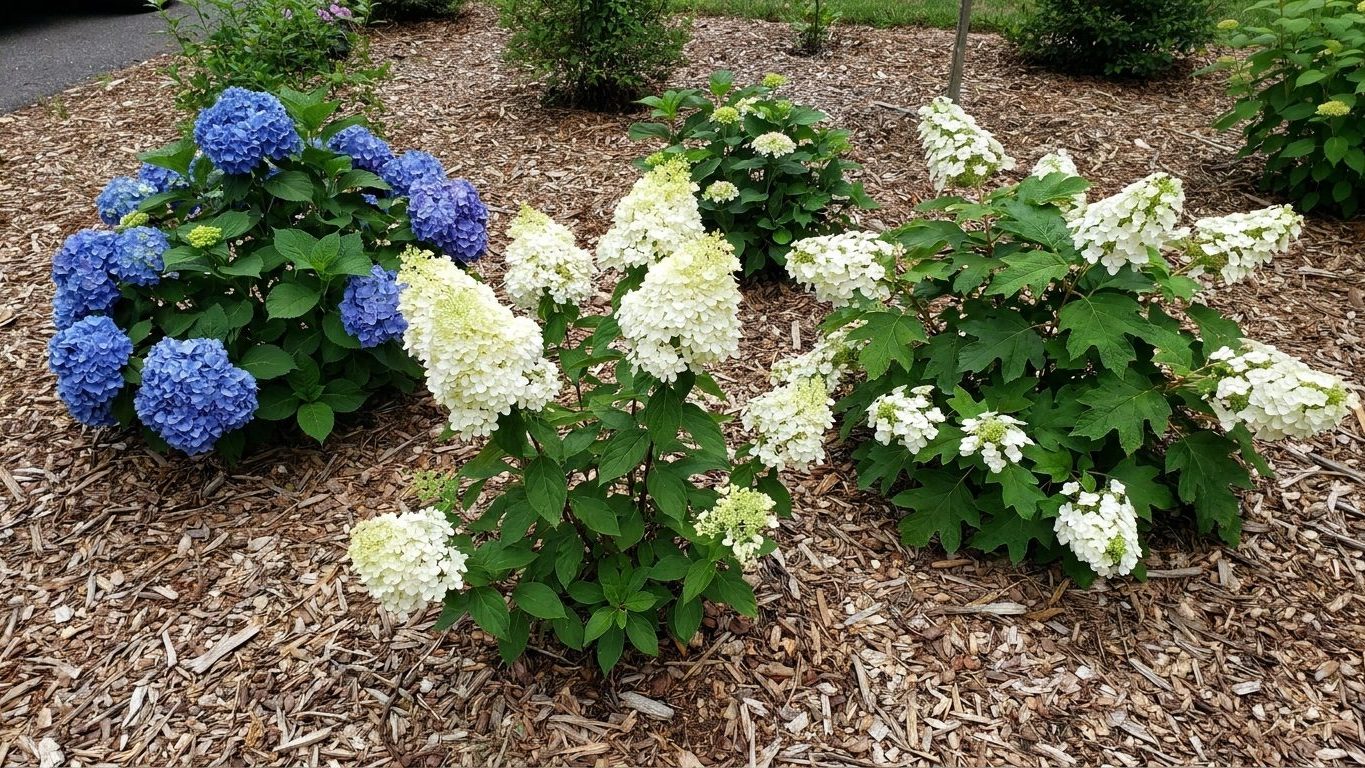
Panicle and smooth hydrangeas handle Nebraska’s winters without special care, based on the reference city of Omaha, while bigleaf types need a sheltered spot and still gamble on flowers most years. Six species and cultivars actually make sense for this state, and knowing which one you’re planting matters more than the label on the pot.
Hydrangeas that grow well in Nebraska: The Short Answer
USDA Plant Hardiness Zone Map puts Nebraska at zone 4a to 5b, with Omaha standing in as the reference city for winter lows. That range decides which hydrangea species shrug off a normal winter here and which ones need a warm wall, heavy mulch, or plain luck to bloom at all.
Panicle hydrangea

This one treats a Nebraska winter as background noise. It blooms on new wood, so a hard freeze that kills the top only delays flowering by a few weeks, not a whole season. Full sun and average soil are all it asks for.
Smooth hydrangea

Native to the eastern half of the country, this species shrugs off subzero lows the same way panicle does. New wood carries the bloom, so late frost damage grows back into flowers within the same summer. It also tolerates part shade better than most on this list.
Climbing hydrangea

Rated hardy into zone 4, this vine survives the cold fine, the trouble is patience. It can take several seasons to establish before it flowers at all, and a rough first winter on a young plant sets it back further. Give it a sheltered wall to start.
Oakleaf hydrangea

Most sources rate this one for zone 5 and up, which puts the colder pockets of the state right at its edge. Flower buds set in fall can die back in a harsh 4a winter even when the shrub itself survives. Plant it against a house wall for extra warmth.
Mountain hydrangea

Closely related to bigleaf and rated for similar zones, this species is a touch hardier but still borderline west of Omaha. Winter dieback of the flower buds is common in an open, windy yard. A protected courtyard spot improves the odds considerably.
Bigleaf hydrangea

This is the one nursery photos always show, and the one that struggles most here. Rated for zone 6 and warmer, it blooms mostly on old wood that a Nebraska winter routinely kills back to the ground. Treat it as a gamble unless it gets serious winter protection.
Nebraska — the year and the numbers
- State
- Nebraska
- USDA zones
- 4a-5b
- Last spring frost
- April 12 to April 23
- First fall frost
- October 15 to October 26
- Annual rain
- 32 in
- Lawn zone
- cool-season
- Source
- NOAA NCEI U.S. Climate Normals 1991-2020, 32F freeze probabilities · Omaha
How to Work Out the Dates for Your Own Yard
I start every calendar for a new yard the same way, by pulling the reference-city frost window and then adjusting it for what’s actually growing in the ground.
- Start from Omaha’s frost window: NOAA NCEI U.S. Climate Normals puts the last spring frost at April 12 to April 23 and the first fall frost at October 15 to October 26 for the reference station.
- Add a buffer for your own county: suburban and rural yards typically see the last frost land later and the first fall frost arrive earlier than the airport figures, sometimes by one to two weeks.
- Match the shrub to the zone: panicle and smooth hydrangeas tolerate the full 4a to 5b range without protection, so they can go in as soon as the soil is workable in spring.
- Hold back on old-wood bloomers: bigleaf and mountain hydrangea set next year’s flower buds in fall, so they go in after the last frost date has cleared for your county, not before.
- Watch the calendar for pruning: bigleaf types get their major cuts in June or July, right after bloom, never in fall when a cut removes next year’s buds along with the wood.
Panicle hydrangea planted in an Omaha-area yard blooms the same summer and returns reliably because it flowers on new wood. Bigleaf hydrangea, planted the same week, can lose every flower bud over a normal winter here and skip a season, which is why it belongs against a sheltered wall rather than an open bed.
Nebraska North to South: How the Dates Shift
The 4a to 5b range for Nebraska is not one flat number, and moving across the state changes which end of it applies to a given yard.
- Eastern Nebraska (Omaha, Lincoln, the Missouri River valley): the mildest corner of the state, sitting toward the warmer 5b end, with a longer stretch between frosts than anywhere else here.
- The Panhandle and western high plains (Scottsbluff, Chadron, Alliance): elevation pushes this area toward the colder 4a end, and a hydrangea that survives fine near Omaha can struggle here without a sheltered spot.
- The Sandhills and north-central counties (Valentine, Ainsworth, O’Neill): wide-open, wind-exposed ground that dries out flower buds over winter faster than a fenced-in suburban yard.
- The southern tier near the Kansas line (Beatrice, Hastings, McCook): closer to the milder end of the range, with a spring that tends to arrive a little sooner than in the Panhandle.
Check your own county’s line on the USDA map before assuming the Omaha figures apply to your yard.
Mistakes Nebraska Punishes
No blooms after a normal winter
This is almost always a bigleaf or mountain hydrangea that set its flower buds in fall, then lost them to a routine Nebraska freeze. Switch to a panicle or smooth variety, or move the shrub against a heated wall for real protection.
Pruning cut off next year’s flowers
Cutting bigleaf hydrangea back in fall or early spring removes the wood that was already holding next year’s buds. The pruning window for bigleaf runs June and July, right after bloom, and any cut outside that stretch costs a season of flowers.
Bare roots left exposed to open wind
Nebraska’s open plains dry out unmulched roots and buds faster than a sheltered yard would, especially in the Panhandle and Sandhills. A few inches of mulch over the root zone before the ground freezes cuts that damage down considerably.
Nebraska Extension Offices and County Contacts
The Omaha figures only take you so far, and Nebraska’s land-grant extension service fills in the rest for your specific county.
- Your state page: the frost dates and the pruning window where you live.
- Which ones hold up here: the variety list ordered from safest to riskiest for this state.
- Nebraska Extension: county offices for soil tests, pest identification, and planting advice specific to your address.
Common questions
Can bigleaf hydrangea ever reliably bloom in Nebraska?
It can, but only with deliberate winter protection such as a mound of mulch over the crown or a spot tight against a heated wall. Left exposed in an open bed, it loses its flower buds to a normal winter more often than not.
Do panicle and smooth hydrangeas need any winter protection at all?
No, both tolerate the full 4a to 5b range without mulch or wrapping. A hard freeze may kill the top growth, but new wood carries the bloom the following summer regardless.
Is the Omaha frost window accurate for my whole county?
Treat it as a starting point, not a guarantee. Suburban and rural yards away from the airport station often see frost arrive earlier in fall and linger later in spring, sometimes by a week or two.