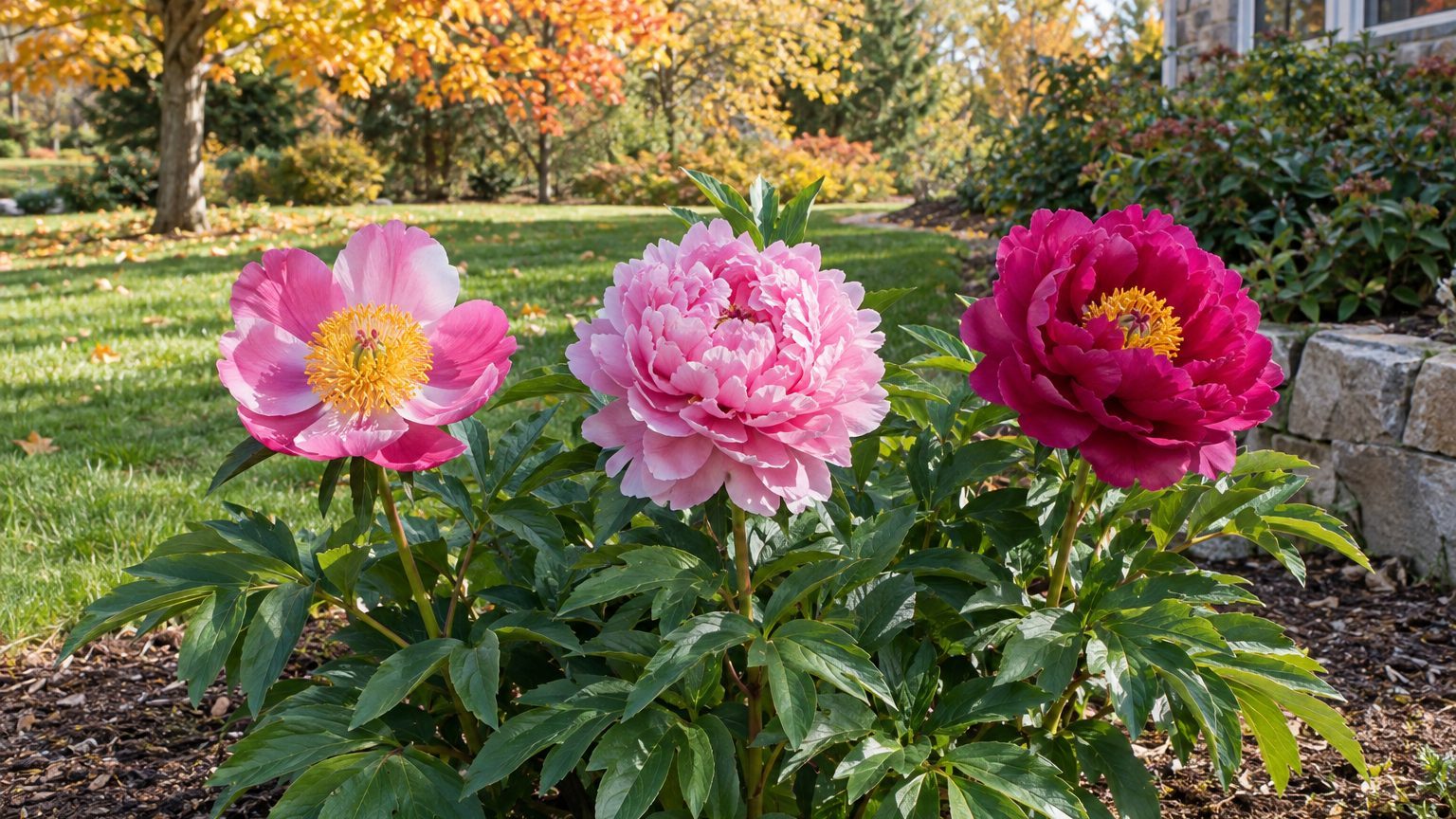
A peony clump in June, heavy with blooms and bending a little under their weight, is one of the great sights of a Minnesota yard. Winters here are cold enough to give peonies the rest they need, so patience is worthwhile. The real choice is between herbaceous, intersectional and tree types.
Best Peonies to Grow in Minnesota

Herbaceous and intersectional peonies are the ones that hold up best in Minnesota, because they die back to the ground each winter and then push up fresh growth. Tree peonies are less hardy and need more care. Peonies also need a cold winter rest to flower, and Minnesota provides it.
Herbaceous Peonies

This is the classic garden peony, descended from the Chinese peony (Paeonia lactiflora) and the common peony (P. officinalis). Hundreds of cultivars came from those two species, so color and form are easy to match to your taste. Each fall the plant dies back, and new growth emerges in spring.
Herbaceous peonies are among the easiest to grow, which suits a yard where winter does the hard work of resting the plant. Pick one spot and leave it there.
Intersectional Peonies

Also called Itoh peonies, these are hybrids of the garden peony and the tree peony. They behave like the herbaceous kind: they die back to the ground each fall and return in spring with the same care.
That makes them a good way to get something a little different without taking on the winter fuss of a woody plant.
Tree Peonies
Tree peonies are woody plants, mostly derived from P. suffruticosa. They keep their stems through winter, so they are never cut back like a herbaceous peony.
They are generally not as hardy as the other types. In Minnesota that means a protected site, such as a spot sheltered from open wind, and a layer of mulch over winter. Treat them as an extra, not the backbone of a peony planting.
Minnesota — the year and the numbers
- State
- Minnesota
- USDA zones
- 3a-5a
- Last spring frost
- April 17 to April 30
- First fall frost
- October 11 to October 23
- Annual rain
- 32 in
- Lawn zone
- cool-season
- Source
- NOAA NCEI 1991-2020 Climate Normals, 32F freeze probabilities · Minneapolis
How to Choose a Peony for a Minnesota Garden
Minnesota is USDA hardiness zone 3a to 5a, and the zone is based on the average annual extreme minimum temperature. Cold like that suits peonies, so the choice comes down to the type, the soil and how much work you want to do.
Match the plant to your situation below, then pick a spot and a variety.
| Your situation | What suits it in Minnesota | Why |
|---|---|---|
| Very cold winter | Herbaceous or intersectional peonies | They die back to the ground each fall, so the cold does not reach any exposed stems |
| Hot, humid summer | Light, sandy soil and varieties less prone to disease | Phytophthora rarely develops in light, sandy soils, and varieties differ in how susceptible they are |
| Little time | Herbaceous or intersectional peonies | They share the same simple care: die back in fall, grow again in spring |
| Need for winter cold | Any herbaceous peony | Peonies do best where winters are cold and flower poorly in mild-winter climates |
| Wish to try a woody plant | Tree peony in a protected site | It is less hardy, so shelter and winter mulch matter |
Small spaces are a matter of planning rather than type. Whichever peony you choose, it comes back in the same spot each year, so set it where the full plant will have room.
Which Peonies Suit Different Parts of Minnesota
Winter cold and the length of the growing season shift from the south of the state to the north, and that changes how much risk you can take.
- Twin Cities: This is the mild south of Minnesota. Herbaceous and intersectional peonies do well, while a tree peony needs shelter or winter mulch.
- Northern Minnesota: Spring comes later and fall frost arrives sooner. Herbaceous and intersectional peonies die back to the ground, while tree peonies need a protected site or winter mulch here.
Wherever you live, plant early enough in fall for roots to settle before the ground freezes, and take extra care with winter mulch the farther north you go.
Peony Buying Mistakes to Avoid in Minnesota
Choosing a Tree Peony Without Protection
Tree peonies are generally less hardy, and a Minnesota winter can punish one planted in an open, windy spot. The loss is a woody plant that dies back or fails to return.
If you want one, pick a sheltered site and mulch it over winter. For simpler care, choose an herbaceous or intersectional peony.
Ignoring Disease Susceptibility
Varieties differ in how prone they are to disease, and the variety Avalanche is reportedly especially susceptible to Phytophthora. A damp summer can then cost you a clump that looked healthy in spring.
Ask for varieties that are less susceptible, and plant in light, sandy soil where Phytophthora rarely develops.
Planting a Potted Peony Too Deep
Peonies are sold as potted plants in spring and as bare roots in fall. Planted too deep, a peony may bloom poorly or not come up at all. Keep the eyes near the soil surface.
Also, a newly planted or transplanted peony may not bloom the first spring. Choose the final spot before you dig, because moving it costs you bloom.
Where to Get Peony Advice in Minnesota
Local questions about soil, disease and varieties are best answered close to home. Minnesota gardeners can start with local extension help.
- University of Minnesota Extension publishes research-based guidance on peonies and garden problems, and its pages are worth a look before you buy.
- Your county extension office can look at your soil and a photo of a troubled plant, so call it when problems first show.
Common Questions
When Do Peonies Bloom in Minnesota?
Bloom runs from early June into early July.
When Should You Plant or Divide Peonies in Minnesota?
September to early October is the time, so the roots settle before the ground freezes. Planting in fall gives the plant a head start, and spring is when potted plants are sold.
When Should You Cut Back Peonies, and What Do You Do with the Stems?
Cut herbaceous peonies down after a hard freeze has killed the foliage, in October or November. Leave a couple inches of stem and bag the debris rather than composting it, which helps prevent disease. Tree peonies are never cut back this way.