Skip to content

Sod Webworms in Lawns: How to Spot Them and Get Rid of Them

Sod Webworms in Lawns: How to Spot Them and Get Rid of Them

Small yellow-brown patches that spread across a lawn in midsummer, especially on hot slopes and banks, often point to sod webworms feeding at the thatch line. The caterpillars hide by day and chew grass blades at night, so the damage shows before the pest does. A simple soap test confirms them.

Signs of Sod Webworms in a Lawn

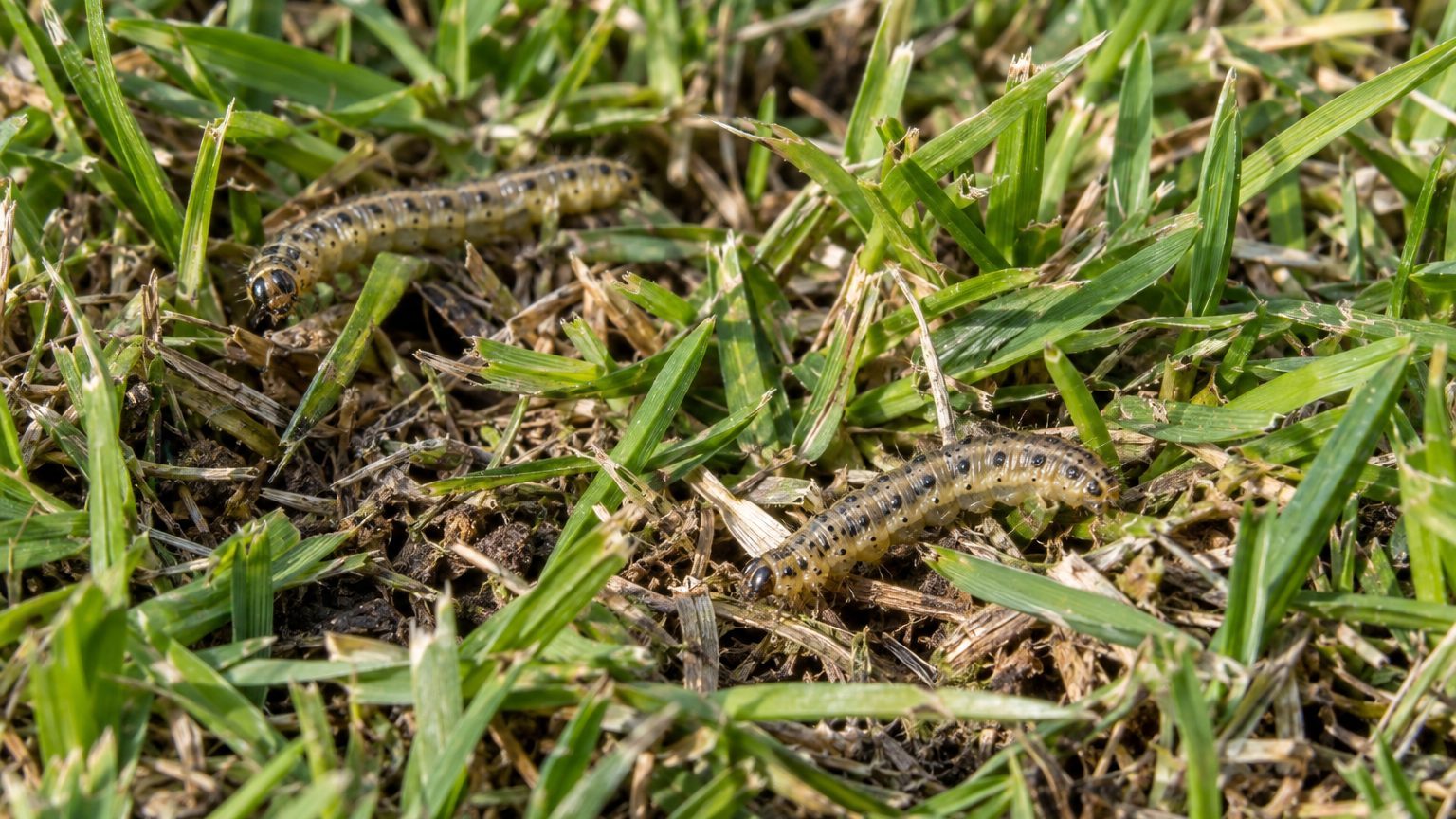
Sod Webworms on a lawn

Look for the signs that set sod webworms apart from other lawn trouble.

  • Larvae surface from the thatch when you pour soapy water over a patch, and they are slender, tan to light brown, and often marked with small darker spots.
  • Small yellow spots or patches appear first, much like the yellowing left by dog urine.
  • Patches turn yellow-brown in midsummer and quickly merge into large dry areas in dry weather.
  • Grass blades look chewed or scraped on the upper surface, an injury that is easy to overlook in the early stages.
  • Small brownish or dull grey moths, up to 3/4 inch long, flutter low over the grass when you walk across it.

Fully grown larvae reach about 1 inch long, which helps identify them when they surface.

Lawn Damage Mistaken for Sod Webworms

Early webworm injury is a small yellow spot, and plenty of other things leave the same mark. Judge by the spot’s location and by what turns up when you test the thatch.

Drought and pet urine can leave similar marks, and neither involves an insect.

Looks like How to tell them apart
Dog urine spots Scattered yellow spots in spots where the dog goes, and no larvae surface when you pour soapy water over the spot.
Drought stress Browning on banks, slopes and sunny edges, with no chewed blades or larvae in the thatch.

Moths flying over the lawn do not prove the patches are webworm damage, since adults are harmless. The caterpillars are what count, so check the thatch before you treat anything.

When Sod Webworms Damage Shows Up

Moths lay eggs on the lawn, and the caterpillars that hatch do the feeding. In Pennsylvania and Wisconsin, eggs hatch in 7 to 10 days. The larvae then feed and grow for 6 to 10 weeks in Wisconsin, depending on temperature and other conditions.

The early stages chew only the upper surface of the blades, so the lawn looks fine for a while. Damage becomes obvious in midsummer, when the patches turn yellow-brown and merge quickly in dry weather.

Some lawns are hit harder than others:

  • Hot, dry banks and steep slopes, where drought stress runs higher.
  • Bermudagrass and St. Augustinegrass, the warm-season grasses tropical sod webworm favors, as it infests all warm-season turfgrasses.
  • St. Augustinegrass varieties sold in Georgia, such as Palmetto and Raleigh, which are susceptible.
  • Lawns heavily fed with nitrogen, which can build thatch and invite attack.

How to Get Rid of Sod Webworms

Confirm the pest first, then decide whether the numbers justify treating.

  1. Mix 2 tablespoons of liquid dish detergent into 2 gallons of water and pour it over a 1 ft2 area of turf, so larvae hiding in the thatch come to the surface.
  2. Repeat the test across the damaged area because the larvae may be unevenly distributed.
  3. Compare your count with the threshold. In Pennsylvania and Utah, treatment may be warranted at 10 to 15 larvae per square yard of turf.
  4. Contact your state’s cooperative extension office for the products approved where you live, and follow the label exactly.
  5. Hold off on heavy irrigation and mowing for 3 days after application, as Wisconsin advises, so the treatment stays where the larvae feed.
  6. Keep watering the damaged patches normally so surviving grass can fill in, and reseed only bare spots that do not recover.

Below the threshold, a lawn in good health usually outgrows the feeding without help, so skipping treatment is often the right call.

How to Prevent Sod Webworms

Prevention comes down to keeping the turf from becoming the hot, thick, stressed lawn that moths prefer.

  • In Georgia, avoid over-fertilizing with nitrogen, since it can build thatch and increase sod webworm attack.
  • Through the growing season, mow regularly with the mower set at the height recommended for your grass species, as Georgia advises.
  • During dry spells, keep slopes and banks from becoming drought-stressed, since sod webworms prefer hot, dry grassy areas.
  • In midsummer, scout hot, dry areas with the soapy water test before yellow patches have time to spread.
  • Dethatch only when the layer has grown thick, and time the work for your grass species.

Catching a problem while the larvae are still small saves far more grass than treating a lawn that has already gone brown.

Common Questions

Can a Lawn Recover from Sod Webworm Damage?

Often yes, if the crowns and roots survive. The caterpillars feed on the blades, so grass usually regrows once feeding stops and the lawn gets normal watering.

Do Sod Webworm Moths Hurt the Grass?

No. The moths are whitish or brownish, up to 3/4 inch long, and only the larvae feed on the turf.

Which Lawns Are Most at Risk?

Bermudagrass and St. Augustinegrass lawns top the list, along with any lawn that has hot, dry slopes. Cool-season lawns are not immune, particularly under drought stress.
Moles in Lawns: How to Spot Them and Get Rid of Them

Moles in Lawns: How to Spot Them and Get Rid of Them

Raised, winding ridges and small cones of loose soil showing up across the grass point to a mole tunneling underneath. The animal rarely appears, but its work is easy to read once you know the signs. Spotting the right tunnel and acting on it soon keeps a small problem from spreading across the whole front yard.

Signs of Moles in a Lawn

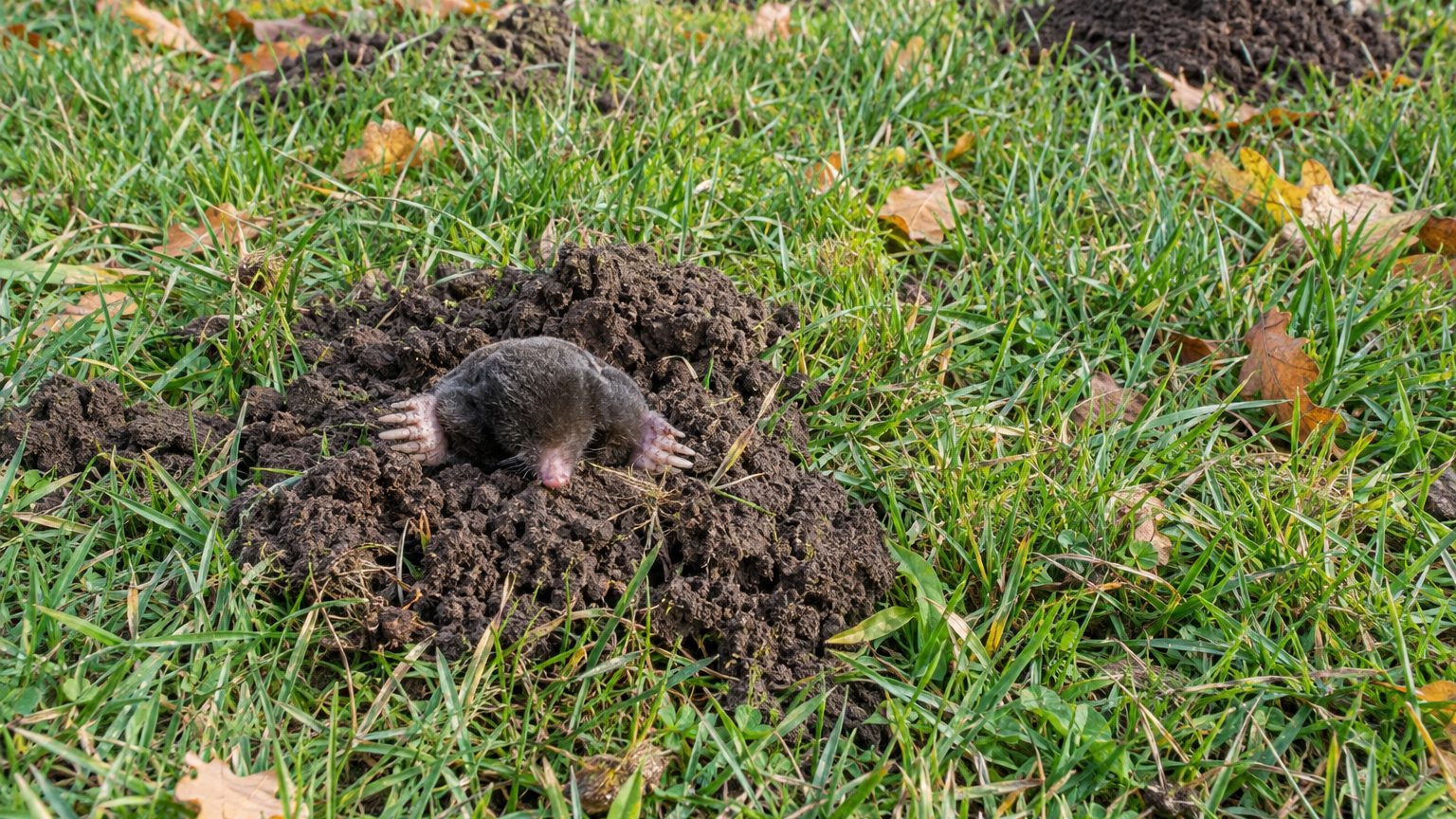
Moles on a lawn

Look for the surface signs that set moles apart from other lawn pests.

  • Volcano-shaped mounds of loose, crumbly soil pushed up from deep tunnels are a sign of a mole.
  • Raised ridges wander across the grass, soft underfoot, where a mole is feeding just below the surface.
  • Tunnels grow fast, at a rate of 18 feet per hour, so a ridge that was not there yesterday is a fresh one.
  • Ridges may be scalped by the mower, which tears the turf and can damage the blade.
  • Paddle-shaped feet with prominent digging claws mark the animal itself if you ever see one, which is 4 to 7 inches long.

Mounds and ridges together, in a lawn with soft soil, leave little doubt about who is digging.

Lawn Damage Mistaken for Moles

Not every disturbed patch of grass comes from a mole. Other causes leave different patterns once you look at the soil and the shape of the damage.

A quick look at the mound shape, plus where the damage sits, usually settles it.

Looks like How to tell them apart
Raised ridges from voles Voles leave open surface runways and small entry holes in the grass, while mole ridges are closed and come with soil mounds.
Mounds from earthworms or ants Their piles are small and scattered, often with castings or a visible hole, while a mole mound is a larger cone fed by a ridge nearby.

Gopher mounds are also sometimes confused with mole mounds, but a mole mound is a rounded volcano shape and gophers are rarely a lawn problem in the eastern half of the country.

When Moles Damage Shows Up

The cause is food. Moles tunnel through the soil hunting for the creatures living in it, and they dig wherever that hunting is easy. Well-drained, loamy soils are their favorite haunts, so lawns with that soft, easily dug ground see the most trouble.

In Iowa, fresh surface activity shows up in early morning and late afternoon in spring and fall, and on cloudy, damp days of summer. The rest of the year, they stay in deep tunnels 6 to 24 inches under the surface, which is why ridges seem to vanish in the coldest and driest stretches.

Numbers are small even when the damage looks huge. In Iowa, moles are mostly solitary, with about 3 moles per 1 acre of land. One animal can add 150 feet of new tunnels in the lawn each day, which explains why a single mole can seem like an invasion. In New Jersey, a single litter of 3 to 5 hairless young is born in the nest chamber.

How to Get Rid of Moles

Trapping is the most dependable way to remove a mole, and a few steps in the right order make it work. Your state extension office can tell you which products and rules apply locally.

  1. Flatten a short stretch of ridge with your foot, so you can see which tunnels the mole repairs and which it abandons.
  2. Watch for the repair. In New Jersey, if the damage in a given location is repaired within 1 or 2 days, place a trap near that spot.
  3. Choose a permanent runway for the trap. In Iowa, traps belong on permanent runways, not the temporary, meandering feeding tunnels.
  4. Set more than one trap when activity is heavy. In New Jersey, 3 to 5 traps per acre give faster control, unless mole activity is very light.
  5. Check the traps regularly and move any that sit unused, since a mole that avoids a tunnel will not return to it.
  6. Press the mounds flat and roll the ridges back down once the digging stops, so the grass can knit together again.

For a small, prized lawn, a barrier is another route, described in the next section.

How to Prevent Moles

Prevention is mostly about keeping them out of the spots you care about most, and about reading the season so you act before a litter or a feeding surge.

  • In Iowa, walk the lawn in early spring and flatten any ridges, so fresh digging stands out clearly when it appears.
  • Roll or tamp raised ridges before mowing so the mower does not scalp the turf.
  • When you build a barrier around a garden bed or small lawn, use a 3′ (91.5 cm) width of galvanized hardware cloth or aluminum sheathing. In New Jersey, the advice is to bury it 2′ (61 cm) deep (1.5′ in hard ground).
  • Leave 6″ (15 cm) of the barrier above the ground, and bend the bottom 3″ (7.5 cm) outward so moles cannot dig under.
  • In Iowa, check ridges often in spring and fall, when moles are close to the surface, and set traps promptly.

Lawns on loose, well-drained loam stay the most inviting to moles, so expect to repeat the checks there.

Common Questions

How Big Is a Mole?

A fully grown eastern mole measures 5″ to 8″ (13 to 20 cm) in length, with paddle-shaped feet and strong claws. The eastern mole, Scalopus aquaticus, is the one most often found in Iowa lawns.

Why Do Mole Ridges Seem to Disappear in Some Months?

Moles do not leave. They move deeper and dig less near the top, so the soft ridges fade until surface feeding picks up again with cooler, damp weather.

Can a Mower Damage a Mole Ridge?

Yes. Mowing over a raised ridge can scalp the turfgrass and harm the mower, so flatten ridges before you cut.

Nematodes in Lawns: How to Spot Them and Get Rid of Them

Nematodes in Lawns: How to Spot Them and Get Rid of Them

Irregular, thinning patches that widen slowly through summer, with no insects under the turf and no spots on the blades, often trace back to nematodes feeding on the roots. These microscopic roundworms live in the soil of lawns across the country. Pinning them down takes a close look at the roots and a soil sample, and managing them is mostly a matter of helping the grass root deeper.

Signs of Nematodes in a Lawn

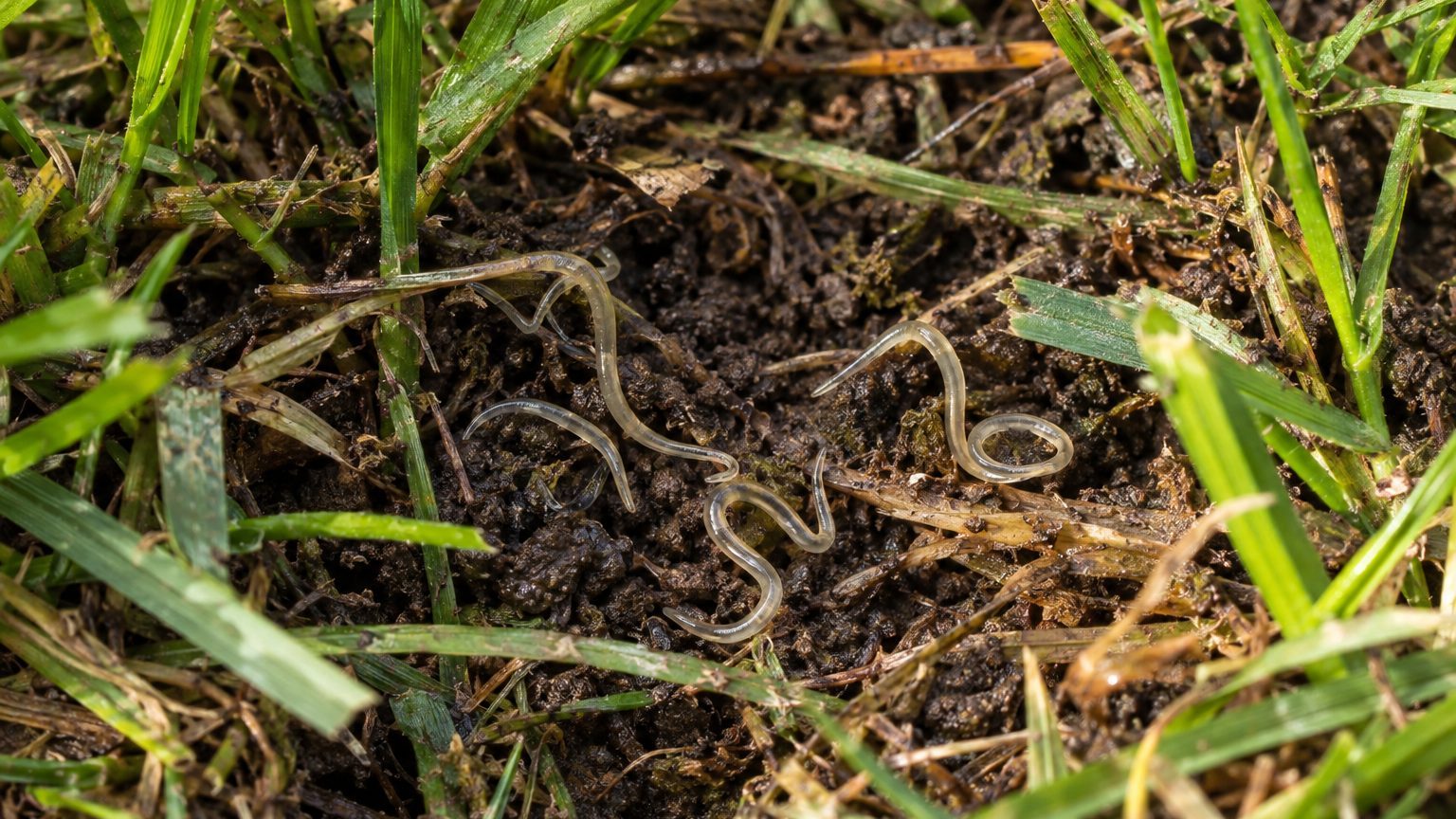
Nematodes in Lawns on a lawn

Nematodes work underground, so the clues are on the roots first and the grass second.

  • Pull up a clump from the edge of a patch and the roots often look cropped off an inch or less below the soil surface.
  • The turf thins, wilts or dies in irregular patches rather than neat circles.
  • Those patches spread outward slowly if left alone, so the lawn declines over seasons rather than overnight.
  • Root-knot nematodes can leave pale, yellowish (chlorotic) patches in the stand.
  • In North Carolina, root-knot populations climb from late April to early May and stay high through summer, so the worst thinning shows in the heat.

One sign alone proves little, but short, stubby roots under a slowly widening patch make a strong case for a soil test.

Lawn Damage Mistaken for Nematodes

Root-knot damage in particular can pass for a fungal disease, and a dry, stressed lawn can look nearly the same from the sidewalk. The difference shows up when you kneel down and look at the roots.

Looks like How to tell them apart
Fungal disease, with yellow or off-color patches Fungal problems tend to mark the blades, while nematode roots look cropped off an inch or less below the surface. A lab soil sample settles it.
Drought stress, with wilted, thinning turf in summer Dry-spot grass has long, intact roots and perks up after a deep soaking. Nematode patches keep spreading outward and the roots stay short.

Grub damage can also leave thin, weak patches, but the turf then lifts like a loose carpet and white grubs sit in the soil beneath it. Nematode-damaged turf stays rooted, only poorly.

When Nematodes Damage Shows Up

The cause is a tiny roundworm that lives on plant roots and pierces cells with a spear-like mouthpart called a stylet. Feeding wears down the root system, so the grass can no longer take up water and nutrients, and the top growth suffers.

Timing follows soil warmth. In North Carolina, sting nematodes begin feeding when spring soil temperatures reach 50-60 degrees F, and root-knot numbers build from late April to early May. Damage becomes visible once summer heat puts demand on those weakened roots.

According to NC State Extension, nematode activity subsides as temperatures rise above 90 degrees F, but heat can still expose damage to a weakened root system. Centipedegrass, zoysiagrass, and bermudagrass can be damaged by sting, root-knot, stubby-root, and lance nematodes.

How to Get Rid of Nematodes

Nematodes cannot be wiped out of a lawn, so the realistic goal is to confirm which ones you have and keep the grass growing a strong root system despite them.

  1. Collect soil cores from the problem area and the edge where healthy grass meets it, because the lab needs a sample that represents the lawn. In Florida, 12–16 cores per lawn is a good rule of thumb.
  2. In Florida, the count of each nematode type in 100 cc of soil sets the risk level for the turf species indicated. According to NC State Extension, labs ask for approximately 10-20 cores.
  3. Top dress with compost to raise soil organic matter. According to Clemson Cooperative Extension, 1/4 to 1/2 inch is the suggested layer.
  4. Water deeply and infrequently so roots chase moisture downward, which North Carolina turf advice recommends for the entire year.
  5. Feed with light, frequent nitrogen applications, which in North Carolina are recommended to build root growth and carry the lawn through stressful summer periods.

If the lab report shows a high risk level, your state’s extension office can tell you which treatments are legal and labeled where you live. Skip any shelf product that promises a quick nematode kill until you have that answer.

How to Prevent Nematodes

Prevention centers on choosing suitable turf and keeping its roots vigorous as nematode activity changes with soil temperature.

  • In late winter, ask the lab or extension office which nematodes tested high before you sod, plug or reseed, so you can choose a grass that tolerates them.
  • In North Carolina, note thin spots as spring soil temperatures approach 50-60 degrees F, when sting nematodes begin feeding.
  • Around late April to early May, start checking patch edges, since root-knot numbers begin to rise then in North Carolina.
  • In North Carolina, continue deep, infrequent watering through summer and use light, frequent nitrogen applications during stressful periods.
  • In fall, mow healthy areas before affected ones and rinse soil off the mower deck afterward, so you do not carry infested soil across the yard.

A lawn that never gets the chance to stress out in midsummer tolerates nematode feeding far better than one that starts the season already thin.

Common Questions

Which Lawn Grasses Get Nematode Damage?

Centipedegrass is the most susceptible to ring nematode, and it is also commonly damaged by sting, root-knot, stubby-root and lance nematodes. Zoysiagrass and bermudagrass are commonly damaged by sting, root-knot, stubby-root and lance nematodes.

Can You See Nematodes Without a Microscope?

No. Plant-parasitic nematodes are microscopic, and identification relies on features such as the juvenile stage, the stylet, and the male spicule or female ovary. The ring nematode is named for the concentric rings around its body.

What Types of Nematodes Attack Turfgrass?

Common turf genera include ring, stunt, lance, spiral, root-knot, needle, cyst, pin, lesion, sheath, stubby root, dagger and sting. A lab sample tells you which of them are present, and that decides how the lawn should be managed.

Fiery Skipper in Lawns: How to Spot Them and Get Rid of Them

Fiery Skipper in Lawns: How to Spot Them and Get Rid of Them

Small, round brown spots that appear in the lawn through summer are often the work of a single caterpillar. Fiery skipper larvae chew grass blades down to nothing in a tight circle, then hide in rolled leaves. Knowing what the larva looks like, and when the damage shows, tells you quickly whether you have a problem worth treating.

Signs of Fiery Skipper in a Lawn

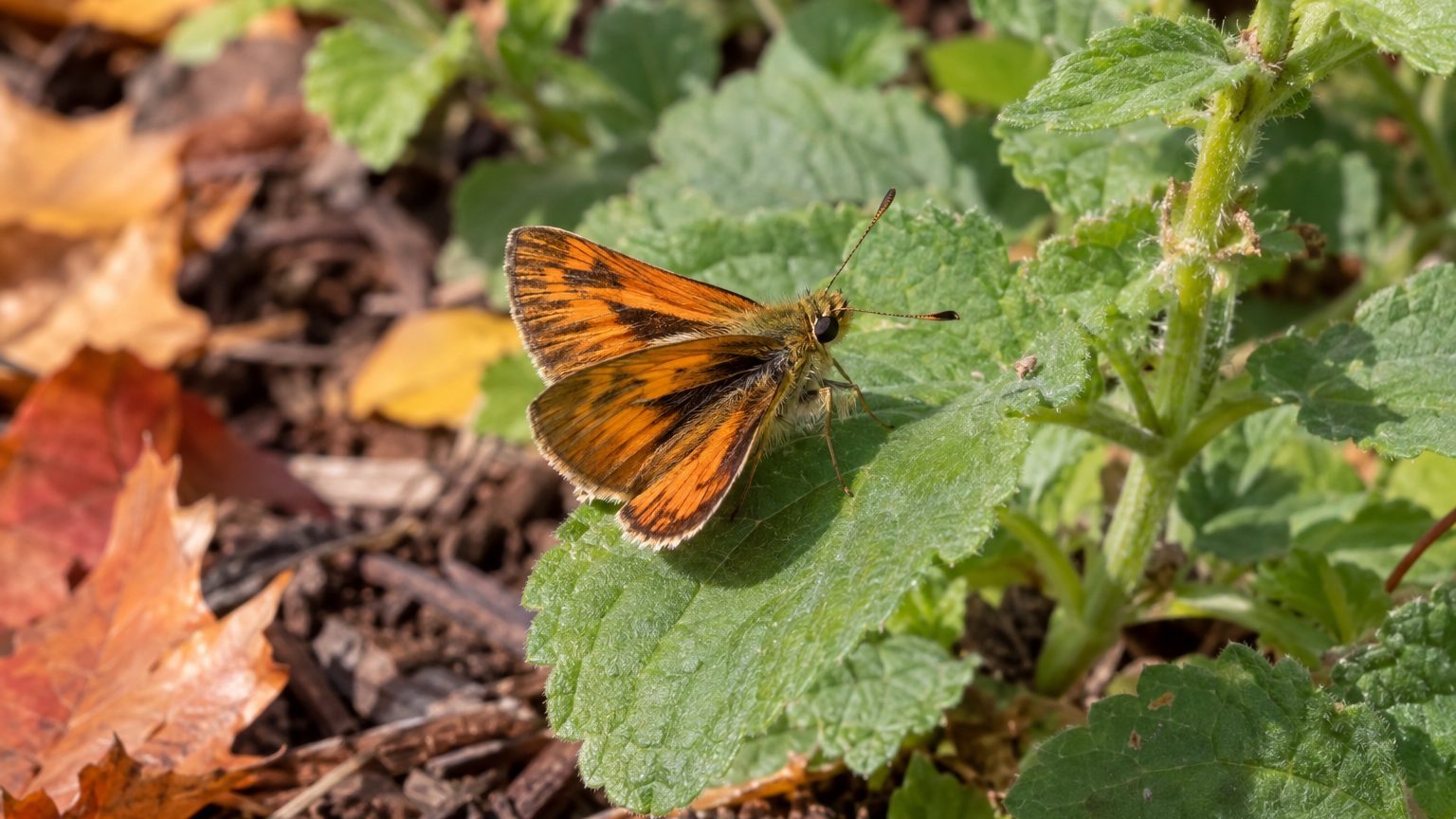
Fiery Skipper in Lawns: How to Spot Them and Get Rid of Them

Look low in the turf, where the larva feeds and hides, and you will see a few clear clues.

  • The larva has reddish markings on the front of a black head that looks too big for its body, with a narrow neck behind it.
  • Behind the neck sits a dark shield, followed by a greenish-pink body with a granulated texture.
  • Full-grown larvae reach up to 1 inch long, so they are easy to spot once you part the blades.
  • The first damage is a round brown spot, 1 to 2 inches across, where one larva has eaten all the grass.
  • Leaves in and around the spot are rolled into small shelters, and the larva feeds on the blades right beside them.
  • Damage is usually seen from May through September.

Rolled leaves with a larva inside are the confirmation, because other causes of brown spots leave no caterpillar behind.

Lawn Damage Mistaken for Fiery Skipper

Brown spots have many causes, and a few look close enough to send you after the wrong fix. Treating for a caterpillar that is not there wastes effort and leaves the real problem alone.

A quick look at the edge of the spot and at the grass blades usually settles it.

Looks like How to tell them apart
Pet urine spots Spots often have a darker green ring and sit where pets go. Fiery skipper spots have bare, eaten-out centers with rolled leaves nearby.
Grub damage Turf lifts like loose carpet because the roots are chewed. Fiery skipper larvae eat the leaves and leave the roots in place.
Drought stress Dry areas are large, irregular and often follow sun or slope. Skipper damage starts as separate round spots with grass eaten away.

Whichever one you suspect, part the grass at the edge of a fresh spot and look for the black-headed larva before you decide on anything.

When Fiery Skipper Damage Shows Up

The cause is the larva’s appetite. It feeds on grass leaves, rolls them into a shelter, and each one clears its own small circle, which is why the damage starts as scattered spots rather than one big patch.

Fiery skippers live year-round around the Gulf of Mexico, in the desert Southwest, in most of low-elevation California and in Hawaii. In those places, lawns can see repeated rounds of larvae because the insect never has to start over from a winter die-off.

In Florida, larvae pupate after 16 days and emerge as adults seven to ten days later. That quick turnaround explains how a few spots can multiply across the lawn before you expect it.

Elsewhere, damage still tends to appear from May through September, which is the stretch to watch closely.

How to Get Rid of Fiery Skipper

Start with confirming the larvae and judging how many there are, then move to cleaning up the places they hide.

  1. Part the grass at the edge of a fresh spot and look for the black-headed larva, so you know you are dealing with a skipper and not a look-alike.
  2. Count larvae in a square yard of damaged lawn, because in California the suggested point at which treatment may be needed is more than 15 larvae per square yard.
  3. Dethatch the turf if larvae are damaging it, since in California this removes the layer of debris where they shelter.
  4. Rake up and remove clippings only if you believe the infestation needs treatment, because in Florida this limits larval habitat and works as a control.
  5. Check back on the damaged spots soon after, so you can tell whether larvae are still feeding or the grass has begun to recover.

If your count is high or the spots keep spreading, your state’s cooperative extension office can tell you which treatments are labeled for lawns where you live. In California, counts below that threshold usually call for cleanup and patience rather than treatment.

How to Prevent Fiery Skipper

Prevention comes down to keeping the lawn from becoming a comfortable hiding place and catching the first spots early.

  • Dethatch the turf if skipper larvae are damaging it, which eliminates larval habitat.
  • In late spring, walk the lawn before the damage season opens in May and part the grass in any spots that look thin.
  • Through summer, mow regularly and watch for round brown spots, since the damage can continue through September.
  • Remove lawn clippings and other debris only if you believe the infestation requires treatment.
  • Along the Gulf Coast, in the desert Southwest, in low-elevation California and in Hawaii, keep scouting through winter, since the insect lives there all year.

Lawns farther north can ease up in cold months, because skippers that wander in during summer do not make it through winter there.

Common Questions

What Does a Fiery Skipper Egg Look Like?

Eggs are white and pearlescent when first laid, then turn blue after a couple of days. They are tiny, with an average diameter of 0.75 mm, so you are unlikely to find them without a hand lens.

What Does an Adult Fiery Skipper Look Like?

Adults resemble butterflies and measure about 1 inch long. A hooked knob at the end of each antenna is a useful identification clue.

Do Fiery Skippers Survive Winter in Northern States?

Those that stray north in summer do not survive the winter there. Lawns in those areas may see them arrive again in a later summer, but they will not carry over in the grass.

Cutworms in Lawns: How to Spot Them and Get Rid of Them

Cutworms in Lawns: How to Spot Them and Get Rid of Them

Small brown patches that appear overnight, with grass sheared off right at the soil line, usually point to caterpillars feeding in the dark. Cutworms chew stems and blades near the ground at night and hide by day, so you rarely catch them in the act. A few simple checks will tell you whether they are the cause and what to do next.

Signs of Cutworms in a Lawn

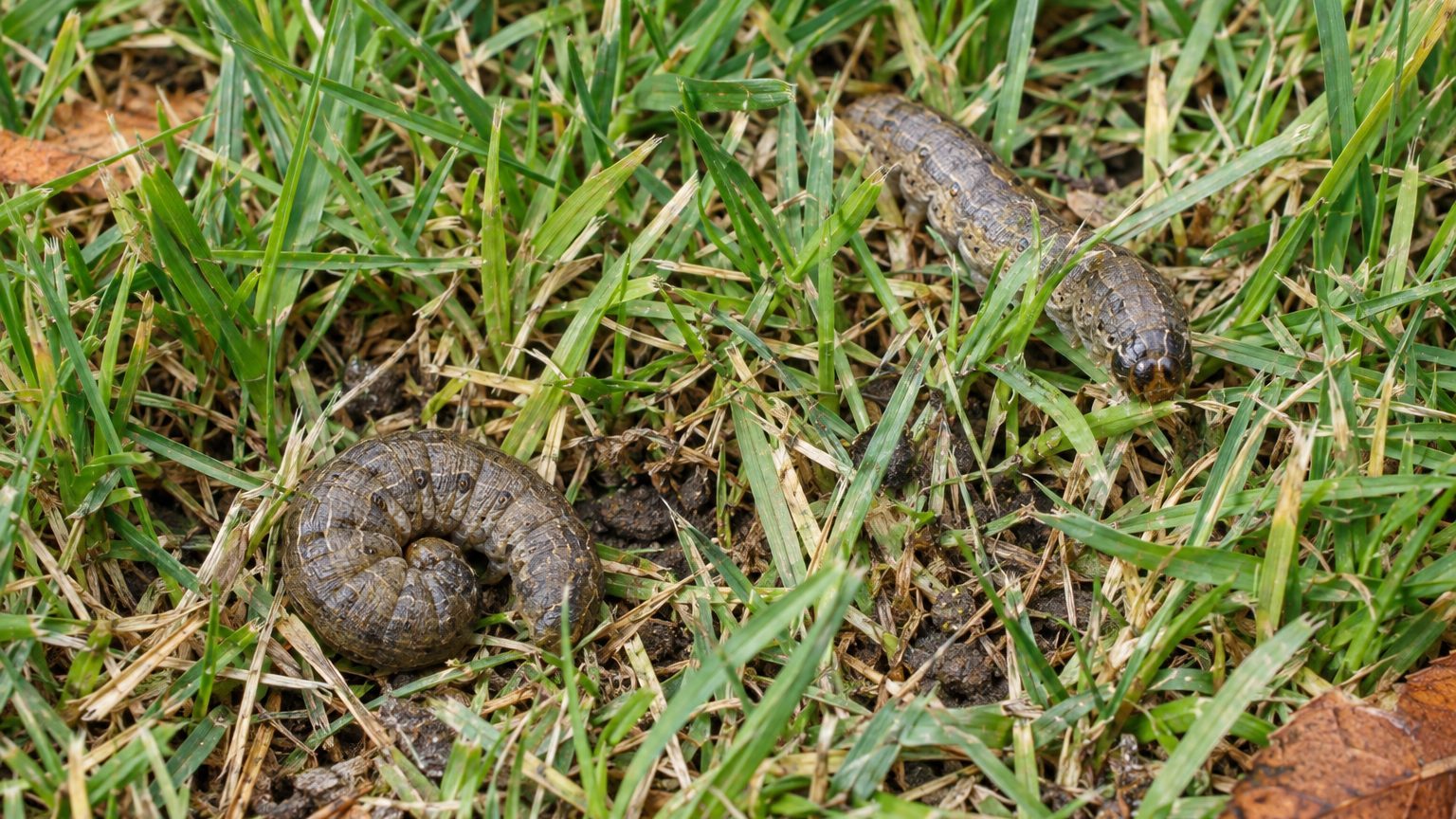
Cutworms on a lawn

Start with the damage itself, then look for the insect and the moth that starts it all.

  • Irregular pockmarked spots show up in the turf, and they grow more ragged as the caterpillar keeps feeding.
  • Blades and stems are chewed off near the soil, so the patch looks clipped rather than yellowed or wilted.
  • Larvae burrow through the thatch or into the ground by day, then come up to feed after dark.
  • Larger areas can be stripped to ground level when the caterpillars are numerous.
  • The moths are mottled brown or gray-brown, with a dagger-shaped marking on the wings of the black cutworm, and their eggs are smooth and yellow-cream, stuck singly to the tip of a grass blade.

Seeing the chewed stems and the burrowing larvae together is what settles the diagnosis.

Lawn Damage Mistaken for Cutworms

Early cutworm damage on a closely mown lawn looks a lot like ball marks or small dents, which is why it gets missed. On a putting-green-style yard, those little pockmarks can be the first warning.

Other problems also leave brown patches, so pair what you see with a simple test before treating anything.

Looks like How to tell them apart
Ball marks or dents in manicured turf A dent that stays the same size is just a mark. Cutworm pockmarks turn more irregular over time, and grass near the soil is chewed.
Armyworm feeding Armyworms are also listed as pests of all grasses, so the patch looks similar. Flush the spot with soapy water and compare the larvae that rise, since cutworms burrow and feed at night.

Dry-weather browning can look similar, but drought-stressed grass has intact stems rather than chewed edges at the soil line.

When Cutworms Damage Shows Up

The cause is the caterpillar stage of a night-flying moth. The moth lays eggs on grass blades, the eggs hatch, and the larvae feed on the turf until they finish growing. According to NC State Extension, eggs hatch within 3-10 days and the larvae finish development within 20-45 days, so a patch can appear quickly once the eggs are down.

How often this repeats depends on where you live. The black cutworm has four to five generations in the southern-most states, three to four in the transition zone, and 2 to 3 generations in the most northern parts of its range. A Gulf Coast lawn can face repeated waves through a long season, while an Upper Midwest lawn sees fewer.

No grass is off the list. Other cutworm species are occasional pests of home lawns of all kinds of turfgrass species. Endophyte-enhanced (E+) cultivars of perennial ryegrass, tall fescue, and creeping red fescue provide some resistance to black cutworms, which helps when you are choosing seed.

How to Get Rid of Cutworms

Confirm the pest first, then decide how far to go. Work in this order.

  1. Mix two tablespoons of liquid detergent into two gallons of water and pour it over one square yard of the damaged edge, because irritated larvae rise to the surface and show you what you are dealing with (this method comes from Indiana and the Midwest).
  2. In Indiana and throughout the Midwest, collect the larvae that surface a few minutes after the soap flush; they rise from largest to smallest and can be identified before you choose a treatment.
  3. Count them against the local threshold. According to NC State Extension, 2-6 larvae per square yard may indicate a need for an insecticide application, though that number can change with the site.
  4. Mow the damaged area and rake out the clippings, because in North Carolina, removing clippings from a recently mowed spot may help take eggs out of the turf.
  5. Contact your state cooperative extension office if the count is over the threshold, since it can tell you which products are approved where you live and how to apply them.

Below the threshold, healthy turf usually outgrows the loss, so patience and good care are often enough.

How to Prevent Cutworms

Prevention is mostly about keeping the turf vigorous and giving moths fewer places to settle through the year.

  • Choose endophyte-enhanced cultivars of perennial ryegrass, tall fescue, or creeping red fescue where they fit your site; in Indiana and throughout the Midwest, broader turfgrass selection should match the site and use.
  • Proper mowing, irrigation, fertilization, thatch management, and cultivation help keep turf healthy and vigorous.
  • In Indiana and throughout the Midwest, manage thatch buildup, since cutworm larvae shelter and burrow there during the day.
  • After aerating, fill the holes soon with sand or other top-dressing, because larvae readily move into aerification holes (this advice is from Indiana and the Midwest).
  • After mowing in areas where you have seen moths or damage, collect the clippings, which in North Carolina may help remove eggs.

Check the lawn edges on a regular schedule in warm weather, because early detection keeps a small patch from turning into a stripped area.

Common Questions

Do Cutworms Kill Grass Roots?

They feed on stems and blades near the soil rather than the roots, so grass often recovers if the feeding stops and the lawn is cared for properly.

Why Do I Only Find Damage in the Morning?

Cutworms chew at night and burrow into thatch or soil by day, so the damage is visible while the caterpillars are hidden.

Can Moths in the Yard Mean Cutworms Are Coming?

Mottled brown or gray-brown moths near the lawn may be the adults that lay eggs on grass blades. Spotting them is a cue to scout the turf for chewed patches.

Crane Fly Larvae in Lawn: How to Spot Them and Get Rid of Them

Crane Fly Larvae in Lawn: How to Spot Them and Get Rid of Them

Pull back a patch of thin, yellowing turf in early spring and you may find gray-brown, legless grubs curled in the thatch and near the soil surface. Those are crane fly larvae, and they feed on grass roots and crowns. Telling them apart from other grubs, and knowing when they are worth treating, saves you from needless work.

Signs of Crane Fly Larvae in a Lawn

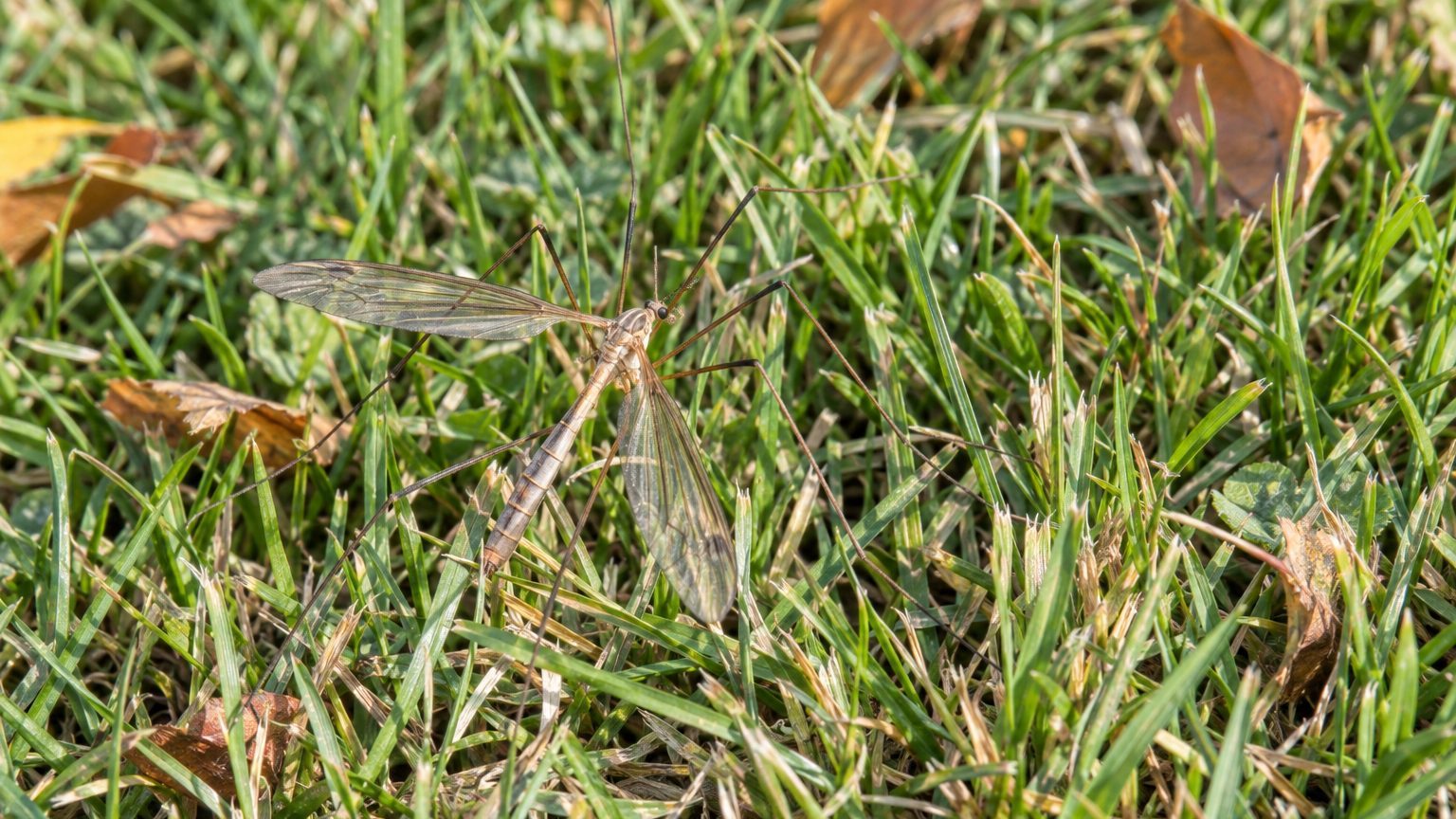
Crane Fly Larvae in Lawn on a lawn

Larvae hide below the surface, so the lawn offers a clue and the soil confirms it.

  • Dig into a thinning patch and you may find a tough, gray to brown, legless grub, 1-1.25 inches long once mature, with no obvious head.
  • Dying patches of turf are most noticeable in March and April, right when the lawn should be greening up.
  • The thinning tends to show up in damp spots, since larvae do very well in wet soil.
  • Weeds move into the dead patches as the grass gives way.
  • Gray to brown pupae, about 1 inch long, may turn up in the soil, and they do not feed.

Adults look like oversized mosquitoes at roughly 0.5 inches long, but they do not bite and do not harm the grass.

Lawn Damage Mistaken for Crane Fly Larvae

Several other problems leave tan, thin turf in spring. Confirm what you see aboveground with what you find when you dig.

Digging a small square of sod helps settle these questions.

Looks like How to tell them apart
Winter dieback or snow mold Matted, straw-colored or grayish patches right after the snow melts, and the soil below holds no grubs when you turn it over.
White grub damage Turf that peels back like a loose carpet, and the grubs underneath are C-shaped with visible legs, unlike the legless gray crane fly larva.
Drought or compaction stress Dry, hard ground in the sunniest or most trampled spots, while crane fly thinning favors the wet areas.

Dog urine spots can also pass for crane fly damage, though they usually show a dark green ring around a dead center and no grubs in the soil.

When Crane Fly Larvae Damage Shows Up

The cause is the larval stage of the insect, which feeds on grass while it lives underground. In the Pacific Northwest, larvae are in the soil from early October until the following September, which is 11 months of the year, so the feeding is long even if the damage stays hidden for much of it.

Life-cycle timing varies by region. In Illinois, adults appear during summer, eggs hatch in the fall, and the insect overwinters as a larva. In Colorado, adults mate and lay eggs in turfgrass soon after emerging in late summer and fall, so the next generation starts feeding before winter.

Moisture decides where the trouble lands. Eggs and larvae need high moisture to survive, and most species breed in aquatic or semi-aquatic habitats. Low spots and lawns that stay soggy are favorable habitat, while improving drainage makes consistently wet areas less favorable to crane flies. Large populations combined with wet conditions are what turn a nuisance into thinning and bare patches.

How to Get Rid of Crane Fly Larvae

Start by confirming the problem and counting, since light feeding often needs no treatment at all.

  1. Dig a section of sod 1 foot long, 1 foot wide and 1 inch deep with a square-end shovel, as is advised in the Pacific Northwest, so you see what is living in the root zone.
  2. Count the larvae in that square foot, because in healthy, well maintained turf in Colorado the treatment threshold is 20 larvae per square foot.
  3. Skip treatment if the count is below your local threshold, since larval feeding is usually a nuisance with no significant injury.
  4. In Illinois, reduce moisture by avoiding watering when the lawn is already damp, because eggs and larvae need high moisture to survive.
  5. Improve drainage in areas that stay wet, as crane flies thrive in wet soils and drier ground discourages them.
  6. Reseed the bare patches once the larvae are under control, so weeds do not take over the dead spots.

If the count is high, your state extension office can tell you which treatments are approved where you live and what timing suits your local cycle.

How to Prevent Crane Fly Larvae

Prevention is mostly about keeping the top layer of soil on the dry side during the season when adults are laying eggs.

  • Check low spots and downspout outlets for standing water, and improve drainage where the ground stays soggy.
  • From Memorial Day to Labor Day, water in the Pacific Northwest with 0.25 inch four times per week, a total of 1 inch, rather than frequent light sprinkling.
  • In the Pacific Northwest, mow once a week to a height of 2 to 3 inches to keep the turf dense.
  • In Colorado, hold back extra irrigation in late summer and fall, when adults emerge and lay eggs in turfgrass.
  • In early spring, walk the lawn and look for thin, damp patches so you can dig and count before the damage spreads.

Healthy, dense turf tolerates the larvae that do show up far better than a thin, stressed lawn.

Common Questions

Are Crane Flies Harmful to People or Pets?

No. The adults look like large mosquitoes but do not bite, and the larvae stay in the soil. The only damage is to the turf.

Will Crane Fly Larvae Kill a Healthy Lawn?

Usually not. Feeding is generally a nuisance, though large populations combined with wet conditions can cause thinning and larger bare patches.

Do Adult Crane Flies in the House Mean the Lawn Has Larvae?

Not by itself. Adults near lights do not by themselves confirm a lawn infestation. Check a thin patch by turning over the sod and counting what you find before deciding anything.

Chinch Bugs in Lawns: How to Spot Them and Get Rid of Them

Chinch Bugs in Lawns: How to Spot Them and Get Rid of Them

A brown patch that creeps outward from the hottest, sunniest corner of the lawn, usually along a driveway or sidewalk, is the classic start of a chinch bug problem. Water does not green it back up, and confirming the insects before treating can save needless work.

Signs of Chinch Bugs in a Lawn

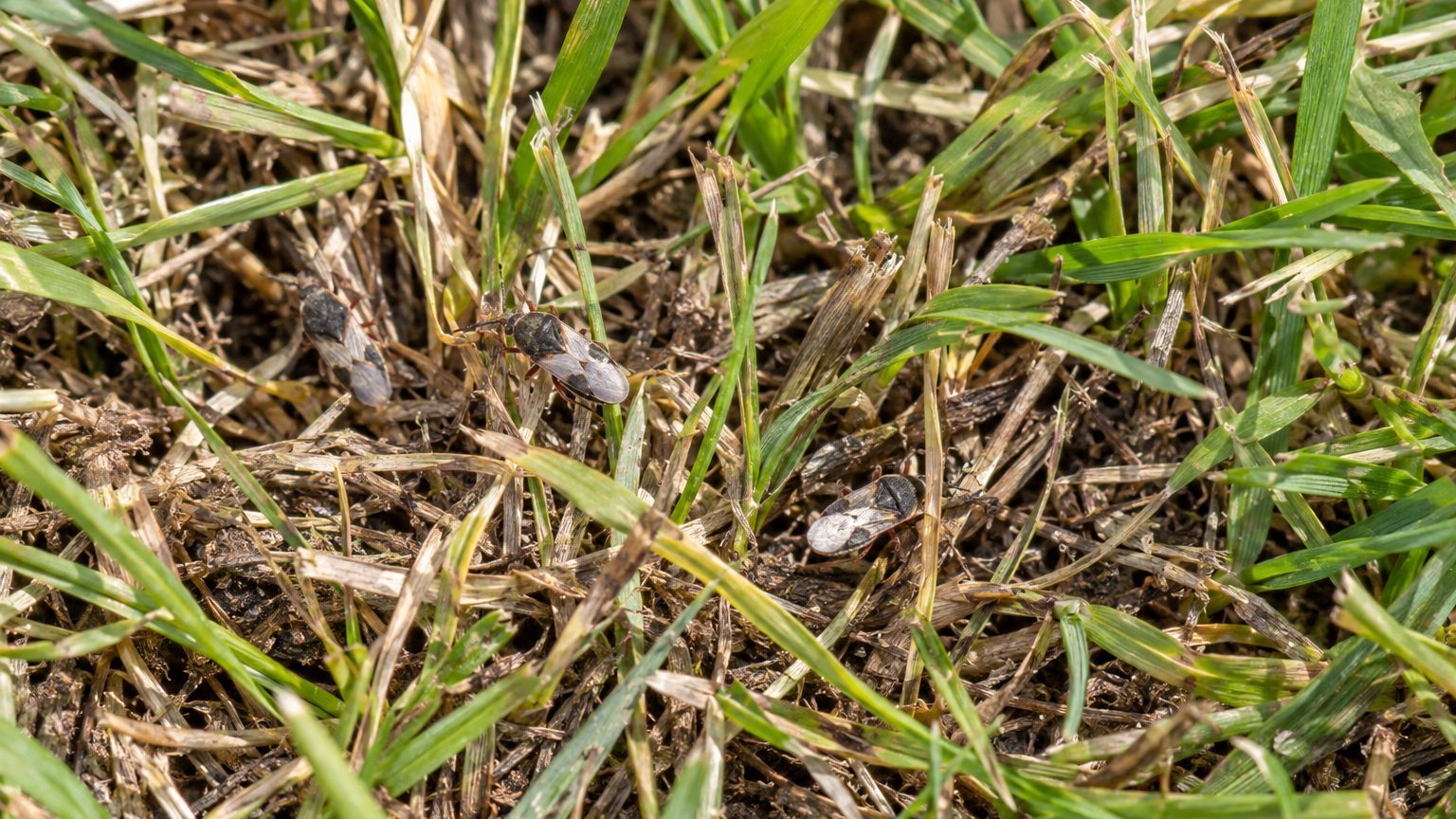
Chinch Bugs on a lawn

Start with the pattern of the damage, then get down on your knees at the edge of a patch to look for the insects themselves.

  • Patches of brown, dead grass spread outward over time instead of staying the same size.
  • Irregular areas first turn yellow, then brown, and the yellow rim sits right where the lawn is still green.
  • Damage shows up first in sunny spots during hot, dry stretches, often beside pavement.
  • Young nymphs are reddish with a white band across the back, and they darken to black as they near adult size.
  • Nymphs run from 1/20 to 1/5 inch long, while adults measure about 3.5 mm, so you will be looking for specks near the soil.

Part the grass at the base of the blades along the patch edge, where the insects hide in the thatch and around the crowns.

Lawn Damage Mistaken for Chinch Bugs

Several problems brown a lawn in summer, and drought stress is the one that fools people most, since chinch bugs also like heat and sun. Use the pattern of damage together with the insects at the grass bases to confirm the problem.

Looks like How to tell them apart
Drought stress: dull, bluish-brown turf in sunny areas Patches do not creep outward in a yellow rim, and no small insects turn up at the grass bases. The lawn perks up after a deep soaking.
Grub damage: irregular brown patches in summer The turf pulls up like loose carpet because the roots are chewed off. Chinch bug turf stays rooted, with insects at the crowns.

Dog urine spots can also look similar. They are round, with a dark green ring around a dead center, and they do not spread the way chinch bug patches do.

When Chinch Bugs Damage Shows Up

The damage comes from the insects sucking sap from the grass, and the injury usually becomes visible during hot, dry periods in the sunniest parts of the lawn. Warmth speeds everything up. In Ohio, eggs take about 20–30 days to hatch at temperatures below 70 degrees F but can hatch in as little as a week when above 80 degrees F, so a hot spell can speed population growth.

In Ohio, a single female may lay up to 200 eggs over 60–80 days, and populations warrant closer attention in June and July. In the Southeast, females lay around four eggs per day in leaf sheaths, thatch and soft soil.

Grass type decides how hard you are hit. Lawns with 50 percent or more bluegrass are the most likely to be attacked. St. Augustine grass is the most seriously injured, while zoysia, bermuda, bahia, and centipede grasses are also subject to attack. Perennial ryegrasses, fine fescues and tall fescues with endophytes are highly resistant.

The numbers needed for visible harm are modest. In Georgia, 20 to 25 chinch bugs per square foot can cause damage.

How to Get Rid of Chinch Bugs

Confirm the insects first, then act in this order so you do not spray a problem you do not have.

  1. For southern chinch bugs in California, inspect around the grass bases or run a drench test to confirm that the insects are present.
  2. Count the insects in a square foot, because in Ohio populations of 25–30 individuals per square foot warrant control, especially in June and July.
  3. Water the lawn if the soil is dry, since in Georgia the guidance is to keep pesticides off dry soil to avoid chemical injury to the turf.
  4. Contact your state extension office for what is currently approved and labeled where you live, since products and rules differ from state to state.
  5. Treat the whole damaged area plus a margin of green grass around it, because the insects keep moving into healthy turf at the edge.
  6. Reseed or resod dead patches once the insects are under control, using a resistant grass where your region allows it.

Dead turf does not regrow from the crowns, so expect to rebuild those spots rather than wait for them to green up.

How to Prevent Chinch Bugs

Prevention is mostly about keeping the lawn from becoming the soft, thatchy, stressed turf that chinch bugs favor, and the timing follows the season.

  • In California, reduce thatch when the layer is thicker than 1/2 inch, because thicker thatch encourages chinch bug and caterpillar populations.
  • In California, reduce nitrogen fertilization as a cultural control for southern chinch bugs.
  • In California, irrigate adequately and check sunny edges for early yellowing.
  • In June and July, scout the sunniest areas more often, since that is when Ohio lawns see numbers climb.
  • When renovating or overseeding, consider perennial ryegrass, fine fescue, or endophyte-enhanced tall fescue for their high resistance.

On St. Augustinegrass in California, resistant varieties such as Floralawn, Floratam and FX-10 are the recommended planting choices.

Common Questions

What Do Chinch Bug Eggs Look Like?

The eggs are bean-shaped and tiny, about 0.84 mm long by 0.25 mm wide, with one end roundly pointed and the other blunt. They are laid in leaf sheaths, thatch and soft soil, so you will rarely see them without a magnifier.

How Many Eggs Can a Chinch Bug Lay?

In the Southeast, a female can lay up to 250 eggs in her lifetime. That rate explains why a small, unnoticed group can turn into a spreading patch once the weather turns hot and dry.

Will Grass Grow Back After Chinch Bugs?

Grass that was killed will not recover on its own, though lightly yellowed turf at the edge of a patch can bounce back once the insects are gone and the lawn is watered. Plan on reseeding or patching the brown center after the infestation is cleared.

Black Turfgrass Ataenius: How to Spot Them and Get Rid of Them

Black Turfgrass Ataenius: How to Spot Them and Get Rid of Them

Irregular brown patches that look thirsty even though the sprinklers run can signal black turfgrass ataenius in a lawn. The culprit is a small beetle whose grubs feed on grass roots. Knowing what the grub and the adult look like, and when they work, makes the fix straightforward.

Signs of Black Turfgrass Ataenius in a Lawn

Black Turfgrass Ataenius: How to Spot Them and Get Rid of Them

Start with the grub itself, because the roots tell the story before the grass leaves do.

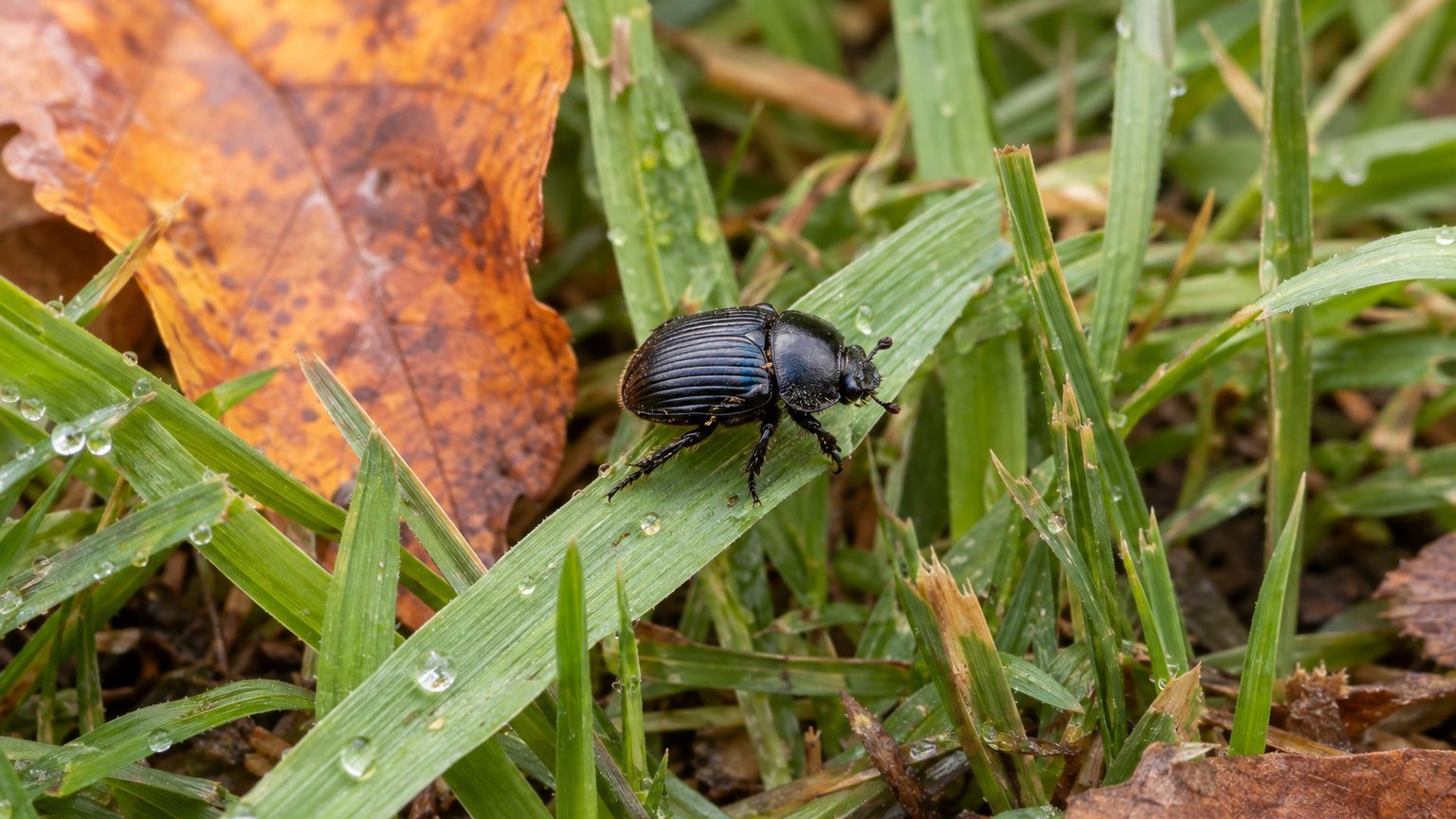
  • Digging around the roots turns up whitish, C-shaped grubs with 6 legs and reddish heads, up to 1/3 inch long.
  • The turf pulls up easily in irregular dead patches, because the larvae have eaten the roots that held it down.
  • The affected grass looks drought stressed, even where irrigation is sufficient.
  • Adult beetles are shiny jet black, about 1/5 inch long, with parallel grooves on the wing covers.
  • According to UC IPM, University of California, adults stay continuously active during the warm months in inland areas.

Pairing the thirsty look with grubs in the soil is what settles the diagnosis.

Lawn Damage Mistaken for Black Turfgrass Ataenius

Several lawn problems produce the same dull, dying patches. The difference lies underground and in how the turf responds to water.

Because the grubs are so small, a quick glance at the soil can miss them. Dig along the edge of a patch, where living and dying grass meet.

Looks like How to tell them apart
Plain drought stress Grass revives after a deep watering and roots are intact. With ataenius, the patch stays stressed despite enough irrigation, and the roots are chewed with grubs in the soil.
Larger white grub damage Turf lifts like a carpet, but the grubs are bigger. The damage threshold is 10 to 12 per square foot for the larger species, compared to 50 for ataenius.

Fungal disease can look similar. It shows on the blades, with spots or discolored leaf tissue, while ataenius leaves the leaves intact and works on the roots.

When Black Turfgrass Ataenius Damage Shows Up

The cause is the larval stage. Female adults lay clutches of 11 or 12 eggs, and the grubs that hatch feed on roots, so the damage follows each generation as it grows.

Timing depends on climate. According to UC IPM, University of California, at least two or three generations develop each year, with up to five in the warmest part of the state. Adults stay continuously active during warm months in inland areas, so the grub pressure there can last through the season.

According to UC IPM, University of California, the beetles probably overwinter in reproductive dormancy, so inspect the roots again if damage builds as the weather warms.

How to Get Rid of Black Turfgrass Ataenius

Confirm the grubs first, then match the response to their numbers.

  1. Dig around the roots at the edge of a damaged patch, because that is where whitish, C-shaped grubs with reddish heads show up.
  2. Count the grubs in a square foot of soil, because in California control may be needed only above about 40 per square foot.
  3. Hold off on treatment if the count is lower, since healthy turf can tolerate a small population.
  4. Schedule irrigations carefully, because in California managing water is one way to help turf withstand low levels of the grubs.
  5. Adjust your mowing practices, since the same California guidance points to mowing changes that help the grass cope.
  6. Ask your state extension office about any product registered locally, because labels and approvals differ from state to state.

If damage returns, sample the soil again to check for grubs.

How to Prevent Black Turfgrass Ataenius

Prevention starts with healthy turf and regular checks for grubs.

  • Sample the soil to look for larval stages.
  • Schedule irrigation carefully so the turf can better withstand low grub levels.
  • Adjust mowing practices so the turf can better withstand low grub levels.
  • Maintain healthy plants with proper cultural practices.
  • When thirsty patches appear despite watering, dig and check the roots before changing your irrigation.

Careful irrigation and mowing can help turf withstand low grub levels.

Common Questions

Do Black Turfgrass Ataenius Grubs Damage Grass as Much as Other White Grubs?

Individually they do less harm, which is why the damage threshold is 50 per square foot, far above the 10 to 12 for larger species. A lawn can carry a fair number before it suffers.

Why Does My Lawn Look Dry When the Sprinklers Are Working?

Roots chewed by grubs cannot take up water, so the grass looks drought stressed even with enough irrigation. Digging up a small section will show whether grubs are the reason.

What Does the Adult Beetle Look Like?

It is shiny jet black, about 0.2 inch long, with parallel grooves on its wing covers. It is small enough to pass for a speck of debris on the turf.

Billbugs in Lawns: How to Spot Them and Get Rid of Them

Billbugs in Lawns: How to Spot Them and Get Rid of Them

Dead patches that turn straw-colored in mid to late summer, even though you have watered, often point to billbug larvae. They feed on the crown and roots, so the damage looks like drought but behaves differently. Spotting the larvae and acting at the right moment keeps a small patch from spreading.

Signs of Billbugs in a Lawn

Billbugs in Lawns: How to Spot Them and Get Rid of Them

A useful sign is a stem that gives way when you pull on it, with other clues building around it.

  • Tugging a stem upward makes it break off at the crown, revealing a hollowed stem packed with sawdust-like excrement.
  • Early damage appears as dead spots about 2-3” in diameter, which can merge into larger patches.
  • Brown or yellow patches are most common and most severe in the mid to late summer.
  • White, legless grubs with a red-brown head capsule sit in the thatch and upper soil, growing from 1/25–1/3 inch (1mm–8mm) in length.
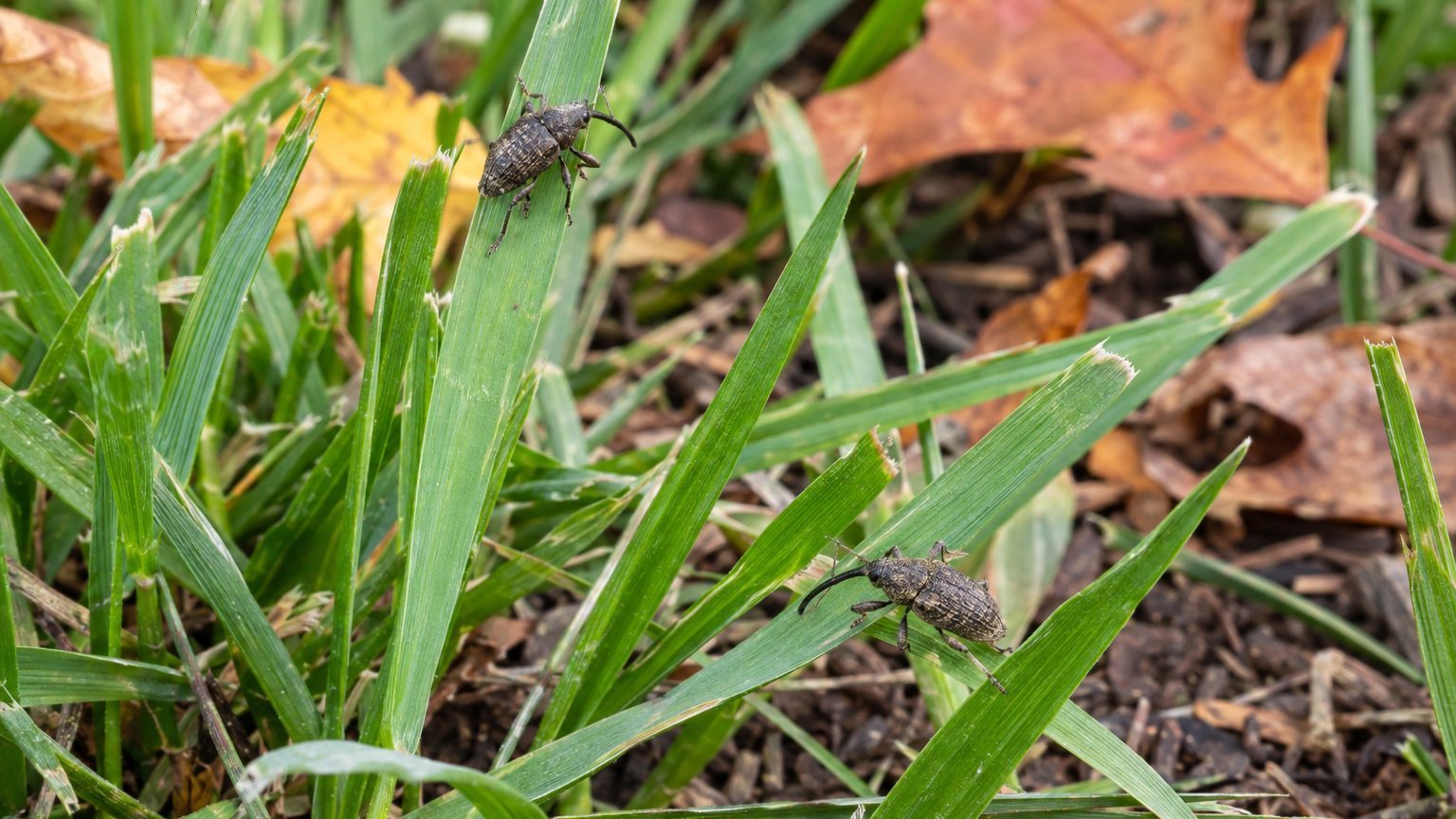
  • Adult weevils, black to red-brown and 1/4–1/2 inch (7–12mm) long, walk across sidewalks and driveways.

Because billbug feeding can hollow the stem, the grass often dies before you see the culprit, so the tug test is worth doing early.

Lawn Damage Mistaken for Billbugs

Drought stress and other grubs both produce brown patches in summer, which is why billbugs often get blamed or missed. Each has its own giveaway, and checking the turf closely keeps you from treating the wrong problem.

Pull a handful of the affected turf and look at what happens to the stems and what lives beneath them.

Looks like How to tell them apart
Drought stress Grass wilts and browns evenly in the dry, sunny areas, and the stems stay intact and solid when tugged, with no sawdust-like debris inside.
Other white grubs Turf lifts like loose carpet because the roots are cut, and the grubs you find have legs, unlike the legless billbug larvae.

Leaf diseases can also leave tan patches, but the leaf blades show spotting or lesions, while billbug damage starts at the crown with stems that snap off cleanly.

When Billbugs Damage Shows Up

The cause is feeding by the larvae, not the adults. The grubs feed on the crown and roots, and the lawn shows damage when the dying grass turns brown. That delay is why the damage seems to arrive suddenly in mid to late summer.

Timing of the insects themselves varies by place. In Pennsylvania, females lay eggs in a hollowed chamber in the grass stem from late April through June, and the larvae hatch in about 7 to 14 days. In Indiana, adult bluegrass billbugs become active in April or May as soil temperatures at the surface warm to about 65°F.

Billbugs are listed as pests of all grasses, so no lawn type is exempt. Dry, stressed turf shows the injury sooner, which is why summer heat makes the patches look worse.

How to Get Rid of Billbugs

Confirm the problem before deciding whether it needs action.

  1. Tug a few stems in the damaged area, so you can see whether they break off at the crown with sawdust-like debris inside.
  2. Dig around the roots and look for whitish, C-shaped, legless grubs with reddish heads.
  3. Count the grubs in a square foot, since in California the suggested treatment threshold is 1 per square foot, while in Indiana densities of 10/ft 2 are not uncommon and most healthy turfgrasses tolerate them.
  4. In Indiana, most healthy turfgrasses can tolerate some larvae without significant damage.
  5. Contact your state extension office if the count is high, because it can tell you which products are approved where you live and the right timing.
  6. Reseed or patch the dead areas once the feeding is under control, so weeds do not move in.

Dead turf will not green up again, so repair comes after control, not before. Healthy grass around the patch can often fill in on its own if the grubs are dealt with.

How to Prevent Billbugs

Prevention is mostly about choosing the right grass and keeping it strong through the season.

  • In Indiana, check lawn edges and driveways for adults walking across hard surfaces in April or May.
  • When seeding or overseeding, choose perennial ryegrass or fescue with endophytes, a fungus that grows within the plant and, in Utah, is noted to reduce billbug feeding and damage.
  • According to Purdue Extension, a stand made up of at least 40% plants with endophytes (E+) is generally recommended for billbug resistance, so aim for that mix when renovating.
  • In Pennsylvania, scout by tugging stems from late April through June, when eggs are laid.
  • In midsummer, water deeply during dry spells so stressed turf does not show damage sooner.

A thick, healthy lawn tolerates feeding better than a thin one, so good turf care offers useful long-term protection.

Common Questions

Do Billbugs Only Attack Kentucky Bluegrass?

No. Billbugs are listed as pests of all grasses, though some lawns show damage more than others depending on stress and how thick the turf is.

How Big Are Billbug Grubs?

Mature third-instar larvae are approximately 1/4 to 3/8 inch long, white with a brown head capsule and no legs, so you may need to look closely in the soil.

Will My Lawn Recover from Billbug Damage?

In Indiana, healthy turf may tolerate billbug larvae without significant damage, but dead patches still need repair after the grubs are controlled.

Armyworms in Lawns: How to Spot Them and Get Rid of Them

Armyworms in Lawns: How to Spot Them and Get Rid of Them

Brown, ragged patches that spread quickly, with birds working the turf, often point to armyworms. These caterpillars chew grass blades and travel in groups, so a lawn can go from green to scorched very quickly. Knowing what they look like and when they hit makes the response far calmer.

Signs of Armyworms in a Lawn

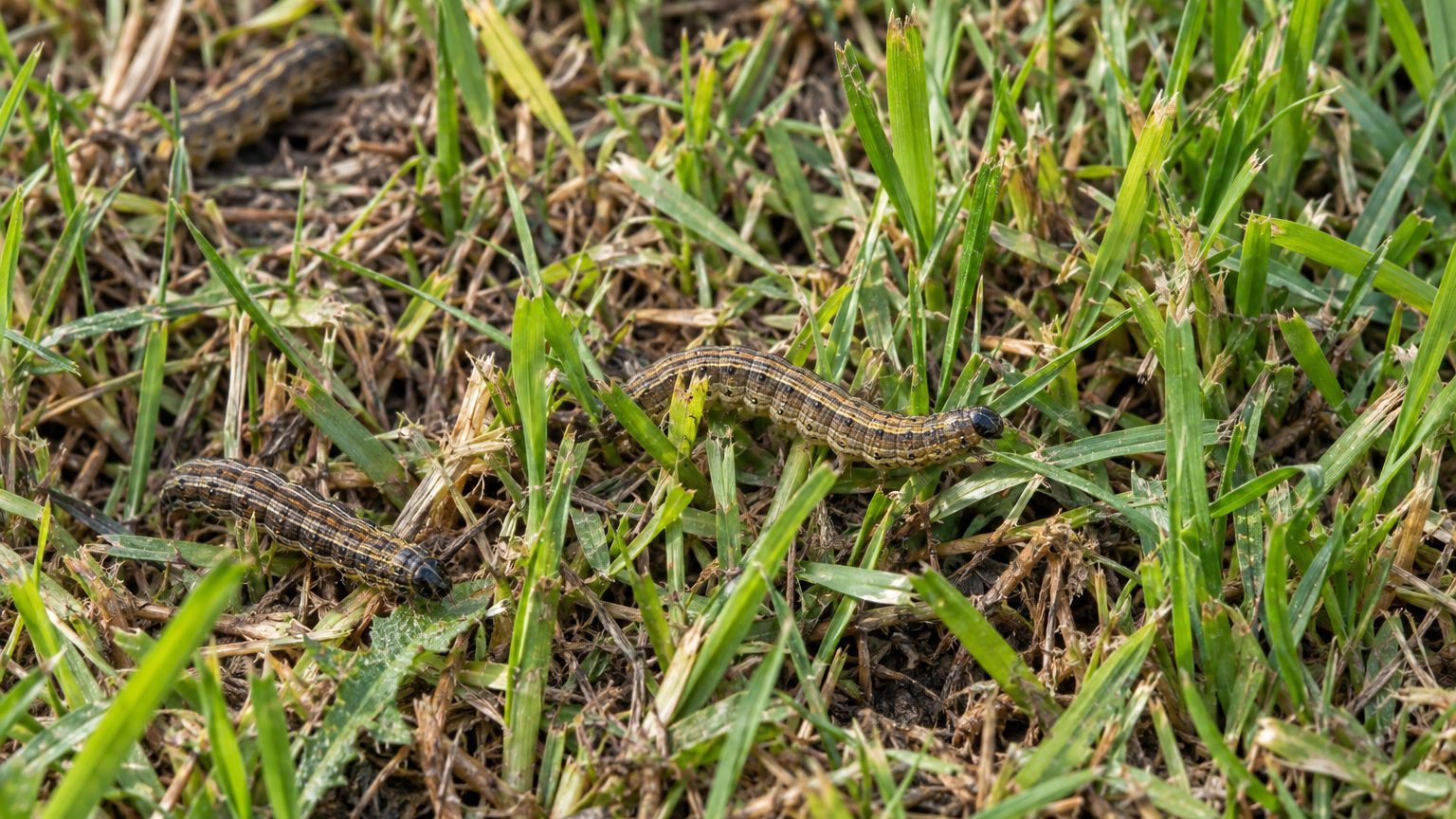
Armyworms on a lawn

Armyworm damage shows up as a mix of chewed grass and small caterpillars hiding in the turf, so check the lawn closely.

  • Birds gather on the lawn to feed, and their presence often signals a heavy infestation.
  • Irregular brown patches appear and grow quickly when large masses of caterpillars are feeding together.
  • Grass blades look skeletonized or have chewed margins, because young caterpillars feed at night.
  • True armyworm larvae feed for 3-4 weeks and reach about 35 mm in length.
  • Moths flying around the yard are a warning, with true armyworm adults reddish-brown and marked with a white dot on each wing, while fall armyworm adults are ash-gray.

Finding brown patches along with feeding birds is a good reason to scout the turf.

Lawn Damage Mistaken for Armyworms

Brown patches have many causes, and several look like caterpillar feeding from the sidewalk. A quick check of the grass blades and the thatch usually sorts them out.

Armyworms leave chewed blades and live caterpillars near the soil surface, while the roots stay firmly in place.

Looks like How to tell them apart
Cutworm damage Small, sunken patches with chewed blades, found along with caterpillars that curl up in the thatch, though cutworms are usually fewer and more scattered.
Drought stress Grass turns dull and straw-colored in broad areas, blades stay whole with no chewing, and no caterpillars appear when you flush the thatch with soapy water.

Grubs can also cause brown turf, but they feed on roots, so the sod lifts like a loose carpet. Armyworms are described as leaving roots and the crown undamaged, which distinguishes them from root-feeding grubs.

When Armyworms Damage Shows Up

Damage follows the life cycle. Eggs hatch into larvae that feed on the leaves, and the feeding is heaviest as the caterpillars grow large. Once they finish, they burrow into the thatch and soil to pupate, then emerge as moths that lay the next round of eggs.

The gap between pupation and new adults varies by place. In Texas, adults emerge 10-14 days later, in South Carolina the larvae pupate in the thatch and soil and emerge 10 to 20 days later, and in Utah adults emerge in 2-3 weeks. In warm climates, that quick turnaround means new waves can follow one another.

Turf type matters too. Armyworms feed on most cool-season and warm-season grasses, and they like well-fertilized, well-kept bermudagrass, which is the most common host. They are also fond of cool-season turf, and they feed and migrate in large groups, so damage can appear suddenly in part of the lawn and spread across the yard.

How to Get Rid of Armyworms

Treatment starts with confirming the caterpillars are there and counting them.

  1. Mix a soap flush, using 2 tablespoons of liquid dishwashing soap in 1 gallon of water (the Alabama recipe), so hidden larvae come up to the surface where you can see them.
  2. Pour it over a patch of lawn and watch the surface for 5-8 minutes, which is the time Utah guidance gives for caterpillars to surface.
  3. Count the larvae in several spots at the edge of the damage, because that is where they are actively feeding.
  4. Compare your count with the threshold, which in Utah is 10-15 larvae per square yard with obvious damage, and treat only if the numbers and the damage both justify it.
  5. Water and fertilize as usual if the count is low, since in Utah healthy turfgrass can tolerate low to moderate infestations when it is properly irrigated and fertilized.
  6. Call your state extension office before buying any insecticide, and if you do use a contact product, hold off on watering, because in South Carolina the advice is to avoid irrigation or rainfall for 24 hours after application.

Because these caterpillars do not damage roots or crowns, Utah guidance notes that turfgrass can usually recover over time without an insecticide treatment. Brown patches that look bad now often green up again.

How to Prevent Armyworms

Prevention is mostly about keeping turf strong and checking it when moths are active.

  • Properly irrigated and fertilized turfgrass can tolerate low to moderate infestations.
  • Walk the lawn regularly and watch for moths or birds feeding on the turf.
  • When moths appear in the yard, do a soap flush on a small area to catch caterpillars before patches form.
  • Keep checking the edges of any brown spots for feeding larvae.
  • After damage appears, follow local watering and mowing guidance while the grass recovers.

Avoid overfeeding bermudagrass with nitrogen, since lush, well-fertilized turf is what these caterpillars prefer.

Common Questions

Will Grass Grow Back After Armyworms?

Usually yes. Turfgrass can recover over time because armyworms leave the roots and crown undamaged.

What Time of Day Should You Look for Armyworms?

Young caterpillars feed at night, and a soap flush can bring larvae from the thatch to the surface.

Do Birds on the Lawn Mean Armyworms?

Often, since birds are drawn to armyworms and cutworms, and heavy bird activity can indicate a bad infestation. Confirm with a soap flush before you act.

The almanac, state by state. Every date on this site comes from a state’s own frost facts and its extension service’s calendar — and says where it comes from.