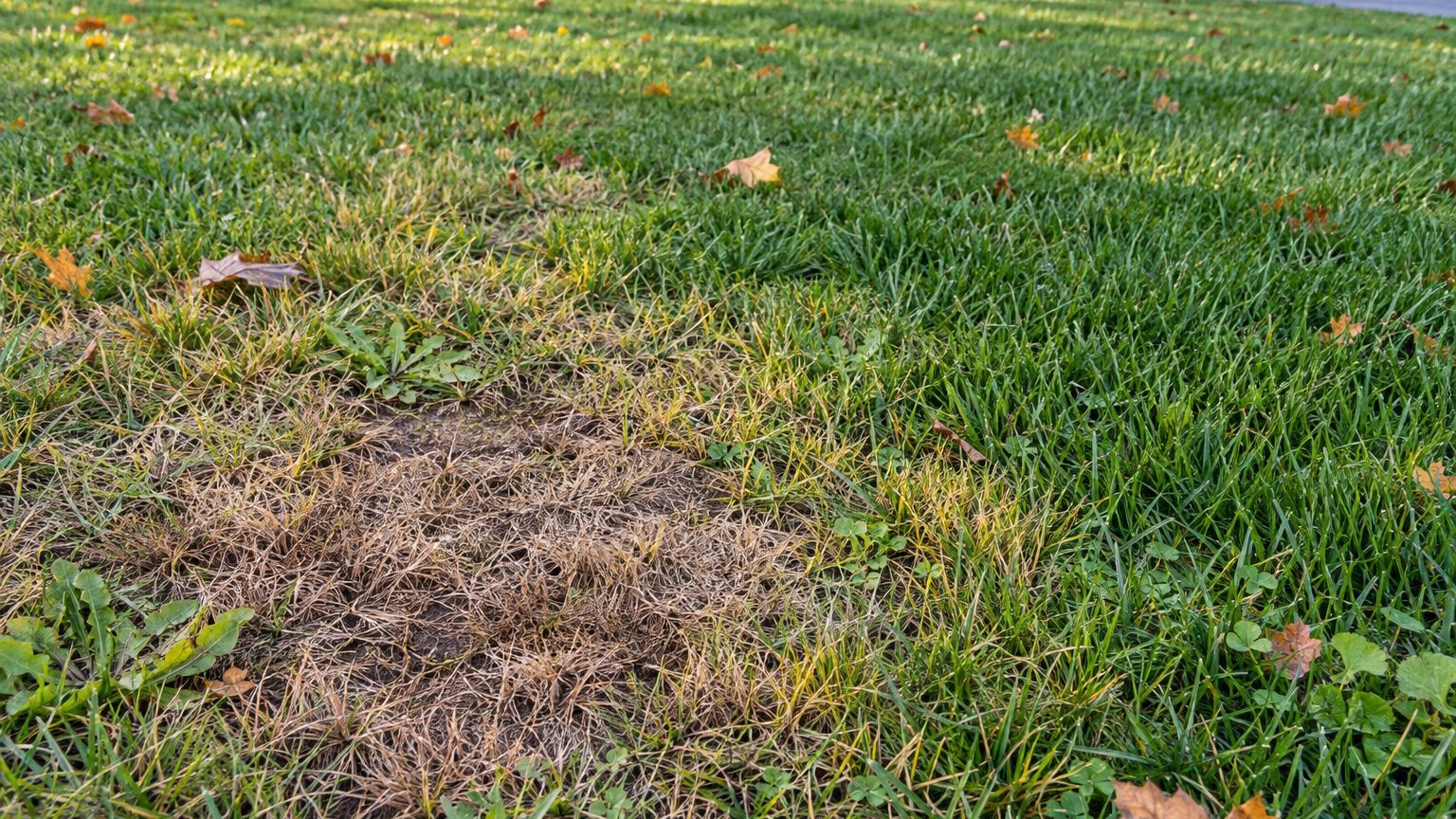
Brown patches that appear after a stretch of summer heat, a lawn that thins out under a maple, and crabgrass pushing through the edge of the driveway are the usual Illinois complaints. These problems often trace back to familiar causes, and each leaves a pattern you can learn to read before you reach for anything in the shed.
Lawn Pests and Diseases in Illinois
Crabgrass in Thin Spots

Crabgrass is a coarse, light green grass that sprawls flat from a central point, usually along sidewalks and in thin turf. It sprouts as the soil warms in spring. A pre-emergence preventer works best in April and still helps in May.
Thick, tall-mown grass shades the seedlings out, which helps suppress crabgrass.
Thatch Building Up
Thatch is the spongy brown layer between the green blades and the soil. A layer up to 1/2 inch is healthy. Beyond that, water and fertilizer struggle to reach the roots, and disease settles in.
Dethatch in August or September, or core aerate in September. April works as a fallback.
Brown Patches in Midsummer
Fungal diseases show up as irregular tan or brown patches when hot, humid weather settles in over June through August. Cool-season grass slows down in that stretch, and wet blades overnight give fungus an opening.
Water deeply in the morning so the blades dry by evening, and avoid heavy nitrogen in summer.
Grubs Under Browning Turf
Grubs are pale, C-shaped larvae that chew grass roots. Turf infested with them feels loose, and you can roll back a patch like a carpet. Skunks and birds tearing at the lawn can also point to grubs.
Pull back a small patch of sod and look. Finding grubs does not automatically mean the lawn needs treatment, so ask a county extension office to assess the damage before treating.
Broadleaf Weeds in Fall
Dandelions, clover and similar weeds move into bare or thin ground as the cooler weather returns. Fall seeding in August or September fills the gaps before they can take hold.
Fertilizing in September and again in November strengthens the turf that crowds them out.
Illinois — the year and the numbers
- State
- Illinois
- USDA zones
- 5a-7b
- Last spring frost
- April 11 to April 22
- First fall frost
- October 24 to November 3
- Annual rain
- 38 in
- Lawn type
- cool-season
- Source
- NOAA NCEI 1991-2020 Climate Normals, 32F freeze probabilities · Chicago
How to Tell Which Lawn Problem You Have
No clue settles it on its own. Pair the shape of the damage with where it sits and when it appeared, then test with a tug or a spade. Grass that lifts easily points below ground, while grass that stays rooted points to disease, drought or weeds.
| What you see | Where and when | Likely cause |
|---|---|---|
| Coarse, sprawling clumps | Edges and thin turf, summer | Crabgrass |
| Irregular tan patches, roots intact | Humid stretches, June to August | Fungal disease |
| Turf that peels back like a rug | Late summer into fall | Grubs |
| Spongy feel, water runs off | Whole lawn, thick brown layer | Thatch |
| Thin, weak grass | Under trees, in shade | Too little light |
Shade deserves its own mention. Thin grass under trees is often a light problem rather than a pest, so overseeding in August or September helps only if the spot gets some sun.
Where Lawn Problems Are Worst in Illinois
Illinois runs from lake country to river bottoms, and the stress on a lawn shifts along the way.
- Chicago and the northern suburbs: Winters are colder here, so the USDA hardiness zone drops toward 5a. Snow cover and cold wet springs favor winter-damaged patches, and the frost window in the reference city of Chicago runs April 11 to April 22 for the last spring freeze, with suburbs usually later.
- Central Illinois: Heavy clay soils hold water after storms, which keeps fungus active in humid summers and compacts the ground under foot traffic.
- Southern Illinois: Heat arrives sooner and lingers longer, in an area near USDA hardiness zone 7b. Summer stress on cool-season grass is greater, and watering matters more through the hottest months.
Check your own county, since Chicago’s first fall frost comes October 24 to November 3, and rural yards often see it earlier.
Lawn Care Mistakes That Invite Problems in Illinois
Mowing Too Short
Scalped grass has little leaf to shade the soil, so weed seeds get light and heat. Keep the mower on a higher setting and cut regularly from April through November.
Watering Lightly and Often
Shallow, frequent sprinkling keeps blades damp and roots near the surface. In June, July and August, water deeply and less often, early in the morning, so the grass dries during the day.
Fertilizing at the Wrong Time
Heavy feeding in midsummer pushes soft growth that fungus loves. Feed in September and November instead, with May as a fallback, so the roots build strength going into winter.
Where to Get Lawn Advice in Illinois
Local help matches advice to your soil, your grass and your county. University of Illinois Extension runs offices across the state, and county staff know which problems are active near you.
- The extension website has lawn guides on weeds, diseases and insects, handy when you want to confirm what you found.
- Your county extension office can look at a sample or photo and suggest a soil test to guide fall fertilizing.
- County extension staff can answer questions, so call before treating a patch you cannot identify.
Common Questions
Can You Fix a Thin Lawn Without Starting Over?
Often yes. Overseed in August or September, and core aerate in September so the new grass can fill gaps while the soil is still warm. April and May also work if you miss that window.
How Do You Know If Grubs or Drought Are Killing the Grass?
Look at the roots. If the turf lifts easily and white larvae sit in the soil, grubs are the cause. If the roots are intact and the soil is dry and hard, the lawn needs deeper watering.
Is a Lawn with Moss a Sign of a Bigger Problem?
Moss usually follows shade, compacted soil or poor drainage. Thin grass and damp ground together point that way, so aerate in September and let in more light before reseeding.