Skip to content

Quick Fire Hydrangea: Size, Zones, Pruning and Care

Quick Fire Hydrangea: Size, Zones, Pruning and Care

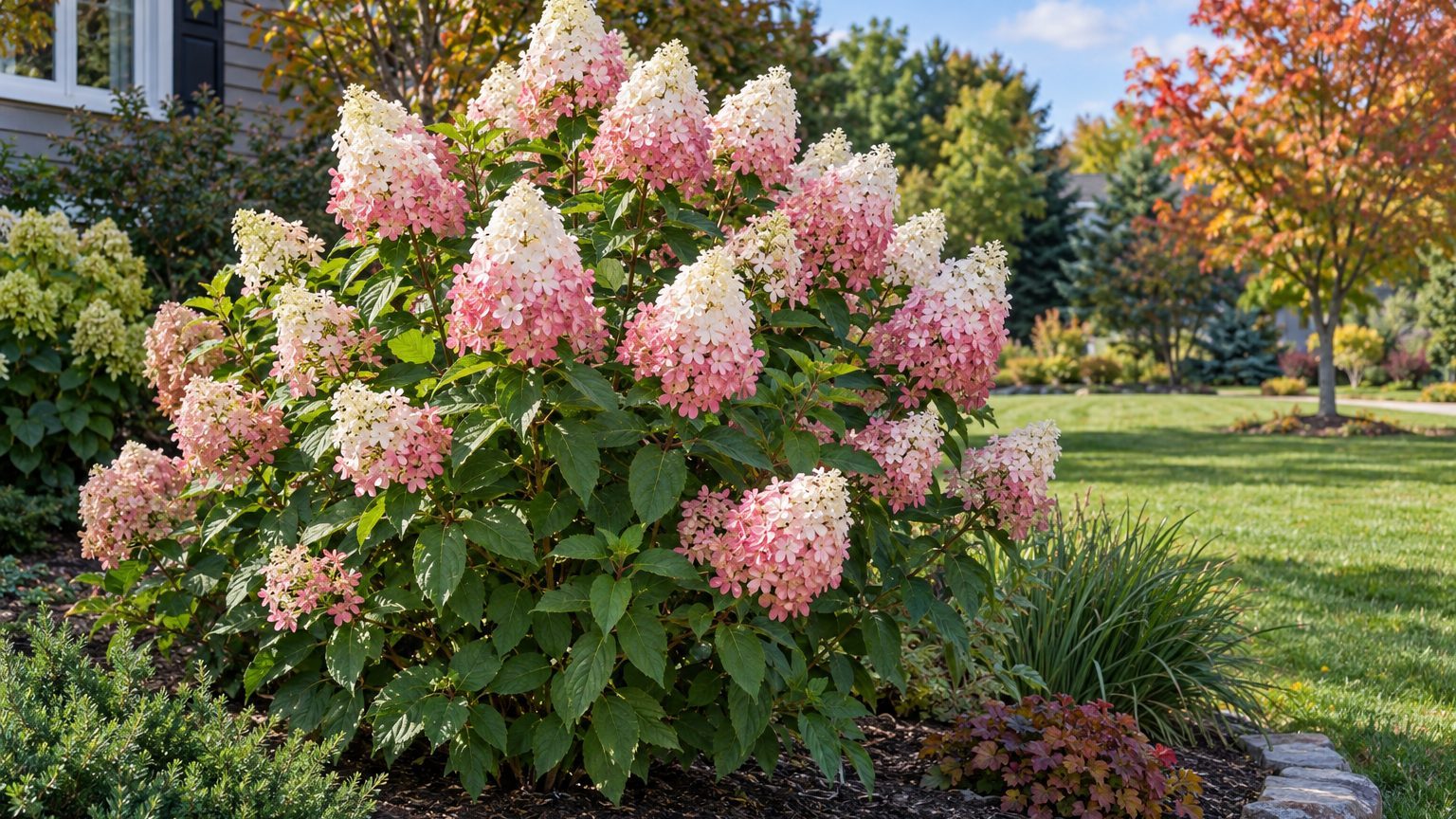
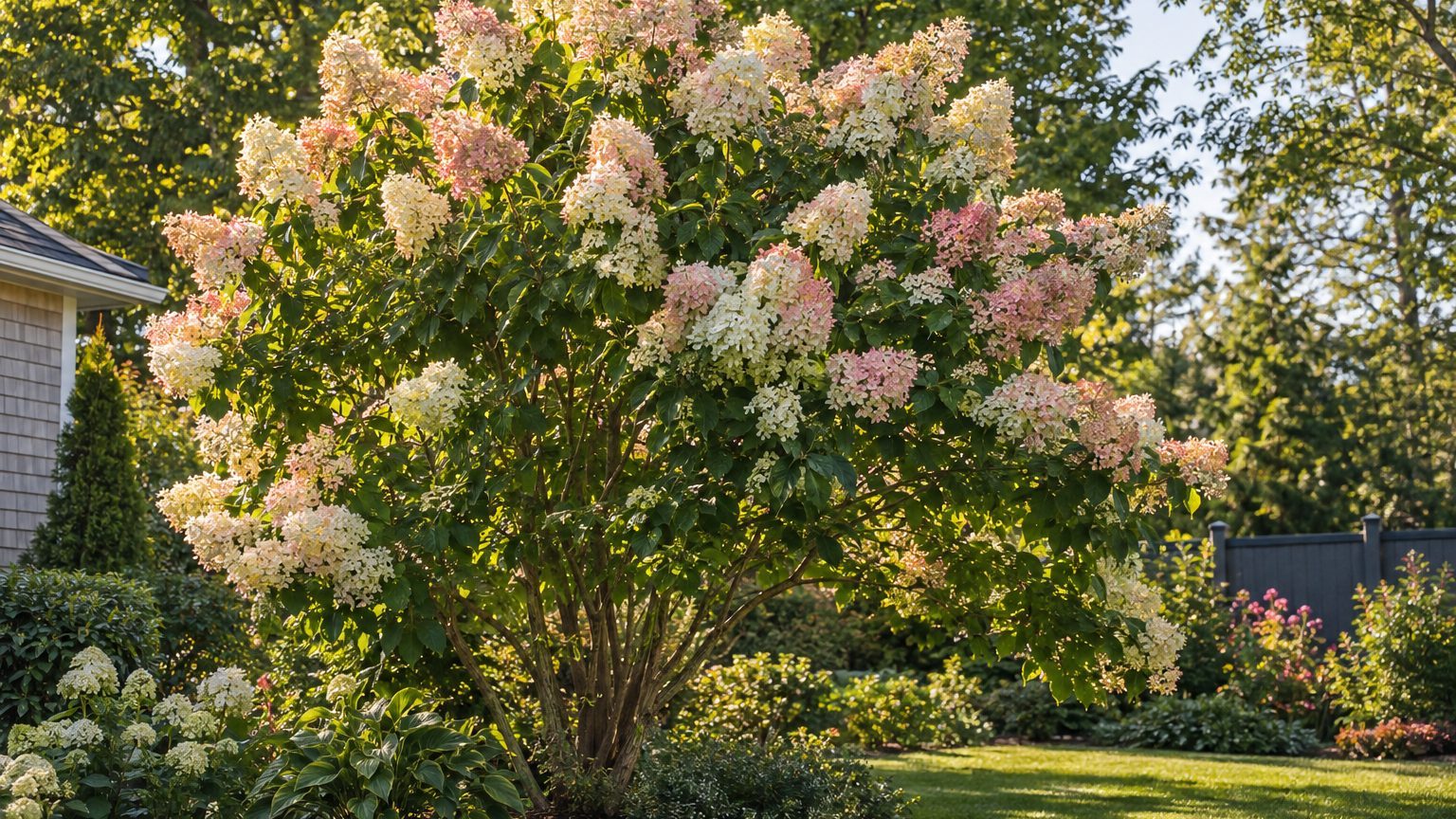
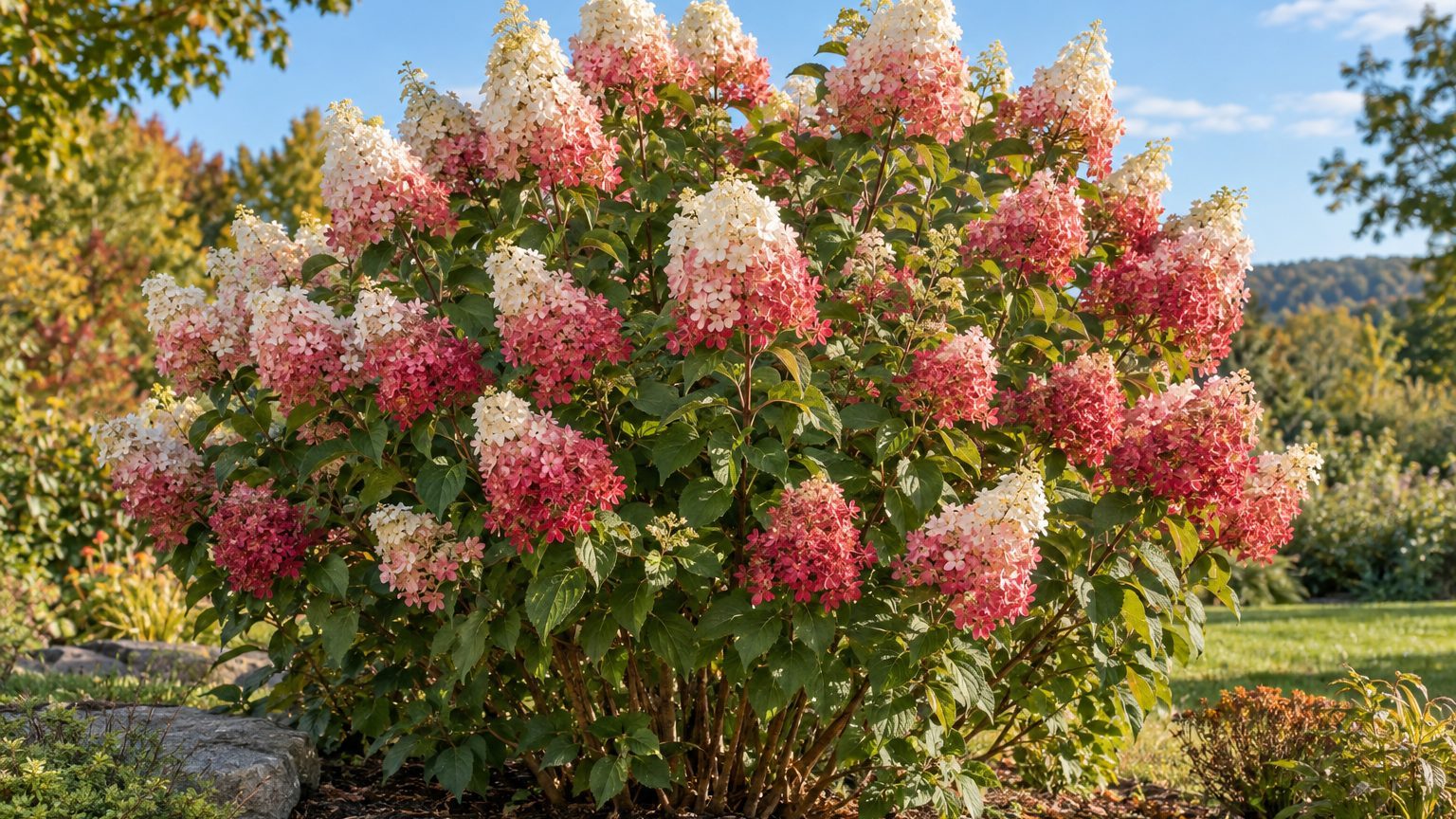
Quick Fire is a panicle hydrangea that opens white in early summer, then blushes pink and deepens toward red as the season runs on. It takes more sun than a bigleaf and blooms on new wood, so a hard winter rarely costs you flowers. What follows tracks the calendar, from planting to the first freeze.

What This Variety Is

Quick Fire is a panicle hydrangea, Hydrangea paniculata, grown as an upright woody shrub with cone-shaped flower clusters. It is sold mainly for one trait: it opens its blooms earlier than most other panicles.

The flowers start white, shift to pink, and finish in a rosy red as nights cool. Because they form on the current year’s growth, pruning timing is forgiving compared with a bigleaf.

Sun is the other difference from a mophead. Panicles like this one want open light, and they take more heat and cold than the bigleaf types sold in spring garden centers.

The plant tag and your state page carry the numbers that matter for your yard.

Where It Grows: Zones and Regions

Panicle hydrangeas are the tough branch of the family, and Quick Fire follows suit. Region by region, the difference is mostly how much heat and how much cold you have to plan around.

  • Great Lakes and the North (Michigan, Minnesota, Wisconsin): panicles are the hydrangeas that keep blooming after a brutal winter, since flower buds form on new wood.
  • The Northeast (New York, Pennsylvania, Massachusetts): a dependable choice in full sun, with the earliest color of the panicles.
  • The South (Georgia, Texas, the Carolinas): summer heat is the test, so give it afternoon shade and steady water.
  • The West (Washington, Oregon, Colorado): coastal gardens suit it, while dry inland yards need irrigation to keep the flowers from browning.

The state selector just below this section leads to the page for your state, with local frost dates and the pruning window.

The Year With It, Season by Season

Spring

Quick Fire leafs out later than many shrubs, so a bare-looking plant in April is not dead. Scratch a twig to check for green. Plant into loose soil in full sun, water deeply, and wait for real growth before you judge it.

Early summer

This is the payoff, because it flowers ahead of most other panicles. Blooms open white and start to blush within weeks. Water at the base during dry spells, and compare it with later bloomers in Hydrangea Varieties Compared before adding more shrubs.

Midsummer

Heat pushes the color toward pink and can stress the leaves. Wilting at midday is normal, wilting at dawn is not. Soak the root zone deeply once or twice a week rather than sprinkling daily, and mulch to hold moisture.

Fall

Cooler nights deepen the pink into red, and the dried heads hold their shape. Stop fertilizing so new growth can harden off. Leave the flower clusters on the plant, since they add fall interest and cost you nothing.

Winter

Once the shrub is dormant, pruning is safe because blooms form on the new season’s growth. Cut back in late winter, before buds swell, and shape rather than shear. Your state page gives the window for your area.

Diseases and Pests It Resists

Any claim that it shrugs off mildew, leaf spot, or insects would need a named source, and none is attached here.

The sensible approach is to treat it as a normal landscape shrub. Give it good air movement, water at the soil line rather than over the leaves, and check the foliage every couple of weeks in humid summers.

A comparison table would be empty, so I left it out. Your county extension office can tell you which problems show up on panicle hydrangeas near you, and the other hydrangea kinds are on their own pages.

Where to Plant It in a Yard

Use Quick Fire where it gets open sun and room to fill out, such as a front-yard foundation corner, a property line, or a mixed border. It also works as a low hedge when planted in a row.

Before you dig, open your state page and note the frost dates and pruning window for your area.

Common questions

When does Quick Fire bloom?

It blooms earlier than most panicle hydrangeas, starting in early summer. Exact timing shifts with your climate, so your state page is the better guide for local dates.

When should I prune it?

Prune while the shrub is dormant, in late winter before buds swell. It flowers on new wood, so this cut will not remove the coming season’s blooms.

Why are the flowers turning pink?

That is the variety’s normal color change. Blooms open white, blush pink, and deepen toward red as the season cools. It is not a disease or a nutrient problem.

Pinky Winky Hydrangea: Size, Zones, Pruning and Care

Pinky Winky Hydrangea: Size, Zones, Pruning and Care

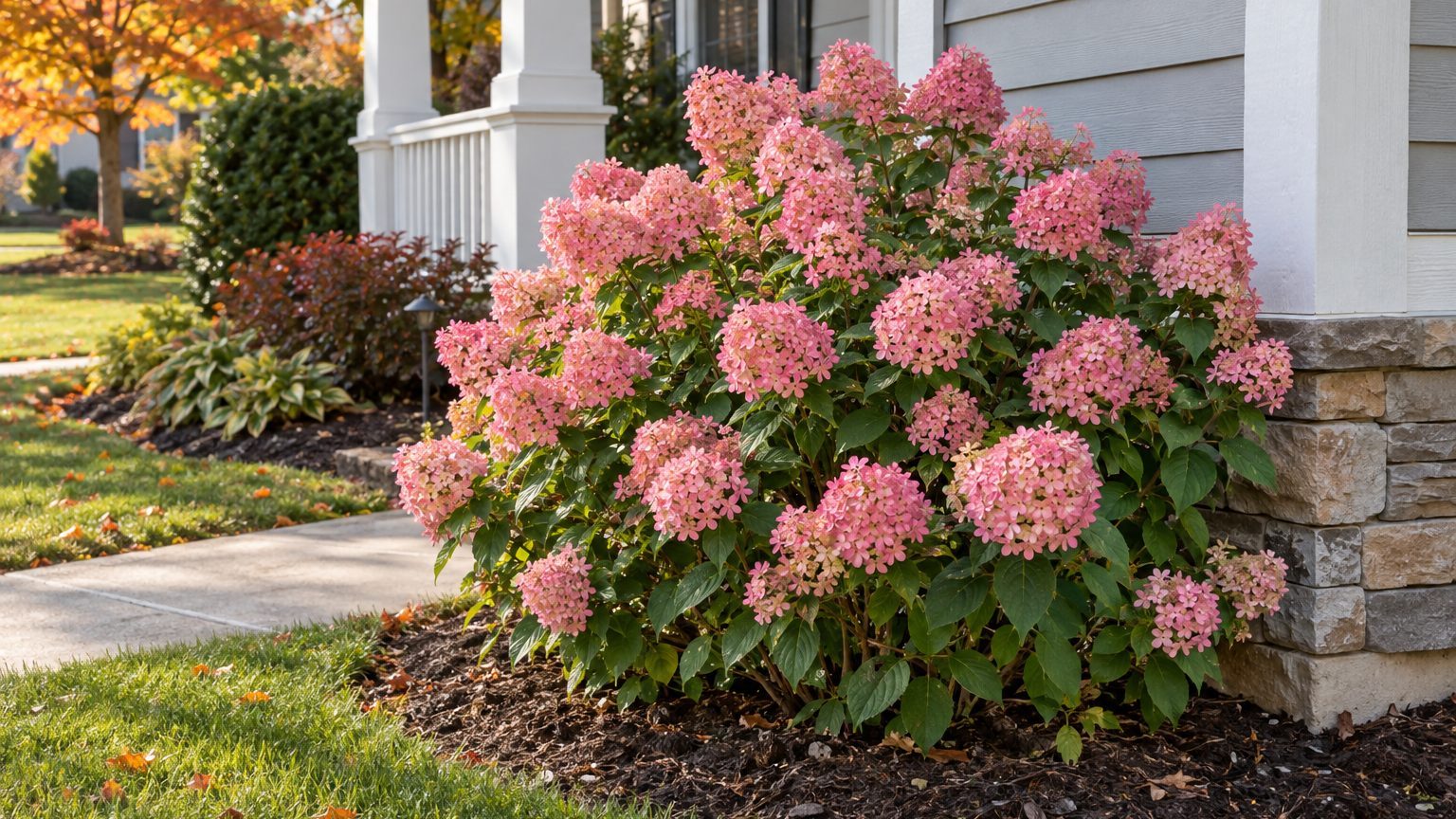
Pinky Winky hydrangea is a panicle hydrangea, a tough deciduous shrub whose cone-shaped flower heads open white and turn pink from the bottom up. It flowers on new wood, so a hard winter rarely costs you the show. It suits cold northern yards and much of the South, with a few conditions that decide how well it does.

What This Variety Is

Pinky Winky is a cultivar of Hydrangea paniculata, a deciduous shrub with an upright, vase-shaped habit. Woody stems hold large cone-shaped flower clusters well above the foliage.

The two-tone effect is what sets it apart. Each cluster opens white at the tip while the older base flushes pink, so one shrub carries both colors at once.

The flowers form on the current season’s growth, and that rule governs almost everything else. Pruning timing, winter losses and bloom failure all trace back to it.

Mature size and the hardiness range appear in the plate for your state. Read those before you pick a spot.

Where It Grows: Zones and Regions

Panicle hydrangeas handle cold better than most of their relatives, and Pinky Winky follows that pattern. Heat and dry air set its limits, not winter.

  • Great Lakes and the North (Michigan, Minnesota, Wisconsin): a dependable choice, since frozen stem tips don’t cancel a bloom that forms on new wood.
  • Northeast and Mid-Atlantic (New York, Pennsylvania, Virginia): grows without fuss in sun, with mulch over the roots for the coldest winters.
  • The South (Georgia, Texas, the Carolinas): it grows, but this is the hot edge of its range, so afternoon shade and steady water matter.
  • Pacific Northwest (Washington, Oregon): mild summers suit it and it needs little beyond a sunny site.
  • Mountain West and Southwest (Colorado, Utah, Arizona): dry air and wind scorch the flowers, so plan on regular irrigation and shelter, and expect a struggle in the desert.

The state selector just below this section leads to the page for your state, with the frost dates and pruning window that apply there.

The Year With It, Season by Season

Planting

Roots come first and flowers second, so a new plant may sit quietly through its first season. Set it in sun with room to spread, water deeply until it settles, and mulch the base. Spring and fall planting both work where winters allow.

Spring

New stems race up after the last hard frost, and that is where the flowers are made. Prune in late winter or very early spring, before buds swell, shortening last year’s stems just above strong buds. Your state page gives the window.

Summer

Flower heads open white in mid to late summer, then blush pink. Heavy heads can bend stems after rain, so thin crowded stems in spring. In hot spells, water at the base and give afternoon shade in the South.

Fall

Pink deepens as nights cool, and the heads dry on the branch to tan and rose. Leave them for color, or cut some for dried arrangements. Skip fertilizer now, because it pushes soft growth that winter will burn.

Winter

Because the flowers come on new wood, cold-killed tips do no harm to next summer’s bloom. Leave stems standing through winter, then cut in late winter. In the far North, mulch the roots once the ground freezes.

Diseases and Pests It Resists

What holds for hydrangeas in general is that crowded stems and wet leaves invite trouble. Air flow and watering at the base are the two habits worth building, whatever the resistance turns out to be.

The other hydrangea kinds are on their own pages, each with its own known weak points.

Where to Plant It in a Yard

Give it a sunny spot with space to reach full size, such as a back border, a foundation corner, or a informal screen. Pair it with lower perennials and evergreens that hold the bed together after the flowers fade.

Before you dig, open your state page and check the frost dates and pruning window where you live.

Common questions

When should I prune Pinky Winky hydrangea?

Prune in late winter or very early spring, before buds begin to swell. Since it blooms on new wood, this timing protects the flowers. Your state page shows the window for your area.

Why is mine staying white instead of turning pink?

The pink comes with flower age and cool nights, not with soil chemistry as in bigleaf hydrangeas. Young heads open white. Wait for late summer and fall, and expect more color where nights cool early.

Does it need shade in a hot climate?

In the South and other hot regions, afternoon shade limits petal scorch and wilting. Deep watering and mulch help too. In cooler northern yards, full sun is the better choice for the heaviest bloom.

Pink Elf Hydrangea: Size, Zones, Pruning and Care

Pink Elf Hydrangea: Size, Zones, Pruning and Care

What This Variety Is

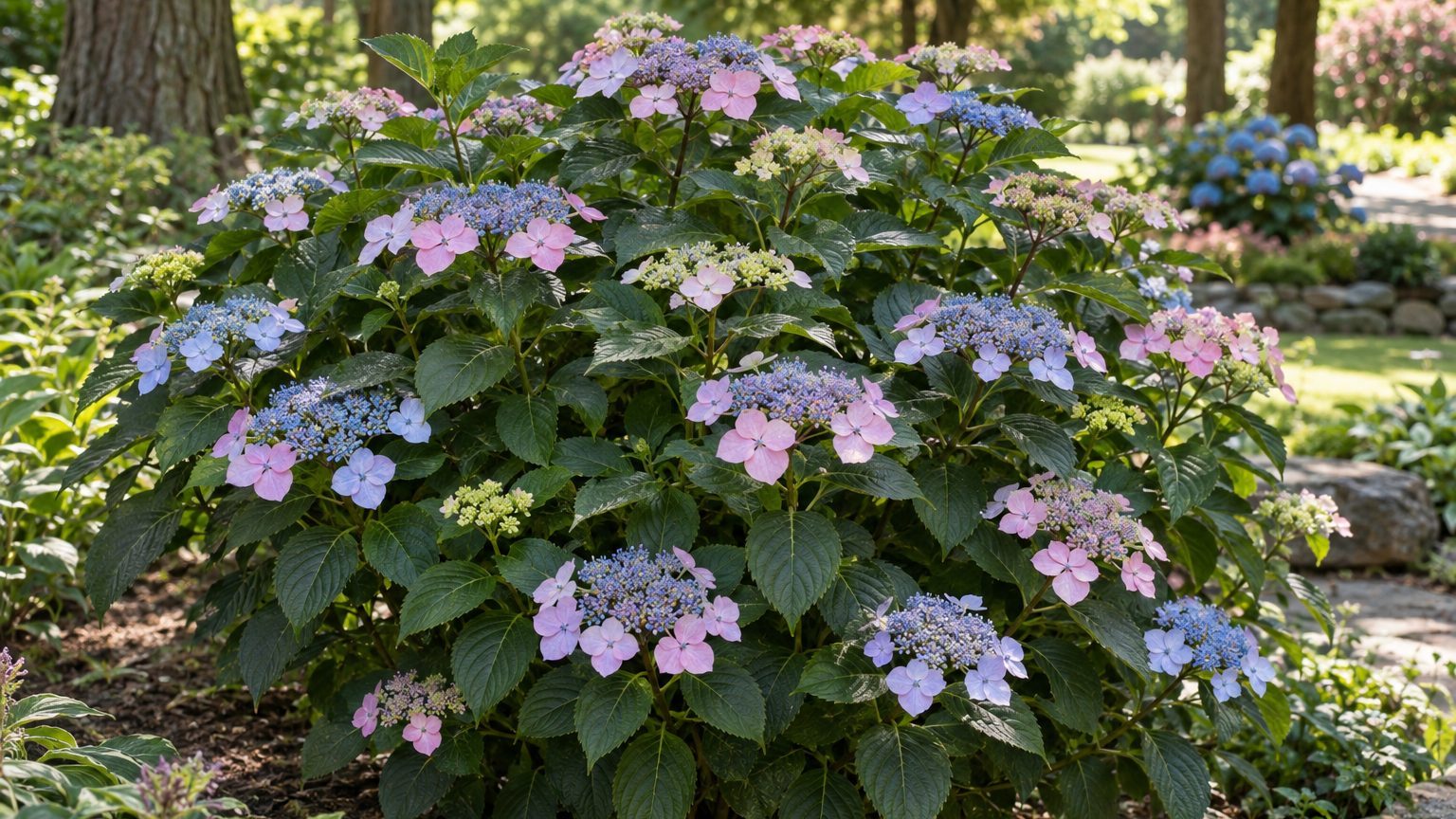
Pink Elf is a compact hydrangea sold for foundation beds and porch corners. Its mature height, spread and exact species vary by source, so trust the plate the site renders here over any number you read elsewhere.

Its appeal is scale. A compact hydrangea needs less clearance from a walkway or a window than a full-size shrub, which is why it turns up in small front yards.

Check the plant tag for one more thing: whether the shrub blooms on old wood or new wood. That single line tells you when you can prune. Flower color on some pink hydrangeas also shifts with soil chemistry, so test the bed’s pH if the shade of pink matters to you.

Where It Grows: Zones and Regions

I can’t cite a verified hardiness range for this variety, so here is the country sorted by the stress that usually decides the outcome.

  • Great Lakes and the North (Michigan, Minnesota, Wisconsin): winter cold is the test, and flower buds that sit above ground can die back in a hard freeze, so pick a sheltered spot.
  • Northeast and Mid-Atlantic (Massachusetts, Pennsylvania, Virginia): winters are usually manageable, but late frosts can nip early buds after a warm spell.
  • The South (Georgia, Texas, the Carolinas): summer heat and dry spells do the damage, so morning sun and afternoon shade matter more than anything else.
  • Mountain West and Plains (Colorado, Nebraska, Kansas): dry air, wind and alkaline soil are the hurdles, and a windbreak and steady watering help.
  • Pacific Coast (Oregon, Washington, coastal California): mild, damp conditions suit hydrangeas in general, with inland valleys needing more summer water.

The state selector rendered just below this section leads to the page for your state, with the frost dates and pruning window for where you live.

The Year With It, Season by Season

Spring

Planting goes best once the ground is workable and hard frosts are behind you, because new roots need a calm start. Set the crown level with the soil and water deeply. Hold the pruners until you see which buds are alive. The Hydrangea Varieties Compared page explains how bloom wood changes the timing.

Early summer

Growth and bloom overlap here, and a compact shrub can flop under heavy flower heads if it is overfed with nitrogen. Feed lightly, or not at all in rich soil. Deep, infrequent watering at the base keeps leaves dry and the shrub steady.

Midsummer heat

Wilting at midday is often heat, not thirst. Push a finger into the soil before you water, since soggy roots wilt a hydrangea too. If leaves scorch on the sunny side, mulch the root zone and think about moving the shrub next spring, when it can be lifted safely.

Fall

Blooms fade to a papery blush, and you can leave them on the plant. Cool nights bring color to the leaves, and shortening days tell the shrub to slow down. Stop feeding, keep watering until the ground freezes, and skip any hard cutback if this one blooms on old wood.

Winter

Cold injury happens to the buds, not the roots. In the colder states, a loose cage filled with leaves or a layer of mulch over the crown gives protection. Avoid wrapping in plastic. Come spring, wait for green buds before removing anything, as the pruning notes in Bobo Hydrangea: Size, Zones, Pruning and Care show for a related compact shrub.

Diseases and Pests It Resists

A table of resistances would be a table of guesses.

Hydrangeas as a group tend to get powdery mildew and leaf spot where air is stagnant and leaves stay wet. Deer browse them in many neighborhoods. Give the shrub room, water at the soil line and fence it if deer are regulars.

Other hydrangea kinds have their own resistance notes on their pages. Until Pink Elf gets a documented rating, treat it as an average hydrangea and check the leaves every week or so in humid stretches.

Where to Plant It in a Yard

A compact hydrangea earns its place close to the house, along a path or in a mixed border where it gets morning sun. Pair it with shrubs of similar size, and compare it with two other compact choices before you buy.

  • Angel Blush Hydrangea: Size, Zones, Pruning and Care: a comparison point when you are weighing pink flowers for a small bed.
  • Bobo Hydrangea: Size, Zones, Pruning and Care: a compact shrub with full notes on size and pruning.
  • Your state page: the frost dates and the pruning window where you live, reached through the selector above.

Common questions

How big does Pink Elf hydrangea get?

Read the plate the site renders here, or the tag on the pot, and leave clearance for the widest number.

When should I prune it?

It depends on whether the shrub flowers on old wood or new wood. If the tag doesn’t say, prune only dead stems until buds swell, then cut back to live growth.

Does it need shade?

In hot regions such as Georgia and Texas, afternoon shade protects the leaves and flowers. In cooler states like Michigan and Oregon, more sun is usually fine as long as the soil stays evenly moist.

Masja Hydrangea: Size, Zones, Pruning and Care

Masja Hydrangea: Size, Zones, Pruning and Care

Masja is a dwarf mophead cultivar of Hydrangea macrophylla, bred to stay under 3 feet while opening the same red-to-blue flowerheads as full-size bigleaf hydrangeas. It suits small beds, containers, and foundation plantings in USDA zones 6a to 9b, and it blooms on last year’s wood, which decides both when to prune and why some plants skip a season.

What This Variety Is

Masja belongs to Hydrangea macrophylla, the bigleaf hydrangea family grown across the South and mid-Atlantic for its rounded mophead blooms. NC State Extension Gardener Plant Toolbox lists the species at zones 6a to 9b, and Masja stays inside that range at a compact size.

Full-size bigleaf types can reach 6 feet, but Masja tops out near 2 to 3 feet tall and wide. That makes it a dwarf form bred for small beds and pots, not the open border.

Flowers open red to pink in alkaline soil and shift toward purple or blue as soil turns acidic, the same pH response every bigleaf hydrangea shows. Masja blooms on old wood, meaning this year’s flowers set on stems grown last season.

That old-wood habit is the detail that decides pruning timing and explains a shrub that looks healthy but skips a bloom. It also separates Masja from panicle or smooth hydrangeas, which flower on new wood instead.

Where It Grows: Zones and Regions

NC State Extension Gardener Plant Toolbox places bigleaf hydrangea, and Masja with it, at zones 6a to 9b, a range that spans most of the country east of the Rockies plus the Pacific Northwest.

Inside that range, the same shrub behaves differently depending on how cold the winter gets and how hot the summer runs.

  • The Northeast and Mid-Atlantic (Pennsylvania, Virginia, Maryland): gardens near Harrisburg sit close to zone 6a, where a hard freeze can kill the old-wood buds that carry next year’s flowers.
  • The South and Gulf Coast (Georgia, Texas, the Carolinas): winter cold is rarely the problem, but full sun near Atlanta scorches leaves by midsummer without afternoon shade.
  • The Pacific Northwest (Oregon, Washington): mild winters and steady rain near Portland suit Masja well, with less dieback than gardens further east see.
  • The upper zone 9 edge (Florida, coastal Texas): heat and humidity push against the limit, and afternoon shade becomes non-negotiable rather than optional.

Outside 6a to 9b, winter kill or summer stress becomes routine rather than occasional, which is why the state selector below this section matters more than the national range. It leads to the frost dates and pruning window for wherever you garden.

The Year With It, Season by Season

Planting

Set Masja out in spring after the last frost, in a spot with morning sun and afternoon shade, and water it deeply for two to three weeks. Container plants establish fastest when the soil stays evenly moist through that stretch.

Spring growth

New leaves push out quickly, but the flower buds already sit inside stems grown the previous year. A late freeze that nips new growth rarely kills the shrub, though it can damage buds already set for that year’s bloom.

Bloom

Mophead flowers open in early to midsummer, red to pink in alkaline soil and blue to purple in acidic soil. Deadhead spent blooms right after they fade rather than waiting, since that is also the safe pruning window.

Summer heat

Afternoon sun scorches leaf edges fast once temperatures climb, especially in southern gardens near Atlanta. A layer of mulch over the root zone and steady watering keep the shrub from wilting hard in the heat.

Fall

Growth slows as the shrub sets next year’s flower buds on this season’s new stems, so pruning now removes wood that would bloom next summer. Leave spent flowerheads in place instead of cutting them back.

Winter

Zone 6 gardens near Harrisburg see old-wood buds most at risk from a hard freeze, and a loose mulch layer over the root zone helps buffer the cold. Zone 9b gardens rarely need this step at all.

Diseases and Pests It Resists

Masja carries the same disease profile as other bigleaf hydrangeas rather than a resistance bred into the cultivar itself. Humid summers bring leaf spot and powdery mildew more often than any pest problem.

Deer browse the leaves and flower buds readily, and aphids show up on new growth in spring, but neither one is usually fatal to an established shrub.

Threat This one Source
Leaf spot Common in humid, low-airflow summers —
Powdery mildew Shows up on crowded plantings —
Deer browsing Leaves and buds eaten readily —
Aphids Cluster on new spring growth —

Root rot from soggy soil is a bigger risk than any insect on this list, so the fix is usually drainage and spacing rather than a spray. Panicle and smooth hydrangeas carry their own separate risk profiles on their own pages.

Where to Plant It in a Yard

Masja’s small size makes it a foundation plant, a container specimen, or a low hedge along a walkway rather than a centerpiece for open lawn space. It needs morning sun and afternoon shade almost everywhere it grows.

  • Your state page: the frost dates and the pruning window for wherever you live.
  • Which ones hold up here: how Masja compares to other bigleaf cultivars in your climate.
  • Hydrangea variety pages: panicle and smooth types for yards outside the 6a to 9b range.

Pair it with ferns or hostas that share the same shade and moisture, then check your state page before the first hard freeze of the year.

Common questions

Does Masja hydrangea bloom on new or old wood?

Old wood. Flower buds form on stems grown the previous year, which is why pruning right after bloom, not in fall or spring, protects next year’s flowers.

How big does Masja hydrangea get?

Most plants settle around 2 to 3 feet tall and wide, making it one of the more compact bigleaf cultivars for small beds or containers.

What zones can Masja hydrangea survive in?

It holds up in zones 6a to 9b. Gardens at the cold edge, like those near Harrisburg, risk losing flower buds to a hard freeze even when the shrub itself survives.

Cityline Paris Hydrangea: Size, Zones, Pruning and Care

Cityline Paris Hydrangea: Size, Zones, Pruning and Care

Cityline Paris answers a simple problem: full-size bigleaf hydrangeas outgrow small yards and patio pots. This cultivar tops out under two feet, keeps the same mophead flower and pH-driven color shift as its bigger cousins, and fits foundation beds, planters, and tight side yards without the annual fight against a shrub that wants to be six feet wide.

What This Variety Is

Cityline Paris belongs to Hydrangea macrophylla, the bigleaf group, inside a series bred specifically for compact scale rather than hedge-height growth. NC State Extension Gardener Plant Toolbox puts bigleaf hydrangea at 6a to 9b, and Paris performs reliably through most of that range.

The plant forms a rounded mound closer to a compact shrub rose than a typical hydrangea. Mature size runs about 18 to 24 inches tall and roughly as wide, a fraction of what many bigleaf types reach.

Flowers are true mopheads, dense round heads rather than the flatter lacecap form. Color still follows soil chemistry, blue in acidic soil and pink in alkaline, exactly like its full-size relatives.

Three things separate it from a generic bigleaf hydrangea:

  • A fixed dwarf habit that doesn’t stretch much with age
  • Old-wood blooming with little to no rebloom on new growth
  • Breeding aimed at containers and small beds, not cutting gardens

Where It Grows: Zones and Regions

NC State Extension Gardener Plant Toolbox lists bigleaf hydrangea at 6a to 9b, and Cityline Paris sits inside that window without stretching it, since the compact series wasn’t bred for extra cold tolerance. What changes the outcome from state to state isn’t survival, it’s whether the flower buds on old wood make it through winter.

  • The Mid-Atlantic and Southeast (Virginia, North Carolina, Georgia): winter lows rarely reach the point that kills stems to the ground, so old-wood buds carry through and bloom shows up most years.
  • The Pacific Northwest (Washington, Oregon): mild, wet winters and cool summers suit the shrub well, with Portland acting as a reasonable reference for the milder end of the range.
  • The Upper Midwest and New England (Minnesota, Wisconsin, Maine): winter lows drop well below the tolerance line, killing old wood most years even where the roots themselves survive.
  • The Deep South and Gulf Coast (Florida, Louisiana, Texas): heat above the upper end of the range stresses the plant in open sun, making afternoon shade the deciding factor rather than cold.

The state selector below this section opens the page built around your own frost dates, not a national average.

The Year With It, Season by Season

Planting in spring or fall

Cityline Paris settles best in spring after the last frost or in early fall while soil is still warm. Dig the hole wide, not deep, and hold off on high-nitrogen fertilizer that pushes leaves over roots.

New growth stays low and dense

Unlike full-size bigleaf types, the first push of stems doesn’t lengthen much past the plant’s mature spread. Resist pruning it like a taller hydrangea, since there’s little spare wood to cut back.

Buds open on last year’s stems

Flower buds formed the previous summer open through late spring into early summer, which is why a late hard frost can erase a season’s bloom entirely. Skip any pruning until after flowering finishes.

Leaves wilt in afternoon heat

Bigleaf foliage droops fast once temperatures climb, even with adequate soil moisture on hand. It usually recovers by evening, so check soil before assuming the plant needs more water.

Color and foliage shift into fall

Spent flower heads dry in place and leaves pick up bronze tones as nights cool down. Leave the dried heads on the plant, since removing them risks cutting into next year’s buds.

Buds need cover through winter

Old-wood flower buds sit exposed above ground all winter, unlike the roots below. A loose mulch layer or burlap wrap over the crown protects them where lows dip toward the edge of its range.

Diseases and Pests It Resists

Cityline Paris carries the same disease profile as bigleaf hydrangea generally, since breeding for this series focused on size and flower form rather than resistance. NC State Extension Gardener Plant Toolbox lists Cercospora leaf spot and botrytis blight as common fungal problems on bigleaf hydrangea in humid, low-airflow spots.

Bud drop from late frost counts as its biggest working weakness in the ground, more than any single insect or fungus. Watch for aphids and spider mites on new growth, especially on container plants kept near a warm wall.

Threat This one Source
Cercospora leaf spot Susceptible in humid, low-airflow spots NC State Extension
Botrytis blight Shows on damaged or crowded flower heads NC State Extension
Aphids and spider mites Common on new growth and containers NC State Extension
Late frost bud kill Main cause of a no-bloom year NC State Extension

Deer browsing and powdery mildew aren’t well documented for this specific cultivar, so treat the general bigleaf hydrangea page as the fuller reference.

Where to Plant It in a Yard

Cityline Paris fits spots a full-size bigleaf hydrangea never would: a foundation bed under a window, a large patio pot, or the front edge of a border. Give it morning sun and afternoon shade, and keep it away from reflected heat off pavement or south-facing brick.

  • Your state page: the frost dates and the pruning window where you live.
  • Bigleaf hydrangea care: the fuller profile of the species this cultivar belongs to.
  • Hydrangea pruning by type: which stems to cut and when, since old-wood bloomers punish a wrong-season cut.

Plant it where the old wood can ride out winter untouched, then let it fill the spot without expecting it to grow past its own footprint.

Common questions

Does Cityline Paris bloom on new wood?

Mostly no. It sets flower buds on the previous season’s stems, so a hard late frost or a wrong-season pruning cut can erase that year’s bloom entirely.

Can I keep Cityline Paris in a container year-round?

Yes, and many gardeners do exactly that given its small size, but container roots freeze faster than roots in the ground. Move pots against a sheltered wall or into an unheated garage where winter lows run hardest.

Why did my Cityline Paris turn from blue to pink?

Soil pH shifted toward alkaline, cutting off the aluminum uptake that makes bigleaf hydrangea flowers blue. Adding sulfur or an acidifying fertilizer nudges it back over a season, not overnight.

Pee Gee Hydrangea: Size, Zones, Pruning and Care

Pee Gee Hydrangea: Size, Zones, Pruning and Care

Pee Gee hydrangea is Hydrangea paniculata ‘Grandiflora’, a panicle type that survives colder winters and takes more sun than almost any other hydrangea sold in US nurseries. It grows 10 to 20 feet tall as a shrub or small tree, blooms white through summer on new wood, and asks for almost no disease spray once it’s past its first two years in the ground.

What This Variety Is

Pee Gee hydrangea is the old nickname for Hydrangea paniculata ‘Grandiflora’, a panicle type grown as a large shrub or trained as a small tree. Missouri Botanical Garden’s Plant Finder lists panicle hydrangea, the group Pee Gee belongs to, at USDA zones 3 to 8.

The flower heads open white in mid to late summer, then age to pink and bronze as the season turns. A mature plant reaches 10 to 20 feet tall in shrub form, taller when limbed up into a single trunk.

Three things set it apart from other hydrangeas in a yard:

  • It blooms on new wood, the growth made that same spring, not on last year’s stems.
  • It tolerates more sun and more cold than bigleaf or oakleaf types.
  • It can be trained as a small flowering tree, something few other hydrangeas allow.

The bloom-on-new-wood habit is the one fact that decides how and when you prune it. Cut it back hard in late winter and it still flowers that summer.

Where It Grows: Zones and Regions

Panicle hydrangea is the toughest common hydrangea type, and Pee Gee carries that toughness into states where bigleaf hydrangea would freeze back every winter. Missouri Botanical Garden’s Plant Finder places panicle hydrangea at USDA zones 3 to 8, wider than any other type sold in most nurseries.

  • Great Lakes and the North (Michigan, Minnesota, Wisconsin): it survives the zone 3 winters that International Falls, Minnesota sees most years, and it still flowers because the buds form on the current season’s growth, made well after the last hard freeze.
  • Northeast and Mid-Atlantic (New York, Pennsylvania, Virginia): zone 5 to 6 conditions here suit it well, with a long bloom that runs from midsummer into fall and almost no winter dieback on established plants.
  • The South (Georgia, Texas, the Carolinas): it handles the zone 7b to 8a heat that Atlanta, Georgia gets, though panicles open and brown faster in that warmth, and afternoon shade helps hold their color longer.

Above zone 8, along the Gulf Coast and through peninsular Florida, the shrub lives on but blooms less heavily, and gardeners there often get a better show from other panicle cultivars or from oakleaf hydrangea instead.

The state selector below this section leads to the exact frost dates and pruning window for where you garden.

The Year With It, Season by Season

Pee Gee follows the panicle hydrangea calendar, not the reblooming schedule of a modern bigleaf variety, and each stage below shapes how heavy the bloom turns out that year.

Planting

Set new plants out in spring or early fall, giving roots time to establish before the first freeze or before summer heat arrives. Water deeply through the first year, since a young Pee Gee without an established root system wilts fast during a dry week.

Spring

New growth starts once nights stay reliably above freezing, and this is the only pruning window the plant gets each year. Cut stems back to two or three buds before that growth begins, because this summer’s flowers form on whatever grows after the cut.

Summer

Panicles open white through the hottest stretch of the year and hold for weeks rather than fading in days like many perennials do. Full sun keeps the stems sturdy, while part shade in the warmest states slows the color from bleaching out by midsummer.

Fall

Flowers age from white to pink and then to a papery bronze that many gardeners leave standing through the cooler months. Cooling nights drive that color shift, not the soil, so it runs on the same schedule from a zone 3 yard down to a zone 8 one.

Winter

Stems and dried flower heads stay upright through snow load better than most garden shrubs, since panicle wood is stiffer than bigleaf or smooth hydrangea wood. No wrapping or mulch over the crown is needed once a plant is past its first two winters in the ground.

Diseases and Pests It Resists

Pee Gee carries a reputation as one of the lower-maintenance hydrangeas, and most of that reputation comes down to what it doesn’t catch. Clemson Cooperative Extension’s Home & Garden Information Center lists panicle hydrangea as having few serious pest or disease problems compared with bigleaf types.

Deer browse it less than they do bigleaf hydrangea, though a hungry herd in a dry year will still take a pass at new growth. Powdery mildew and leaf spot show up occasionally in wet, crowded plantings but rarely do lasting damage.

Kind Flowers on USDA zones Sun
Panicle (Pee Gee) New wood 3 to 8 Full sun to part shade
Bigleaf Old wood, mostly 6 to 9 Part shade
Smooth (Annabelle type) New wood 3 to 9 Full sun to part shade

The other kinds each carry their own tolerance and problem list, covered on their own pages, but few match Pee Gee for staying clean once it’s settled into full sun.

Where to Plant It in a Yard

Give Pee Gee room to become a small tree or a wide shrub, not a foundation plant kept tidy at three feet. It works well as a lawn specimen, a property-line hedge, or a trained standard by a front door.

  • Your state page: the frost dates and the pruning window for where you live.
  • Which hydrangeas hold up here: a side-by-side of panicle, bigleaf, smooth, and oakleaf for your zone.
  • Hydrangea pruning by type: the old-wood versus new-wood cut, explained for each kind.

Plant it where a six-foot spread won’t crowd a walkway, then check your state page before the first cut.

Common questions

Does Pee Gee hydrangea bloom on old or new wood?

New wood. Buds form on the growth made that same spring, which is why a hard prune in late winter doesn’t cost you that year’s flowers.

How tall does Pee Gee hydrangea get?

Missouri Botanical Garden’s Plant Finder puts panicle hydrangea, the type behind Pee Gee, at 10 to 20 feet as a shrub, taller when trained to a single trunk as a small tree.

Can Pee Gee hydrangea change color like bigleaf hydrangea?

No. Its shift from white to pink to bronze comes from the flowers aging as nights cool, not from soil pH, so aluminum sulfate or lime won’t change the shade.

Nikko Blue Hydrangea: Size, Zones, Pruning and Care

Nikko Blue Hydrangea: Size, Zones, Pruning and Care

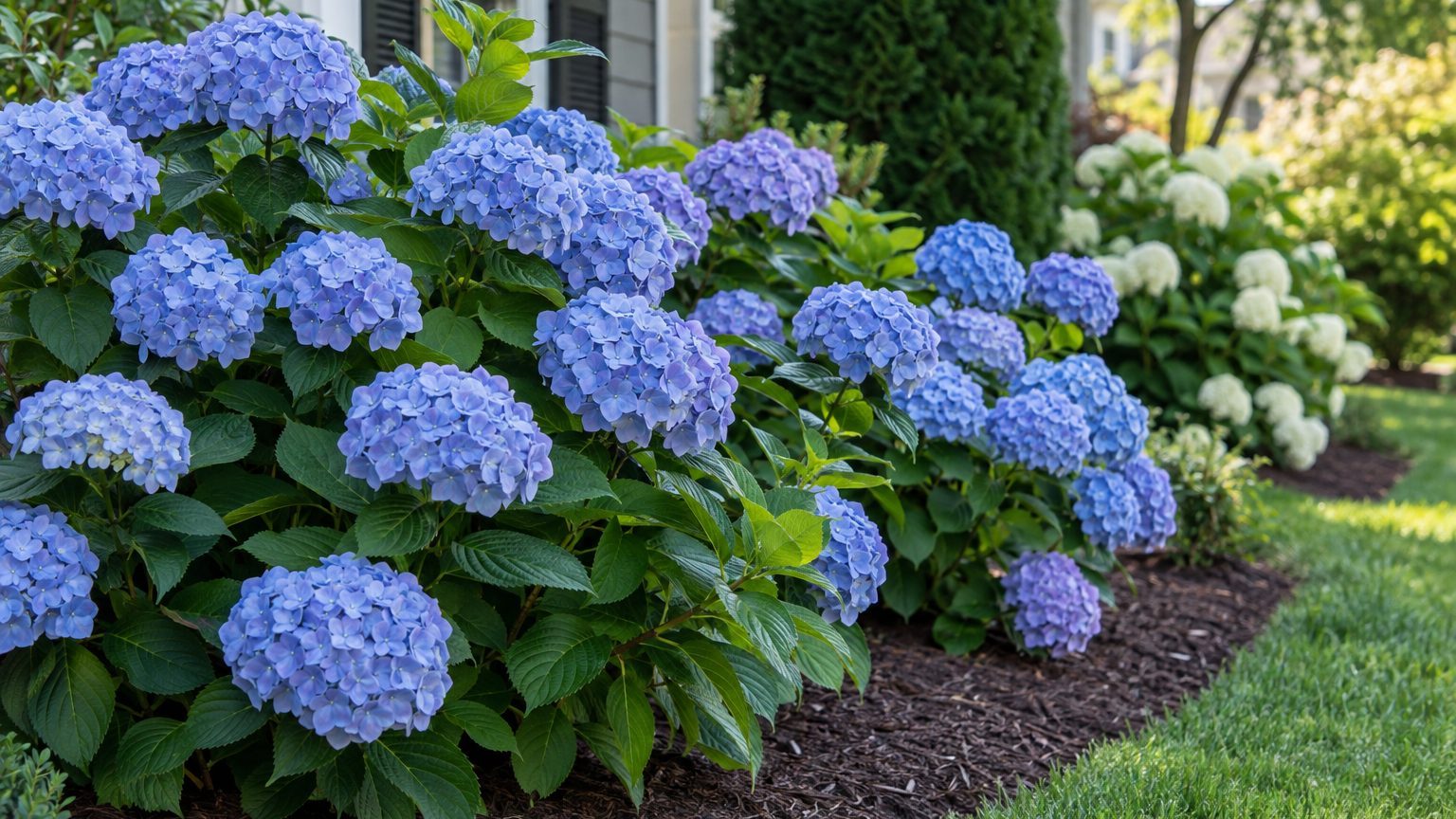
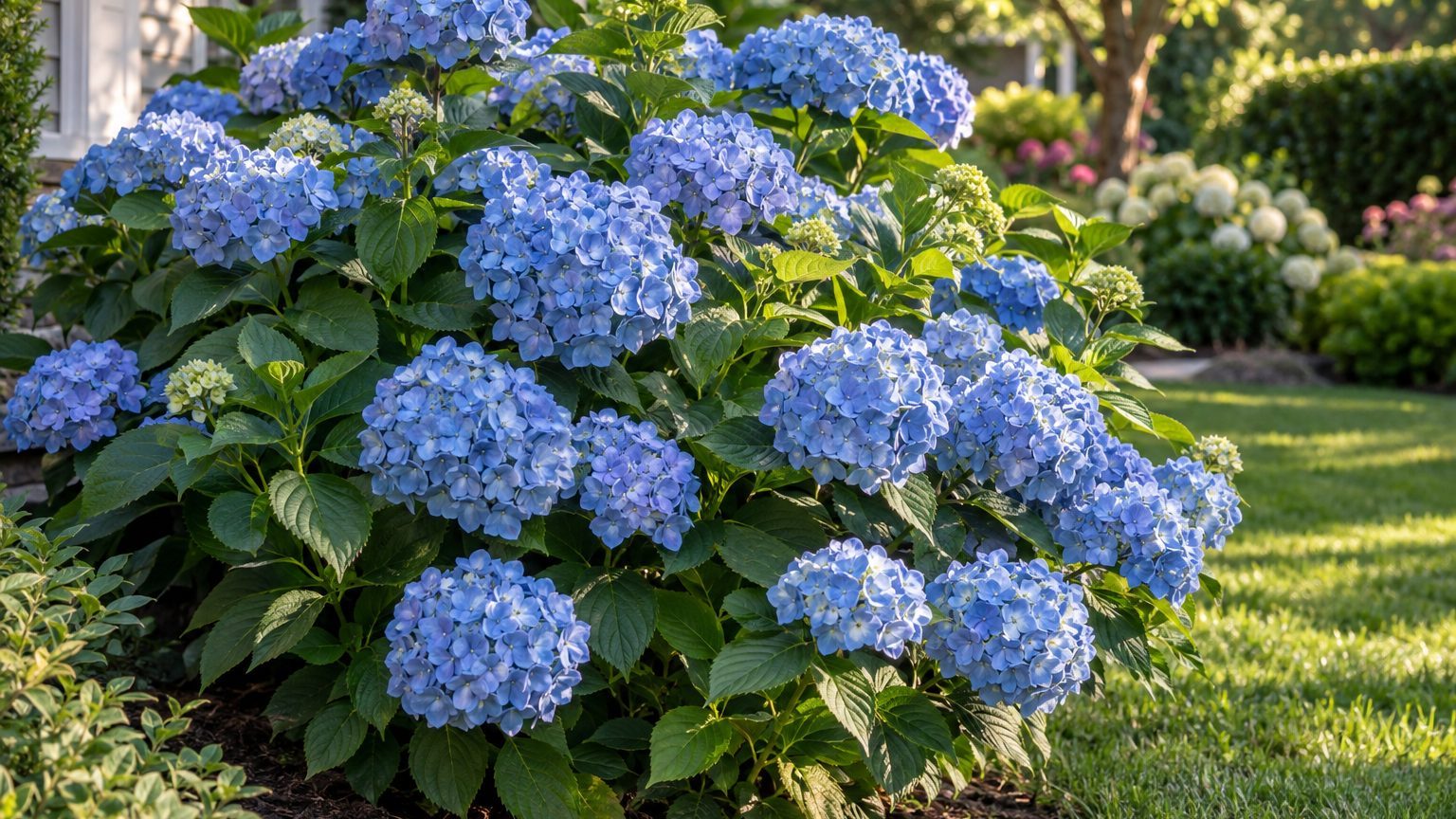
Nikko Blue is a bigleaf hydrangea grown for large mophead blooms that turn blue or pink depending on soil pH, hardy in USDA zones 6 through 9, reaching 4 to 6 feet tall and wide. It flowers on wood set the previous summer, which is why pruning time and winter cold matter more with this variety than with most shrubs in a yard.

What This Variety Is

NC State Extension Gardener Plant Toolbox lists Nikko Blue as a cultivar of bigleaf hydrangea, Hydrangea macrophylla, grown for its rounded mophead flower heads. It flowers on wood grown the previous year, not on new spring growth.

The shrub forms a rounded mound, often wider at maturity than many newer bigleaf types bred for smaller yards. Stems stay woody through winter, holding next year’s buds near the tips.

Leaves are broad, glossy, and coarsely toothed, dropping clean in fall with little color change. Three traits set it apart from other bigleaf cultivars:

  • Flower color shifts with soil pH rather than staying fixed
  • Bloom heads run larger than many reblooming cultivars sold today
  • Next year’s buds form by late summer, well ahead of frost

Full sun suits it in cooler regions, but afternoon shade keeps the foliage from wilting where summers run hot and humid.

Where It Grows: Zones and Regions

NC State Extension Gardener Plant Toolbox rates Nikko Blue for USDA zones 6 through 9, and that range decides flowering more than soil ever will.

  • The Coastal South (Georgia, South Carolina, Texas): summers run long enough that afternoon shade matters more than winter cold, and flower buds survive most years without any wrap or cover.
  • The Mid-Atlantic and Upper South (Virginia, North Carolina, Tennessee): sits near the middle of the range, with the shrub tolerating more sun where summer humidity stays high through the season.
  • The Pacific Northwest (Washington, Oregon): mild winters paired with cool summers let it hold more direct sun than it would tolerate on the East Coast.
  • The Northeast and cold Midwest (Massachusetts, Minnesota, Wisconsin): sits at or below the low edge of the range, where a hard winter can kill the flower buds even though the shrub itself survives.

That last group explains why so many Nikko Blue shrubs in colder yards leaf out every spring but skip flowering, since the wood carrying next year’s buds froze back over winter. The state selector below this section leads to the frost dates and pruning window for the state you actually garden in.

The Year With It, Season by Season

Spring

New leaves push out from buds formed the previous summer, and a late frost can blacken the tips before growth hardens off. Wait until leaves show before pruning, then cut only stems that stayed bare and brittle.

Early summer

Mophead flowers open from last year’s buds over several weeks once the shrub leafs out fully. Deadhead spent blooms just below the flower head rather than further down the stem, since next year’s buds are already forming there.

Midsummer

Heat pulls moisture from the broad leaves faster than roots can replace it, so afternoon wilt shows up even in moist soil. A deep watering at the base, not overhead, carries the plant through the hottest stretch without scorching leaf edges.

Late summer

The shrub sets next year’s flower buds on this season’s wood, usually as daylight starts shortening. Any pruning done past this point removes next year’s blooms, making this the last safe window to shape the plant.

Fall

Leaves drop with little color change, leaving bare stems that already carry next year’s buds. Leave the spent flower heads through fall instead of cutting them back, since they add winter interest and shield the buds just below.

Winter

Cold at the low end of the range can kill exposed flower buds even when the shrub itself survives underground. A loose pile of mulch or leaves over the base, pulled back in spring, buys the buds a few extra degrees.

Diseases and Pests It Resists

NC State Extension Gardener Plant Toolbox lists leaf spot and powdery mildew as the main disease pressure on bigleaf hydrangea, both worse in still, humid air. Good spacing and morning watering cut back both more than any spray applied after the fact.

Pests stay minor on this shrub, with aphids showing up on soft new growth and rarely causing lasting damage. Deer are the bigger threat, browsing both leaves and flower buds through winter when other food runs short.

Threat This one Source
Leaf spot (Cercospora) Common in humid summers —
Powdery mildew Worse in still, shaded air —
Aphids Minor, on new growth —
Deer browsing Not resistant —

Bacterial wilt and root rot show up occasionally in soil that stays wet, but neither is common enough to call typical for this cultivar. Other bigleaf types carry their own disease notes on their own pages.

Where to Plant It in a Yard

Nikko Blue works best along a foundation or a woodland edge where afternoon shade holds through the hottest hours, with room for its 4 to 6 foot spread to fill in without crowding a walkway.

  • Your state page: the frost dates and the pruning window for where you live.
  • Hydrangea types compared: how this bigleaf cultivar stacks up against panicle and smooth types for the same spot.
  • Soil pH and bloom color: what pushes a Nikko Blue toward pink instead of blue in your own beds.

Check your state page before the first cut, since a pruning window that works in Georgia can strip next year’s flowers off a shrub in Minnesota.

Common questions

Why is my Nikko Blue not flowering?

The most common cause is pruning at the wrong time, cutting off wood that was already carrying next year’s buds. A hard winter in a colder zone can do the same damage without any pruning at all.

How do I make Nikko Blue hydrangea turn blue?

Blue color depends on aluminum being available to the roots, which happens in acidic soil below a pH of about 6.0. Working aluminum sulfate into the soil in fall, ahead of the growing season, gives it time to reach the roots before bud break.

When should I prune Nikko Blue hydrangea?

Prune right after the flowers fade in summer, not in fall or the following spring. Waiting past late summer removes the buds the shrub has already set for next year’s bloom.

Nantucket Blue Hydrangea: Size, Zones, Pruning and Care

Nantucket Blue Hydrangea: Size, Zones, Pruning and Care

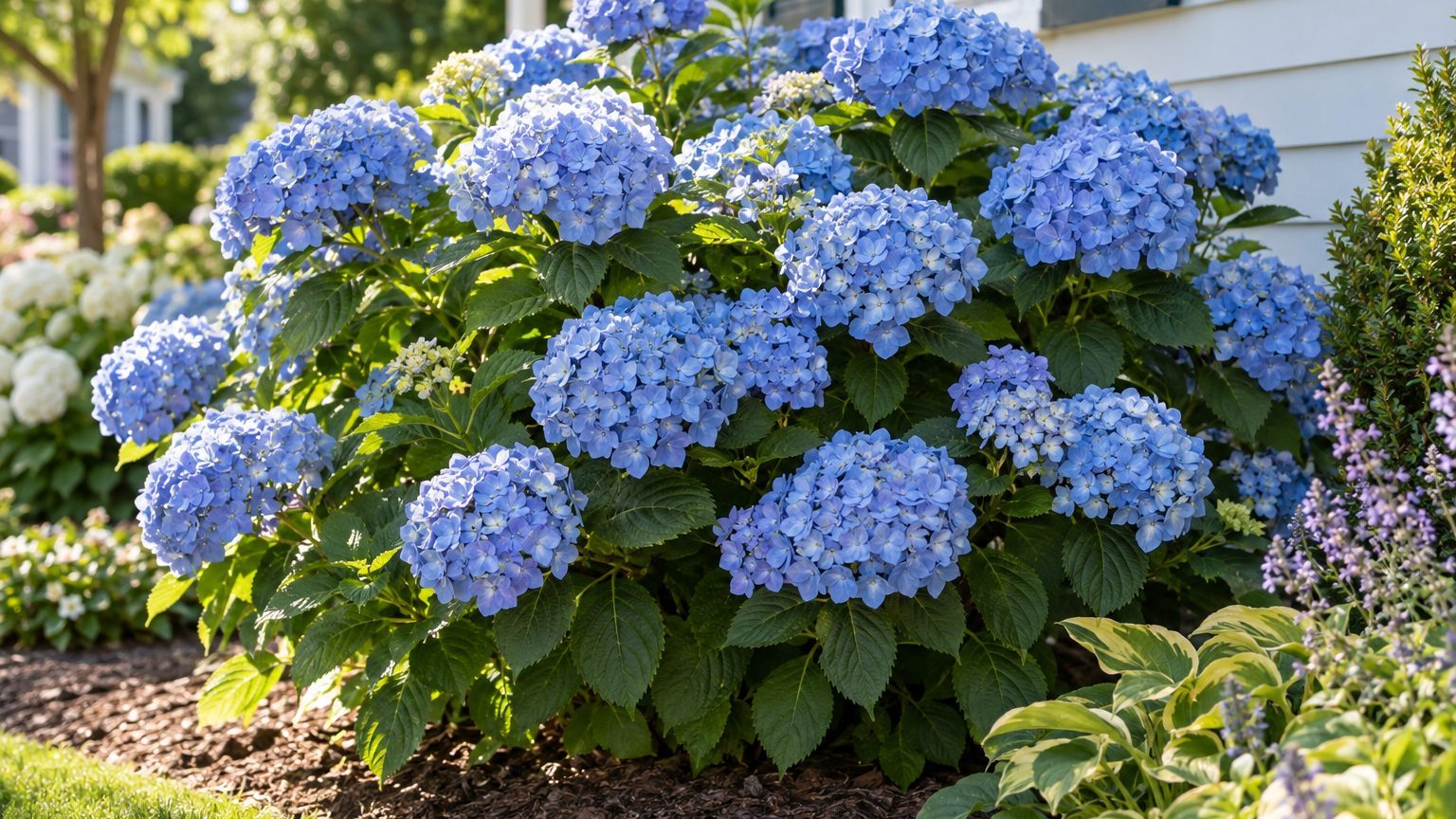
Nantucket Blue is a compact bigleaf hydrangea that reblooms on old and new wood, so a warm week after a rough winter still delivers mophead flowers by summer. Hardy roughly zones 6 to 9, it grows into a 3 to 4 foot mound and needs only light, well-timed pruning. Soil pH still decides whether those flowers open blue or pink.

What This Variety Is

Nantucket Blue is a bigleaf hydrangea, Hydrangea macrophylla, bred as a mophead that flowers on both old and new wood. That habit sets it apart from older bigleaf cultivars that bloom only on stems grown the year before.

The plant forms a rounded, dense mound rather than an open, spreading shrub. Height and spread land around 3 to 4 feet, which keeps it in scale with a foundation bed or a mixed border.

NC State Extension Gardener Plant Toolbox lists bigleaf hydrangea’s hardiness at 6a to 9b, and nurseries sell Nantucket Blue inside that same window. Bloom color still swings with soil chemistry, not with the cultivar name on the tag.

Three traits set it apart in a nursery row:

  • Rebloom on new growth after a hard winter or a bad prune
  • A tight, rounded habit that holds shape without staking
  • Large mophead clusters that shift blue to pink with soil pH

Where It Grows: Zones and Regions

Nantucket Blue’s flower buds are what limit it, not the roots. NC State Extension Gardener Plant Toolbox puts bigleaf hydrangea’s range at 6a to 9b, and a late frost after bud swell can erase a season’s old-wood flowers even where the shrub itself survives the winter.

  • New England and the coast (Massachusetts, Connecticut, Rhode Island): this is the plant’s namesake ground, with mild winters and humid summers that keep buds intact through spring frost.
  • Mid-Atlantic (Virginia, Maryland, New Jersey): reliable in most yards, though a hard freeze after an early warm spell can still cost the first flush of blooms.
  • The Deep South (Georgia, South Carolina, Texas): heat and bright afternoon sun push it toward part shade, since full summer sun on clay soil scorches the leaf edges.
  • Upper Midwest and interior cold pockets (Minnesota, Wisconsin, Michigan): winters routinely drop past the shrub’s tolerance, so buds need mulch or a wrap to make it through.
  • Pacific Northwest (Oregon, Washington): mild, wet winters and cool summers suit it about as well as the coastal Northeast does.

The state selector below this section leads to the frost dates and pruning window for where you live, since one national range hides a lot of local variation.

The Year With It, Season by Season

Spring

Plant after the last frost date and before summer heat sets in, so roots settle before the plant pushes stem growth. Old wood buds swell first, and a late cold snap now is the single biggest threat to that first bloom.

Early summer

Flowers open on last year’s stems first, usually the biggest mophead clusters of the year. Deadhead spent blooms just below the flower head, cutting to the first healthy pair of leaves, without touching the buds forming lower on the stem.

Midsummer

New-wood flowers follow through the hottest weeks, which is why the shrub keeps color even after a rough winter. Water deeply during dry stretches, since bigleaf hydrangea wilts fast in afternoon sun once soil dries out.

Fall

Bloom color fades and flower production slows as day length shortens. Leave the last flush of flowers on the stem through fall, since cutting now removes wood that could carry next year’s earliest buds.

Winter

Old wood buds are the vulnerable part of the plant, not the roots or the stems below ground. Mulch the base a few inches deep, and in the coldest pockets of its range, wrap the top growth before the first hard freeze.

Diseases and Pests It Resists

Bigleaf hydrangeas share a short list of common problems, and Nantucket Blue doesn’t stand apart from the species on that score. Clemson Cooperative Extension Home & Garden Information Center lists Cercospora leaf spot and Botrytis blight as the two fungal issues to watch on wet foliage.

Deer browse the leaves and flower buds when hungrier options run out, though the shrub isn’t a preferred target the way hostas are. Aphids show up on new growth in spring but rarely do lasting damage.

Threat This one Source
Cercospora leaf spot Common on wet leaves Clemson HGIC
Botrytis blight Common in humid, still air Clemson HGIC
Aphids Occasional on new growth Clemson HGIC
Deer browsing Occasional, not a preferred target Clemson HGIC

Powdery mildew and root rot in soggy soil round out the list, but neither is documented as a particular weakness of this cultivar, and the other kinds are on their own pages.

Where to Plant It in a Yard

Give it morning sun and afternoon shade anywhere south of the Mid-Atlantic, and fuller sun further north where summers run cooler. Rich, evenly moist soil with steady drainage keeps the mophead clusters from wilting by midday.

  • Your state page: the frost dates and the pruning window for where you live.
  • Hydrangea pruning guide: when to cut old wood back and when to leave it alone.
  • Hydrangea soil pH and bloom color: how to nudge flowers toward blue or pink over a season.

Pair it with hostas or ferns along a shade edge, or mass a few plants along a foundation where the afternoon sun breaks early.

Common questions

Does Nantucket Blue always bloom blue?

No. Flower color follows soil pH, not the cultivar name, so the same plant can open pink in alkaline soil and blue in acidic soil within the same yard.

Can I prune it hard in fall?

A hard fall prune removes the old wood buds that would have opened first next spring. Light deadheading and removing dead stems is safer than a full cutback.

Will it survive a zone 5 winter?

The shrub itself often does, but flower buds are less cold hardy than the roots. Expect fewer old-wood blooms and a later, new-wood-only display in the coldest part of its range.

Mathilda Gutges Hydrangea: Size, Zones, Pruning and Care

Mathilda Gutges Hydrangea: Size, Zones, Pruning and Care

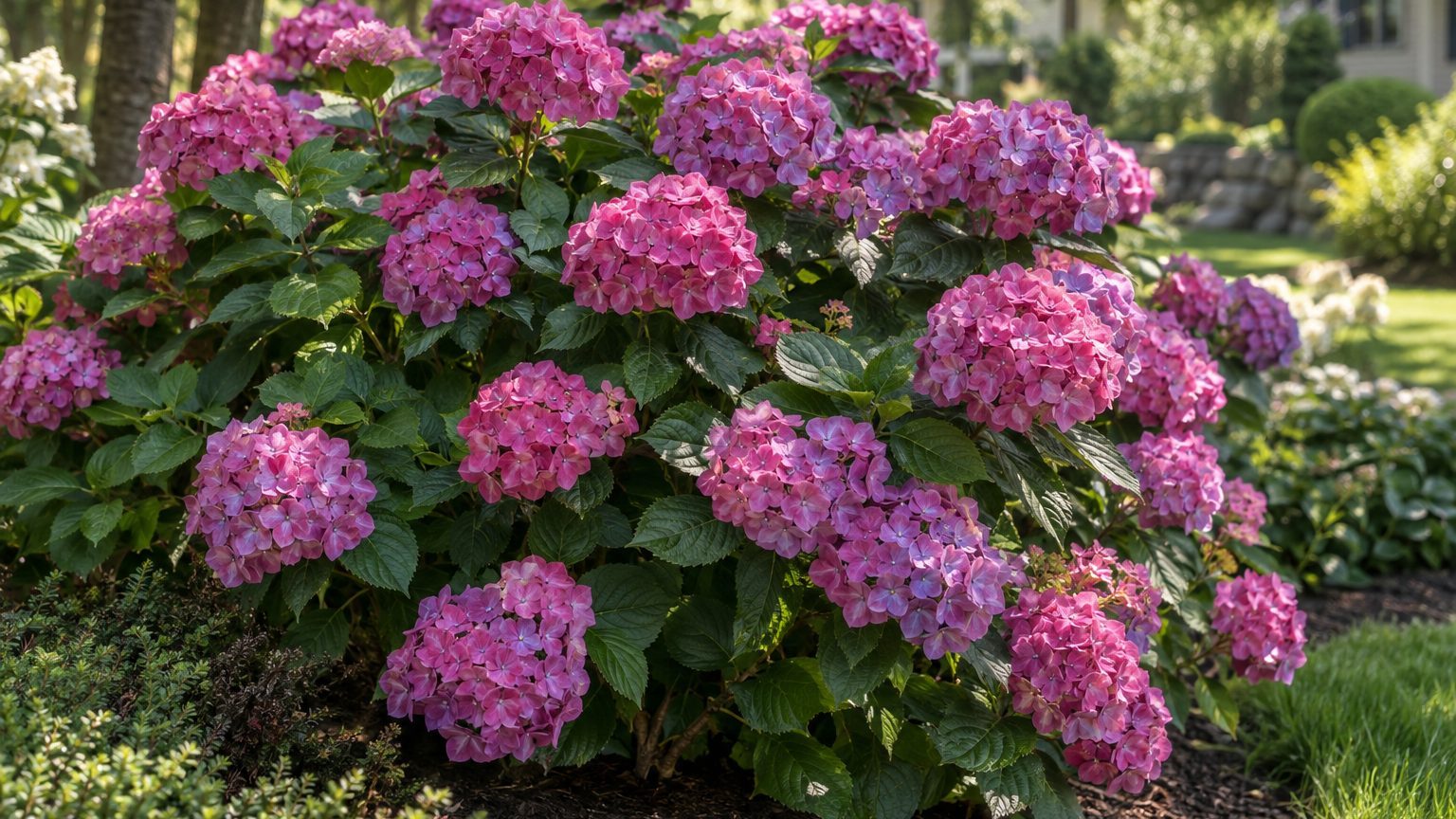
Mathilda Gutges is a mophead bigleaf hydrangea (Hydrangea macrophylla), hardy in USDA zones 6 through 9, growing 4 to 6 feet tall and wide. It blooms on last year’s wood, so pruning happens right after flowering, not in fall or spring. Part shade and moist, well-drained soil keep it healthiest, and flower color shifts from pink toward blue as soil pH drops.

What This Variety Is

Mathilda Gutges is a bigleaf hydrangea, a mophead cultivar with dense, rounded flower heads rather than the flat lacecap form. NC State Extension Gardener Plant Toolbox lists bigleaf hydrangea at zones 6 through 9, and this cultivar sits inside that same range.

Mature size runs 4 to 6 feet tall and just as wide, a rounded shrub rather than a climber or a small tree. Flowers open deep pink in alkaline soil and shift toward violet blue as the soil turns acidic.

It flowers on old wood, meaning this year’s blooms formed on stems grown last season. That single fact decides when you can safely cut it back.

Three traits define it in a yard:

  • Mophead flower clusters that hold their shape through a full summer
  • Bloom color tied to soil pH, not the plant’s genetics
  • Soft new stems that need protection through cold winters

Where It Grows: Zones and Regions

Bigleaf hydrangea covers a wide band of the country, but Mathilda Gutges holds best where winters stay inside zones 6 through 9 and summers don’t scorch past what part shade can buffer.

  • Pacific Northwest (Oregon, Washington): mild, damp winters keep old wood intact, and cool summers protect mophead blooms from fading fast.
  • Mid-Atlantic and Southeast (Virginia, North Carolina, Georgia): reliable zone 7 and 8 winters let old wood survive, though afternoon shade matters more the farther south you go.
  • Northeast and New England (Massachusetts, Connecticut, New York): zone 6 winters sit at the edge of its range, and a hard late freeze can kill buds already set to bloom.
  • Deep South and Gulf Coast (Florida, Texas, Louisiana): zone 9 heat pushes past its comfort, and full sun there scorches leaves by midsummer.

The state selector below this section leads to the page built for where you live, with your own frost dates and pruning window.

The Year With It, Season by Season

Spring

Old wood buds swell first, and new leaves follow within weeks. Skip any hard pruning now, since cutting back removes flower buds already set last fall. A light feeding with an acid-forming fertilizer at this point nudges bloom color toward blue.

Summer

Mophead clusters open in early summer and hold color for several weeks in part shade. Full sun afternoons wilt the leaves fast, so a deep soak twice a week beats a daily light sprinkle. Deadheading spent blooms keeps the shrub tidy without harming next year’s buds.

Fall

Flower buds for next year form on the new stems that grew this summer, so this is the one window for shaping cuts. Wait until leaves drop to see the shrub’s true form before trimming. A layer of mulch now protects shallow roots before frost.

Winter

Old wood carries next year’s blooms through the cold, and a hard freeze on exposed buds is the main risk in zone 6 gardens. Wrapping the base with leaves or burlap in the coldest weeks guards buds low on the stem. Zones 8 and 9 need none of this.

Diseases and Pests It Resists

Mathilda Gutges carries the same weak points as most bigleaf hydrangeas, more foliage trouble than the kind of disease that kills a shrub outright.

Deer browse tender leaves and flower buds in early spring when little else is green, though it isn’t a preferred target once other food is around.

Threat This one Source
Powdery mildew Common on crowded plants with poor air flow NC State Extension Gardener Plant Toolbox
Cercospora leaf spot Brown spots on older leaves late in summer NC State Extension Gardener Plant Toolbox
Deer browsing Moderate, buds eaten in early spring NC State Extension Gardener Plant Toolbox

Aphids and scale show up occasionally but rarely need treatment beyond a strong spray of water. The other kinds, like oakleaf or panicle hydrangea, are on their own pages for their own pest lists.

Where to Plant It in a Yard

Part shade near a north or east wall suits it best, sheltered from wind and hot afternoon sun. Pair it with ferns or hostas that like the same moist, part-shade soil.

  • Your state page: the frost dates and the pruning window where you live.
  • Hydrangea pruning guide: when to cut back old wood versus new wood bloomers.
  • Hydrangea color change guide: how soil pH shifts pink blooms toward blue.

Test the soil before you plant it, since the pH that day sets the color for years.

Common questions

Does Mathilda Gutges bloom on old wood or new wood?

Old wood, which is why pruning right after the flowers fade in late summer is the safe window, not spring or fall.

Can I grow Mathilda Gutges in a pot?

Yes, in a large container with drainage, though the shallow root ball dries faster than one in the ground and needs more frequent watering through summer.

Why did my Mathilda Gutges not bloom this year?

A late frost likely killed the buds already set on old wood, or a hard pruning cut them off by mistake the season before.

Mariesii Hydrangea: Size, Zones, Pruning and Care

Mariesii Hydrangea: Size, Zones, Pruning and Care

Mariesii hydrangea is a lacecap-flowered cultivar of the bigleaf hydrangea, Hydrangea macrophylla. It grows as a rounded, mounding shrub with flat flower heads and holds in USDA zones 6a to 11b. It blooms on old wood, wants part shade, and its color shifts with soil pH.

What This Variety Is

Mariesii belongs to the lacecap group of bigleaf hydrangeas. NC State Extension Gardener Plant Toolbox puts bigleaf at 6a to 11b, and Mariesii sits inside that same range.

A lacecap head is flat, not round. A ring of large, showy sepals surrounds a center of tiny, fertile florets.

The shrub keeps a mounding, rounded shape through the growing season. It blooms on old wood, meaning the flower buds form on last year’s stems, not on new spring growth.

Part shade suits it best, especially where afternoon sun runs hot. Morning sun with afternoon cover keeps the leaves from wilting midday.

Where It Grows: Zones and Regions

NC State Extension Gardener Plant Toolbox puts bigleaf hydrangea, the species behind Mariesii, at zones 6a to 11b, and that range sorts the country into clear winners and losers.

  • Great Lakes and the North (Minnesota, Wisconsin, Maine): Minneapolis sits around zone 4, well below 6a, so Mariesii will not overwinter reliably outdoors here without heavy protection.
  • Mid-Atlantic and Southeast (Virginia, North Carolina, Georgia): Raleigh’s zone 7b falls comfortably inside the range, and this belt is close to the sweet spot for the plant.
  • Deep South and Gulf Coast (Louisiana, Texas, Florida): the range stretches up near Miami’s zone 10b, but the heat means afternoon shade and steady water matter more than the cold does.
  • Pacific Northwest and coastal California (Washington, Oregon, California): Seattle’s zone 8b sits mid-range, and the milder, damper summers there suit a lacecap hydrangea well.

The state selector below turns this into your own numbers, your zone, your frost dates, and your safe pruning window, instead of a national guess.

The Year With It, Season by Season

Spring

Leaf and flower buds swell along last year’s stems as the soil warms. A late freeze can blacken those swelling buds before they open, so cover the shrub if frost threatens once buds show color.

Summer

Flat lacecap heads open, with a ring of large sepals framing a center of small, fertile florets. Soil chemistry decides the color, and aluminum sulfate worked into acidic soil pulls the ring toward blue.

Fall

Skip pruning entirely this season. Next year’s flower buds are already set along the stems by now, and cutting back removes them, which is the one mistake that costs a full year of bloom.

Winter

The shrub goes dormant, but next year’s buds sit exposed on old wood through the cold months. A hard freeze near the low end of the range can kill those buds outright even when the roots survive underground.

Diseases and Pests It Resists

Mariesii carries no special resistance to deer. The broad, tender leaves and the flower buds are both readily browsed where deer pressure is high.

Fungal trouble shows up mostly where air can’t move through the shrub. Crowded plantings against a fence or wall see it more than open, well-spaced beds.

Threat This one Source
Deer browsing Foliage and flower buds are readily eaten NC State Extension Gardener Plant Toolbox
Leaf spot (Cercospora) Common in humid spots with poor airflow NC State Extension Gardener Plant Toolbox
Powdery mildew Shows on shaded leaves late in the season NC State Extension Gardener Plant Toolbox
Aphids Minor, rarely needs treatment NC State Extension Gardener Plant Toolbox

Panicle and oakleaf hydrangeas handle deer and heat differently, and the other kinds are on their own pages.

Where to Plant It in a Yard

Give Mariesii morning sun and afternoon shade, room for a rounded mound at maturity, and shelter from drying wind, near a woodland edge or a shaded foundation bed works well.

  • Your state page: the frost dates and the pruning window where you live.
  • Bigleaf hydrangea zones and care: how Mariesii compares to mophead types in the same species.
  • Hydrangea pruning by type: the old-wood versus new-wood rule laid out side by side.

Match the site to the shade first, the color debate over soil pH can wait until the shrub is settled in.

Common questions

Does Mariesii hydrangea bloom on new growth?

No. It blooms on old wood, so pruning in fall, winter, or early spring cuts off the buds already set for the coming season.

Can I change the flower color?

Yes. Soil pH and available aluminum control it, acidic soil pulls the sepals toward blue, and alkaline soil shifts them toward pink.

Is a lacecap the same as a mophead hydrangea?

No. A lacecap head is flat with a ring of large sepals around tiny fertile florets, while a mophead is a full, rounded ball of showy sepals.

The almanac, state by state. Every date on this site comes from a state’s own frost facts and its extension service’s calendar — and says where it comes from.