Skip to content

Little Lime Hydrangea: Size, Zones, Pruning and Care

Little Lime Hydrangea: Size, Zones, Pruning and Care

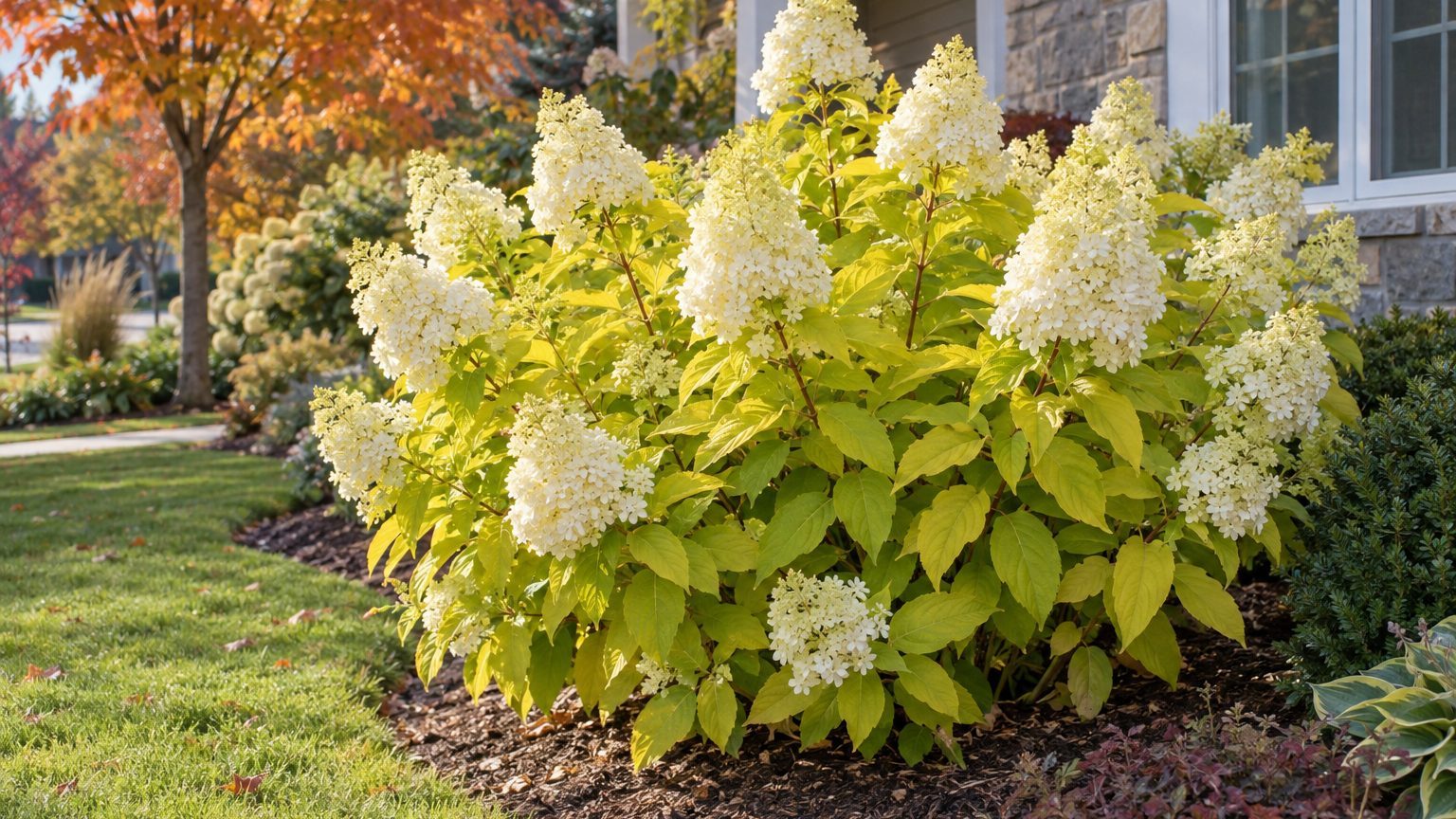
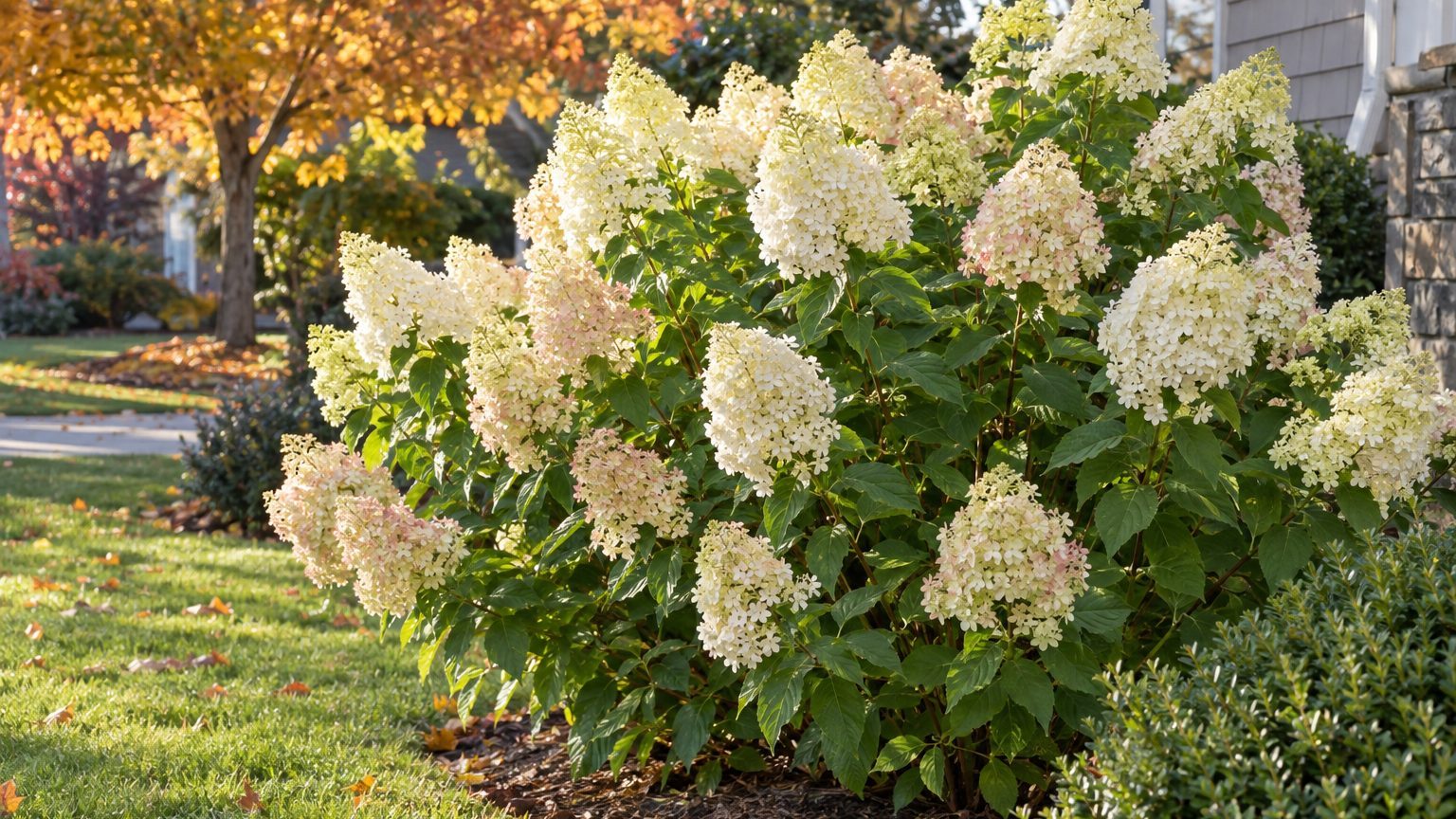
Little Lime hydrangea is a compact panicle type, hardy in USDA zones 3 through 8, that grows 3 to 5 feet tall and wide. It blooms on new wood from summer into fall, opening lime green and aging to a pink blush, and gets a hard cut back in late winter before new growth starts. It takes more sun and more cold than a bigleaf hydrangea.

What This Variety Is

Little Lime is a dwarf sport of the panicle hydrangea Limelight, bred to fit a foundation bed instead of a background border. NC State Extension Gardener Plant Toolbox lists Hydrangea paniculata as hardy from zone 3 to zone 8, a wider range than most bigleaf types manage.

The shrub reaches 3 to 5 feet tall and about as wide, roughly half the mature size of the straight species. Its stems stay sturdy enough to hold the flower heads upright through a summer downpour, which is not true of every hydrangea on the market.

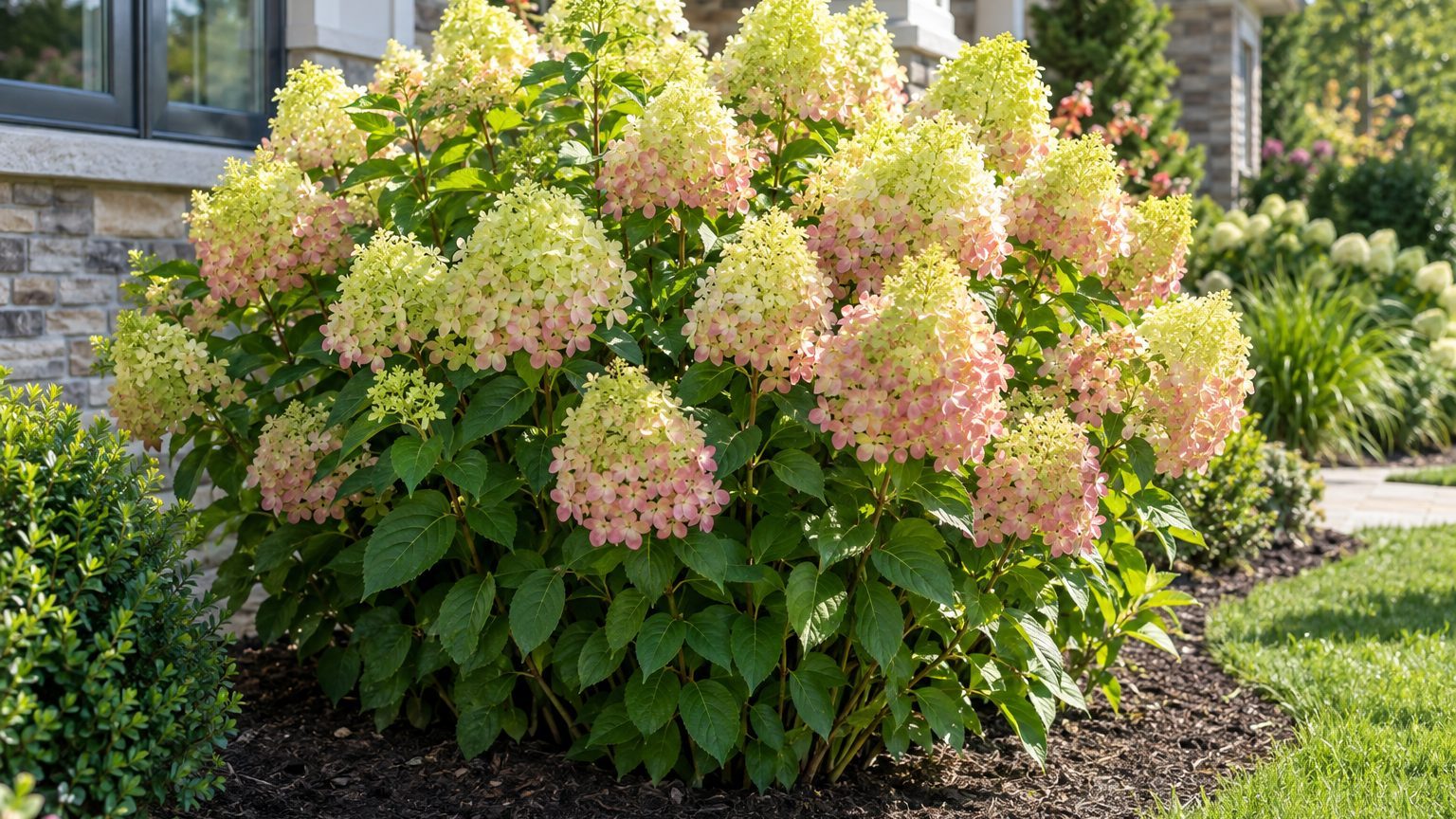
Flowers open a clear lime green during the hottest weeks of summer, then shift toward rose pink as fall nights cool. It blooms on the current season’s growth, not on wood left over from last year.

Three things separate it from a bigleaf hydrangea in a front yard bed:

  • Blooms on new wood, so a hard late winter cut does not cost a season of flowers
  • Soil pH does not shift the color, unlike a bigleaf mophead
  • It handles full sun, with water, in a way a bigleaf plant cannot

Where It Grows: Zones and Regions

This shrub covers more of the US map than most hydrangeas sold at a garden center, because a panicle type shrugs off cold that stops a bigleaf cold. NC State Extension Gardener Plant Toolbox lists Hydrangea paniculata as hardy from zone 3 to zone 8, and that range is what draws the lines below.

  • Great Lakes and the North (Michigan, Minnesota, Wisconsin): winters run zone 3 to 5 here, and this is often the only reblooming hydrangea worth planting without winter protection.
  • The Northeast and Mid-Atlantic (New York, Pennsylvania, Virginia): zone 5 to 7, full sun works fine except in the hottest inland counties, where afternoon shade helps.
  • The South (Georgia, North Carolina, Tennessee): zone 7 to 8, and part shade in the afternoon keeps leaves from scorching in a place like Atlanta.
  • The Plains and Mountain West (Nebraska, Colorado, Montana): zone 4 to 5, wind shelter matters more than shade in these open sites.
  • The Gulf Coast and Deep South edge (Florida, Texas, Louisiana): zone 9 and warmer sits past its comfort range, without enough winter chill the plant struggles and blooms poorly.

The state selector below this section opens straight to the frost dates and pruning window for the state you actually garden in, instead of a national average that fits nobody’s yard.

The Year With It, Season by Season

Spring

New growth breaks from the base once soil warms, right after a late winter cut removed last season’s dead wood. Flower buds form on this same spring growth, so the timing of that cut decides how heavy the bloom will be.

Summer

Flower heads open lime green through the hottest weeks, and they hold that color better in full sun than in heavy shade. Six or more hours of direct sun a day, with steady water, keeps the panicles dense instead of thin and floppy.

Fall

Cooler nights turn the green panicles toward a rose pink blush that can hold on the stem well into fall in milder zones. Leave the flower heads in place through this stretch, cutting them now removes wood the plant needs over winter.

Winter

Stems and dried flower heads stay upright through snow, giving the bed winter structure that most perennials cannot offer. Leave them alone until late winter, then cut the whole plant back hard before new buds swell.

Diseases and Pests It Resists

Panicle hydrangeas carry a lighter disease load than bigleaf types, part of why growers keep pushing them for foundation plantings. NC State Extension Gardener Plant Toolbox notes Hydrangea paniculata as generally free of serious pest or disease problems under normal care.

Problems that do show up trace back to crowding or wet foliage, not to the plant itself. Space plants for air movement and water at the base instead of overhead, and most of the table below stays theoretical.

Threat This one Source
Powdery mildew Occasional in humid, crowded beds NC State Extension
Bacterial leaf spot Rare, more common on bigleaf types —
Deer browsing Not a preferred plant, but not immune —
Aphids Occasional on soft new growth —

Bigleaf and oakleaf hydrangeas carry their own separate set of leaf spot and mildew pressures, covered on their own pages.

Where to Plant It in a Yard

This shrub earns its keep as a low hedge along a foundation, or as a repeating anchor down a front walk, since it holds its shape without staking. Give it morning sun and afternoon shade where summers run hot.

  • Your state page: the frost dates and the exact pruning window for where you live
  • Which hydrangeas hold up here: a side by side of panicle, bigleaf, and oakleaf types by zone
  • Pruning by type: the difference between cutting an old wood bloomer and a new wood bloomer like this one

Check the state page before the first frost date on the calendar, that date is what sets the cut.

Common questions

Does Little Lime hydrangea need full sun?

It tolerates full sun with regular water, though afternoon shade helps in the hottest southern zones, where leaf scorch shows up on the sunniest side of the plant.

When should I prune Little Lime hydrangea?

Late winter, before new buds swell. It blooms on the current season’s growth, so a hard cut at that point does not cost a single flower.

Can I change the color of Little Lime hydrangea blooms?

No. Soil pH does not affect panicle hydrangea color the way it does a bigleaf mophead, the shift from green to pink is seasonal, not chemical.

Lemon Daddy Hydrangea: Size, Zones, Pruning and Care

Lemon Daddy Hydrangea: Size, Zones, Pruning and Care

Lemon Daddy hydrangea is a panicle hydrangea (Hydrangea paniculata), grown for chartreuse to lemon yellow foliage that shifts through the season, with white cone flowers that age to soft pink. It suits USDA zones 3 through 8, stays compact enough for a foundation bed, blooms on new wood, and takes a hard prune in late winter without losing its summer show.

What This Variety Is

Lemon Daddy is a cultivar of Hydrangea paniculata, a panicle-type shrub bred for foliage that runs chartreuse in spring and shifts toward lemon yellow through summer. NC State Extension Gardener Plant Toolbox notes that panicle hydrangea sets its flower buds on new wood grown fresh each spring, not on stems left over from the year before.

That distinction changes the answer on pruning: a hard cut in late winter doesn’t erase this year’s flowers, unlike bigleaf types that bloom on old wood. The habit stays upright and rounded rather than sprawling, which keeps the shrub tidy near a foundation bed.

Cone-shaped panicles open white and fade to a soft pink as nights cool in fall, a shift many paniculata cultivars share. What sets this one apart is the leaf color, since most panicle hydrangeas keep plain green foliage from spring through frost.

Flower color here follows temperature and age, not soil pH. Gardeners chasing blue or pink by adjusting aluminum uptake are thinking of bigleaf hydrangea, not this one.

  • Type: panicle hydrangea (Hydrangea paniculata).
  • Bloom wood: new wood, so a hard prune skips a season of loss.
  • Standout trait: chartreuse to lemon yellow foliage, not the bloom color.

Where It Grows: Zones and Regions

NC State Extension Gardener Plant Toolbox lists panicle hydrangea hardiness from zone 3 through zone 8, a wider band than the bigleaf hydrangeas most yards already have, and that range decides where Lemon Daddy holds up without special winter care.

  • Great Lakes and the Northeast (Michigan, Minnesota, New York): winters sit right at the zone 3 edge, and stems above the snow line can die back before spring growth catches up.
  • The Mid-Atlantic and Upper South (Virginia, Tennessee, North Carolina): zone 6 to 7 summers run warm enough for a full bloom, with winters mild enough that serious dieback is rare.
  • The Deep South and Gulf Coast (Florida, Louisiana, coastal Texas): zone 9 and up runs past the top of the range, and heavy summer heat can thin out bloom quality even where the shrub survives.
  • The Southwest and low desert (Arizona, southern Nevada, inland California): heat and alkaline soil work against panicle hydrangea no matter what the zone number says.
  • The Pacific Northwest (Washington, Oregon): mild, damp summers sit well inside the range and rarely call for extra watering once a plant is established.

The state selector below this section opens the frost dates and pruning window for wherever you garden, so check that before reading a national zone map as the final word.

The Year With It, Season by Season

Planting

Early spring, once the ground has thawed and stopped freezing overnight, is the easiest planting window, though a container-grown shrub can go in through fall in milder zones too. Give it full sun to part shade and enough room to reach its mature width without crowding a walkway or a foundation.

Spring

New shoots push from the base and from any stems that made it through winter intact, and this fresh growth is what carries the summer’s flowers. Skip a fertilizer heavy in nitrogen at this point, since it pushes leafy growth at the expense of the flower buds forming later.

Summer

Panicles open white through the hottest weeks and hold their shape even as afternoon temperatures push past 90 degrees, since bloom happens on new wood grown that same spring rather than stored energy from last year. Deep watering during dry spells keeps the cone-shaped flowers from wilting before they color up toward pink.

Heat

Extended stretches above 90 degrees can wilt panicles by afternoon even with damp soil, since the broad leaves lose water faster than the roots can pull it back up. A layer of mulch over the root zone and a deep soak every few days carries it through a heat wave without lasting damage.

Fall

Blooms shift from white to a dusty pink as nights cool, and the yellow foliage that sets this variety apart starts fading back toward green before leaves drop for the season. This is not the time to prune, since cuts made now remove wood that should stay put through winter dormancy.

Winter

Stems go fully dormant and look bare next to nearby evergreens, which is normal for the type, and many gardeners leave the dried panicles standing through the coldest months for winter structure. Late winter, right before buds swell, is the real pruning window, when cutting back to a framework of strong stems sets up a fuller summer flush.

Diseases and Pests It Resists

Extension publications don’t carry pest or disease ratings specific to Lemon Daddy, so what follows applies to panicle hydrangea as a group, the closest documented match available.

As a species, panicle hydrangea deals with fewer serious diseases than bigleaf hydrangea and rarely needs a fungicide program in an average yard.

Threat This one Source
Bacterial leaf spot Occasional, cosmetic, worse in wet years —
Powdery mildew Shows up in humid, still air, rarely fatal —
Deer browsing Less favored than bigleaf foliage —

None of these threats is severe enough to plan a spray schedule around, and morning sun that dries leaves fast beats any fungicide here. The real risk to flowering is a late hard frost on new growth, and the other kinds, bigleaf and oakleaf included, have their own pest pages.

Where to Plant It in a Yard

Give it morning sun with afternoon shade in hot climates, full sun further north, and clear the mature width from a walkway or foundation so the heavy panicles don’t flop into foot traffic after a rain.

  • Your state page: the frost dates and pruning window for wherever you garden.
  • Hydrangea types compared: how panicle stacks up against bigleaf, oakleaf, and smooth for a mixed border.
  • Pruning hydrangeas by type: the full cutting calendar if more than one kind shares the yard.

Mark the late-winter pruning window on next year’s calendar before the last of the foliage drops this fall.

Common questions

Does Lemon Daddy hydrangea bloom on old wood or new wood?

New wood, the growth it puts out each spring, which is why a hard prune in late winter doesn’t cost a season of flowers the way it would on a bigleaf hydrangea planted along the same fence line.

How big does Lemon Daddy hydrangea get?

Panicle hydrangea selections generally run from about 4 to 8 feet without pruning, and cutting back hard each late winter keeps a shrub like this on the smaller, tidier end of that range for a foundation bed.

What USDA zone works best for Lemon Daddy hydrangea?

Zone 6 to 7 is the sweet spot, with summers warm enough for a full bloom and winters mild enough to avoid the dieback that shows up closer to the zone 3 edge of its range.

Lady in Red Hydrangea: Size, Zones, Pruning and Care

Lady in Red Hydrangea: Size, Zones, Pruning and Care

Lady in Red is a bigleaf hydrangea bred for red stems, red-veined leaves that turn burgundy in fall, and a compact frame that fits foundation beds without spilling over the walkway. It stays in the 3 to 4 foot range, holds USDA zones 5 to 9, blooms on last year’s wood, and needs pruning right after the flowers fade, not in fall or spring.

What This Variety Is

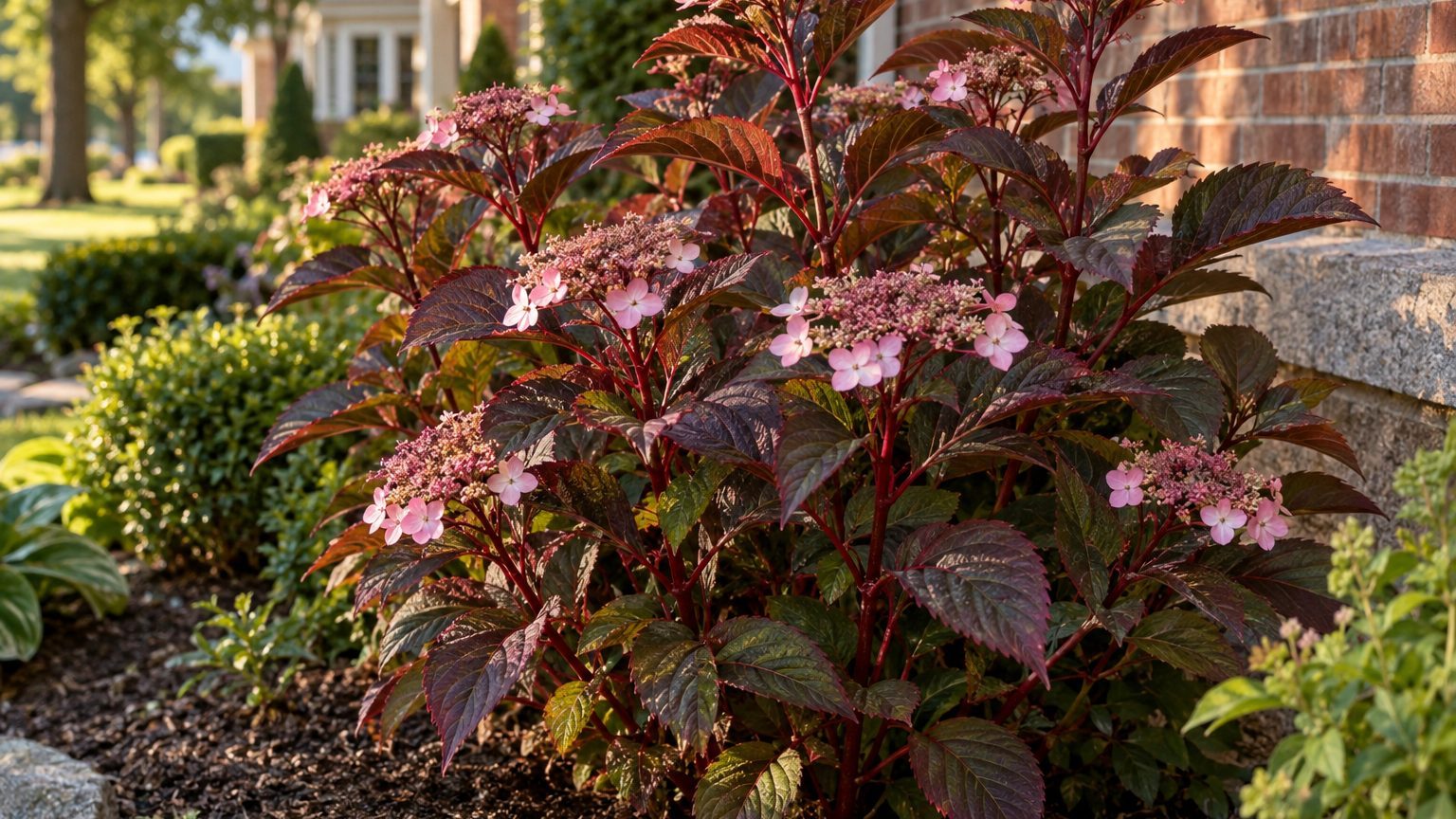
Lady in Red is a bigleaf hydrangea, Hydrangea macrophylla, bred at North Carolina State University for stems that stay red through the growing season. The lacecap flowers sit flat, ringed by sterile petals, and shift from pink toward blue as the soil turns acidic.

The leaves show red veins and red petioles even in July, then the whole plant turns burgundy to deep red once fall nights cool down. That color holds through several frosts before the leaves drop.

The flower form sets it apart from rounded mophead hydrangeas too: lacecap types show a ring of showy sterile flowers around a flat center of small fertile ones, rather than one solid ball of bloom.

NC State Extension Gardener Plant Toolbox lists it at 3 to 4 feet tall and wide, a foundation-bed scale next to the 6-foot spread of older mophead varieties.

It flowers only on old wood, the stems grown the prior season, so a hard spring cut removes the buds before they ever open. Growers plant it in part shade because full southern sun scorches the leaf edges by midsummer.

Where It Grows: Zones and Regions

NC State Extension Gardener Plant Toolbox puts Lady in Red at USDA zones 5 to 9, a wider hardiness window than most bigleaf hydrangeas carry.

  • The Upper Midwest and Northeast (Ohio, Pennsylvania, New York): zone 5 winters can still nip flower buds on exposed stems, so a sheltered spot against a wall helps more here than farther south.
  • The Mid-Atlantic and Southeast (Virginia, North Carolina, Georgia): this is the range it was bred for, with reliable bloom and the fall color running longest where autumn nights turn cool without a hard freeze.
  • The West Coast (Oregon, Washington, coastal California): mild winters remove the bud-hardiness question, but afternoon shade still matters once summer heat sets in inland.
  • The Interior West and high plains (Colorado, Utah, parts of New Mexico): low humidity and alkaline soil push flowers toward pink and can dry out the leaf margins without regular water.

The state selector below this section opens the frost dates and pruning window for wherever you garden.

The Year With It, Season by Season

Spring

New leaves break from buds set on last year’s red stems, so the pruning window has already closed by the time growth starts. A light feeding and a mulch refresh is the only work needed before the lacecap buds swell.

Summer

Flowers open flat and ringed, pink in alkaline soil and blue where the soil runs acidic, and they hold through the hottest weeks with steady watering. This is the window to deadhead, cutting just above the next bud pair once the color fades.

Fall

The foliage turns from green to burgundy and deep red as nights cool, a trait that runs longer here than on most bigleaf varieties. The color holds through several frosts before the leaves drop on their own.

Winter

Bare stems stay red through the cold months, adding color to an otherwise empty bed, while next summer’s flower buds already sit on that old wood. NC State Extension Gardener Plant Toolbox notes zone 5 winters put those buds most at risk, so mulch at the base helps most there.

Diseases and Pests It Resists

Lady in Red carries the same general susceptibilities as other bigleaf hydrangeas, and no separate resistance has been bred into this cultivar. NC State Extension Gardener Plant Toolbox lists powdery mildew and Cercospora leaf spot as the two disease pressures that show up most in humid, still-air conditions.

Neither problem is usually fatal, and both slow down once air moves freely between shrubs and watering stays at the roots instead of on the leaves.

Threat This one Source
Powdery mildew Susceptible in humid summers —
Cercospora leaf spot Susceptible, worse on crowded plants —

Deer browsing and the occasional aphid or spider mite outbreak are not specific to this variety, so those pages cover the controls that apply across bigleaf hydrangeas.

Where to Plant It in a Yard

Part shade near a foundation or along a walkway suits this shrub best, especially where afternoon sun would otherwise scorch the leaf edges by midsummer. Pair it with ferns or hostas that share the same moisture needs.

  • Your state page: the frost dates and the pruning window where you garden.
  • Which hydrangeas hold up here: a side-by-side of bigleaf, panicle, and smooth types for your zone.
  • Bigleaf hydrangea care: the general pruning and watering rules this variety shares with its parent species.

Common questions

Does Lady in Red bloom on new wood or old wood?

It blooms on old wood, the stems grown the previous season, which is why a hard prune in fall or early spring removes next summer’s flowers.

Can I change the flower color on Lady in Red?

Yes, soil pH shifts the color the same way it does on other bigleaf hydrangeas, more acidic soil pulls toward blue and more alkaline soil pulls toward pink.

How cold hardy is Lady in Red compared to other bigleaf hydrangeas?

NC State Extension Gardener Plant Toolbox lists it at USDA zones 5 to 9, a wider range than many older bigleaf varieties that struggle below zone 6.

L.A. Dreamin Hydrangea: Size, Zones, Pruning and Care

L.A. Dreamin Hydrangea: Size, Zones, Pruning and Care

L.A. Dreamin is a compact, reblooming bigleaf hydrangea that tops out around 3 to 4 feet tall and wide, hardy across USDA zones 4 through 9. Its bicolor mophead blooms shift color with soil pH while the white edge holds steady, and because it flowers on both old and new wood, a rough winter costs weeks of bloom, not the whole season.

What This Variety Is

L.A. Dreamin belongs to Hydrangea macrophylla, the bigleaf group, and it’s part of the Endless Summer Collection developed by Bailey Nurseries, which puts mature size at 3 to 4 feet tall and wide. It grows as a rounded, dense mound rather than an open, leggy shrub.

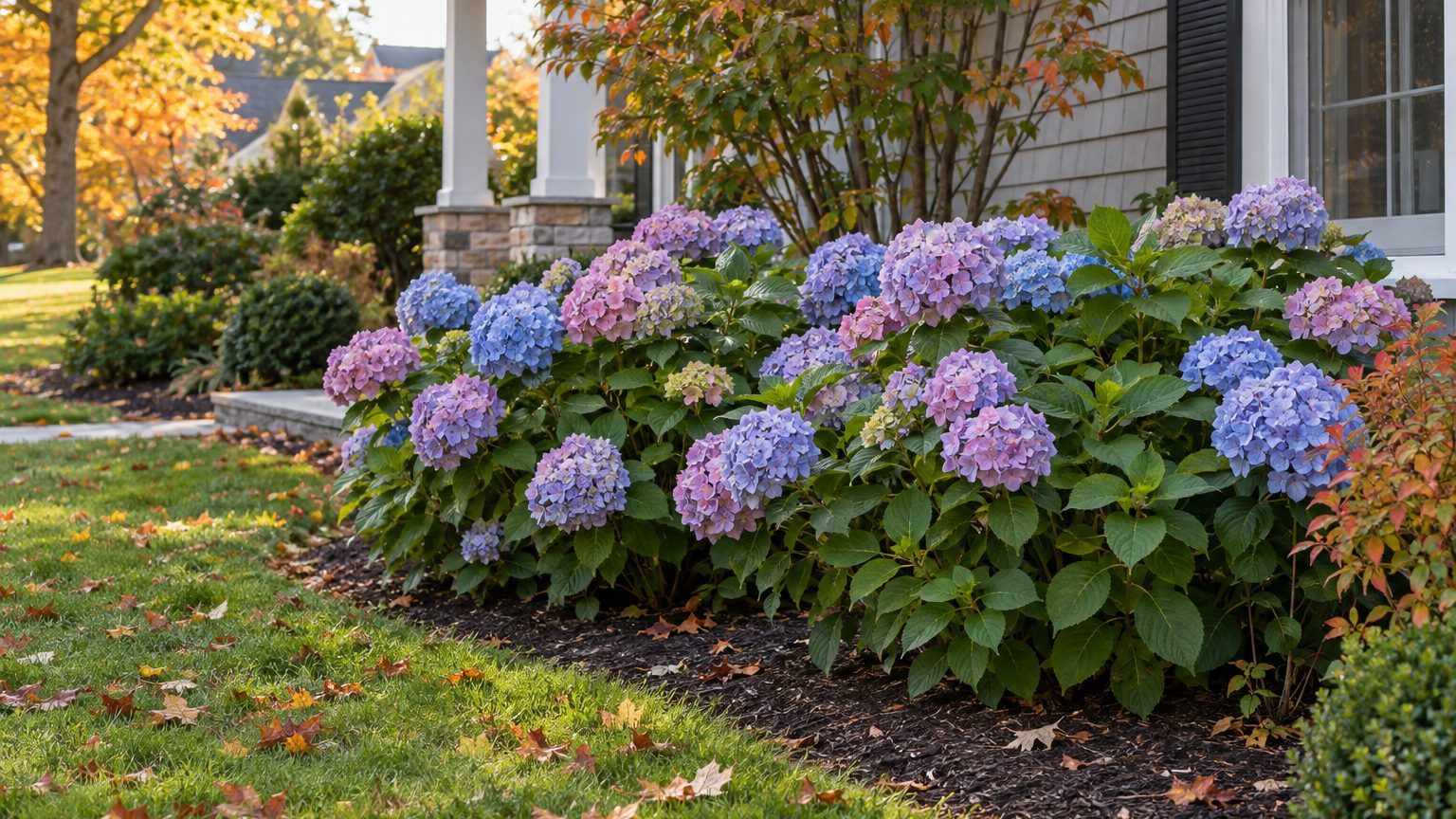
The bloom is a mophead, not a lacecap, with a bicolor pattern: a saturated pink or blue-purple center ringed in white. That white edge holds its color regardless of soil pH, while the center shifts from pink toward blue as the soil turns more acidic.

What sets it apart from an older bigleaf shrub is where the flowers come from: it blooms on both old wood and new wood. A late frost that kills last year’s buds still leaves a summer flush coming from stems the plant grew this year.

The leaves are broad and glossy, dark green against the compact frame. That density is why growers slot it into foundation beds and mixed borders alike.

Where It Grows: Zones and Regions

Zone alone doesn’t tell the whole story with a reblooming bigleaf, since the new-wood flowers act as a backup when a cold snap wipes out the old-wood buds.

  • Cold winters (Minnesota, Wisconsin, Michigan): Bailey Nurseries rates the Endless Summer Collection, including L.A. Dreamin, for USDA zones 4 through 9, and in these states the old-wood buds routinely die back, so summer flowers come almost entirely from new growth.
  • Mixed winters (Ohio, Pennsylvania, Virginia): both old and new wood usually survive, which means two waves of bloom, an early one in late spring and a second flush into fall.
  • Mild winters (Georgia, South Carolina, coastal North Carolina): old wood buds almost always make it through, and the shrub can bloom nearly continuously from late spring into fall with steady water.
  • Hot, humid Gulf states (Louisiana, Florida, Texas): afternoon sun turns punishing here, and the plant does better tucked where it gets shade after midday.

The state selector below this section links to the frost dates and hardiness numbers for where you garden.

The Year With It, Season by Season

Planting

Early spring or early fall works best, while soil is workable but summer heat hasn’t arrived. Dig the hole twice as wide as the root ball, and water deeply right after planting so roots settle before the first bloom cycle starts.

Spring growth

New leaves emerge on stems that made it through winter, and this is the pruning window if any wood is clearly dead. Cut only stems with no green under the bark, since live old wood carries the first flush of bicolor blooms.

Summer bloom

Mophead flowers open from old wood first, then new-wood stems add a second round as the season goes on. Deadheading spent blooms encourages more flower production without risking next year’s buds, since new growth continues through summer.

Summer heat

Bigleaf hydrangeas wilt fast once soil dries out in high heat, and L.A. Dreamin is no exception. A deep soak two or three times a week beats a daily sprinkle, and afternoon shade keeps leaves from scorching on the hottest days.

Fall

Blooming slows as days shorten, but new-wood stems set the buds that will open as old-wood flowers the following spring. This is not the time to prune, since cutting now removes next year’s earliest color.

Winter

Dormant stems and swollen buds sit through cold weather, and in the coldest parts of its range those old-wood buds can die back. A four-inch layer of mulch over the root zone protects the crown, and because the shrub reblooms on new wood too, a hard winter costs a few weeks of bloom, not the season.

Diseases and Pests It Resists

NC State Extension Gardener Plant Toolbox lists several common weak points for bigleaf hydrangea, and L.A. Dreamin hasn’t been bred with special resistance to any of them.

Deer will browse the buds and leaves too, since bigleaf hydrangeas carry no natural deer resistance. A wire cage over young plants in fall protects the buds that carry next year’s old-wood bloom.

Threat This one Source
Aphids and spider mites Susceptible, worse in dry heat NC State Extension
Leaf spot (Cercospora) Susceptible in humid, wet-leaf spells NC State Extension
Powdery mildew Susceptible late in the growing season NC State Extension
Deer browsing Not resistant NC State Extension

Panicle, oakleaf, and smooth hydrangeas carry different pest profiles, and those are covered on their own pages.

Where to Plant It in a Yard

L.A. Dreamin works best as a foundation planting or a mixed-border anchor, somewhere it gets morning sun and afternoon shade. Its compact frame also does well in a large container on a patio.

  • Your state page: the frost dates and pruning window for where you garden.
  • Hydrangea types compared: how bigleaf stacks up against panicle, oakleaf, and smooth for your yard.
  • Companion plants for hydrangeas: what holds up next to the same moisture needs and part-shade spot.

Common questions

How big does L.A. Dreamin hydrangea get?

Bailey Nurseries puts mature size at 3 to 4 feet tall and wide, a compact, rounded shape suited to foundation beds and large containers.

Does L.A. Dreamin hydrangea bloom on old or new wood?

Both. That’s what makes it a reblooming hydrangea, so it keeps producing flowers even if a late frost kills the old-wood buds.

What zones does L.A. Dreamin hydrangea grow in?

Bailey Nurseries rates it for USDA zones 4 through 9, though old-wood blooms show up more reliably in the milder end of that range.

Incrediball Hydrangea: Size, Zones, Pruning and Care

Incrediball Hydrangea: Size, Zones, Pruning and Care

Incrediball hydrangea is a smooth hydrangea cultivar bred for stronger stems than Annabelle, holding blooms up to 12 inches across without flopping over after rain. It grows in USDA zones 3 to 8, reaches 4 to 5 feet tall and wide, and flowers on new wood from early summer into fall. Below: zones, the season-by-season calendar, resistance, and where to plant it.

What This Variety Is

Incrediball is a cultivar of Hydrangea arborescens, the smooth hydrangea native to the eastern United States. Missouri Botanical Garden Plant Finder lists it as reaching 4 to 5 feet tall and 4 to 5 feet wide, with a rounded, mounding habit.

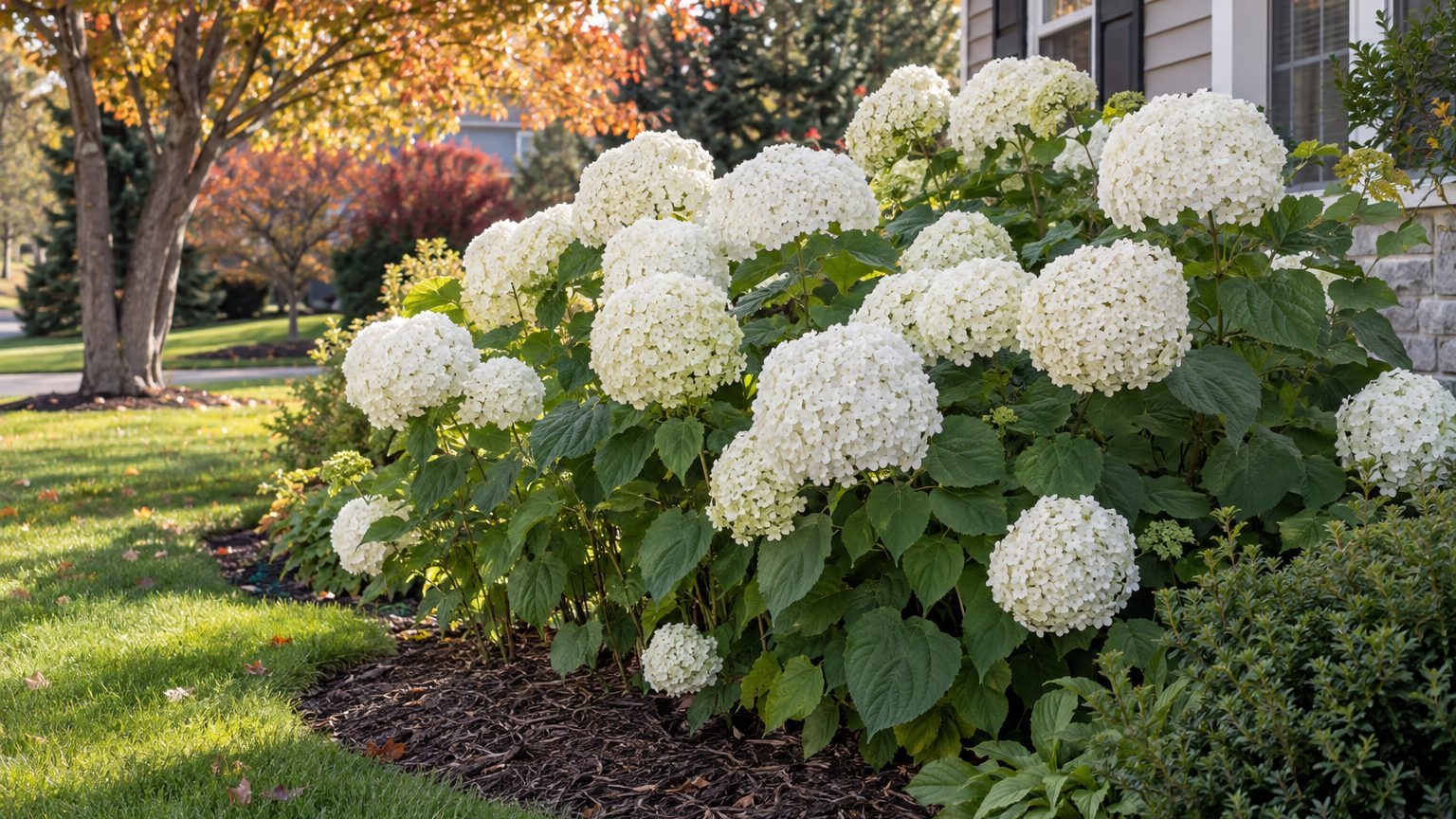
Its defining trait is stem strength. Bred to correct the floppy stems of older smooth hydrangea varieties like Annabelle, Incrediball holds blooms that can reach 12 inches across upright through wind and heavy rain.

Blooms open lime green, turn pure white, and can pick up a blush tone as nights cool in fall. A pink-flowered sport, Incrediball Blush, exists for gardeners who want color from the start.

Three things separate it from other hydrangeas grown nearby:

  • It blooms on new wood, not last year’s growth.
  • Its stems are thick enough to skip staking in most yards.
  • It tolerates more sun than bigleaf hydrangea without wilting by afternoon.

Where It Grows: Zones and Regions

Missouri Botanical Garden Plant Finder puts Incrediball’s hardiness at USDA zones 3 to 8, a wider range than most bigleaf hydrangeas manage.

  • Great Lakes and the North (Michigan, Minnesota, Wisconsin): zone 3 and 4 winters kill the top growth back most years, but since Incrediball blooms on new wood, that costs height, not flowers.
  • Northeast and Mid-Atlantic (New York, Pennsylvania, Virginia): zone 5 to 7 is where this shrub performs closest to its full size, with minimal stem dieback and full-size blooms.
  • The South (Georgia, Texas, the Carolinas): zone 7 and 8 still work well, though afternoon shade helps blooms hold their color and last longer through a hot summer.
  • Pacific Northwest and interior West (Oregon, Washington, Colorado): coastal zone 7 to 8 sites need little extra care, while drier interior spots need regular watering to keep the wide leaves from wilting by midday.

Past zone 8, in the Gulf Coast counties and peninsular Florida, the heat cuts bloom size and shortens the display. The state selector below this section leads to the planting dates and pruning window for where you live.

The Year With It, Season by Season

Spring

New growth pushes from the base as soil warms, and this is the safe window to cut stems back to 12 to 18 inches since next season’s blooms form entirely on this new wood, not on anything left from last year.

Summer

Blooms open lime green early in the season and turn white by midsummer, holding their shape on thick stems even after a heavy storm, though a deep soak during dry stretches keeps the wide leaves from drooping by afternoon.

Fall

Flower heads age to a papery tan or pick up a blush tint as nights cool, and many gardeners leave them standing rather than cutting them, since the dried heads add structure to the yard once everything else has faded.

Winter

Top growth can die back hard in the coldest zones, but because next year’s flowers come from new wood, a rough winter costs nothing but height, and the shrub still blooms on schedule once spring growth resumes.

Diseases and Pests It Resists

Missouri Botanical Garden Plant Finder lists Incrediball as having no serious insect or disease problems, a shorter list of concerns than many hydrangeas grown in the same bed.

It also earns a deer tolerant rating, useful in yards where browsing pressure has ended other flowering shrubs planted nearby.

Threat This one
Deer browsing Rated tolerant
Insects None serious reported
Disease None serious reported

Occasional leaf spot can show up in a wet, humid summer, but it rarely spreads far on this variety. The other kinds, including bigleaf and oakleaf hydrangea, are on their own pages with their own pest lists.

Where to Plant It in a Yard

Incrediball’s rounded 4 to 5 foot frame works as a stand-alone specimen, a low hedge along a foundation, or a repeated block bordering a patio where its white blooms catch evening light.

  • Your state page: the frost dates and the pruning window for where you garden.
  • Which ones hold up here: how Incrediball compares with the other hydrangeas rated for your zone.
  • Hydrangea care basics: watering and soil notes that apply across every type in this family.

Pair it with hostas or ferns at its feet, since both like the same afternoon shade and even moisture, and let the shrub’s size do the work near a porch or mailbox bed.

Common questions

How big does Incrediball hydrangea get?

It reaches 4 to 5 feet tall and 4 to 5 feet wide at maturity, holding a rounded shape without staking thanks to its thick stems.

Does Incrediball hydrangea need full sun?

It handles full sun to part shade. In the South, part shade during the hottest afternoon hours keeps blooms from fading as fast.

When should I prune Incrediball hydrangea?

Prune in late winter or early spring, before new growth starts, since every bloom forms on wood grown that same season.

Grandiflora Hydrangea: Size, Zones, Pruning and Care

Grandiflora Hydrangea: Size, Zones, Pruning and Care

Grandiflora hydrangea is the classic panicle type, sold for generations as the PeeGee hydrangea, hardy from USDA zone 3 to 8 and reaching 10 to 25 feet depending on whether you train it as a small tree or let it grow as a multi-stem shrub. It blooms on new wood, so a hard late-winter cut never costs you a season of flowers.

What This Variety Is

Grandiflora is the classic cultivar of Hydrangea paniculata, sold for over a century as the PeeGee hydrangea. It grows as a multi-stem shrub or a trained small tree, never as the mounding bigleaf type most yards already have.

NC State Extension Gardener Plant Toolbox lists panicle hydrangea at USDA zones 3 to 8, the widest range of any hydrangea sold at garden centers. That range is what separates Grandiflora from bigleaf and mophead types that struggle north of zone 6.

The flower is a dense cone, not a ball, opening white in summer and aging to pink, rose, or bronze by fall. It blooms on new wood, so a hard late-winter cut does not cost you the season’s flowers.

Left alone, height depends entirely on how you train it:

  • 25 feet as a single-trunk tree form
  • 10 to 15 feet as an untrimmed multi-stem shrub
  • 6 to 8 feet where cut back hard each year

Where It Grows: Zones and Regions

Panicle hydrangea’s zone 3 to 8 range means it grows in almost every part of the continental United States, which is unusual for a hydrangea most yards know as a shade lover. Where it struggles is the deep South and the low desert, where summer heat can stall bloom size and stress shallow roots even with regular water.

  • Great Lakes and the North (Michigan, Minnesota, Wisconsin): this is the one hydrangea reliably hardy here, since it blooms on new wood and shrugs off a winter that kills flower buds on other types.
  • Mid-Atlantic and the Northeast (Pennsylvania, New York, Virginia): full sun works without scorch, and the plant reaches full size in a normal growing season without much fuss.
  • The South (Georgia, Texas, the Carolinas): afternoon shade keeps the panicles from bleaching and the roots from drying out in clay soil that bakes through July and August.
  • The Mountain West and high plains (Colorado, Montana, Wyoming): cold tolerance holds up fine, but wind and low humidity call for a sheltered spot and steady water the first two summers.

Your state page, reached through the selector rendered below this section, carries the exact frost dates and pruning window for where you live.

The Year With It, Season by Season

Grandiflora’s calendar runs on one rule: everything it blooms on this year, it grew this year. That single fact decides when you cut, when you feed, and how much winter cold you ever need to worry about.

Late winter

New flower buds haven’t formed yet, so this is the only pruning window that matters for Grandiflora. Cut stems back by a third to a half before growth starts, and the plant still blooms on schedule because every flower forms on wood made this year.

Spring

Fresh shoots push fast once soil warms, often a foot or more before the first buds show. Feed lightly and refresh mulch now, since a dry spring stresses the shallow roots more than a cold winter ever does.

Summer

Panicles open white in the first real heat of the season and hold their cone shape through the hottest weeks. Give it a deep soak weekly in dry stretches, because panicle hydrangea forgives poor soil far more than it forgives drought.

Fall

Color shifts from white to pink, rose, or a dusty bronze as nights cool, and those spent panicles look good left on the stem into winter. Cut a few for drying now, before frost turns them brittle.

Winter

Dormant wood rides out cold that would kill flower buds on a bigleaf hydrangea, which is the whole reason this variety succeeds where others fail. No wrapping or burlap needed here, just a layer of mulch over the root zone.

Diseases and Pests It Resists

NC State Extension Gardener Plant Toolbox lists panicle hydrangea as having no serious disease or pest problems, a shorter list than almost any other hydrangea in the genus. That is part of why it shows up in commercial plantings, not just home yards.

The one real threat is not a bug or a fungus. It is a hard freeze right after a false spring, which can nip the soft new growth that would have carried the season’s buds.

Threat This one Source
Bacterial leaf spot Occasional, cosmetic only —
Powdery mildew Rare, mainly in shaded, still air —
Deer browsing Seldom severely damaged —
Winter bud loss Not a factor, blooms on new wood —

Bigleaf and mountain hydrangea carry a longer list, including the leaf blight that can defoliate a plant by late summer. Those problems belong on their own pages, since Grandiflora simply does not share most of them.

Where to Plant It in a Yard

Grandiflora earns its keep as a specimen, not a filler shrub, since a mature plant needs room to become a small tree or a wide multi-stem mass. Give it eight feet of clearance from the foundation and let it anchor a corner or a fence line.

  • Your state page: the frost dates and the pruning window where you live.
  • Which hydrangea holds up here: a side-by-side of panicle, bigleaf, smooth, and oakleaf for your zone.
  • Pruning by type: the cut that fits a plant that blooms on new wood, not old.

Plant it where you’ll walk past the panicles in late summer, since that is when this variety earns the space you gave it.

Common questions

Is Grandiflora hydrangea the same as PeeGee hydrangea?

Yes. Grandiflora is the formal cultivar name for Hydrangea paniculata, and PeeGee is the old nursery nickname for the same plant, both referring to the same white cone-shaped bloom.

How big does Grandiflora hydrangea get?

Anywhere from 6 feet to 25 feet, depending entirely on training. Cut hard every year and it stays a compact shrub, leave it alone or train a single trunk and it becomes a small tree.

Does Grandiflora hydrangea bloom on new wood or old wood?

New wood. That means pruning in late winter, before growth starts, never removes the buds that will carry this year’s flowers, unlike bigleaf hydrangea where the same cut can strip the season bare.

Glowing Embers Hydrangea: Size, Zones, Pruning and Care

Glowing Embers Hydrangea: Size, Zones, Pruning and Care

Glowing Embers is a bigleaf hydrangea (Hydrangea macrophylla) grown for its rose-red mophead blooms that deepen toward rust and wine tones as summer fades. It stays a compact, rounded shrub, generally 3 to 4 feet tall and wide, hardy through USDA zones 6 to 9. It flowers on old wood, so pruning timing matters more than pruning frequency.

What This Variety Is

Glowing Embers is a bigleaf hydrangea, Hydrangea macrophylla, in the mophead group rather than the lacecap group. NC State Extension Gardener Plant Toolbox puts bigleaf hydrangea at zones 6a to 9b, and this cultivar sits within that range.

The plant forms a rounded, mounding shrub with sturdy stems and broad, glossy leaves. Mature size runs 3 to 4 feet tall and equally wide, smaller than many older bigleaf types.

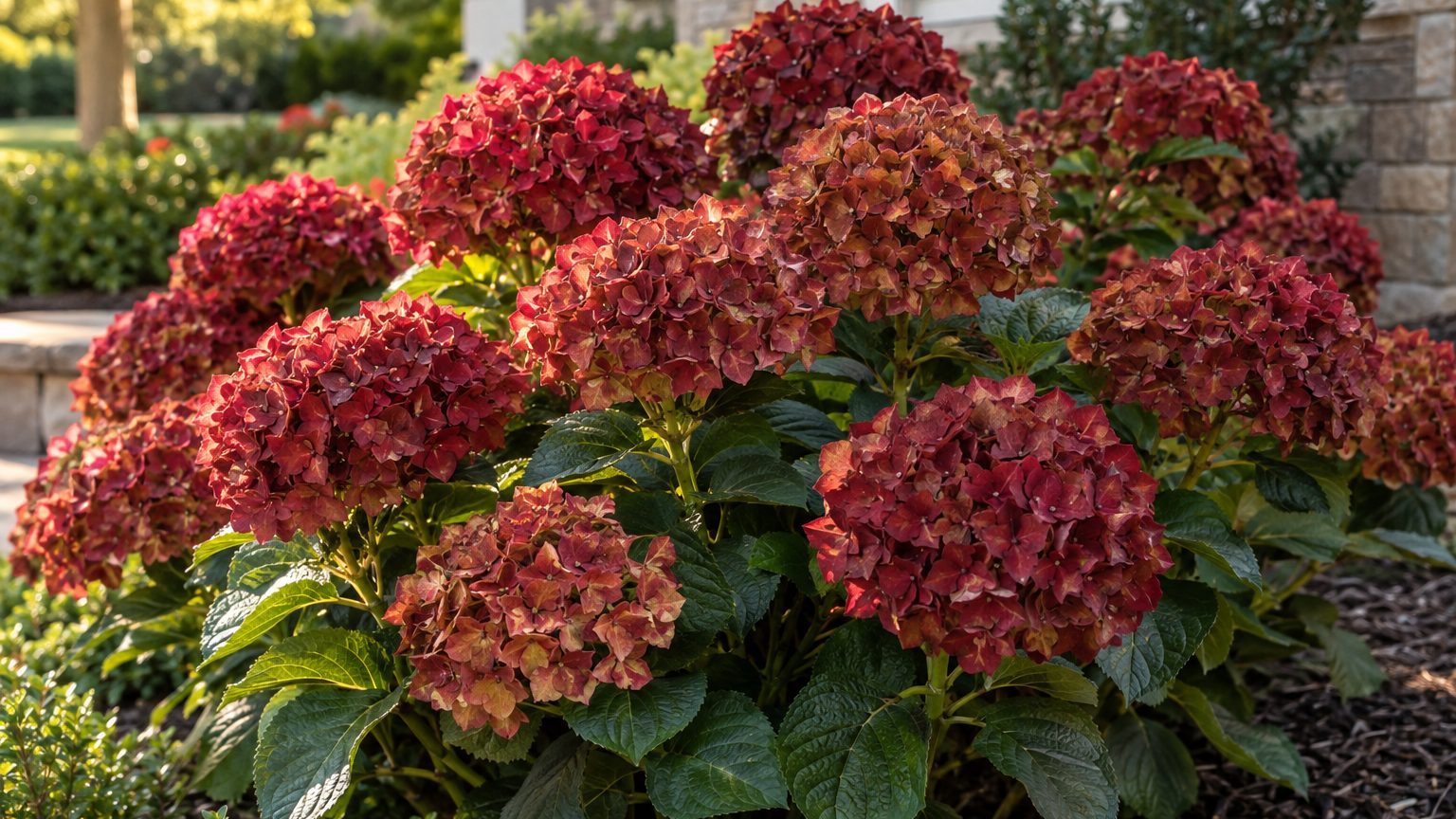
Flowers open rose-red and shift toward deeper wine and rust shades as the heads age, which is where the name comes from. Soil pH nudges the color: more acidic soil pulls toward purple-red, more alkaline soil holds the pink-red end.

Buds form on old wood, the stems that grew the prior season, not on new growth pushed in spring. That timing decides when to prune, more than any calendar date.

Compared with the largest mopheads, Glowing Embers stays tidy in beds edged with lawn. It suits foundation plantings and mixed borders without overwhelming a small yard.

Where It Grows: Zones and Regions

Zone tells only part of the story for a shrub that blooms on old wood, since a late frost can erase a season even inside its hardy range.

  • Mid-Atlantic and Upper South (Virginia, Maryland, North Carolina): NC State Extension Gardener Plant Toolbox lists bigleaf hydrangea at zone 6a to 9b, and this region sits near the cold edge, from 6b to 7b, where a sheltered spot decides the bloom.
  • Deep South and Gulf Coast (Georgia, South Carolina, Louisiana): zone 8 to 9 summer heat calls for afternoon shade and steady moisture, or the big leaves scorch by midsummer.
  • Pacific Northwest (Oregon, Washington): mild, damp winters keep old wood buds intact most years, which is a big part of why bigleaf hydrangeas thrive around Seattle and Portland.
  • Upper Midwest and northern New England (Minnesota, Wisconsin, Maine): winters routinely drop below the zone 6 floor for bigleaf hydrangea, so buds and often whole stems die back most years.

The state selector below turns this into your own frost dates and zone, worth a check before this one goes in the cart.

The Year With It, Season by Season

Planting

Spring or fall planting gives roots time to settle before summer heat or winter cold arrives, in moist, well-drained soil enriched with organic matter. Part shade, especially shade from afternoon sun, suits the broad leaves better than full sun in most regions.

Spring

New leaves push out from the old wood in the first mild weeks, and this is when a late freeze does the most damage since the flower buds sit right at the stem tips. I hold off on any hard pruning until I see which buds survived.

After bloom

Next year’s buds start forming on the stems soon after the current flowers fade, so any real pruning needs to happen within a few weeks of bloom, not in fall or late winter. Cutting stems back later removes the buds meant for next summer.

Summer

Mophead clusters open rose-red from early to midsummer, then hold their color for weeks in part shade. Full afternoon sun paired with inconsistent water turns the big leaves crisp at the edges by August.

Fall

Spent flower heads dry in place and turn rust and bronze, echoing the name, while the plant slows growth and hardens its stems for winter. I leave the dried heads on rather than deadheading late in the season.

Winter

The exposed buds formed on old wood are the vulnerable part, since the shrub itself tolerates cold within its zone range better than its flowers do. A thick mulch layer over the root zone protects the crown if stems do die back.

Diseases and Pests It Resists

Glowing Embers carries the same weak points as most bigleaf hydrangeas rather than anything unique to the cultivar. Leaf spot and powdery mildew show up in humid summers, especially where air circulation is poor.

The bigger risk is not a disease at all: a late spring frost can kill the exposed flower buds on old wood before they ever open. Deer also browse the foliage and flower buds where populations are heavy.

Threat This one Notes
Cercospora leaf spot Susceptible Worse in humid, still air, per Clemson Cooperative Extension guidance on bigleaf hydrangea
Powdery mildew Susceptible Shows late summer on crowded plants
Late frost bud loss High risk Buds sit exposed on old wood all winter
Deer browsing Moderate Foliage and buds both eaten where deer are common

Aphids and scale turn up now and then but rarely at damaging levels on a healthy plant. The threats specific to panicle or smooth hydrangea are on their own pages.

Where to Plant It in a Yard

Glowing Embers works best as a focal shrub near a patio or entry where its color show is visible up close, in a spot with morning sun and afternoon shade. Underplant with shallow-rooted shade perennials rather than crowding the root zone.

  • Your state page: the zone, frost dates, and pruning window for where you garden.
  • Hydrangea types compared: how bigleaf stacks up against panicle and smooth hydrangea for a given spot.
  • Pruning hydrangeas: the old-wood versus new-wood timing explained step by step, so the cuts land in the right week.

Common questions

Does Glowing Embers rebloom after the first flush?

It sets buds on old wood and blooms once per season in most gardens, without the repeat flowering seen in newer reblooming mophead types. One full flush from early to midsummer is the usual pattern.

Why did my Glowing Embers hydrangea not flower this year?

A late frost or a hard prune done at the wrong time of year are the two most common causes, since both remove the old-wood buds before they can open. Check the pruning window for your state before cutting stems back.

Can I change the flower color?

Soil pH shifts the shade within the rose-red to purple-red range this cultivar naturally shows, more acidic soil pulling toward purple, more alkaline soil holding the pinker end. It will not turn true blue the way some other bigleaf cultivars can.

Fuji Waterfall Hydrangea: Size, Zones, Pruning and Care

Fuji Waterfall Hydrangea: Size, Zones, Pruning and Care

Fuji Waterfall is a lacecap-style panicle hydrangea, not the mophead most people picture. It tops out at 4 to 6 feet with a similar spread, holds up in USDA zones 4 through 8, and blooms on new wood, so late-winter pruning won’t cost you a single flower. Full sun keeps the canes strong enough to carry the cascading white heads without staking.

What This Variety Is

Fuji Waterfall belongs to the panicle group, Hydrangea paniculata, not the bigleaf mopheads that fill most garden centers. NC State Extension Gardener Plant Toolbox places the species at USDA zones 3 to 8, and this cultivar sits comfortably inside that range.

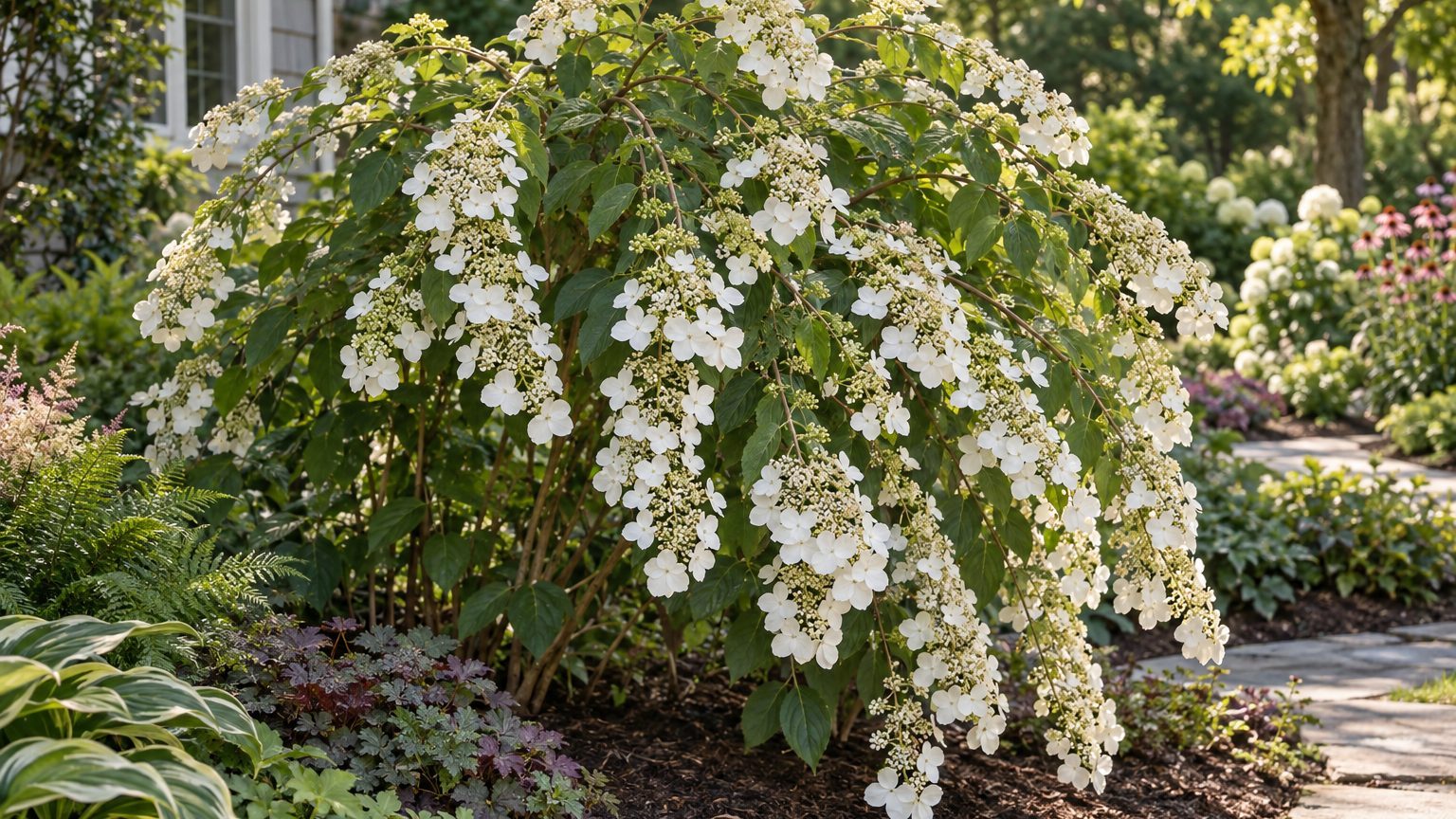
The bloom itself sets it apart. Each flower head is a lacecap, a ring of large sterile florets around a flat center of small fertile ones, and the whole cluster arches downward on slender stems.

That drooping habit is where the name comes from. The canes lean under the weight of the flowers, so the shrub reads as a cascade rather than a solid mound.

Growers point to three traits that separate it from other panicle types:

  • Lacecap bloom instead of the dense cone shape of other panicle cultivars
  • New-wood flowering, so winter damage never erases a season
  • An arching, weeping cane structure rather than upright growth

The new-wood habit is the detail that decides how you prune it, and it carries through everything in the next few sections.

Where It Grows: Zones and Regions

Panicle hydrangeas cover more ground than any other type in this genus, and Fuji Waterfall follows that pattern, though a few regions call for small adjustments.

  • New England and the Upper Midwest (Maine, Vermont, Wisconsin): winters routinely dip into zone 4, and since this cultivar flowers on new wood, a hard freeze that kills the top growth still leaves a full bloom season ahead.
  • The Mid-Atlantic and Ohio Valley (Virginia, Ohio, Pennsylvania): the middle of the range, zones 6 and 7, where full sun all day is the standard advice without the afternoon scorch some warmer states see.
  • The Deep South (Georgia, Alabama, South Carolina): zone 8 pushes the upper edge of the plant’s tolerance, and afternoon shade keeps the lacecap heads from bleaching out in July and August.
  • The Pacific Northwest (Oregon, Washington, northern California): mild summers and reliable rainfall make this one of the easiest regions to grow it in, with little supplemental water needed once established.

Zone 9 and up, the low desert stretches of Arizona and inland Nevada, sits outside the documented range, and the plant struggles there regardless of shade or irrigation. The state selector below this section narrows all of this down to your own frost dates and pruning window.

The Year With It, Season by Season

Planting

Spring or early fall both work, set in well-drained soil with full sun to light afternoon shade in warmer zones. A wide, shallow hole beats a deep one for getting the roots to spread.

Spring growth

New canes push from the crown as soil warms, and since flowers form on this new growth, a late frost that nips the tips only delays bloom by a few weeks rather than skipping the season.

Bloom time

Lacecap heads open in midsummer and hang from arching stems through the season. The color stays white to cream throughout, since panicle types don’t shift blue or pink with soil pH the way bigleaf hydrangeas do.

Summer heat

Long dry stretches show up first as wilting by mid-afternoon, even in well-watered soil, simply from the leaf surface losing moisture faster than roots can replace it. A deep soak once a week beats frequent shallow watering.

Fall

Spent blooms age from white to a soft pink or tan and hold their shape on the stem. Leaving them through autumn adds structure to the yard and doesn’t cost next year’s flowers.

Winter

Some cane dieback is normal in colder zones and isn’t a sign of a dying shrub. Wait until late winter, just before new growth resumes, to cut back to live wood.

Diseases and Pests It Resists

Panicle hydrangeas as a group tend to shrug off the diseases that hit bigleaf types hardest, and Fuji Waterfall follows that pattern in a general sense rather than through cultivar-specific testing.

Deer tend to pass over panicle types more often than bigleaf or oakleaf hydrangeas, though no browsing is ever guaranteed in a hungry winter.

Threat This one Source
Deer browsing Rarely a preferred target among panicle types —
Bacterial leaf spot Less prone than bigleaf hydrangeas —
Aphids Occasional on new spring growth —

Powdery mildew and other cultivar-specific pest data for Fuji Waterfall aren’t documented at this level of detail.

Where to Plant It in a Yard

Give it a spot where the weight of the flower heads can drape over an edge, a slope, the top of a low wall, or a raised bed, so the lacecap clusters cascade into view rather than folding onto the ground.

  • Your state page: the frost dates and the pruning window where you live.
  • Panicle hydrangea pruning guide: the cut lines and timing for new-wood bloomers like this one.
  • Hydrangea companion plants: what holds its color and bloom time alongside a cascading panicle type.

Set it where you’ll walk past it in August, when the arch is heaviest and the color is at its peak.

Common questions

Does Fuji Waterfall change color like a bigleaf hydrangea?

No. As a panicle type, its white to cream bloom color comes from genetics, not soil pH, so aluminum sulfate or lime won’t shift it blue or pink.

When is the right time to prune it?

Late winter, before new growth starts, since flowers form entirely on the current season’s wood. Pruning in fall only removes canes that would have carried next summer’s blooms.

Can it handle a full day of sun?

In most of its range, yes, and full sun actually keeps the canes sturdier under the weight of the flowers. In zone 8 gardens, afternoon shade helps the blooms hold their color longer.

Fire Light Hydrangea: Size, Zones, Pruning and Care

Fire Light Hydrangea: Size, Zones, Pruning and Care

Fire Light is a panicle hydrangea, Hydrangea paniculata, bred for sturdy stems that hold up a red-turning bloom without flopping. It grows in USDA zones 3 through 8, blooms on new wood every year regardless of winter dieback, and reaches roughly 6 to 8 feet tall in most yards.

What This Variety Is

Fire Light is a cultivar of Hydrangea paniculata, the panicle group that sets flower buds on the current season’s growth. NC State Extension Gardener Plant Toolbox lists the species hardy from zone 3 to zone 8, a wider range than any bigleaf hydrangea on the same garden center bench.

The shrub grows rounded and multi-stemmed, and the canes stay upright under a full bloom instead of arching over like older panicle types. That stiffness is the trait breeders selected it for.

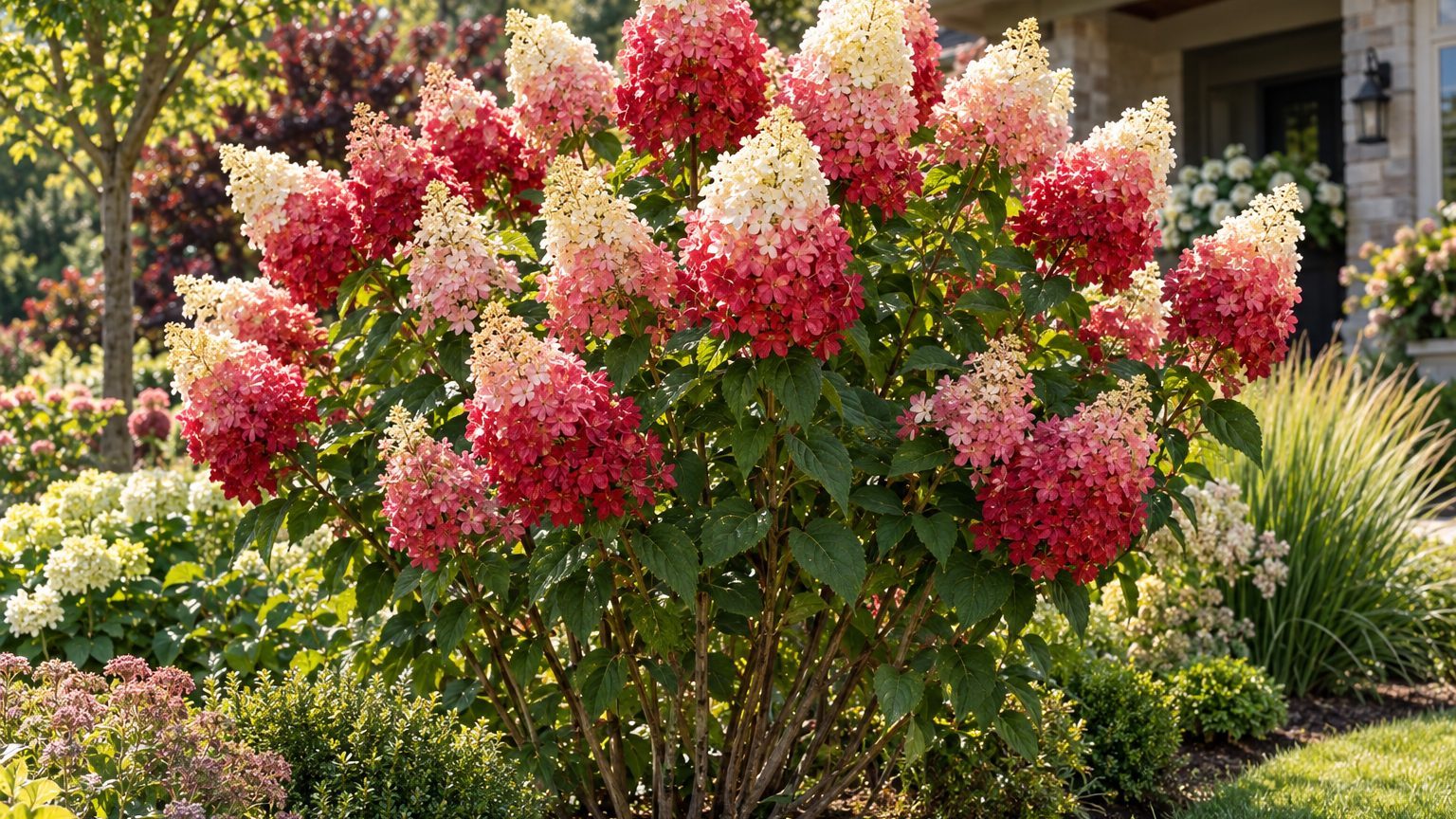
Flower cones open white in midsummer, then shift through pink toward a deep red as nights cool. Full sun sharpens that color change, while shade fades it toward a duller rose.

Mature plants settle at about 6 to 8 feet tall and 4 to 6 feet wide, with a medium growth rate of a foot or two a year.

Where It Grows: Zones and Regions

Fire Light carries the same zone 3 to 8 range as the species, which puts it in yards that most other hydrangeas skip entirely.

  • Great Lakes and the North (Michigan, Minnesota, Wisconsin): winters here can kill stems back to the snow line some years, but new wood still carries a full bloom by late summer.
  • Mid-Atlantic and the Northeast (Pennsylvania, New York, Ohio): the plant reaches its full size without any winter wrapping or extra protection.
  • The South (Georgia, Texas, the Carolinas): zone 8 is the upper edge of the range, and afternoon shade keeps the blooms from bleaching out under July sun.

The state selector below this section opens the frost dates and planting window for the state you actually garden in.

The Year With It, Season by Season

Spring

New shoots emerge later than on bigleaf hydrangeas, and a late frost rarely does damage since the flower buds haven’t formed yet. This is the pruning window, cutting stems back hard before leaves fully open, without losing a single bloom.

Summer

Flower heads open white in midsummer and hold that shade for weeks before the color shift starts. Full sun keeps the cones dense and upright, and a deep soaking twice a week during dry stretches keeps the largest heads from wilting by afternoon.

Fall

Color moves from white to pink to a deep red as nights cool, and the shift happens right on the plant. Spent blooms can stay through the season for winter structure, since next year’s flowers will form on wood that grows fresh in spring.

Winter

Stems stay upright under snow load better than older panicle varieties, though a heavy wet snow can still bow the outer canes. Zone 3 gardens sometimes see stems die back hard, but the shrub regrows and blooms that same year regardless.

Diseases and Pests It Resists

Missouri Botanical Garden Plant Finder notes no serious insect or disease problems for the species, which covers Fire Light as a cultivar of it. That record is part of why it shows up in low-maintenance foundation plantings more than bigleaf types do.

What trouble does turn up tends to be cosmetic rather than deadly, and it’s usually tied to a crowded, humid planting site rather than the plant itself.

Threat This one Source
Bacterial leaf spot Rare, minor cosmetic spotting Missouri Botanical Garden Plant Finder
Powdery mildew Occasional in crowded, humid sites Missouri Botanical Garden Plant Finder
Deer browsing Light browsing on new shoots, not a preferred plant Missouri Botanical Garden Plant Finder

Bigleaf and oakleaf hydrangeas carry their own separate disease pressures, and the other kinds are on their own pages rather than in this table.

Where to Plant It in a Yard

Fire Light works best where it gets a half day of direct sun or more, with room to spread to its full width without crowding a walkway or a foundation.

  • Your state page: the frost dates and the pruning window where you live.
  • Which ones hold up here: how Fire Light compares to bigleaf and smooth types for your zone.
  • Companion plants: what fills in around the base while the shrub is still young and small.

Check your state page before you dig, since the safe planting window shifts by several weeks between the Great Lakes and the South.

Common questions

Does Fire Light hydrangea bloom on old or new wood?
It blooms on new wood, which is why hard pruning in late winter doesn’t cost you flowers the following summer.

How tall does Fire Light hydrangea get?
Most plants settle at around 6 to 8 feet tall and 4 to 6 feet wide once mature.

Will Fire Light hydrangea grow in full shade?
It tolerates part shade, but full shade weakens stems and fades the fall color shift toward a dull pink instead of deep red.

Everlasting Amethyst Hydrangea: Size, Zones, Pruning and Care

Everlasting Amethyst Hydrangea: Size, Zones, Pruning and Care

Everlasting Amethyst is a bigleaf hydrangea from Proven Winners’ Everlasting Series, bred to hold its rounded mophead blooms as they shift color with age, from cream and green to blush pink and finally deep amethyst. It stays compact, tops out around 3 to 4 feet, blooms on old and new wood, and suits USDA zones 5 to 9 with part sun to part shade.

What This Variety Is

Everlasting Amethyst is a bigleaf hydrangea, Hydrangea macrophylla, part of Proven Winners’ Everlasting Series bred for blooms that age instead of just fading. The flowers open cream and lime green before shifting through rose to a deeper amethyst purple.

Proven Winners lists mature size at 3 to 4 feet tall and 3 to 4 feet wide, small enough for a foundation bed. The habit stays rounded and mounding rather than sprawling wide like older bigleaf varieties.

What sets it apart from older bigleaf types is the flowering wood. It sets buds on old wood from last season and on new wood the same year, so a late frost that kills one round still leaves a second bloom coming.

That reblooming habit is the trait most catalog descriptions skip past. It is also the reason pruning timing matters more here than on a one-bloom hydrangea.

Where It Grows: Zones and Regions

Proven Winners rates Everlasting Amethyst for USDA zones 5 to 9, a wider band than most rebloomers get away with, but the two edges of that range behave differently depending on how cold the ground gets and how long the summer heat holds on.

  • Upper Midwest and the Northeast (Minnesota, Wisconsin, Michigan): zone 5 marks the cold edge of the range, and stems left exposed above the snow line often die back partway, trimming the old-wood flush down to whatever new wood manages to open by late summer.
  • Mid-Atlantic and the Upper South (Virginia, Maryland, North Carolina): this band sits near the middle of the range, where winters are cold enough to satisfy dormancy but rarely harsh enough to kill stems to the ground, so both bloom flushes tend to show up on schedule.
  • Deep South and Gulf Coast (Georgia, Florida, Texas): at zone 9 the limiting factor flips from cold to heat, and unshielded afternoon sun can wilt blooms and scorch leaves by early afternoon.

The state selector below this section opens the page built for where you garden, with the frost window and pruning dates set to your zone.

The Year With It, Season by Season

Planting

Spring and early fall are the two windows for putting a new shrub in the ground, since the roots get time to settle before summer heat or winter cold arrives. Water deeply through the first growing season while the root system is still shallow.

Spring

New growth pushes from both old stems and the base once nights stay above freezing, and this is when winter-killed tips show up as blackened, soft wood. Cut back only to the first live, green bud and leave the rest of the framework standing.

Summer

Mophead clusters open cream and green through early summer, then shift toward pink and amethyst as the flowers age on the stem, the trait the whole Everlasting Series is built around. Consistent soil moisture keeps that color change even instead of blotchy.

Fall

New-wood buds set in late summer carry the second bloom flush into early fall, so this is the wrong season for a hard cutback no matter how tired the shrub looks. Deadhead spent heads if you want, but leave the stems alone.

Winter

Buds for next year’s old-wood flowers are already set on the stems by the time the shrub goes dormant, which is why an ill-timed cut in late winter can erase half the coming season’s blooms. Mulch the root zone rather than the stems.

Diseases and Pests It Resists

Proven Winners does not publish a formal pest or disease resistance rating for Everlasting Amethyst the way some breeders do for turf or roses. What shows up in grower notes instead are the same pressures that affect bigleaf hydrangeas as a group.

Powdery mildew shows up as a white film on leaves in humid, still air, and it rarely kills the shrub outright. Deer browse the leaves and flower buds readily, since hydrangeas are often the softest, greenest thing left by midsummer.

Threat This one Source
Powdery mildew Not resistant, common in humid shade —
Deer browsing Not resistant, foliage and buds eaten —
Formal cultivar rating Not published Proven Winners

Aphids and leaf spot turn up on stressed plants of any bigleaf variety, and the other pests and diseases common to hydrangeas as a group are covered on their own pages rather than repeated here.

Where to Plant It in a Yard

A rounded, 3 to 4 foot mophead like this one reads well as a low hedge along a walkway or grouped in a foundation bed where afternoon shade breaks up the hottest part of the day.

  • Your state page: the frost dates and the pruning window set for where you live.
  • Hydrangea types compared: how this bigleaf rebloomer stacks up against panicle and smooth types for size and bloom timing.
  • Hydrangea pruning by type: the old-wood, new-wood distinction that decides when to cut this one back.

Plant it where a late frost that takes out the first flush still leaves a second one to look forward to.

Common questions

Does Everlasting Amethyst bloom the first year after planting?

It can, since it sets buds on both old and new wood, but a shrub planted from a small container in spring often puts more energy into roots than flowers the first season.

Why did the amethyst color not show up on my blooms?

Color depth follows how long the flower head stays on the stem and how much sun and heat it gets while aging, so blooms cut early or grown in deep shade often stall at pink instead of reaching the deeper purple.

Can I grow Everlasting Amethyst in a container?

Its compact 3 to 4 foot size makes it workable in a large pot, though container roots freeze faster than roots in the ground, so gardeners at the cold edge of the range need to move pots somewhere sheltered for winter.

The almanac, state by state. Every date on this site comes from a state’s own frost facts and its extension service’s calendar — and says where it comes from.