Skip to content

Hydrangea Pests and Diseases in Montana

Hydrangea Pests and Diseases in Montana

In Billings, the hydrangea problems that show up most are winter dieback, aphids, powdery mildew, and leaf spot, all shaped by a climate that swings from zone 3a to 6a. None of them are exotic. What decides whether a shrub blooms or sits bare is timing, not luck, and the calendar tells you which problem you’re actually looking at.

Hydrangea pests and diseases Montana: The Short Answer

NOAA NCEI 1991-2020 Climate Normals puts Billings’ last spring freeze between April 29 and May 10, and the USDA hardiness map spreads the state from zone 3a to 6a, which is exactly why the same shrub can look healthy in one county and burned in the next.

No flowers after a hard winter

Bigleaf types set next year’s buds in fall, and a hard snap anywhere in the 3a to 6a range can kill them before they ever open. If the stem flexes and the pith is green, leave it. Cut only where the wood is brown and brittle, and expect blooms lower on the plant next season.

Leaf edges scorched by dry wind

Leaf edges scorched by dry wind — Hydrangea Pests and Diseases in Montana

Montana’s low humidity and open plains pull moisture out of leaves faster than roots can replace it, especially on a shrub planted in full sun. The fix is a thick mulch ring and a slow soak twice a week rather than a daily sprinkle. Move exposed plants closer to a wall or hedge line.

Aphids clustering on new growth

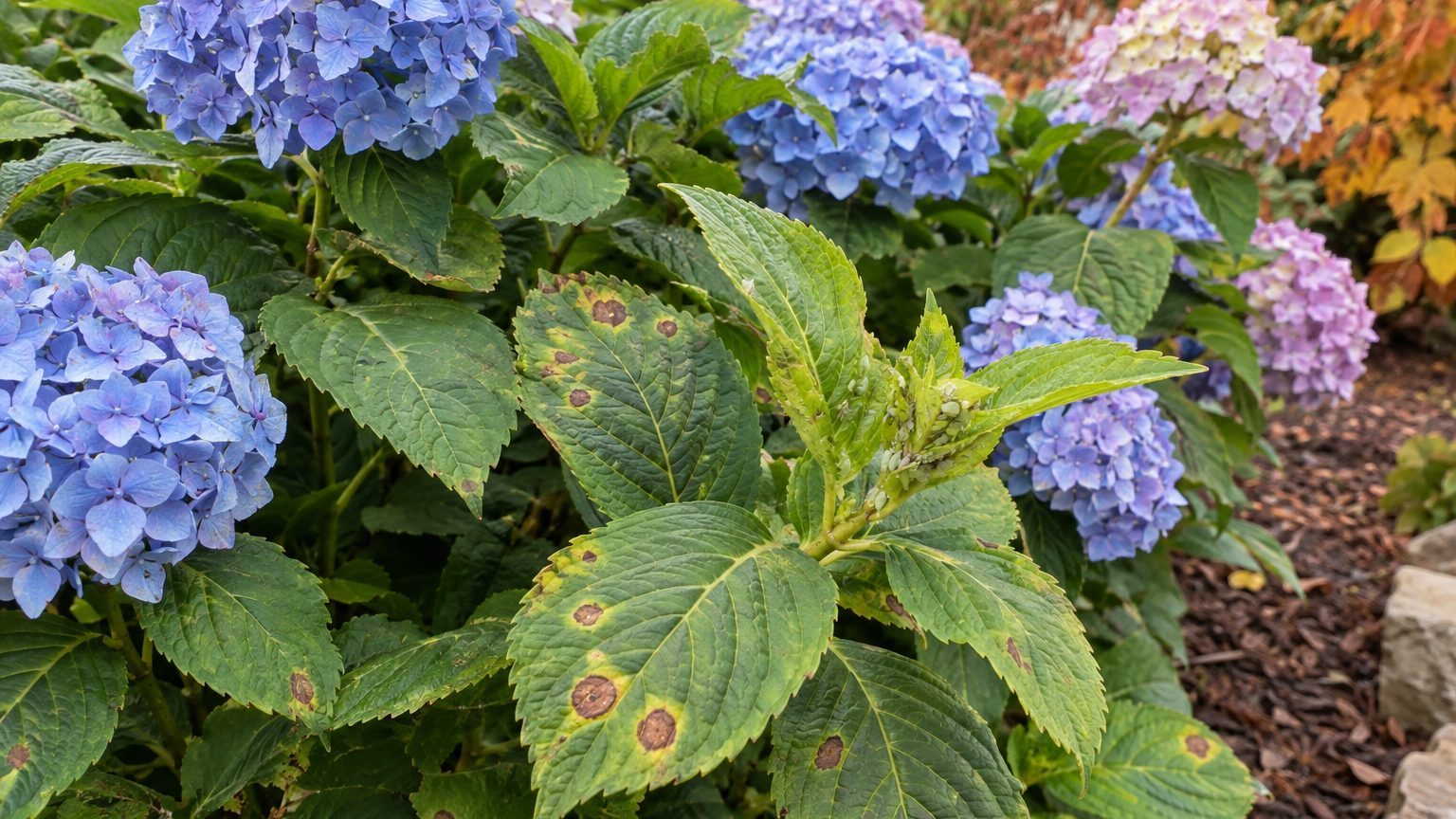
Small pale green or black insects crowd the soft tips in early summer, leaving a sticky residue that draws ants and sometimes black sooty mold. A strong water spray knocks most of them off. Insecticidal soap handles the rest, and ladybugs usually clean up whatever is left within a couple of weeks.

Powdery mildew on older leaves

Powdery mildew on older leaves — Hydrangea Pests and Diseases in Montana

A gray white coating shows up on lower leaves during humid stretches, usually where air can’t move through a crowded shrub. Space plants for airflow and water the soil, not the foliage. Existing spots won’t clear, but a fungicide labeled for hydrangeas keeps new growth clean through the rest of summer.

Cercospora leaf spot working upward

Cercospora leaf spot working upward — Hydrangea Pests and Diseases in Montana

Purple brown circles appear on the lowest leaves first and climb the plant as spores splash upward in rain or overhead watering. Strip the worst leaves and clear fallen debris at the base. Drip irrigation instead of a sprinkler head is the single change that slows this the most.

Botrytis blight after a wet spell

Botrytis blight after a wet spell — Hydrangea Pests and Diseases in Montana

Cool damp weather near the October 1 to 14 frost window can turn flower buds and stem tips gray and mushy. Cut affected tips back to clean wood and skip watering for a few days to let the shrub dry out. Don’t compost the trimmings.

How to Work Out the Dates for Your Own Yard

NOAA NCEI 1991-2020 Climate Normals sets Billings’ last spring freeze at April 29 to May 10, and matching the date a symptom appeared to that window does most of the diagnostic work before any product gets involved.

  1. Mark the date you noticed it: symptoms that appear before Billings’ last spring freeze of April 29 to May 10 point toward cold damage rather than any fungus or insect, since nothing has had time to establish yet.
  2. Check which leaves are affected first: lower, older leaves usually mean a soil-splashed fungus such as Cercospora, while damage on the newest tips points more toward aphids or a late frost.
  3. Look for insects before treating anything: turn a few leaves over and check the stem tips, since a fungicide won’t touch an aphid problem and insecticidal soap won’t slow down mildew.
  4. Compare the timing to the fall frost window: damage that shows up between October 1 and October 14 during a wet spell usually points to botrytis rather than a pest at all.
  5. Note where your yard sits in the state’s range: a shrub near the cold edge of Montana’s 3a to 6a band carries more winter dieback risk than one in a sheltered Billings yard.
  6. Call before spraying anything broad: a county extension office can usually confirm a fungus or pest from a description or photo, saving a treatment that wouldn’t have worked in the first place.

None of this requires special equipment. A phone photo with the date, held next to Billings’ frost windows, tells you more than a guess ever will. It’s also exactly what a county extension agent will ask for first, before recommending any spray, cut, or wait and see approach.

Montana North to South: How the Dates Shift

USDA Plant Hardiness Zone Map spans Montana from zone 3a to 6a, and where a yard falls inside that band decides which problem shows up first and how early it arrives.

  • Western valleys (Bitterroot, Flathead, Missoula): milder pockets near lakes and rivers keep humidity higher through summer, so mildew and leaf spot tend to outrank outright winter kill here.
  • South central plains (Billings, Laurel, Columbus): open and windy, and closer to the mild end of the state’s range, so dry wind scorch and aphids often show up before any dieback does.
  • Eastern plains (Miles City, Glendive, Sidney): colder extremes and less natural shelter push winter bud death to the top of the list in most years, even on otherwise healthy shrubs.
  • Mountain valleys and high towns (Bozeman, Whitefish, Red Lodge): frost can arrive in almost any month here, so botrytis and late freeze damage overlap far more than they do around Billings.

Whichever part of the state a yard sits in, the calendar for this state still starts from Billings’ dates, and a yard in a colder pocket should shift every one of them earlier.

Mistakes Montana Punishes

Pruning too early in spring

Cutting bigleaf stems back before new growth confirms which wood actually survived removes live flower buds right along with the dead ones. Wait for the calendar’s June or July pruning window, after leaves show exactly where the plant is alive, then shape from there instead of guessing in March.

Watering overhead in the evening

Wetting foliage right before a cool night gives Cercospora and botrytis exactly the damp window they need to spread across a shrub. Switch to a soaker hose at soil level in the morning instead, and both problems noticeably slow down within a single season of doing it differently.

Planting in full, unbroken sun

A shrub with no afternoon shade against Montana’s dry wind loses moisture faster than its roots can pull it back, showing up as scorched leaf edges every summer without fail. Choose a spot with some afternoon shelter from a wall or hedge, or plan on extra watering right through July.

Montana Extension Offices and County Contacts

Billings’ numbers are a starting point, not the final word, since soil, elevation, and shelter change block by block across the state. Montana State University Extension and the county office nearest a yard fill in the rest of the picture.

  • Montana State University Extension: county-by-county contacts and horticulture agents who can confirm a pest or disease from a description or a photo before any treatment starts.
  • Which ones hold up here: the variety guide for this state, for choosing a hydrangea suited to a yard’s zone before problems even start.
  • The planting and pruning calendar: the month-by-month page for this state, for timing every cut, fertilizer round, and treatment around the frost windows.

Start with a call or a photo before the next spray, cut, or big decision.

Common questions

What is the most common hydrangea problem in Montana?

Winter bud death is the problem homeowners report most often, since Montana’s 3a to 6a hardiness range means the flower buds set the previous fall can freeze out before spring even arrives, with no pest or fungus involved at all.

Do hydrangeas need spraying every year in Montana?

Most yards don’t need routine spraying every year. Powdery mildew and leaf spot tend to show up in wetter, shadier pockets more than in open Billings yards, so a fungicide is only worth reaching for once symptoms actually appear on the leaves.

When should I stop worrying about frost damage?

Once a shrub is past Billings’ last spring freeze window of April 29 to May 10, new growth is generally out of danger, though mountain valleys elsewhere in the state can still see a frost show up in almost any month of the year.
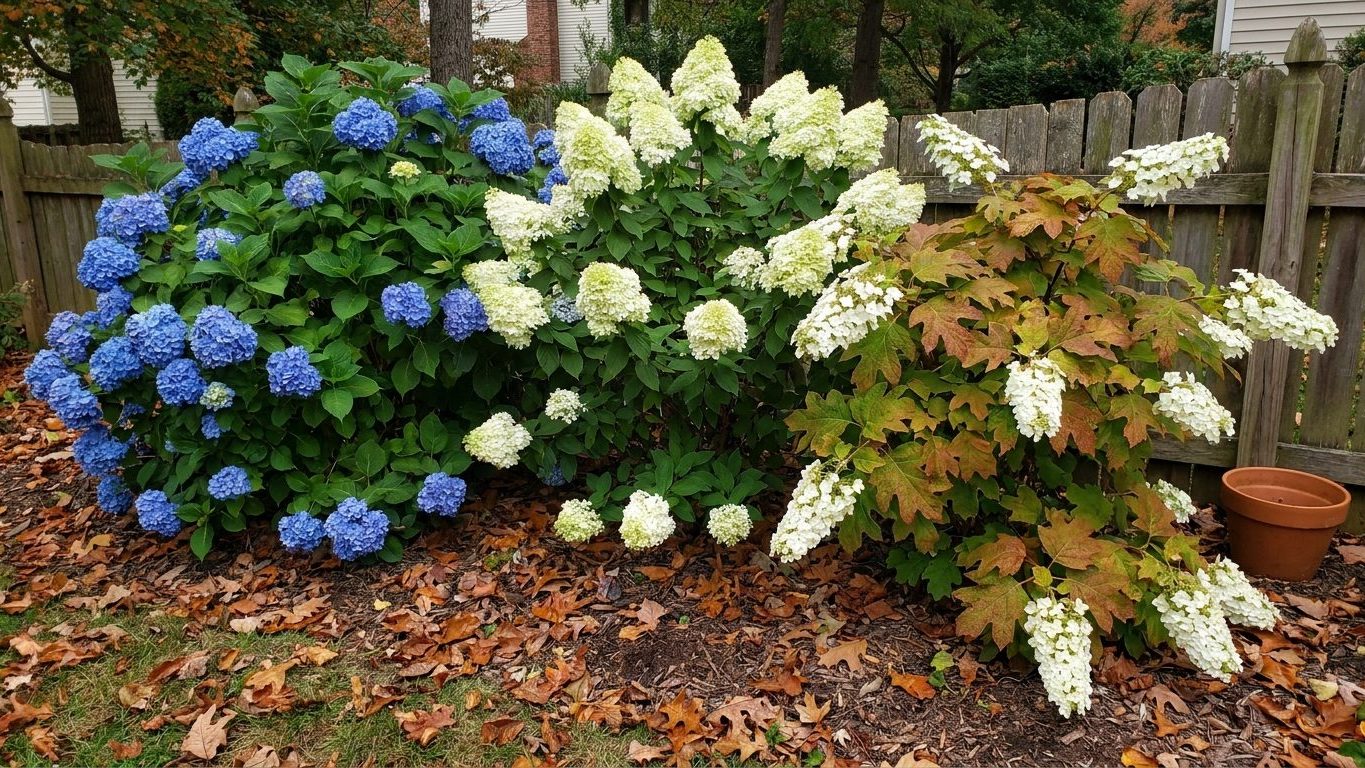
When to Prune Hydrangeas in Montana

When to Prune Hydrangeas in Montana

In Billings, the safe planting window falls in April to May or August to September, once the last spring frost (April 29 to May 10) has cleared or before the first fall frost (October 1 to October 14) arrives. Bigleaf hydrangea pruning waits for June and July, right after bloom, and zone 3a to 6a means winter protection matters as much as the date itself.

When to prune hydrangeas in Montana: The Short Answer

The USDA Plant Hardiness Zone Map puts Billings in zone 3a to 6a, a spread wide enough that the month-by-month calendar below decides more than any single date on it.

  • January: The ground is frozen and the shrub is fully dormant, weeks past the first fall frost of October 1 to October 14. Leave the mulch mound in place and skip any tools this month.
  • February: Still deep winter, with the last spring frost eight to ten weeks away. Use the quiet stretch to pick a variety suited to zone 3a to 6a rather than reaching for a bigleaf on impulse.
  • March: The first fertilizer feeding of the year goes down now, ahead of the last spring frost window of April 29 to May 10. Wait for soil you can work with a trowel, not soil that is still frozen underneath.
  • April: Planting opens this month, but I hold new stock until late April since frost can still hit through May 10. Container plants tolerate the wait far better than a shrub set out too early.
  • May: Once the last frost date has passed, May carries both a planting window and a second fertilizer round. This is the month most Billings yards actually get a hydrangea in the ground.
  • June: Pruning starts for bigleaf hydrangea, right after the spring flush of bloom fades. Cut only spent flower stems, since next year’s buds are already forming lower on the stem.
  • July: Bigleaf pruning continues alongside a third fertilizer feeding. Midsummer heat means both jobs go best in the cooler part of the day.
  • August: A second planting window opens, roughly two months ahead of the first fall frost of October 1 to October 14. Roots set in August have time to establish before the ground cools.
  • September: Planting continues, and this is the safer of the two fall dates for anyone unsure about their site’s microclimate. Water new plantings deeply since fall rain in Montana is inconsistent.
  • October: The first fall frost arrives sometime between October 1 and October 14. Stop feeding a few weeks before this window, since growth pushed by fertilizer won’t harden off in time.
  • November: Mound mulch over the base once the ground has cooled but before hard freezes set in. This step matters more in a zone 3a pocket than in the milder ground near zone 6a.
  • December: Fully dormant again, with the next planting window four months away. Check that mulch hasn’t blown off after any windstorm, since exposed roots are the main winter loss here.

Every one of these dates shifts with elevation and local pocket, but the Billings numbers above give a working baseline for the rest of the state.

How to Work Out the Dates for Your Own Yard

Start from the two frost windows for Billings and work backward or forward by the number of weeks each task needs.

  1. Mark your last frost window: Billings runs April 29 to May 10, so anyone at a similar elevation should treat early May as the safer half of that range, not the earlier one.
  2. Count back four to six weeks for a fall planting: measured against the first fall frost of October 1 to October 14, that puts the safest window in mid to late August, which lines up with the state’s own August and September planting months.
  3. Check your own frost date against Billings: a yard tucked in a mountain valley can frost in any month, even July, so treat the reference dates as a floor rather than a guarantee.
  4. Watch the soil, not just the date: hydrangea roots want soil that has warmed past the earliest edge of frost risk, which in practice means waiting a week or two past the start of the spring window.
  5. Schedule the prune after the last frost, not before: bigleaf pruning falls in June and July here because cutting too early exposes next season’s buds to a frost that hasn’t finished yet.

None of these steps replace a local check. A yard one valley over from Billings can run two or three weeks colder in spring, which is enough to undo a planting date that looked safe on paper.

Montana North to South: How the Dates Shift

Elevation and a handful of valley pockets move these dates more than latitude does in a state this size.

  • The Missouri River valleys (Great Falls, Billings): closest to the reference dates above, with a spring frost window that usually clears by mid May.
  • Western mountain valleys (Missoula, Kalispell): a longer growing season near Flathead Lake softens the cold, but nearby benches sitting higher can still frost after the reference window closes.
  • The high plains and eastern prairie (Miles City, Glasgow): more exposed to early fall cold snaps, which can push the first frost ahead of the October 1 to October 14 range used for Billings.
  • Mountain basins and higher elevations (Bozeman, Helena): sit toward the colder end of the state’s 3a to 6a range, and a frost can arrive in nearly any month in a hard year.

Check the state guide for the county closest to your own yard before locking in a date.

Mistakes Montana Punishes

Planting the first warm week of spring

Billings’ last frost window runs April 29 to May 10, and a warm afternoon in early April can trick anyone into planting two or three weeks too soon. A late frost then kills the new growth to the ground. Wait for the back half of the spring window before digging.

Pruning bigleaf hydrangea in fall or early spring

Bigleaf sets its buds on old wood, so a cut made outside the June to July window removes next year’s flowers along with this year’s dead stems. Prune only right after bloom fades, and leave the rest of the plant alone through winter.

Skipping winter mulch in a zone 3a pocket

A shrub that survives fine in the milder end of the state’s 3a to 6a range can die back hard in a colder valley without a mulch mound over its base. Pile mulch once the ground cools in November, and pull it back only after the last frost risk has passed.

Montana Extension Offices and County Contacts

The Billings numbers above are a starting point, not a guarantee for every yard in the state. Montana State University Extension and your county office can confirm what holds up on your soil and at your elevation.

  • Your state page: the frost dates and the pruning window where you live.
  • Montana State University Extension: county-by-county contacts and local planting advice.
  • Which ones hold up here: the variety picks that handle zone 3a to 6a without dying back every winter.

Common questions

What is the best month to plant hydrangeas in Montana?

May is usually the safest single month, since it falls after the last spring frost of April 29 to May 10 and still gives roots a full summer to establish. August works nearly as well for anyone planting from a container.

Can hydrangeas survive winter in Montana?

Some can, depending on variety and exactly where in the state’s 3a to 6a range a yard sits. Panicle and smooth types handle the cold far better than bigleaf, which often dies back to the ground in the colder valleys.

When should I stop fertilizing hydrangeas in Montana?

The state’s fertilizing calendar stops after July, which gives new growth enough time to harden off before the first fall frost arrives October 1 to October 14. Feeding later than that pushes tender growth right into frost season.

Hydrangeas That Grow Well in Missouri

Hydrangeas That Grow Well in Missouri

Smooth, panicle, and oakleaf hydrangea handle Missouri’s freeze-thaw winters and Ozark summer humidity with the least fuss, while mophead bigleaf and climbing hydrangea need real babying to make it through a hard Kansas City winter without losing a season’s blooms. Six varieties make the safe-to-risky list below.

Hydrangeas that grow well in Missouri: The Short Answer

The USDA Plant Hardiness Zone Map puts Missouri at 5b to 7b, a spread wide enough that a shrub thriving near the Bootheel can struggle sixty miles north of Kansas City. That range decides which of these six hydrangeas shrug off a Missouri winter and which ones gamble every year they’re in the ground.

Smooth hydrangea

Smooth hydrangea — Hydrangeas That Grow Well in Missouri

Hydrangea arborescens is native to the Ozarks and blooms on new wood each year, so even a hard winter that kills the top growth back to the ground still leaves a full flush of flowers by midsummer. It tolerates Missouri’s clay soil without complaint.

Panicle hydrangea

Panicle hydrangea — Hydrangeas That Grow Well in Missouri

Hydrangea paniculata sets its flower buds on new wood too, which means Missouri’s coldest nights near Kansas City can’t erase a season’s blooms. It also handles more direct sun than most hydrangeas, an advantage against the state’s exposed summer afternoons.

Oakleaf hydrangea

Oakleaf hydrangea — Hydrangeas That Grow Well in Missouri

Hydrangea quercifolia comes from woodlands just south and east of Missouri, so its tolerance for heavy summer humidity and dappled shade fits the Ozarks well. Its buds form on old wood, which makes it a notch riskier in the state’s colder northern counties.

Reblooming bigleaf hydrangea

Reblooming bigleaf hydrangea — Hydrangeas That Grow Well in Missouri

Varieties bred to flower on both old and new wood give Missouri gardeners a second chance after a rough winter strips the first set of buds. They still need a spot sheltered from Kansas City’s harshest wind to bloom reliably every year.

Mophead bigleaf hydrangea

Mophead bigleaf hydrangea — Hydrangeas That Grow Well in Missouri

Hydrangea macrophylla blooms mostly on old wood, so a freeze that dips into the coldest end of Missouri’s range can wipe out a season’s color while the shrub itself survives fine. It does best in the state’s southern third, well away from Kansas City.

Climbing hydrangea

Climbing hydrangea — Hydrangeas That Grow Well in Missouri

Hydrangea anomala subsp. petiolaris takes years to establish before it flowers at all, and a young plant’s first winters are its most vulnerable in Missouri’s colder pockets. It needs a sturdy structure and patience, which makes it the riskiest bet here.

How to Work Out the Dates for Your Own Yard

Matching a hydrangea to your yard in Missouri comes down to counting from your frost dates and being honest about where your property sits inside the state’s hardiness spread.

  1. Locate your zone inside the spread: NOAA NCEI 1991-2020 Climate Normals puts Kansas City’s last spring frost between April 6 and April 20, a window that shrinks the closer you get to the Ozarks.
  2. Watch your fall window too: the first fall frost lands between October 18 and October 29, which is how long a new-wood bloomer like panicle hydrangea has to finish its display.
  3. Test which wood carries the buds: a variety that blooms on old wood, like mophead bigleaf, risks losing its flowers to any freeze that slips inside that April window.
  4. Plant inside the state’s window: the calendar above lists April, May, August, and September as Missouri’s planting months, giving a new shrub mild weather on both sides.
  5. Prune bigleaf on schedule: the safe window for cutting back bigleaf hydrangea runs June and July, after the shrub has already set next year’s buds.

Smooth hydrangea overwinters fine in the coldest pocket near Kansas City because a late freeze only delays its new-wood blooms. Mophead bigleaf planted in that same spot often survives the winter but skips flowering, since the freeze took out the old-wood buds it needed.

Missouri North to South: How the Dates Shift

Missouri’s frost line does not fall evenly across the state, and that shift decides how far south a gardener needs to be before mophead bigleaf turns from a gamble into a safer bet.

  • Northern Missouri and Kansas City (Kansas City, St. Joseph, Chillicothe): sits at the cold edge of the state’s 5b to 7b spread, where smooth and panicle hydrangea outlast bigleaf types most winters.
  • Central Missouri (Columbia, Jefferson City, Sedalia): a middle ground where oakleaf hydrangea settles in well against a wall that blocks the worst of the winter wind.
  • The Ozarks and southwest Missouri (Springfield, Branson, Joplin): milder winters push the zone warmer, giving reblooming bigleaf varieties a better shot at holding their old-wood buds.
  • The Bootheel (Sikeston, Cape Girardeau, Poplar Bluff): the state’s warmest corner, near the top of the 7b range, where mophead bigleaf and climbing hydrangea come closest to a comfortable winter.

Check the state page for the frost dates and zone reading that apply to your own county before settling on a bigleaf variety.

Mistakes Missouri Punishes

Bigleaf bought for the wrong end of the state

National marketing rarely mentions Missouri’s 5b to 7b spread, so a mophead bought for a Kansas City yard often loses its buds every few winters. Stick to reblooming types, or shift to panicle and smooth hydrangea north of the Ozarks.

Pruning bigleaf after summer

Cutting bigleaf back in fall or winter removes the old wood carrying next year’s buds before the shrub ever gets to use them. The safe window is June and July, once this year’s blooms have faded and next year’s buds have already formed.

Full afternoon sun in Ozark humidity

Missouri’s summer combination of heat and humidity scorches hydrangea leaves fast, especially on bigleaf and oakleaf varieties left in unbroken afternoon sun. Morning sun with afternoon shade, on the east or north side of the house, keeps leaves from crisping by August.

Missouri Extension Offices and County Contacts

Missouri’s 5b to 7b hardiness spread is a starting point, not a verdict, and University of Missouri Extension tracks the county-level differences the map leaves out.

  • Your state page: the frost dates and zone reading for where you live in Missouri.
  • The calendar page: month by month planting, fertilizing, and pruning windows for hydrangeas here.
  • What goes wrong here: the pests and problems specific to Missouri hydrangeas, and what actually fixes them.

Bring a soil test and a photo of your yard’s shade pattern to your county office before you buy the next shrub.

Common questions

Can mophead bigleaf hydrangea survive winter in Missouri?

It usually survives as a plant across most of the state, but its old-wood flower buds can freeze out in the colder third near Kansas City, leaving a healthy shrub with no blooms that year.

What is the safest hydrangea to plant near Kansas City?

Smooth and panicle hydrangea are the safest choices, since both bloom on new wood and recover their flowers even after a hard freeze kills back the top growth.

Do hydrangeas need shade in Missouri?

Most varieties do best with morning sun and afternoon shade, since Missouri’s summer humidity combined with full afternoon sun scorches leaves on bigleaf and oakleaf hydrangea especially fast.

Hydrangea Pests and Diseases in Missouri

Hydrangea Pests and Diseases in Missouri

In Kansas City, the two problems that show up on almost every hydrangea are fungal, powdery mildew and Cercospora leaf spot, both fed by summer humidity trapped in dense foliage. Insects rank second, aphids on new growth, four-lined plant bug on tender leaves, and Japanese beetles skeletonizing blooms by July. University of Missouri Extension diagnoses most of these free through county offices.

Hydrangea pests and diseases Missouri: The Short Answer

The USDA Plant Hardiness Zone Map places Missouri from zone 5b in the north to 7b near the Bootheel, with Kansas City sitting toward the milder half of that range. Winters this mild rarely kill overwintering pest eggs outright, which is part of why the same problems return year after year.

Aphids

Small green or black clusters on new stem tips in April and May, sticky honeydew coating leaves underneath. Curled, distorted new growth is the tell. A strong water spray every few days or insecticidal soap knocks numbers down before ants start farming them.

Four-lined plant bug

Sunken, brown-ringed spots stippling young leaves in late May, usually gone by the time you look closely since the nymphs feed fast and drop. Damage looks worse than it is. Prune out the worst leaves and skip broad insecticide sprays that also kill its natural predators.

Japanese beetles

Japanese beetles — Hydrangea Pests and Diseases in Missouri

Metallic green beetles chewing leaves down to lace and sometimes stripping flower petals through July. Handpicking into soapy water each morning works better than spraying, since populations peak for only a few weeks before eggs go back into the lawn for next year.

Powdery mildew

A white, flour-like coating spreads across leaf tops through humid August afternoons in Kansas City, rarely killing the shrub outright but slowing bloom for the season. Space plants for airflow and water the soil, not the leaves. Morning watering beats an evening soak every time here.

Cercospora leaf spot

Purple-rimmed brown spots starting on lower, older leaves in late summer, working upward as spores splash up during rain. Strip and bag fallen leaves each fall since the fungus overwinters in that debris and reinfects the same shrub next season.

Botrytis blight

Gray, fuzzy mold coats flower clusters and stem wounds during the cool, wet stretches Missouri gets in September and October. Cutting spent blooms promptly and avoiding overhead irrigation late in the season keeps humidity off the tissue this fungus needs to spread.

Root rot in heavy clay

Wilting leaves despite moist soil and a soft, dark base of the stem point to root rot, common in Missouri’s clay where water sits after rain. Raise the planting hole a few inches above grade and skip the automatic sprinkler zone that keeps this spot too wet.

How to Work Out the Dates for Your Own Yard

Kansas City’s last spring frost falls between April 6 and April 20, per NOAA NCEI 1991-2020 Climate Normals, and every pest date below counts forward from that range, not from one fixed day. The first soft growth, and the first aphids, typically appear two to three weeks after the window closes.

  1. Check new growth two to three weeks after frost-out: once the April 6 to April 20 window passes, look under the first flush of leaves for aphid clusters before honeydew builds up.
  2. Scout for four-lined plant bug by mid to late May: this pest hits about two weeks after the aphid flush, right as the plant fills in during its April to May planting window.
  3. Handpick beetles through the June to July prune window: Japanese beetles peak the same weeks you’re already out there pruning bigleaf stems, so check both at once.
  4. Inspect leaf undersides at the July fertilizing pass: the third feeding round of the year is a natural trigger to check for the first dusting of powdery mildew.
  5. Watch older leaves in August for leaf spot: Cercospora shows up on the lowest, oldest leaves first, well before it climbs toward new growth.
  6. Strip fallen leaves ahead of the October frost window: once leaves start dropping before the October 18 to October 29 freeze, bag them so overwintering spores don’t return next spring.

None of this needs a spray calendar of its own. Walking the bed on the same days you’re already fertilizing or pruning, using Missouri’s own task windows, covers every date above for free.

Missouri North to South: How the Dates Shift

Missouri stretches nearly the length of the eastern half of Kansas, and that reach in latitude and river humidity is what moves these dates around more than anything else.

  • The Bootheel (Sikeston, Poplar Bluff, Cape Girardeau): the mildest corner of the state, where fall frost lands toward the late end of the state’s window, giving fungal disease extra weeks to build before cold finally shuts it down.
  • Northern Missouri (St. Joseph, Kirksville, Hannibal): the coldest pocket, where spring frost breaks toward the early end of the range and hard freezes knock back overwintering aphid eggs more reliably than farther south.
  • Kansas City and the west (Kansas City, Independence, Blue Springs): humid summer air off the river keeps powdery mildew and leaf spot active well into September.
  • The Ozark Plateau (Springfield, Branson, Rolla): higher ground trims a few degrees off summer nights, which slows mildew spread slightly but does nothing to slow Japanese beetle numbers.

Mistakes Missouri Punishes

Watering after dark

Evening sprinklers leave leaves wet through Missouri’s humid nights, exactly what powdery mildew and botrytis need to spread. Water the soil in the morning instead, ideally with a soaker hose, so foliage dries by afternoon and stays dry through the night.

Pruning bigleaf outside its window

Cutting stems back outside the June to July window removes next year’s flower buds along with this year’s mildew-damaged leaves. Wait for that window, then cut only what looks diseased, leaving healthy old wood alone to set next season’s blooms.

Skipping the fall leaf cleanup

Leaving fallen leaves under the shrub through winter lets Cercospora and botrytis spores ride out the cold in that litter, ready to reinfect new growth in spring. Bag and remove leaves once the October frost window arrives, rather than waiting for spring cleanup.

Missouri Extension Offices and County Contacts

The zone and frost ranges cover the whole state, but University of Missouri Extension and your county office narrow that down to what’s actually spreading on your block this month.

  • Your state page: the frost dates and pruning window for hydrangeas across Missouri.
  • Which ones hold up here: the varieties bred to handle both this humidity and these winters.
  • The Missouri calendar: month by month tasks tied to the same frost windows used here.

Common questions

Do I need to spray hydrangeas every year in Missouri?

No. Most Missouri hydrangea problems are humidity-driven fungal issues that respond better to airflow, soaker hoses, and morning watering than to routine spraying.

What’s the most common hydrangea disease in Missouri?

Powdery mildew and Cercospora leaf spot, both fed by the state’s humid summer air, show up on nearly every crowded or unpruned shrub by late summer.

Can I treat hydrangea pests with the same products used for beetles on roses?

Handpicking works better than broad insecticides during the few weeks Japanese beetles peak, since sprays also kill the predators that keep aphids and plant bugs in check.

When to Prune Hydrangeas in Missouri

When to Prune Hydrangeas in Missouri

The safe windows to plant hydrangeas in Missouri run April, May, August, and September, bracketing the hottest stretch of summer, while bigleaf varieties get pruned in June and July. Kansas City’s frost dates set the pace for the whole state, and the calendar below breaks down what to do each month, from late-winter dormancy through the first fall freeze.

When to prune hydrangeas in Missouri: The Short Answer

Kansas City’s frost calendar sets the rhythm for planting and pruning hydrangeas anywhere in Missouri, and every other date on this list works backward or forward from it.

  • January: The ground is frozen and the shrub is fully dormant, so there is nothing to plant or prune. Check that last fall’s mulch is still in place over the root zone.
  • February: Buds are already set on last year’s wood, and disturbing them now costs you this year’s blooms. Use the quiet weeks to plan where a new hydrangea will go once the soil opens up.
  • March: NOAA NCEI 1991-2020 Climate Normals put Kansas City’s last spring frost between April 6 and April 20, so March still sits ahead of that window. This is the first of three fertilize months, applied while the plant wakes up but before tender new growth is exposed.
  • April: The last frost window closes by April 20, and April opens the planting season across Missouri. Wait until the soil has warmed and frost risk has passed before setting a new shrub in the ground.
  • May: Planting continues, and it overlaps with the second fertilize month of the year. A newly set hydrangea benefits from both at once, as long as the root ball goes in before the summer heat arrives.
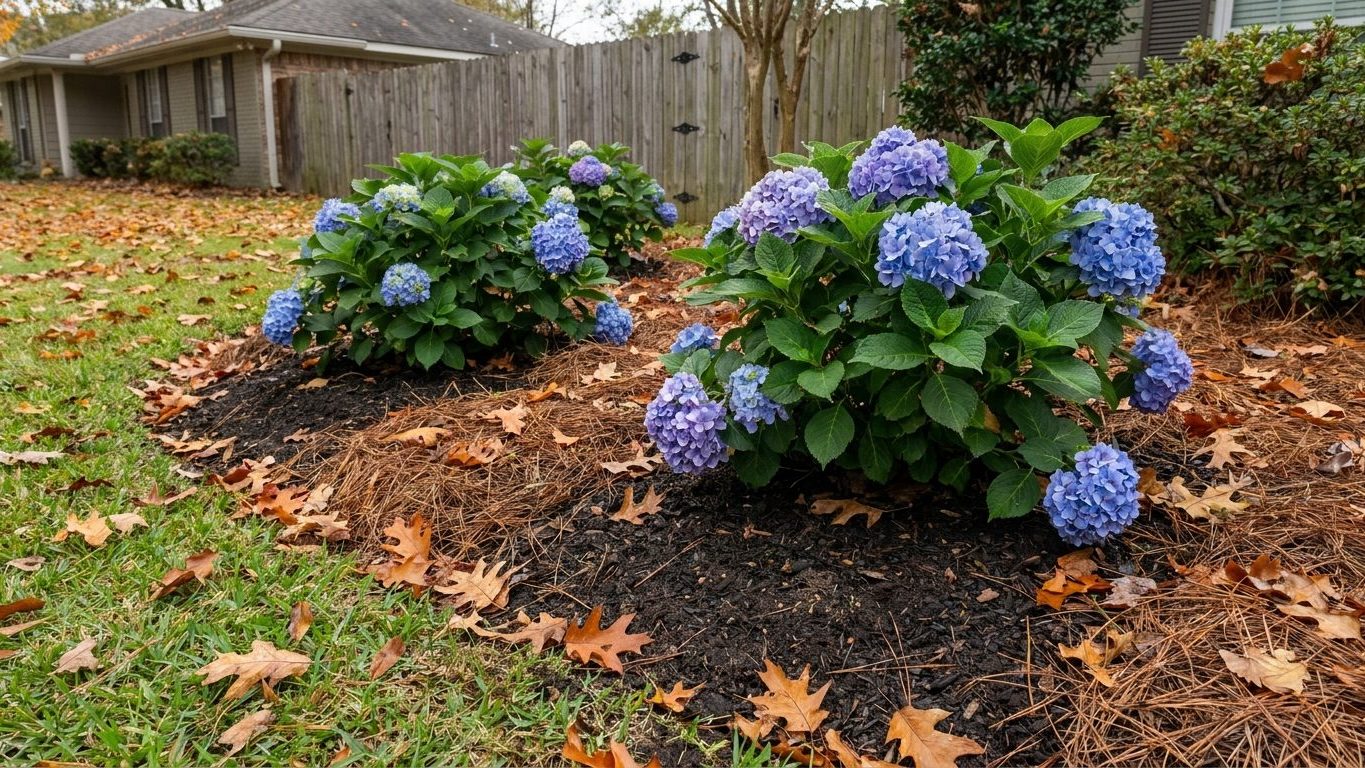
  • June: Bigleaf pruning opens here, timed to spent blooms rather than a set date. Cut just below the faded flower head, never lower, since next year’s buds are already forming on this wood.
  • July: Bigleaf pruning and the third fertilize window both fall in July, doing them the same week saves a return trip to the yard. Keep the cut light, this late in the season a hard prune removes wood the shrub needs for next spring.
  • August: Missouri’s second planting window opens now, aimed at giving roots a head start before fall dormancy. Water deeply and often in August heat, since a new shrub has not built the root mass to handle a dry stretch alone.
  • September: Planting continues, and this is the better of the two fall windows for most of the state. Roots get several weeks to establish before the ground cools for good.
  • October: The first fall frost lands between October 18 and October 29, closing the planting window for the year. Hold off on pruning, since cuts made this close to dormancy heal slowly and invite dieback.
  • November: The shrub has gone dormant, though root growth continues slowly even as top growth stops. Add a fresh layer of mulch once the ground starts to cool, ahead of the coldest months.
  • December: There is no planting, fertilizing, or pruning gesture this month, and that is by design. Check the mulch layer after any hard freeze, since wind and ice can expose the root zone it is meant to protect.

These twelve gestures track Kansas City’s frost calendar, but the state’s hardiness runs from 5b to 7b under the USDA system, so a yard in the Bootheel gets more room on both ends of the season than one near the Iowa line.

How to Work Out the Dates for Your Own Yard

Frost windows, not a fixed date, are what decide when planting or pruning is safe in your yard.

  1. Find your local frost window: NOAA NCEI 1991-2020 Climate Normals put Kansas City’s last spring frost between April 6 and April 20, and a yard well north of downtown often clears that risk about five days earlier.
  2. Count backward for shipped or mail-order plants: holding bare-root stock in a sheltered spot until the frost window closes protects it better than setting it out early to beat a delivery date.
  3. Count forward to open the planting window: Missouri’s plant months run April, May, August, and September, so anything set out in early April still needs a watchful eye if a late cold snap moves through.
  4. Match pruning to the frost-free stretch, not the calendar page: the bigleaf pruning window sits in June and July, clear of frost on both ends, so spent blooms come off without risking new growth.
  5. Recheck before the first fall frost: that window lands between October 18 and October 29, and once it opens, planting stops for the year no matter how warm the afternoon feels.

Every one of these steps borrows the same two numbers, the spring and fall frost windows, and just shifts them earlier or later depending on where in the state you’re standing.

Missouri North to South: How the Dates Shift

A single statewide calendar hides real differences between the top of Missouri and the bottom, and knowing which side of the state you’re on changes how you read the months above.

  • Northern Missouri (near the Iowa line, around Kirksville and Chillicothe): sits at the cold edge of the state’s 5b to 7b range mapped by the USDA Plant Hardiness Zone Map, so both frost dates run later in spring and earlier in fall than Kansas City’s.
  • The Kansas City and Columbia corridor (Jackson, Boone, and Cole counties): tracks closest to the reference dates, since Kansas City itself sits inside this band.
  • St. Louis and the Missouri River bottoms (St. Louis, St. Charles, Franklin counties): the river moderates temperature swings a little, often nudging the safe planting window a few days earlier than inland spots at the same latitude.
  • The Ozarks (Springfield, Branson, Table Rock Lake): elevation changes work against the general south-is-milder rule, so a ridge-top yard can lag a valley yard by more than a week.
  • The Bootheel (Sikeston, New Madrid, Caruthersville): the mildest corner of the state, closer to zone 7b, where the growing season stretches longest on both ends.

For the frost dates and hardiness zone that apply to a specific address, the Missouri state guide breaks the range down further.

Mistakes Missouri Punishes

Pruning bigleaf in fall

Cutting back a bigleaf hydrangea in September or October removes the buds it already set for next year’s blooms. Keep pruning inside the June and July window, and let spent flower heads sit through fall instead.

Planting in the peak of July heat

A root ball set out during the hottest stretch of summer struggles to establish before it faces drought stress. Use the April and May window, or wait for the calmer August and September window, instead of forcing a July planting.

Pulling mulch too early in spring

Removing winter mulch before Kansas City’s last frost, which falls between April 6 and April 20, exposes new growth to a freeze that mulch would have blocked. Wait until that window closes before clearing the bed.

Missouri Extension Offices and County Contacts

The 5b to 7b hardiness range is a starting point, not the final word, and county-level advice fills in the rest for a specific yard.

  • Your county extension office: University of Missouri Extension keeps local contacts for soil testing and site-specific timing.
  • Which hydrangeas hold up here: the companion guide names the varieties worth planting in this state, from the safest bets to the riskier ones.
  • What goes wrong here: the companion guide covers the pests and problems specific to Missouri hydrangeas, in the order they show up during the season.

Common questions

Can I plant a hydrangea in June in Missouri?

June falls outside the state’s plant months of April, May, August, and September, and summer heat makes it a harder month for roots to establish. Waiting for August is the safer call.

Is it too late to plant hydrangeas in October in Missouri?

Once the first fall frost arrives, somewhere between October 18 and October 29, the planting window closes for the year. A shrub set out that late has too little time to root before dormancy.

Do I need to prune hydrangeas every year in Missouri?

Bigleaf types only need pruning in June and July, and skipping a year rarely hurts a healthy shrub. Removing spent blooms is a choice for tidiness, not a requirement for flowering.

Hydrangea Pests and Diseases in Mississippi

Hydrangea Pests and Diseases in Mississippi

Hydrangeas in Mississippi run into the same handful of problems year after year: aphids and Japanese beetles chewing new growth, powdery mildew and cercospora leaf spot spreading in Gulf humidity, and root rot in beds that stay soggy after Jackson’s frequent spring rain. None of these are exotic. Catch them early, match the response to the calendar, and a healthy shrub shrugs off most of them.

Hydrangea pests and diseases Mississippi: The Short Answer

The USDA Plant Hardiness Zone Map puts Jackson in Zone 7b to 9a, and that long, damp growing season is exactly what lets fungal disease and soft-bodied insects build up on hydrangea foliage year after year.

The problems worth tracking here, in the order they usually show up, are aphids, Japanese beetles, powdery mildew, cercospora leaf spot, botrytis blight, and root rot in beds that don’t drain.

Aphids

Small green or black insects cluster on new shoot tips in spring, curling leaves and leaving a sticky residue that draws sooty mold. A strong water spray knocks most colonies off, and ladybugs usually finish the job before the plant needs anything stronger. Check new growth weekly through the fertilize windows in March and May.

Japanese beetles

Japanese beetles — Hydrangea Pests and Diseases in Mississippi

These metallic green beetles skeletonize leaves down to the veins through early summer, feeding in groups that can strip a shrub in days. Handpicking into soapy water in the cool morning hours works better than most sprays, since beetles keep arriving from neighboring yards all season. Damage looks worse than it is on a healthy plant.

Powdery mildew

A gray-white dusty coating settles on leaf surfaces once summer humidity sets in, more of a cosmetic problem than a killer on established shrubs. Space plants for airflow and water the soil instead of the foliage. It rarely needs treatment beyond better spacing and morning watering rather than evening watering.

Cercospora leaf spot

Small purple-brown spots with tan centers appear on lower, older leaves first in the thick heat of July and August, sometimes causing early leaf drop. Rake and discard fallen leaves rather than composting them, since the fungus overwinters in leaf litter. A healthy, well-fed shrub outgrows the damage most years.

Botrytis blight

Fuzzy gray mold shows up on flower heads and soft stems during cool, wet stretches in spring or fall, turning blooms brown and mushy. Remove and discard affected flowers as soon as you see them, and avoid overhead watering during humid spells. Good air circulation matters more here than any spray.

Root rot

Root rot — Hydrangea Pests and Diseases in Mississippi

Wilting leaves on a shrub sitting in soggy soil point to root rot rather than drought, especially in heavy Delta clay or low spots that hold water after Mississippi’s spring rains. Improve drainage or move the shrub to a raised bed, since fungicide rarely saves roots that are already mushy and black.

How to Work Out the Dates for Your Own Yard

Diagnosing a hydrangea problem in Mississippi comes down to matching what you see against the calendar rather than guessing from a photo online.

  1. Start with the frost window: NOAA NCEI 1991-2020 Climate Normals put Jackson’s last spring frost between March 6 and March 22, so leaf damage showing up before that date is more likely cold injury than disease.
  2. Watch the fertilize months: new, tender growth pushed out during the March, May, and July fertilize windows is exactly what aphids target first, so check those flushes closely.
  3. Time leaf spot against summer heat: cercospora leaf spot shows up on older leaves once the humid stretch between the fertilize windows sets in, not in cooler months.
  4. Match dieback to the pruning window: since bigleaf hydrangea gets pruned in June and July, any branch dying back outside that window points to disease or root trouble, not pruning shock.
  5. Check the fall frost side too: the first fall frost arrives between November 7 and November 22 around Jackson, and blight on flowers after a cool wet stretch before that date is botrytis, not frost.
  6. Call before you spray: if two problems overlap, a call to your county extension office settles which one you actually have before you spend money on the wrong treatment.

None of this requires lab work. A hand lens, a wet week’s weather, and the calendar above answer most questions a homeowner has about a struggling shrub.

Mississippi North to South: How the Dates Shift

Mississippi stretches roughly 340 miles from the Tennessee state line to the Gulf of Mexico, and that distance changes how much pressure hydrangeas face from pests and disease without changing the actual list of problems.

  • The Delta and North Mississippi (from the Tennessee border down toward Grenada and Oxford): heavier clay soils drain slowly after rain, so root rot and fungal leaf spot tend to linger longer here than in sandier ground further south.
  • Central Mississippi (the Jackson metro area): most of the state’s interior tracks close to this timing for both frost and disease pressure.
  • The Pine Belt and Gulf Coast (Hattiesburg down through Gulfport and Biloxi): higher humidity, salt air near the coast, and a longer frost-free stretch push powdery mildew and cercospora leaf spot to start earlier in spring and hang on well into fall.

The state guide covers how these regional shifts move the planting and pruning windows themselves, not just which problem shows up first.

Mistakes Mississippi Punishes

Watering the leaves at night

Overhead watering in the evening leaves foliage wet through the humid night air, exactly the condition powdery mildew and botrytis blight need to spread. Switch to soaker hoses or water early enough that leaves dry before dark, and space shrubs for airflow instead of crowding them together.

Planting in a low, wet spot

A shrub set into a low corner of the yard that holds water after every storm is headed for root rot, no matter how well it’s fed. Choose higher ground or build a raised bed before planting, since the September and October planting window won’t fix bad drainage on its own.

Composting infected leaves

Raking cercospora-spotted or blighted leaves into the compost pile just moves the fungus back into the garden next spring. Bag and discard diseased leaf litter instead, and clean up under the shrub through fall before the first frost between November 7 and November 22 locks the debris in for winter.

Mississippi Extension Offices and County Contacts

The Zone 7b to 9a range is a useful starting point, but your county’s soil and drainage decide the rest. Mississippi State University Extension keeps county-level guidance current.

  • Your state page: the frost dates and pruning window for wherever you live in Mississippi.
  • Which ones hold up here: the hydrangea varieties bred for Mississippi’s humidity and heat.
  • Mississippi State University Extension: extension.msstate.edu connects to your county office for a plant sample check.

Common Questions

Do I need to spray hydrangeas every year in Mississippi?

Most healthy shrubs get through the season with good spacing, morning watering, and dead leaf cleanup rather than a spray schedule. Reach for treatment only after matching the symptom to a specific problem in the list above.

Why do my hydrangea leaves have holes but no bugs in sight?

Japanese beetles and other chewing insects often feed at dawn or dusk and drop off the plant the moment they sense movement. Check leaves early in the morning before the yard gets busy, when beetles are still slow and easy to spot.

Can root rot be fixed once it starts?

Rarely, once roots have turned soft and black there’s little a fungicide can reverse. The better move is prevention: raised beds or amended soil at planting time, well before Mississippi’s wet spring weeks arrive.

When to Prune Hydrangeas in Mississippi

When to Prune Hydrangeas in Mississippi

Plant hydrangeas in Mississippi during March and April, once Jackson’s spring frost risk fades after March 22, or again in September and October before the fall frost arrives. Prune bigleaf varieties in June or July, right after the blooms fade, never in late winter. Those four planting months and two pruning months carry the state’s whole calendar.

When to prune hydrangeas in Mississippi: The Short Answer

NOAA NCEI Climate Normals put Jackson’s last spring frost between March 6 and March 22, and that single window decides everything on the calendar below.

  • January: The shrub is dormant, so there is nothing to plant or prune this month. Leave winter mulch in place until the coldest nights pass.
  • February: Still too early to plant, and pruning bigleaf now would cut off flower buds already set. Check mulch depth and hold off on fertilizer.
  • March: Planting opens this month, but frost risk does not clear until March 22, so young roots still need protection some years. This is also the first of three fertilizing months.
  • April: Spring planting continues, now with frost risk mostly behind Jackson. Soil has warmed enough for roots to settle before summer heat arrives.
  • May: No planting this month, but it is the second fertilizing window of the year. New growth needs steady moisture as temperatures climb.
  • June: Bigleaf pruning opens now, right after the first flush of blooms fades. Cut spent flower heads back to a healthy bud, never into the old wood below it.
  • July: Pruning continues alongside the year’s third and final fertilizing window. After this month, let the shrub set next year’s buds undisturbed.
  • August: No planting, no pruning, no fertilizer. Water deeply during dry spells and let the plant coast through peak heat.
  • September: Fall planting opens, giving roots cooler soil and months to establish before winter. This window often produces sturdier shrubs than spring planting.
  • October: The second and final fall planting month, closing out before frost risk returns. Water new plantings well through this stretch.
  • November: Frost risk arrives sometime between November 7 and November 22, so planting stops. Add mulch around the base once nights turn consistently cold.
  • December: Fully dormant, with no gestures needed beyond checking mulch after hard freezes. Save any pruning ideas for June.

These dates track the airport station in Jackson, so a shaded yard in the Hill Country, or a low spot that holds cold air, should push both ends of the window by a week or two instead of planting on a fixed date.

How to Work Out the Dates for Your Own Yard

Working out your own dates starts with your county’s frost record, not the airport figures for Jackson.

  1. Pull your county’s frost dates: NOAA NCEI Climate Normals put Jackson’s spring window at March 6 to March 22 and its fall window at November 7 to November 22, so start there and ask your county extension office how much earlier or later your yard runs.
  2. Count back for fall planting: work backward from the first fall frost so September and October plantings have time to settle roots before the ground cools.
  3. Match the variety to your zone: bigleaf hydrangeas need the milder end of the state’s 7b to 9a range, while panicle and smooth types tolerate the colder end without complaint.
  4. Watch last year’s buds, not the calendar: if bigleaf flower buds browned in a cold snap last spring, your yard likely sits colder than Jackson and needs a later spring planting date.
  5. Set the pruning window around bloom fade: prune bigleaf in June or July, once the first flush of flowers browns, and stop touching the shrub after that so next year’s buds can form.
  6. Recheck after a wet or dry year: a soggy spring can push soil warm-up back a week, while a mild winter can pull the whole calendar forward, so treat these dates as a starting point each year.

None of this replaces a hard freeze warning. If a late cold front is forecast after you’ve planted, a bucket or frost cloth overnight costs nothing and saves a season’s growth.

Mississippi North to South: How the Dates Shift

Mississippi stretches from hill country in the north to the Gulf Coast in the south, and that distance shifts the calendar more than a single statewide date can capture.

  • North Mississippi (the Hill Country, DeSoto County, the northeast corner): the coldest part of the state, where spring planting slides later and fall frost arrives sooner than in Jackson.
  • Central Mississippi (Jackson, Meridian, the Delta): sits closest to the reference dates used throughout this guide.
  • South Mississippi and the Gulf Coast (Hattiesburg, Gulfport, the coastal counties): the mildest part of the state, with wider planting windows on both ends and less risk to bigleaf’s old-wood buds.

Whichever part of the state describes your yard, the Mississippi hydrangea guide breaks these ranges down further by county.

Mistakes Mississippi Punishes

No flowers on an otherwise healthy shrub

This almost always traces back to pruning bigleaf hydrangeas outside the June to July window, cutting off buds that already formed for next year. Stick to that window, and cut spent flowers back to a healthy bud, never further down the stem.

Leaves scorched on the sunny side

Mississippi’s summer sun and humidity punish hydrangeas planted in full afternoon exposure, especially bigleaf types bred for filtered light. Choose a spot with morning sun and afternoon shade, and mulch to keep roots cool through July and August.

New growth still soft when frost hits

Fertilizing past the July window pushes tender new growth right into the fall frost risk that starts in early November near Jackson. Stop feeding after July, so the shrub hardens off before the first cold front arrives.

Mississippi Extension Offices and County Contacts

The USDA Plant Hardiness Zone Map’s 7b to 9a range for Mississippi is a starting point, but your county extension office, reached through Mississippi State University Extension, sees what actually happens in your soil each spring.

  • Mississippi hydrangea guide: the full state overview, zones, and soil notes in one place.
  • Which hydrangeas hold up in Mississippi: six varieties ranked from safest to riskiest for this climate.
  • What goes wrong with hydrangeas in Mississippi: the pests and problems that show up here, in the order they appear each season.

Common questions

Can I plant hydrangeas in Mississippi in the summer?

Summer planting is possible but riskier, since Mississippi’s June through August heat stresses new roots before they establish. The calendar above favors March through April or September through October instead, when soil temperatures are gentler.

How do I know if my hydrangea is bigleaf or another type?

Bigleaf hydrangeas bloom on old wood and need the June to July pruning window described here, while panicle and smooth types bloom on new growth and tolerate a wider pruning schedule. If you’re unsure which one is in your yard, the varieties guide for Mississippi breaks down six common names one by one.

What happens if I plant after October in Mississippi?

Planting after October pushes roots into Jackson’s frost window, which typically opens between November 7 and November 22. Shrubs planted this late have less time to establish before winter dormancy, so waiting for spring becomes the safer choice.

Hydrangeas That Grow Well in Minnesota

Hydrangeas That Grow Well in Minnesota

The safest bets are panicle and smooth hydrangeas, both rated for Minnesota’s 3a to 5a range on the USDA Plant Hardiness Zone Map. In the Twin Cities, the state’s reference city, a mountain or climbing hydrangea can work against a sheltered wall, while bigleaf types mostly die back to the ground each winter.

Hydrangeas that grow well in Minnesota: The Short Answer

The safest bets across Minnesota are panicle and smooth hydrangeas, both rated for the state’s 3a to 5a range on the USDA Plant Hardiness Zone Map.

In the Twin Cities, the state’s reference city, a mountain or climbing hydrangea can work against a sheltered wall, while bigleaf types mostly die back to the ground each winter.

Panicle hydrangea

Panicle hydrangea — Hydrangeas That Grow Well in Minnesota

Panicle hydrangea (Hydrangea paniculata) is the one variety that shrugs off a Minnesota winter without a second thought. It blooms on new wood, so even a hard dieback still leaves cone-shaped flower clusters by August. This is the shrub most nurseries in the Twin Cities stock first, and for good reason.

Smooth hydrangea

Smooth hydrangea — Hydrangeas That Grow Well in Minnesota

Smooth hydrangea (Hydrangea arborescens), the native Annabelle-type shrub, handles the state’s cold with the same ease as panicle types. It flowers on new wood too, which means a late spring frost that nips the tips barely changes the bloom count. It tolerates part shade better than most other hydrangeas sold here.

Climbing hydrangea

Climbing hydrangea — Hydrangeas That Grow Well in Minnesota

Climbing hydrangea (Hydrangea anomala subsp. petiolaris) can work against a south or east wall in the milder parts of the state, though it needs several seasons to establish before it flowers reliably. Wood above the snow line still risks winter injury most years, so patience matters more than skill here.

Mountain hydrangea

Mountain hydrangea — Hydrangeas That Grow Well in Minnesota

Mountain hydrangea (Hydrangea serrata) sits on the edge of what the Twin Cities can support. It flowers mostly on old wood, so a harsh winter often means a shrub with leaves but no blooms. Gardeners who grow it here usually mound mulch over the crown every fall as insurance.

Oakleaf hydrangea

Oakleaf hydrangea — Hydrangeas That Grow Well in Minnesota

Oakleaf hydrangea (Hydrangea quercifolia) brings striking fall foliage color but struggles with reliable flowering once temperatures drop into the state’s coldest zones. Its flower buds form on old wood, which the coldest winters in northern counties tend to kill outright even when the plant itself survives.

Bigleaf hydrangea

Bigleaf hydrangea — Hydrangeas That Grow Well in Minnesota

Bigleaf hydrangea (Hydrangea macrophylla), the mophead type sold everywhere in spring, is the riskiest choice for a Minnesota yard. It blooms almost entirely on old wood, and the state’s winter lows kill that wood most years, leaving a shrub that grows leaves but rarely flowers without heavy protection.

How to Work Out the Dates for Your Own Yard

Working out your own planting and pruning dates starts with the frost window rather than a fixed date. NOAA NCEI 1991-2020 Climate Normals puts Minnesota’s last spring frost between April 17 and April 30, depending on where you live in the state.

  1. Check your last spring frost: in the Twin Cities that window runs April 17 to April 30, so anything planted before mid-April risks a freeze.
  2. Line it up with the state’s planting window: the calendar lists April, May, August, and September as plant months, which follows the ground warming after that frost window closes.
  3. Match the variety to the wood it blooms on: panicle and smooth hydrangeas flower on new wood, so planting them anytime in that April to May stretch still gives a full season to set buds.
  4. Hold old-wood types for a sheltered spot: bigleaf and oakleaf hydrangeas need buds that survive winter, so plant them where snow piles up against a wall, not in an open bed.
  5. Schedule bigleaf pruning inside the state’s window: the calendar sets that task for June and July, once the shrub shows which wood actually made it through winter.
  6. Fertilize on the state’s three windows: March, May, and July, timed so tender new growth isn’t pushing right before the first fall frost between October 11 and October 23.

Panicle hydrangea passes this test easily since new wood means winter damage barely matters. Bigleaf hydrangea usually fails it, because the same freeze that closes the state’s frost window also kills the old wood carrying next year’s flowers.

Minnesota North to South: How the Dates Shift

Latitude moves these dates the most inside Minnesota. The USDA Plant Hardiness Zone Map puts the state’s range at 3a in the far north to 5a in the Twin Cities, and that gap is what changes when a shrub is safe to plant.

  • Northern Minnesota (Zone 3a, near the Iron Range and the border): the growing season closes early, and only panicle and smooth hydrangeas hold up reliably.
  • Twin Cities metro (Zone 4b to 5a): this is the mild south of the state, the reference point for the frost windows used throughout this guide, and where a mountain or climbing hydrangea has the best odds.
  • Southeastern bluff country (along the Mississippi): the bluffs trap warmer air overnight, giving a slight edge over open ground at the same latitude.
  • Western prairie (open, fewer windbreaks): wind exposure can undo that edge even where the zone number looks the same, so a windbreak matters as much as the map does.

The state guide covers the exact frost window for whichever part of Minnesota you call home.

Mistakes Minnesota Punishes

Pruning old wood in fall

Cutting back a bigleaf or oakleaf hydrangea in fall removes the buds it already set for next year, since Minnesota’s calendar reserves pruning for June and July after new growth shows what survived. Wait until then, and only remove what’s clearly dead once leaves confirm it.

Planting before frost clears

Setting a young hydrangea out before the last spring frost, which NOAA NCEI 1991-2020 Climate Normals puts at April 17 to April 30 in the Twin Cities, exposes tender roots to a freeze they haven’t hardened against. The state’s plant window opens in April and May for a reason, so hold off until then.

No mulch over the crown

Skipping a mulch layer leaves the crown of an old-wood hydrangea exposed to the extreme lows behind the state’s 3a to 5a rating, killing buds that would otherwise open the next summer. A few inches of mulch mounded over the base each fall protects that tissue through winter.

Minnesota Extension Offices and County Contacts

The state’s 3a to 5a range is a starting point, not a final answer, since local snow cover and windbreaks change what survives from one yard to the next. University of Minnesota Extension and county offices track those local differences county by county.

  • University of Minnesota Extension: extension.umn.edu carries county-level advice on planting and winter protection for hydrangeas.
  • Your county extension office: local staff can confirm whether your yard runs closer to the northern or southern edge of the state’s zone range.
  • Minnesota state hydrangea guide: the calendar and frost windows for wherever you garden in the state.

Call before you plant, especially if the shrub goes in near a north wall or a low spot where cold air settles.

Common Questions

Do bigleaf hydrangeas survive Minnesota winters?

Rarely without heavy protection. The wood carrying next year’s flower buds sits above ground, and the state’s winter lows behind its 3a to 5a rating usually kill it, leaving a plant that leafs out but skips blooming most years.

What is the best hydrangea for a Minnesota front yard?

Panicle hydrangea is the most forgiving choice for most yards in the state, since it blooms on new wood and tolerates the swing between the Twin Cities’ milder pocket and the colder counties further north.

When should I plant a hydrangea in Minnesota?

The state’s calendar sets April, May, August, and September as planting months, timed around the frost window that closes in late April and reopens in mid-October.

Hydrangea Pests and Diseases in Minnesota

Hydrangea Pests and Diseases in Minnesota

Hydrangeas in Minnesota face a short, sharp list of threats: winter bud kill, aphids, powdery mildew, leaf spot, botrytis blight, and deer browsing. Cold damage outranks every insect or fungus here. Knowing which problem is showing up, and what separates a recovering shrub from a dying one, matters most in Minneapolis-Saint Paul.

Hydrangea pests and diseases Minnesota: The Short Answer

NOAA NCEI 1991-2020 Climate Normals put Minneapolis-Saint Paul’s last spring frost between April 17 and April 30, with the first fall frost landing October 11 to October 23. That window is what a hydrangea has to leaf out, bloom, and harden off again, and it is why winter injury outdoes any single insect or fungus here.

Add a hardiness range of zone 3a to 5a across the state, and a stem that survives a cold December can still lose every flower bud before April arrives. Here is the full list, in the order each one tends to show up over a Minnesota season.

Winter bud blast and stem dieback

Winter bud blast and stem dieback — Hydrangea Pests and Diseases in Minnesota

Cold settles into unprotected stem tips and flower buds over winter, hitting bigleaf types built for warmer zones hardest. Wood that looks fine in March can leaf out only from the base, with no blooms above it. Choose panicle or smooth varieties bred for colder zones, and mulch crowns heavy each fall.

Aphids

Clusters of small green or black insects gather on new growth soon after leaves open, curling tips and leaving a sticky residue that draws sooty mold. A strong hose spray most mornings knocks populations down before they build, and ladybugs usually finish the job without any spray at all.

Powdery mildew

A gray-white film spreads across leaf surfaces during Minnesota’s humid July and August stretches, especially on plants crowded against a fence or wall. It rarely kills a hydrangea but slows next year’s buds. Space shrubs for airflow and water the soil, not the foliage, in the evening.

Cercospora leaf spot

Small purple-brown spots appear on lower leaves first during wet summer weeks, spreading upward and causing early leaf drop by late August. It rarely threatens a healthy shrub but looks alarming. Rake and discard fallen leaves each fall so spores don’t overwinter in the mulch bed.

Botrytis blight

Cool, damp stretches in spring or fall coat flower clusters and soft stems in a gray fuzzy mold, turning petals brown almost overnight. It thrives where water sits on the plant overnight. Prune out affected blooms immediately and avoid overhead watering during any cloudy, wet stretch.

Deer and rabbit browsing

Deer and rabbit browsing — Hydrangea Pests and Diseases in Minnesota

Once perennial food sources die back in late fall, deer and rabbits strip buds and bark from exposed stems all winter, the same stems that would have carried next year’s flowers. A physical fence around the shrub beats any repellent spray for reliability through a Minnesota winter.

How to Work Out the Dates for Your Own Yard

Matching a symptom to its cause starts with the calendar, since Minnesota’s problems don’t all show up at once. NOAA NCEI 1991-2020 Climate Normals give Minneapolis-Saint Paul a last spring frost of April 17 to April 30, and every problem below reads differently depending on how many weeks past that date it is.

  1. Check the calendar first: if it’s late April to early May and stems look dead, wait two to three weeks past the frost window before calling it dieback rather than late leaf-out.
  2. Scratch the bark near the soil line: green tissue under the surface means the crown survived even if every stem above did not, which rules out disease entirely.
  3. Look at which leaves are affected first: spots starting on lower, older leaves point to Cercospora leaf spot, while a gray film across upper leaves in July or August points to powdery mildew.
  4. Check for sticky residue or curled tips: this narrows things to aphids rather than a fungal problem, especially in the first weeks after leaf-out.
  5. Note the weather in the week before symptoms: a cool, damp stretch right before petals turn brown and fuzzy points to botrytis blight, not simple flower fade.
  6. Inspect stems at snow melt for gnaw marks: bark stripped in clean patches near the ground is deer or rabbit browsing, not winter dieback.

Once you know the problem, timing decides the fix. Fertilize only in March, May, or July, plant new shrubs in April, May, August, or September, and save bigleaf pruning for June or July: a badly timed cut turns a minor issue into a season with no blooms.

Minnesota North to South: How the Dates Shift

Minnesota’s frost dates and hardiness zones don’t hold steady from the Iowa border to the Canadian one, and that shift changes when each problem on this list actually shows up. USDA Plant Hardiness Zone Map data spans zone 3a to 5a across the state, with the mildest pocket sitting around the Twin Cities.

  • The Arrowhead and the North Shore (Duluth, Grand Marais, International Falls): winters run colder and longer here, so bud blast and stem dieback show up more often and more severely, and deer start browsing exposed stems earlier in fall.
  • The Twin Cities metro (Minneapolis, Saint Paul, Bloomington): this is the reference zone for the state’s frost dates, with the longest frost-free stretch and the mildest winters, which gives powdery mildew and leaf spot more time to develop in a humid summer.
  • Southern Minnesota (Rochester, Mankato, Albert Lea): frost dates land close to the Twin Cities window, but slightly more humid summers give Cercospora leaf spot and botrytis blight a longer stretch to take hold before fall arrives.

Whichever part of the state you garden in, the Minnesota hydrangea calendar page lines up planting, fertilizing, and pruning windows to your own frost dates rather than a statewide average.

Mistakes Minnesota Punishes

Skipping fall mulch

USDA Plant Hardiness Zone Map data places Minnesota at zone 3a to 5a, cold enough that bare crowns left exposed all winter lose stems and buds a few inches of mulch would have blocked. Pile mulch over the crown once the ground starts to freeze, not before, so mice don’t nest in it.

Pruning bigleaf in fall

Cutting stems back after summer removes the flower buds already set for next year, since bigleaf hydrangeas bloom on old wood. Save any pruning for June or July instead, right after this year’s blooms fade, so next year’s buds have time to form before frost.

Fertilizing outside the window

A late summer feeding pushes soft new growth that has no time to harden before the first fall frost arrives October 11 to October 23. Stick to March, May, and July applications only, and let the plant slow down naturally as the season winds down.

Minnesota Extension Offices and County Contacts

Every number here starts from the Twin Cities and the state’s zone 3a to 5a range, but a county office narrows it to your own soil and microclimate. University of Minnesota Extension keeps that detail at extension.umn.edu.

  • Your Minnesota hydrangea calendar: the frost dates and pruning window laid out month by month for this state.
  • Which hydrangeas grow well in Minnesota: varieties ranked from safest to riskiest for this climate.
  • Your county extension office: local staff who can confirm a diagnosis and check soil test results specific to your yard.

Common questions

Why do my Minnesota hydrangeas have no flowers but healthy leaves?

Winter cold likely killed the flower buds while the crown and stems survived underneath. This hits bigleaf varieties hardest in zone 3a to 5a winters. Switch to a panicle or smooth variety, or mulch the crown heavier each fall to protect next year’s buds.

Are hydrangeas deer resistant in Minnesota?

No. Deer and rabbits browse hydrangea buds and bark through winter once other food sources die back, and a hungry deer will strip a young shrub down to bare stems. A physical fence around the plant works better than repellent sprays through a long Minnesota winter.

Can I treat powdery mildew without chemicals?

Usually, yes. Spacing shrubs for airflow and watering the soil instead of the leaves in the evening cuts down the humid conditions mildew needs. It rarely kills a hydrangea outright, so a cultural fix is often enough without reaching for a fungicide.

Hydrangea Pests and Diseases in Louisiana

Hydrangea Pests and Diseases in Louisiana

Louisiana’s hydrangeas face more trouble from humidity and heat than from any hard freeze, with fungal leaf spot, powdery mildew, aphids, spider mites, and heavy-clay root rot topping the list. Watering at the soil line instead of overhead, and improving drainage before planting, prevents most of what actually kills a shrub here.

Hydrangea Pests and Diseases Louisiana: The Short Answer

New Orleans, the reference city for this state’s climate data, rarely sees a hard freeze, so hydrangea disease pressure here comes from humidity and heat rather than winter dieback. USDA Plant Hardiness Zone Map puts Louisiana at 8a to 10a, and that long, wet growing season keeps fungal spores active for most of the year.

Aphids on new growth

Aphids cluster on tender spring shoots and flower buds, leaving a sticky honeydew that draws ants and sooty mold. A hard spray from the hose most mornings knocks the colony down, and the March fertilize window is a good time to check the same new growth for damage.

Cercospora leaf spot

Small purple-brown spots with tan centers appear on lower leaves first as early summer humidity climbs, then spread upward and cause premature leaf drop. Removing fallen leaves and watering the soil instead of the foliage slows the spread, and thinning stems during the June to July prune helps air move through the shrub.

Powdery mildew

A gray-white dusty coating settles on leaf tops and stem tips during warm days with cool, humid nights, distorting new leaves without necessarily killing the plant. Spacing shrubs for airflow and watering at the base rather than overhead keeps the fungus from spreading through a bed.

Spider mites

Spider mites — Hydrangea Pests and Diseases in Louisiana

Fine stippling and a bronze cast on leaves, often with faint webbing underneath, shows up during the hottest, driest stretch of summer when mites multiply fast. A strong daily rinse of the leaf undersides breaks their cycle, and mulch that holds soil moisture reduces the drought stress that draws them in.

Botrytis blight

Brown, mushy blotches on petals and buds spread fast once fall brings cooler nights and lingering leaf wetness, especially after the season’s last blooms fade. Deadheading spent flowers promptly and avoiding overhead watering in the evening keeps the fungus from overwintering in plant debris.

Root rot

Root rot — Hydrangea Pests and Diseases in Louisiana

Wilting leaves on a well-watered shrub, plus dark and mushy roots when you dig, point to root rot in Louisiana’s heavy, slow-draining clay after a wet winter. Raised beds or amended planting holes at the January and February planting window keep roots from sitting in standing water.

Yellowing leaves with green veins

Interveinal yellowing on newer leaves points to iron chlorosis, common where Louisiana’s soil runs alkaline from shell or limestone fill near the coast. A soil test confirms the pH, and a light application during the May fertilize window with an acidifying feed greens the leaves back up within a few weeks.

How to Work Out the Dates for Your Own Yard

Working out which problem you actually have takes a short, repeatable check instead of a guess from a single blurry leaf.

  1. Start with the wet season: NOAA NCEI 1991-2020 Climate Normals put New Orleans’ last freeze window at January 18 to February 8, so soil in the January and February planting window is often already saturated, favoring root rot over any insect.
  2. Check where the damage starts: lower, older leaves point to a splash-borne fungus like leaf spot, while damage on new tip growth usually means an insect is feeding there.
  3. Turn the leaf over: fine webbing and stippling on the underside signal spider mites, while a dusty gray coating sitting on top signals powdery mildew instead.
  4. Dig near the root ball: a shrub that wilts despite wet soil, with dark, mushy roots underneath, points to root rot rather than any pest.
  5. Match the season: aphids cluster on spring growth, mites peak in the hottest, driest weeks of summer, and botrytis waits for the first cool, wet nights of fall.
  6. Watch how fast it spreads: a single blemished leaf that stays isolated is often just heat stress, but new spots appearing daily across the shrub call for the treatment labeled for that specific problem.

If two or three of these checks point the same direction, that’s very likely your actual problem, and it’s worth confirming with the parish extension office before spraying anything.

Louisiana North to South: How the Dates Shift

Louisiana’s disease and pest pressure shifts noticeably from the Arkansas line to the Gulf, and that shift changes which problem shows up first each year.

  • North Louisiana (Shreveport, the Ark-La-Tex): sits at the cooler end of the state’s zone range, so a real winter freeze knocks back aphid and mite populations before spring growth starts, and leaf spot has less time to build over winter.
  • Central Louisiana (Alexandria): freezes are lighter and less consistent than in the north, letting leaf spot and mildew linger later into what would be a dormant season further up the state.
  • South Louisiana and the coast (New Orleans, Baton Rouge): sits at the milder end of the range, where humidity rarely lets up and heavy clay drains slowly, so fungal problems and root rot both get a longer window to build each year.

Whichever end of the state you’re in, the state hydrangea guide has the exact frost window and hardiness figures for your parish, and it’s worth checking before deciding a symptom is unusual for your area.

Mistakes Louisiana Punishes

Three habits show up again and again in Louisiana yards, and each one hands a problem from the list above exactly what it needs to spread.

Watering the leaves at night

Overhead sprinklers run in the evening leave hydrangea foliage wet through Louisiana’s long, humid nights, the exact condition powdery mildew and leaf spot need to take hold and spread across a bed. Switch to soaker hoses or hand-water the soil in the morning instead, well before dusk.

Skipping fall leaf cleanup

NOAA NCEI 1991-2020 Climate Normals show a 32-degree freeze in only 86.8 percent of years here, so roughly one winter in seven leaves fallen, spore-loaded leaves un-killed by cold. Raking and discarding that litter each fall keeps next spring’s leaf spot and mildew pressure lower.

Planting in a low, wet corner

Louisiana’s heavy clay holds water long after a storm, and a hydrangea set into a low spot without amendment sits in exactly the wet conditions root rot needs to establish. Build the bed up a few inches above grade during the January or February planting window instead.

Louisiana Extension Offices and County Contacts

The state-wide range above is a starting point, and your parish’s LSU AgCenter office can confirm exactly which pest or disease is active in your yard right now.

  • Your state page: the frost dates and hardiness range for Louisiana, plus the fertilize, plant, and prune windows for the whole state.
  • Which ones hold up here: hydrangea varieties suited to Louisiana’s heat and humidity, ranked from most to least reliable.
  • LSU AgCenter: local parish contacts for a soil test or a diagnosis before you spray anything.

Common questions

Do hydrangeas get fungal disease every year in Louisiana?

Not automatically, but the humidity makes it likely in a wet year. Watering at the base instead of overhead, and spacing shrubs for airflow, cuts that risk substantially.

What’s the most common hydrangea pest in Louisiana?

Aphids and spider mites are the two most reported, with mites peaking during the hottest, driest weeks of summer and aphids showing up earlier on tender spring growth.

Should I spray a fungicide as prevention every spring?

Not necessary for every yard. Check for the season’s actual first symptoms as described above before treating anything, and confirm with the parish LSU AgCenter office if you’re unsure which problem you have.

The almanac, state by state. Every date on this site comes from a state’s own frost facts and its extension service’s calendar — and says where it comes from.