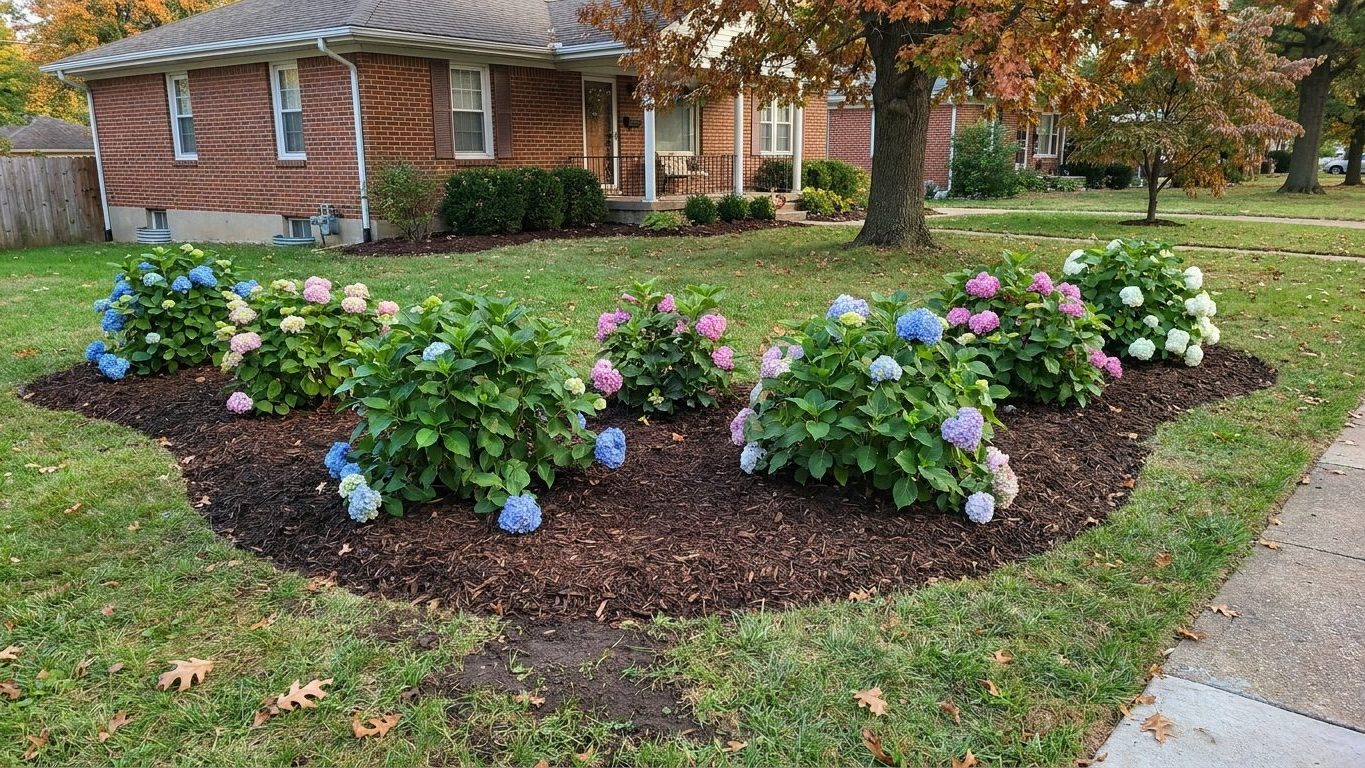
The safe windows to plant hydrangeas in Missouri run April, May, August, and September, bracketing the hottest stretch of summer, while bigleaf varieties get pruned in June and July. Kansas City’s frost dates set the pace for the whole state, and the calendar below breaks down what to do each month, from late-winter dormancy through the first fall freeze.
When to prune hydrangeas in Missouri: The Short Answer
Kansas City’s frost calendar sets the rhythm for planting and pruning hydrangeas anywhere in Missouri, and every other date on this list works backward or forward from it.
- January: The ground is frozen and the shrub is fully dormant, so there is nothing to plant or prune. Check that last fall’s mulch is still in place over the root zone.
- February: Buds are already set on last year’s wood, and disturbing them now costs you this year’s blooms. Use the quiet weeks to plan where a new hydrangea will go once the soil opens up.
- March: NOAA NCEI 1991-2020 Climate Normals put Kansas City’s last spring frost between April 6 and April 20, so March still sits ahead of that window. This is the first of three fertilize months, applied while the plant wakes up but before tender new growth is exposed.
- April: The last frost window closes by April 20, and April opens the planting season across Missouri. Wait until the soil has warmed and frost risk has passed before setting a new shrub in the ground.
- May: Planting continues, and it overlaps with the second fertilize month of the year. A newly set hydrangea benefits from both at once, as long as the root ball goes in before the summer heat arrives.
- June: Bigleaf pruning opens here, timed to spent blooms rather than a set date. Cut just below the faded flower head, never lower, since next year’s buds are already forming on this wood.
- July: Bigleaf pruning and the third fertilize window both fall in July, doing them the same week saves a return trip to the yard. Keep the cut light, this late in the season a hard prune removes wood the shrub needs for next spring.
- August: Missouri’s second planting window opens now, aimed at giving roots a head start before fall dormancy. Water deeply and often in August heat, since a new shrub has not built the root mass to handle a dry stretch alone.
- September: Planting continues, and this is the better of the two fall windows for most of the state. Roots get several weeks to establish before the ground cools for good.
- October: The first fall frost lands between October 18 and October 29, closing the planting window for the year. Hold off on pruning, since cuts made this close to dormancy heal slowly and invite dieback.
- November: The shrub has gone dormant, though root growth continues slowly even as top growth stops. Add a fresh layer of mulch once the ground starts to cool, ahead of the coldest months.
- December: There is no planting, fertilizing, or pruning gesture this month, and that is by design. Check the mulch layer after any hard freeze, since wind and ice can expose the root zone it is meant to protect.
These twelve gestures track Kansas City’s frost calendar, but the state’s hardiness runs from 5b to 7b under the USDA system, so a yard in the Bootheel gets more room on both ends of the season than one near the Iowa line.
Missouri — the year and the numbers
- State
- Missouri
- USDA zones
- 5b-7b
- Last spring frost
- April 6 to April 20
- First fall frost
- October 18 to October 29
- Annual rain
- 39 in
- Lawn zone
- transition-season
- Source
- NOAA NCEI 1991-2020 Climate Normals, 32F freeze probabilities · Kansas City
How to Work Out the Dates for Your Own Yard
Frost windows, not a fixed date, are what decide when planting or pruning is safe in your yard.
- Find your local frost window: NOAA NCEI 1991-2020 Climate Normals put Kansas City’s last spring frost between April 6 and April 20, and a yard well north of downtown often clears that risk about five days earlier.
- Count backward for shipped or mail-order plants: holding bare-root stock in a sheltered spot until the frost window closes protects it better than setting it out early to beat a delivery date.
- Count forward to open the planting window: Missouri’s plant months run April, May, August, and September, so anything set out in early April still needs a watchful eye if a late cold snap moves through.
- Match pruning to the frost-free stretch, not the calendar page: the bigleaf pruning window sits in June and July, clear of frost on both ends, so spent blooms come off without risking new growth.
- Recheck before the first fall frost: that window lands between October 18 and October 29, and once it opens, planting stops for the year no matter how warm the afternoon feels.
Every one of these steps borrows the same two numbers, the spring and fall frost windows, and just shifts them earlier or later depending on where in the state you’re standing.
Missouri North to South: How the Dates Shift
A single statewide calendar hides real differences between the top of Missouri and the bottom, and knowing which side of the state you’re on changes how you read the months above.
- Northern Missouri (near the Iowa line, around Kirksville and Chillicothe): sits at the cold edge of the state’s 5b to 7b range mapped by the USDA Plant Hardiness Zone Map, so both frost dates run later in spring and earlier in fall than Kansas City’s.
- The Kansas City and Columbia corridor (Jackson, Boone, and Cole counties): tracks closest to the reference dates used across this guide, since Kansas City itself sits inside this band.
- St. Louis and the Missouri River bottoms (St. Louis, St. Charles, Franklin counties): the river moderates temperature swings a little, often nudging the safe planting window a few days earlier than inland spots at the same latitude.
- The Ozarks (Springfield, Branson, Table Rock Lake): elevation changes work against the general south-is-milder rule, so a ridge-top yard can lag a valley yard by more than a week.
- The Bootheel (Sikeston, New Madrid, Caruthersville): the mildest corner of the state, closer to zone 7b, where the growing season stretches longest on both ends.
For the frost dates and hardiness zone that apply to a specific address, the Missouri state guide breaks the range down further.
Mistakes Missouri Punishes
Pruning bigleaf in fall
Cutting back a bigleaf hydrangea in September or October removes the buds it already set for next year’s blooms. Keep pruning inside the June and July window, and let spent flower heads sit through fall instead.
Planting in the peak of July heat
A root ball set out during the hottest stretch of summer struggles to establish before it faces drought stress. Use the April and May window, or wait for the calmer August and September window, instead of forcing a July planting.
Pulling mulch too early in spring
Removing winter mulch before Kansas City’s last frost, which falls between April 6 and April 20, exposes new growth to a freeze that mulch would have blocked. Wait until that window closes before clearing the bed.
Missouri Extension Offices and County Contacts
The 5b to 7b hardiness range is a starting point, not the final word, and county-level advice fills in the rest for a specific yard.
- Your county extension office: University of Missouri Extension keeps local contacts for soil testing and site-specific timing.
- Which hydrangeas hold up here: the companion guide names the varieties worth planting in this state, from the safest bets to the riskier ones.
- What goes wrong here: the companion guide covers the pests and problems specific to Missouri hydrangeas, in the order they show up during the season.
Common questions
Can I plant a hydrangea in June in Missouri?
June falls outside the state’s plant months of April, May, August, and September, and summer heat makes it a harder month for roots to establish. Waiting for August is the safer call.
Is it too late to plant hydrangeas in October in Missouri?
Once the first fall frost arrives, somewhere between October 18 and October 29, the planting window closes for the year. A shrub set out that late has too little time to root before dormancy.
Do I need to prune hydrangeas every year in Missouri?
Bigleaf types only need pruning in June and July, and skipping a year rarely hurts a healthy shrub. Removing spent blooms is a choice for tidiness, not a requirement for flowering.