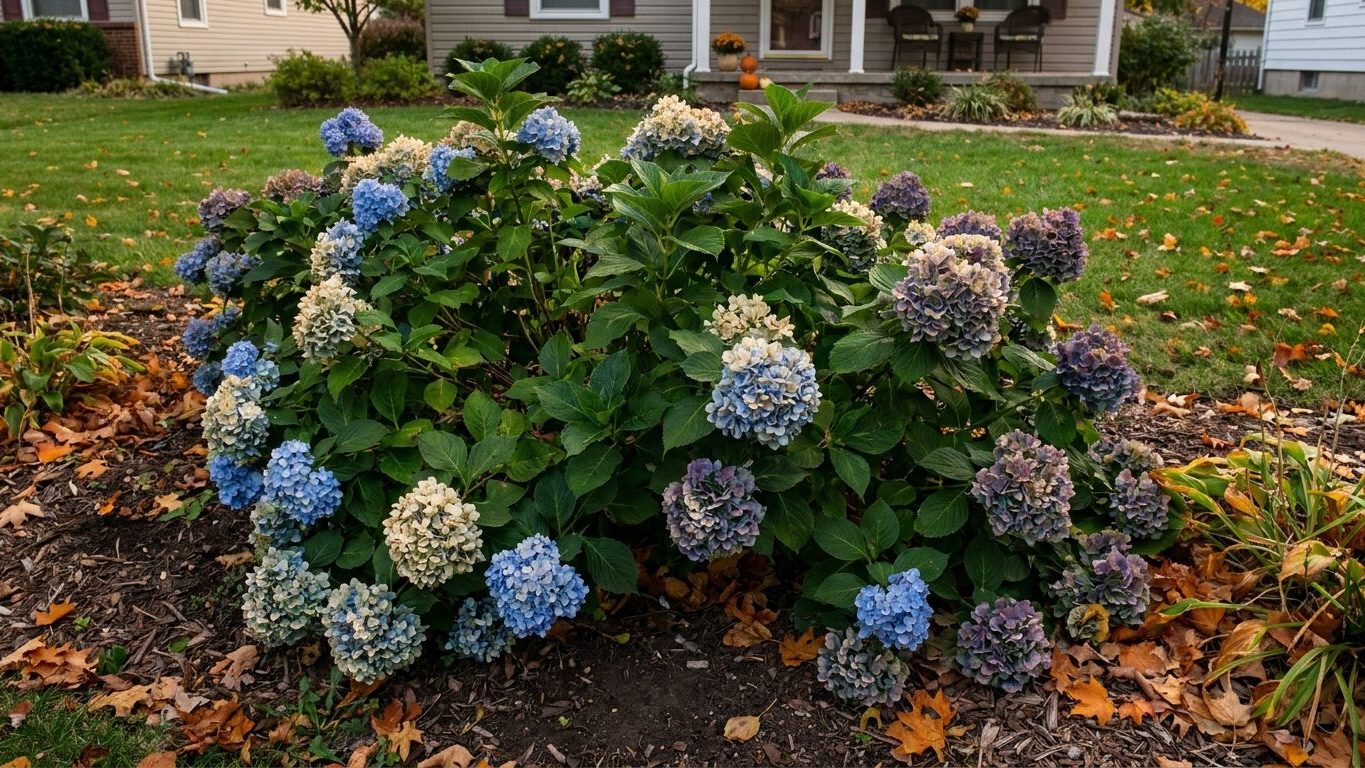
In Kansas City, the two problems that show up on almost every hydrangea are fungal, powdery mildew and Cercospora leaf spot, both fed by summer humidity trapped in dense foliage. Insects rank second, aphids on new growth, four-lined plant bug on tender leaves, and Japanese beetles skeletonizing blooms by July. University of Missouri Extension diagnoses most of these free through county offices.
Hydrangea pests and diseases Missouri: The Short Answer
The USDA Plant Hardiness Zone Map places Missouri from zone 5b in the north to 7b near the Bootheel, with Kansas City sitting toward the milder half of that range. Winters this mild rarely kill overwintering pest eggs outright, which is part of why the same problems return year after year.
Aphids
Small green or black clusters on new stem tips in April and May, sticky honeydew coating leaves underneath. Curled, distorted new growth is the tell. A strong water spray every few days or insecticidal soap knocks numbers down before ants start farming them.
Four-lined plant bug
Sunken, brown-ringed spots stippling young leaves in late May, usually gone by the time you look closely since the nymphs feed fast and drop. Damage looks worse than it is. Prune out the worst leaves and skip broad insecticide sprays that also kill its natural predators.
Japanese beetles

Metallic green beetles chewing leaves down to lace and sometimes stripping flower petals through July. Handpicking into soapy water each morning works better than spraying, since populations peak for only a few weeks before eggs go back into the lawn for next year.
Powdery mildew
A white, flour-like coating spreads across leaf tops through humid August afternoons in Kansas City, rarely killing the shrub outright but slowing bloom for the season. Space plants for airflow and water the soil, not the leaves. Morning watering beats an evening soak every time here.
Cercospora leaf spot
Purple-rimmed brown spots starting on lower, older leaves in late summer, working upward as spores splash up during rain. Strip and bag fallen leaves each fall since the fungus overwinters in that debris and reinfects the same shrub next season.
Botrytis blight
Gray, fuzzy mold coats flower clusters and stem wounds during the cool, wet stretches Missouri gets in September and October. Cutting spent blooms promptly and avoiding overhead irrigation late in the season keeps humidity off the tissue this fungus needs to spread.
Root rot in heavy clay
Wilting leaves despite moist soil and a soft, dark base of the stem point to root rot, common in Missouri’s clay where water sits after rain. Raise the planting hole a few inches above grade and skip the automatic sprinkler zone that keeps this spot too wet.
Missouri — the year and the numbers
- State
- Missouri
- USDA zones
- 5b-7b
- Last spring frost
- April 6 to April 20
- First fall frost
- October 18 to October 29
- Annual rain
- 39 in
- Lawn zone
- transition-season
- Source
- NOAA NCEI 1991-2020 Climate Normals, 32F freeze probabilities · Kansas City
How to Work Out the Dates for Your Own Yard
Kansas City’s last spring frost falls between April 6 and April 20, per NOAA NCEI 1991-2020 Climate Normals, and every pest date below counts forward from that range, not from one fixed day. The first soft growth, and the first aphids, typically appear two to three weeks after the window closes.
- Check new growth two to three weeks after frost-out: once the April 6 to April 20 window passes, look under the first flush of leaves for aphid clusters before honeydew builds up.
- Scout for four-lined plant bug by mid to late May: this pest hits about two weeks after the aphid flush, right as the plant fills in during its April to May planting window.
- Handpick beetles through the June to July prune window: Japanese beetles peak the same weeks you’re already out there pruning bigleaf stems, so check both at once.
- Inspect leaf undersides at the July fertilizing pass: the third feeding round of the year is a natural trigger to check for the first dusting of powdery mildew.
- Watch older leaves in August for leaf spot: Cercospora shows up on the lowest, oldest leaves first, well before it climbs toward new growth.
- Strip fallen leaves ahead of the October frost window: once leaves start dropping before the October 18 to October 29 freeze, bag them so overwintering spores don’t return next spring.
None of this needs a spray calendar of its own. Walking the bed on the same days you’re already fertilizing or pruning, using Missouri’s own task windows, covers every date above for free.
Missouri North to South: How the Dates Shift
Missouri stretches nearly the length of the eastern half of Kansas, and that reach in latitude and river humidity is what moves these dates around more than anything else.
- The Bootheel (Sikeston, Poplar Bluff, Cape Girardeau): the mildest corner of the state, where fall frost lands toward the late end of the state’s window, giving fungal disease extra weeks to build before cold finally shuts it down.
- Northern Missouri (St. Joseph, Kirksville, Hannibal): the coldest pocket, where spring frost breaks toward the early end of the range and hard freezes knock back overwintering aphid eggs more reliably than farther south.
- Kansas City and the west (Kansas City, Independence, Blue Springs): humid summer air off the river keeps powdery mildew and leaf spot active well into September.
- The Ozark Plateau (Springfield, Branson, Rolla): higher ground trims a few degrees off summer nights, which slows mildew spread slightly but does nothing to slow Japanese beetle numbers.
Mistakes Missouri Punishes
Watering after dark
Evening sprinklers leave leaves wet through Missouri’s humid nights, exactly what powdery mildew and botrytis need to spread. Water the soil in the morning instead, ideally with a soaker hose, so foliage dries by afternoon and stays dry through the night.
Pruning bigleaf outside its window
Cutting stems back outside the June to July window removes next year’s flower buds along with this year’s mildew-damaged leaves. Wait for that window, then cut only what looks diseased, leaving healthy old wood alone to set next season’s blooms.
Skipping the fall leaf cleanup
Leaving fallen leaves under the shrub through winter lets Cercospora and botrytis spores ride out the cold in that litter, ready to reinfect new growth in spring. Bag and remove leaves once the October frost window arrives, rather than waiting for spring cleanup.
Missouri Extension Offices and County Contacts
The zone and frost ranges cover the whole state, but University of Missouri Extension and your county office narrow that down to what’s actually spreading on your block this month.
- Your state page: the frost dates and pruning window for hydrangeas across Missouri.
- Which ones hold up here: the varieties bred to handle both this humidity and these winters.
- The Missouri calendar: month by month tasks tied to the same frost windows used here.
Common questions
Do I need to spray hydrangeas every year in Missouri?
No. Most Missouri hydrangea problems are humidity-driven fungal issues that respond better to airflow, soaker hoses, and morning watering than to routine spraying.
What’s the most common hydrangea disease in Missouri?
Powdery mildew and Cercospora leaf spot, both fed by the state’s humid summer air, show up on nearly every crowded or unpruned shrub by late summer.
Can I treat hydrangea pests with the same products used for beetles on roses?
Handpicking works better than broad insecticides during the few weeks Japanese beetles peak, since sprays also kill the predators that keep aphids and plant bugs in check.