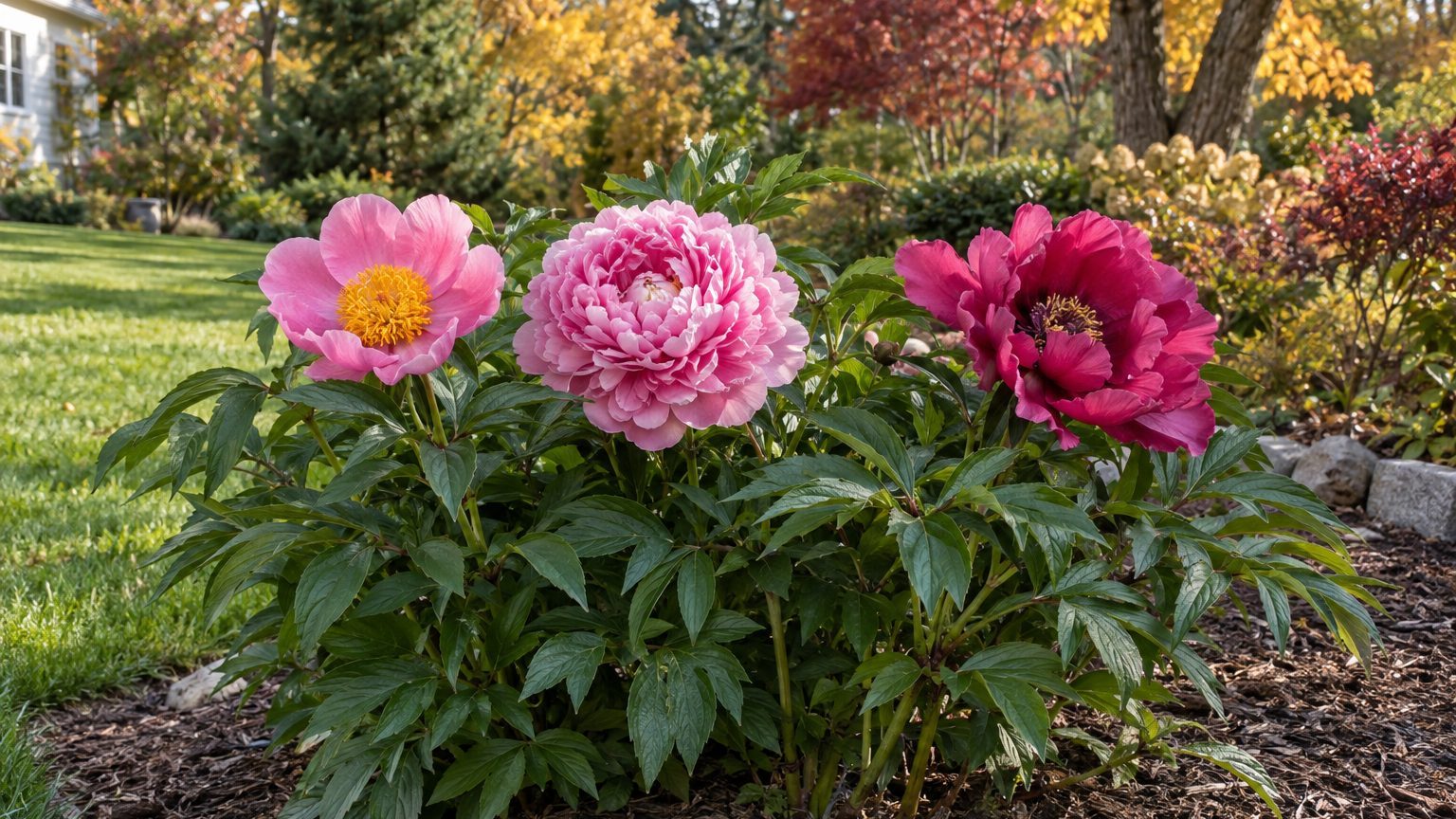
A peony that returns every May, loaded with buds, is one of the quiet rewards of a Connecticut yard. The state’s cold winters give peonies the long rest they need, so the choice comes down to which type fits your space, your patience and your tolerance for upkeep.
Best Peonies to Grow in Connecticut

Four types of peonies are generally grown in Connecticut home landscapes, and all four suit the state because peonies need a minimum of 6 weeks of temperatures below 40°F to flower. Connecticut winters supply that cold, which is why peonies do better here than in mild-winter climates, where they may flower poorly.
Woodland Peony

The woodland peony (Paeonia japonica) is the white-flowered type that opens the season. Its bloom lasts about 2 weeks in late spring, so it fills the gap before the larger peonies arrive. It suits a shadier corner of the garden.
Tree Peony

The tree peony (including Paeonia suffruticosa) is a woody shrub that blooms later than the woodland type. It keeps its woody stems through winter, so it is never cut back to the ground. Leave the framework alone and remove only dead wood.
Garden Peony
The garden, or herbaceous, peony (Paeonia hybrids) is the classic border plant. It blooms for 2-3 weeks and then dies back each year. Cut the foliage to the ground once it has died back, in late fall or early winter, or wait until early spring.
Intersectional Peony
The intersectional peony, also known as the Itoh, is a hybrid of the garden and tree peonies. It finishes the sequence, flowering for two-three weeks once the garden peonies have finished. Planted alongside the other types, it extends the show well into June.
Connecticut — the year and the numbers
- State
- Connecticut
- USDA zones
- 6a-7b
- Last spring frost
- April 2 to April 12
- First fall frost
- October 28 to November 10
- Annual rain
- 44 in
- Lawn zone
- cool-season
- Source
- NOAA NCEI 1991-2020 Climate Normals, 32F freeze probabilities · Bridgeport
How to Choose a Peony for a Connecticut Garden
Connecticut spans USDA zones 6a to 7b. Peonies generally receive the winter cold they need here. The better question is how much space, time and shade you have, and how long you want the blooms to last.
Planting different types staggers the show, since each one flowers in turn from late spring into June. Match the type to the job you need it to do.
| Your situation | What suits it in Connecticut | Why |
|---|---|---|
| Very cold winter | Any of the four types | Peonies need winter cold to flower, so a hard winter works in their favor |
| Want blooms for as long as possible | One of each type | The four types flower in sequence from late spring into June |
| Little time for upkeep | Tree peony | It keeps its woody stems and is never cut back |
| Shady spot | Woodland peony | It opens the season with white flowers for about 2 weeks |
| Classic cutting border | Garden peony | It blooms for 2-3 weeks, then dies back and is cut down after the foliage fades |
| Want a long finish to the season | Intersectional peony | It flowers last, as a hybrid of the garden and tree types |
Whichever type you pick, a newly planted or transplanted peony may not bloom the first spring, so give it time to settle.
Which Peonies Suit Different Parts of Connecticut
Winter cold varies across the state, but every part of Connecticut gives peonies the chilling they need, so the differences affect timing more than variety.
- Long Island Sound shoreline: Winters are milder here, and spring frost ends earlier than inland. Peonies still get their cold rest, so all four types are fair choices, and growers can expect buds to wake a little sooner.
- Northwest Hills: Frost lingers later in spring and returns earlier in fall. Tree peonies, which leaf out early, benefit from a spot sheltered from late frost, while herbaceous types come up later and dodge it more easily.
- Connecticut River Valley and inland towns: Winters are cold enough that any type works, and planting dates follow the same early fall window as elsewhere in the state.
Expect bloom to shift later as you move inland and uphill, but favor the early side of the fall planting window there.
Peony Buying Mistakes to Avoid in Connecticut
Planting Too Deep
A peony set too deep may bloom poorly or not come up at all, and a potted plant often arrives sitting low in its soil. Keep the eyes near the soil surface when you plant. If an established clump has stopped flowering, replant it at the right depth in early fall.
Expecting Flowers Right Away
A newly planted or transplanted peony may not bloom the first spring, and it can feel like a failure when it was only settling in. Plant or divide in August and September, or into October, so the roots can establish before winter. Spring planting is possible, but it may delay flowers a year.
Cutting the Wrong Peony Back
Tree peonies are easy to confuse with herbaceous ones at the nursery, and they need opposite care. A herbaceous peony is cut back after the foliage has died back, in November and December; if it was left standing, cut it back in March or April instead. A tree peony is never cut back, so check the label before you pick up the pruners.
Where to Get Peony Advice in Connecticut
Connecticut gardeners have a local resource for peony questions, from choosing a type to figuring out why a clump stopped flowering. The state’s land-grant university runs it.
- The UConn Extension offers practical guidance on growing peonies in the home landscape, so check it before planting in August or September.
- Your county extension office can answer questions about your own soil and site, and it is a good stop when a plant refuses to bloom.
Common Questions
Do Peonies Grow Well in Connecticut?
Yes. Connecticut winters give peonies the cold they need to set flowers, and four types are grown in home landscapes across the state.
When Do Peonies Bloom in Connecticut?
Blooms arrive from May into June, depending on the type. The woodland peony comes first, followed by tree peonies, garden peonies and finally intersectional hybrids.
When Should You Plant or Divide Peonies in Connecticut?
August and September are the months to aim for, with October as a later option. Early fall gives the roots time to settle before winter arrives.