The biggest problem on Connecticut hydrangeas isn’t a bug at all. It’s a bare shrub in June with plenty of green leaves and zero flowers, and the cause traces back to a bud that froze months earlier, not to anything crawling on the plant. Everything else, from aphids to powdery mildew, follows a fairly predictable seasonal order once that first mystery is solved.
Hydrangea Pests and Diseases Connecticut: The Short Answer
In Bridgeport and the rest of coastal Connecticut, the season’s problems arrive in a set order: winter bud loss shows up first in spring, insects and fungal spots follow through summer, and deer pressure closes out the year. Knowing which stage you’re in narrows the list fast.
No blooms after a mild-looking winter
USDA Plant Hardiness Zone Map puts most of Connecticut at 6a to 7b, and in the colder inland pockets an unprotected bigleaf hydrangea can lose every flower bud to a hard snap without a single leaf showing damage. Scratch a stem in April, green means it lived, brown means the buds are gone for the year.
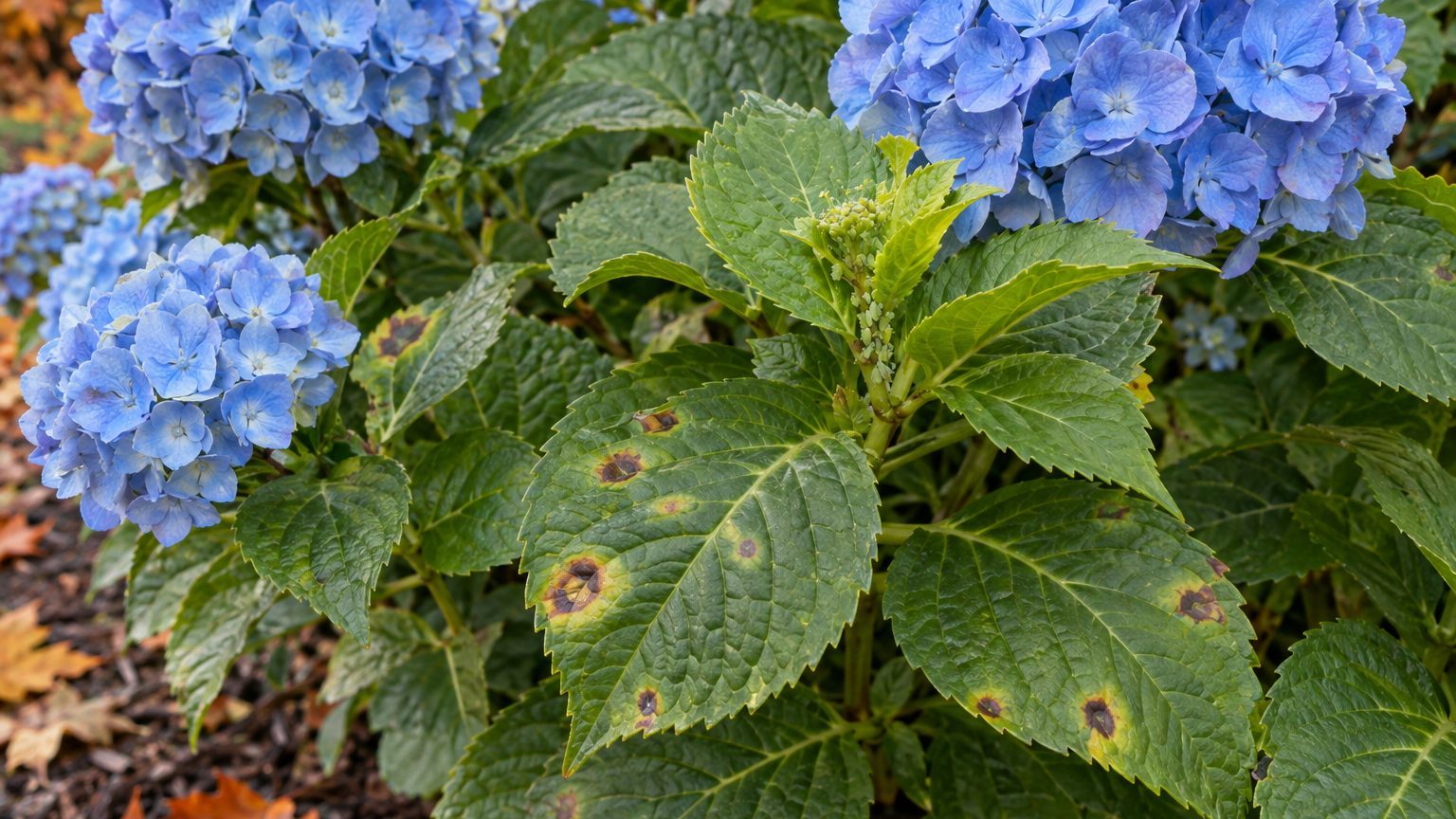
Aphids clustering on new shoots
Small pale-green insects bunched on the newest growth tips, curling the leaf edges as they feed, show up as soon as tender spring growth appears. A firm spray of water knocks most colonies loose, and a repeat rinse a few days later usually finishes the job without spraying anything else.
Dark spots ringed in purple or yellow

Bacterial leaf spot leaves irregular brown patches with a yellow halo, spreading fastest after a run of wet, warm days in late spring. Pull and bag the worst leaves, water at the base instead of overhead, and give the shrub room to breathe by spacing new plants further apart.
A white, dusty coating on the leaves

Powdery mildew builds up through humid midsummer stretches, coating leaves in a gray-white film that rarely kills the plant but weakens it. Morning sun and afternoon air movement matter more here than any fungicide, so a spot with dappled shade and a breeze holds up noticeably better.
Leaves scorched on the sunny side
Crisp brown edges facing south or west, worse on shrubs planted in full sun with no afternoon relief, point to heat and drought rather than disease. Deep, infrequent watering and a few hours of afternoon shade fix most cases within a season.
Buds and stems chewed back in fall and winter
Deer browse hydrangea stems hardest once other forage thins out in late fall, and a single overnight visit can strip a young shrub of next year’s flower buds. Fencing or a repellent applied before the first hard frost protects more buds than anything used after the damage is done.
Connecticut — the year and the numbers
- State
- Connecticut
- USDA zones
- 6a-7b
- Last spring frost
- April 2 to April 12
- First fall frost
- October 28 to November 10
- Annual rain
- 44 in
- Lawn zone
- cool-season
- Source
- NOAA NCEI 1991-2020 Climate Normals, 32F freeze probabilities · Bridgeport
How to Work Out the Dates for Your Own Yard
Matching a symptom to its real cause starts with the frost calendar, not the pest.
- Note your last spring frost window: NOAA NCEI Climate Normals put Bridgeport’s window between April 2 and April 12, and an inland or northwest Connecticut yard should expect it a week or two later.
- Count back from that window: a bud that swelled before the cold cleared was likely caught by frost, not insects.
- Check stem color in April: green tissue under a light scratch means the shrub survived winter, brown means the buds are already lost.
- Watch new growth through May: this is the aphid window, distinct from any winter injury showing up at the same time.
- Track the first fall frost: Bridgeport’s runs October 28 to November 10, and deer pressure and browsing damage build steadily in the weeks before it.
Run through those five checkpoints in order and most Connecticut hydrangea mysteries sort themselves out before you ever reach for a spray bottle.
Connecticut North to South: How the Dates Shift
The same problem can show up weeks apart depending on which part of the state a shrub sits in.
- The shoreline (Fairfield County, the Long Island Sound towns): the mildest ground in the state, where bud survival is highest and powdery mildew arrives earliest because humid air lingers off the water.
- The central valley (Hartford, New Haven, the river corridor): more temperature swing between day and night, which tends to push leaf scorch later into summer than on the coast.
- The northwest hills (Litchfield County, the higher elevations): the coldest ground in Connecticut, where winter bud loss is the most common complaint and deer pressure runs heaviest through a longer, harder winter.
Check the state guide for the zone and frost figures that apply to your own town before assuming any of these dates directly.
Mistakes Connecticut Punishes
Pruning bigleaf hydrangea in fall
Cutting back bigleaf stems after the growing season removes next year’s flower buds before they’ve even opened, which is why the state’s prune window sits in June and July instead. Wait until you can see which stems actually bloomed, then cut just after.
Watering overhead in the evening
Wetting the whole shrub late in the day leaves leaves damp overnight, which is exactly the setup bacterial leaf spot and powdery mildew need to spread. A soaker hose at the base, run earlier in the day, keeps foliage dry by dark.
Planting in full afternoon sun
A shrub facing due south or west with no relief after midday scorches reliably by midsummer, no matter how much water it gets. A spot with morning sun and afternoon shade avoids the problem entirely rather than treating it after the fact.
Connecticut Extension Offices and County Contacts
UConn Extension and your county’s office carry the specifics a statewide figure can’t, from soil test results to which pest is active in your town this week.
- Your state guide: the frost windows and hardiness zone figures for where you live in Connecticut.
- The Hydrangea Care Calendar for Connecticut: the month-by-month fertilizing, planting, and pruning dates for the state.
- Which Hydrangeas Hold Up Here: the varieties bred to handle Connecticut winters with the fewest bud losses.
Start with UConn Extension if a problem doesn’t match anything on this list, and bring a photo of the affected leaf or stem when you call.
Common questions
Why didn’t my hydrangea bloom even though the leaves look healthy?
Healthy leaves and no flowers almost always point to winter bud damage rather than disease, especially on bigleaf varieties in the colder parts of the state.
Do I need to spray my hydrangea every spring as a preventive measure?
No. Most Connecticut problems, from aphids to leaf spot, respond to spacing, morning sun, and base watering long before a spray becomes necessary.
How do I tell deer damage from disease?
Deer leave torn, ragged stem ends and stripped buds, usually overnight, while disease shows as spots, coatings, or discoloration on leaves that stay otherwise intact.