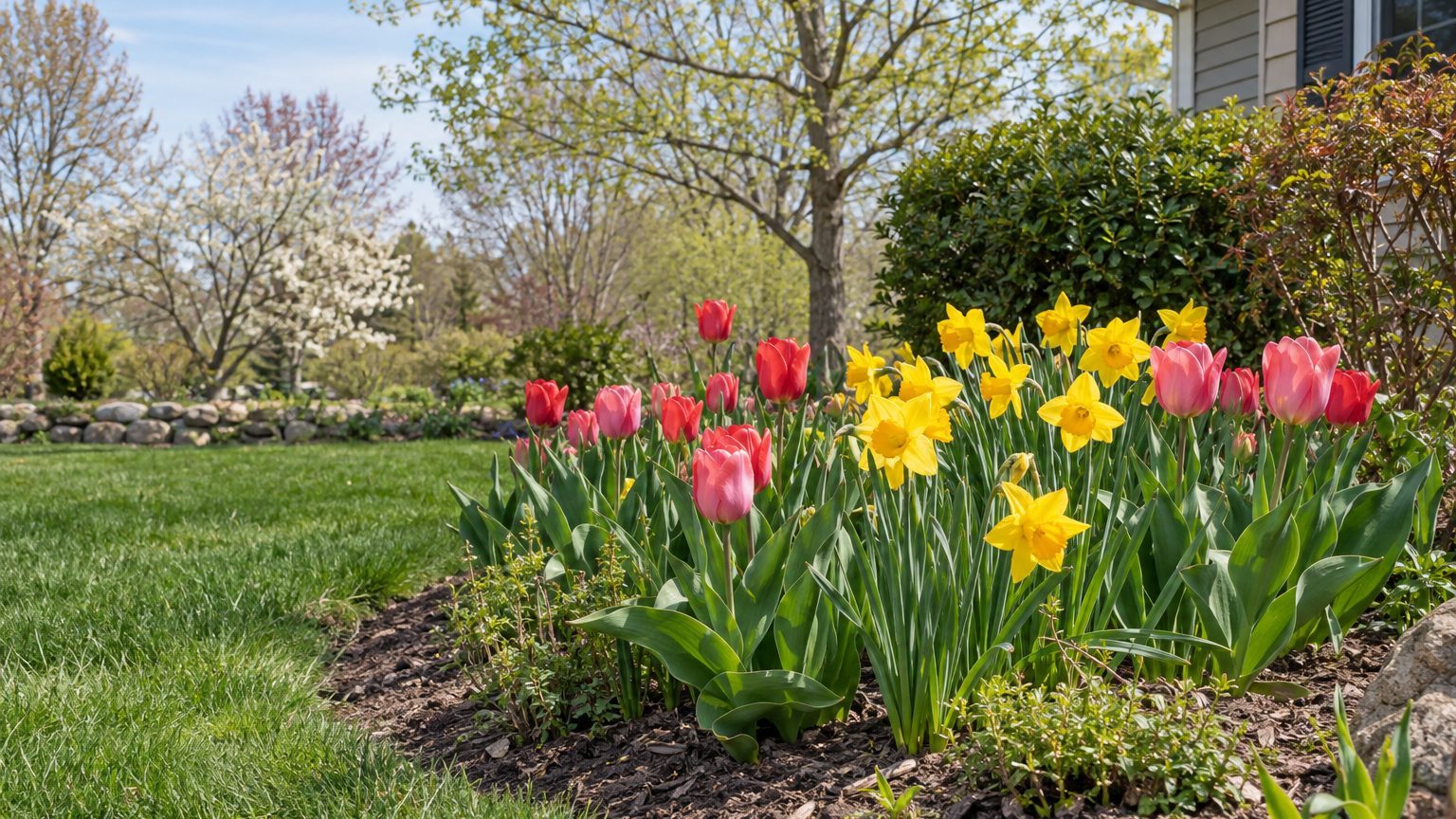
Green spears pushing through cool soil in a winter bed are the first hint that spring bulbs are on their way. In Arizona that rhythm runs on its own schedule, shaped by mild winters in the low desert and real cold in the high country.
When Do Tulips and Daffodils Bloom in Arizona?

Tulips and daffodils bloom in Arizona between January and May. Bulbs planted in September and October have the whole cool season to root and build flower buds, so blooms arrive during the cooler months rather than all at once.
| Bulb | When it blooms in Arizona | What sets the timing |
|---|---|---|
| Daffodils and crocus | January to May | Planted in September and October, then left to settle in cool soil |
| Tulips | January to May | Planted in September and October, with enough winter cold to flower |
| Hyacinths | January to May | Planted in September and October, chilled first when winters run mild |
| Alliums | January to May | Planted in September and October, with enough winter cold to flower |
Most spring bulbs need about 12 to 16 weeks of cold to flower. Where winters are too mild to give it, tulips and hyacinths are chilled in the refrigerator before planting. Alliums skip that step, which makes them the easygoing choice for warm yards.
Arizona — the year and the numbers
- State
- Arizona
- USDA zones
- 4b-10b
- Frost
- none in an average year
- Annual rain
- 7 in
- Lawn zone
- warm-season
- Source
- NOAA NCEI 1991-2020 Climate Normals + NOAA RCC ACIS daily records, station USW00023183 — https://www.ncei.noaa.gov/access/services/data/v1?dataset=normals-annualseasonal&stations=USW00023183 · Phoenix
How to Tell Your Bulbs Are About to Bloom
Bulbs give plenty of notice, and each stage tells you something different about what the bed needs.
- Green tips breaking the soil surface mean roots have formed and the bulb is awake, so the planting spot is working.
- Leaves that stand up straight and gray-green or deep green show the bulb is drawing on its stored energy, which is a good sign even before any flower appears.
- A fat bud rising from the center of the leaves means a flower is only a short wait away, so keep the bed clear of weeds and debris.
- A bud that starts to show color at the tip is close to opening, and a cut stem brought indoors at that stage will finish opening in a vase.
- Leaves that come up but never produce a bud usually point to too little sun or a bulb that has used up its reserves, which is common with tulips.
If the bed sits in shade for part of the day, the buds will lag behind those in full sun.
What to Do After Tulips and Daffodils Bloom in Arizona
Snip off the faded flowers once the petals drop, and stop there. The leaves stay in place and are never tied, braided or cut while green, because they are feeding the bulb for next year’s bloom.
Wait until the foliage turns brown, then clear it away. The bed may look untidy for a while, but planting annuals or low perennials in front of the fading leaves hides them without disturbing the bulbs.
Expect the two to age differently. Tulips are often short-lived in the garden, and a bed may thin out after a season or two. Daffodils last longer and are the more reliable perennial bulb, so they are the ones to count on for repeat color. Compost worked into the soil when bulbs go in keeps the ground loose and drains well, which helps every bulb in the bed.
How Bloom Time Shifts Across Arizona
Arizona spans a huge range of climates, and USDA hardiness zones run from 4b to 10b across the state, so the timing of a bed depends on where it sits.
- Phoenix and the low desert: Winters are mild, and most years pass without a freeze. A rare cold snap can bring 32F between late December and mid January, but bulbs in the ground handle it. The mild winter is why chilling tulips and hyacinths ahead of planting matters here.
- Flagstaff and the high country: This is a different climate entirely, with hard freezes through the cold months. Bulbs sit through real winter cold, and flowers open later than in the desert, as they do wherever spring warms up slowly.
If your yard falls between these two, expect bloom to land somewhere in the middle.
Where to Get Bulb Advice in Arizona
Local conditions change a lot from one Arizona town to the next, so a quick question to a nearby expert can save a season. Two places are worth knowing before the bulbs go in.
- University of Arizona Cooperative Extension publishes bulb guidance written for Arizona gardens, and it is worth reading before September planting.
- Your county extension office can speak to your own elevation and soil, so call or stop in before you order bulbs.
Common Questions
Can You Still Plant Bulbs After October in Arizona?
A bulb that is still in the bag goes in as soon as the ground can be dug, since it fares better in soil than in storage. For a fresh planting, wait until the soil has cooled below about 60°F. That gives roots time to form without tempting the bulb to sprout in fall.
Do Animals Eat Tulips and Daffodils?
Voles, squirrels, rabbits and deer eat tulips and crocus. Daffodils are left alone, so they suit beds that wildlife visits often.
What Kind of Spot Do Tulips and Daffodils Want in Arizona?
Pick a place with full sun, and avoid low spots where water sits, especially in spring. Both bulbs are fairly adaptable, but loosened soil with compost mixed in gives them the drainage they like.