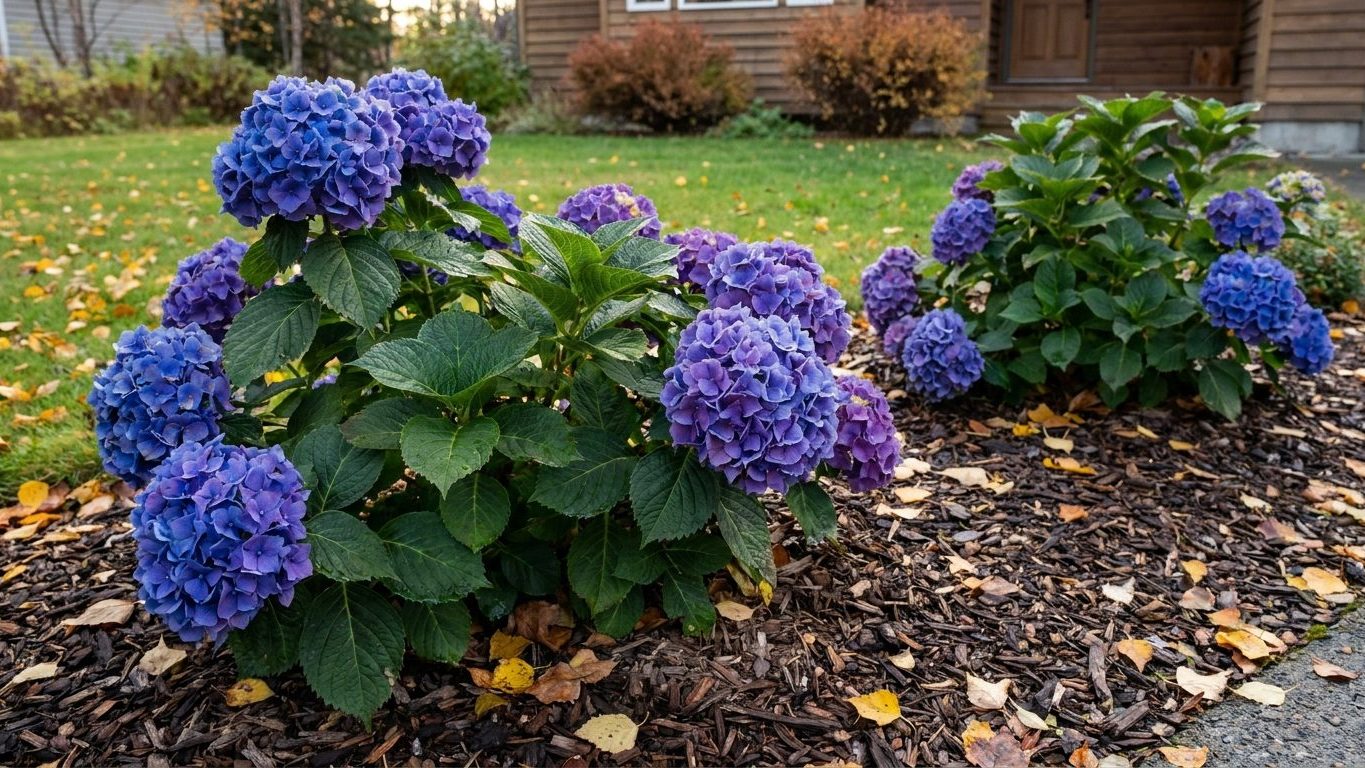
Hydrangea trouble in Alaska almost always traces back to the cold rather than a bug or fungus. Winter dieback dominates the list of problems gardeners run into from Anchorage to the Interior, with a short list of summer pests and fungal issues trailing well behind it. Knowing which one you’re looking at changes whether you reach for pruners, a hose, or nothing at all.
The Short Answer
In Anchorage, the coldest season of the year causes far more hydrangea damage than any insect or fungus does. The USDA Plant Hardiness Zone Map 2023 places the state across a 1a to 8a range, and Anchorage sits near the milder end of it, with about 143 frost-free days to grow, bloom, and heal from any wound.
That short window is the reason “pests and diseases” here mostly means winter damage first, and only then a short list of common summer problems. Here’s what actually shows up, roughly in the order a season brings it.
Winter dieback and bud kill

This is the one every Anchorage hydrangea grower meets sooner or later. Stems that snapped brittle instead of bending, buds that never swelled, whole branches bare while the base leafs out fine, all point to cold that got into unhardened wood. There’s no cure once it happens, only pruning back to live, green wood in spring and giving the rest of the plant time to recover.
Aphids
Small, soft-bodied, clustered on new growth and the underside of young leaves, aphids show up once the plant is actively pushing new shoots. They leave curled leaf tips and a sticky residue behind. A strong water spray every few days, or an insecticidal soap for a heavier cluster, knocks them back without hurting the plant.
Powdery mildew
A gray white dusting across the top of the leaves, worse in a stretch of warm days and cool, damp nights, this fungus rarely kills a hydrangea but it slows it down. Spacing plants for airflow and watering the soil instead of the foliage does more than any spray applied after symptoms show.
Botrytis blight
Gray, fuzzy mold on flowers and soft new growth after a stretch of cool, wet weather late in the season is botrytis. It spreads fast on crowded, wet foliage. Removing spent blooms and damaged growth promptly, and giving the plant room to dry between rains, is what actually works here.
Alaska — the year and the numbers
- State
- Alaska
- USDA zones
- 1a-8a
- Last spring frost
- May 3 to May 12
- First fall frost
- September 22 to October 1
- Annual rain
- 16 in
- Lawn zone
- cool-season
- Source
- NOAA NCEI 1991-2020 Climate Normals, 32F freeze probabilities · Anchorage
How to Work Out the Dates for Your Own Yard
One quick method separates cold damage from an actual pest or disease before you treat anything.
- Check the calendar first: if symptoms appear before Anchorage’s last spring frost, which NOAA NCEI 1991-2020 Climate Normals puts at May 3 to May 12, cold is the likely cause, not a pathogen.
- Look at what’s damaged: bare stems with live buds lower down point to winter injury, while spotted or curled leaves on an otherwise normal plant point to a pest or fungus.
- Check the underside of new leaves: clusters of small soft insects mean aphids, and a strong rinse from the hose is the first move, not a spray.
- Watch for a dusty gray white film: on top of leaves in the warmest weeks of summer, that’s powdery mildew, and it calls for spacing and dry foliage, not fungicide alone.
- Watch for fuzzy gray mold: on flowers and soft growth once fall rains start, ahead of the first fall frost window of September 22 to October 1, that’s botrytis, and cleanup beats any spray.
- When in doubt, wait two weeks: past frost problems often resolve on their own once the plant pushes new growth, while pest and fungus symptoms tend to spread.
Most of what looks alarming in an Anchorage yard in April or May turns out to be cold, not disease. Patience and a clean pair of pruners solve more of it than any product does.
Alaska North to South: How the Dates Shift
Location within the state moves these dates more than anywhere else in the country, since Alaska spans arctic tundra to a temperate coastal rainforest.
- Southcentral coast (Anchorage, Kenai Peninsula, Kodiak): the mildest, longest growing conditions in the state, with the shortest, gentlest winters a hydrangea here will face.
- Interior (Fairbanks, Delta Junction): a much shorter season and far colder winter extremes, where dieback is heavier and more of the plant is lost each year.
- Southeast panhandle (Juneau, Sitka, Ketchikan): wetter and milder than the coast further north, which raises the risk of botrytis and powdery mildew even as winter injury eases.
- Far north and west (Utqiagvik, Nome, the arctic coast): conditions too short and cold for hydrangeas as garden shrubs in most yards.
None of this changes the order these problems show up in, only how hard winter hits and how much room fungal problems get. Check the state page for the frost window that matches where you actually garden.
Mistakes Alaska Punishes
Pruning in fall
Cutting stems back before the first fall frost window that NOAA NCEI 1991-2020 Climate Normals sets at September 22 to October 1 opens fresh wounds right as cold arrives, inviting dieback deeper than it would otherwise go. Prune in spring instead, once new growth shows what’s alive.
Planting too late in spring
Setting a hydrangea out after the last spring frost window of May 3 to May 12 sounds safe, but it leaves the plant too little of the roughly 143 frost-free days to root in before fall. Get it in the ground early in that window instead.
Watering the leaves, not the soil
Overhead watering late in the day keeps foliage wet through the cool nights that favor powdery mildew and botrytis, both of which spread fastest on damp leaves. Water at the base, in the morning, and let the foliage dry before evening.
Alaska Extension Offices and County Contacts
The state figures above are a starting point, not the full picture for your yard. Local wind, snow cover, and soil vary enough within Alaska that a call to a real office beats guessing.
- Your state page: the frost dates and the pruning window for where you live.
- Which ones hold up here: the hydrangea varieties bred to handle a short, cold Alaska season.
- University of Alaska Fairbanks Cooperative Extension Service: local offices that can confirm what’s actually damaging your plant before you treat it.
Common questions
Do hydrangeas actually get diseases in Alaska, or is it just the cold?
Both, but cold dominates. Winter dieback outranks every fungus or insect on this list in frequency and severity, especially outside the mild Southcentral coast.
Should I spray preventively each spring?
Not as a first move. Cleanup, spacing, and watering the soil instead of the leaves prevent more powdery mildew and botrytis here than any routine spray applied on a calendar.
Can I tell winter injury from disease by looking at the leaves?
Mostly yes. Bare stems with buds alive lower down point to cold. Spotted, curled, or fuzzy-coated leaves on an otherwise normal plant point to a pest or fungus instead.