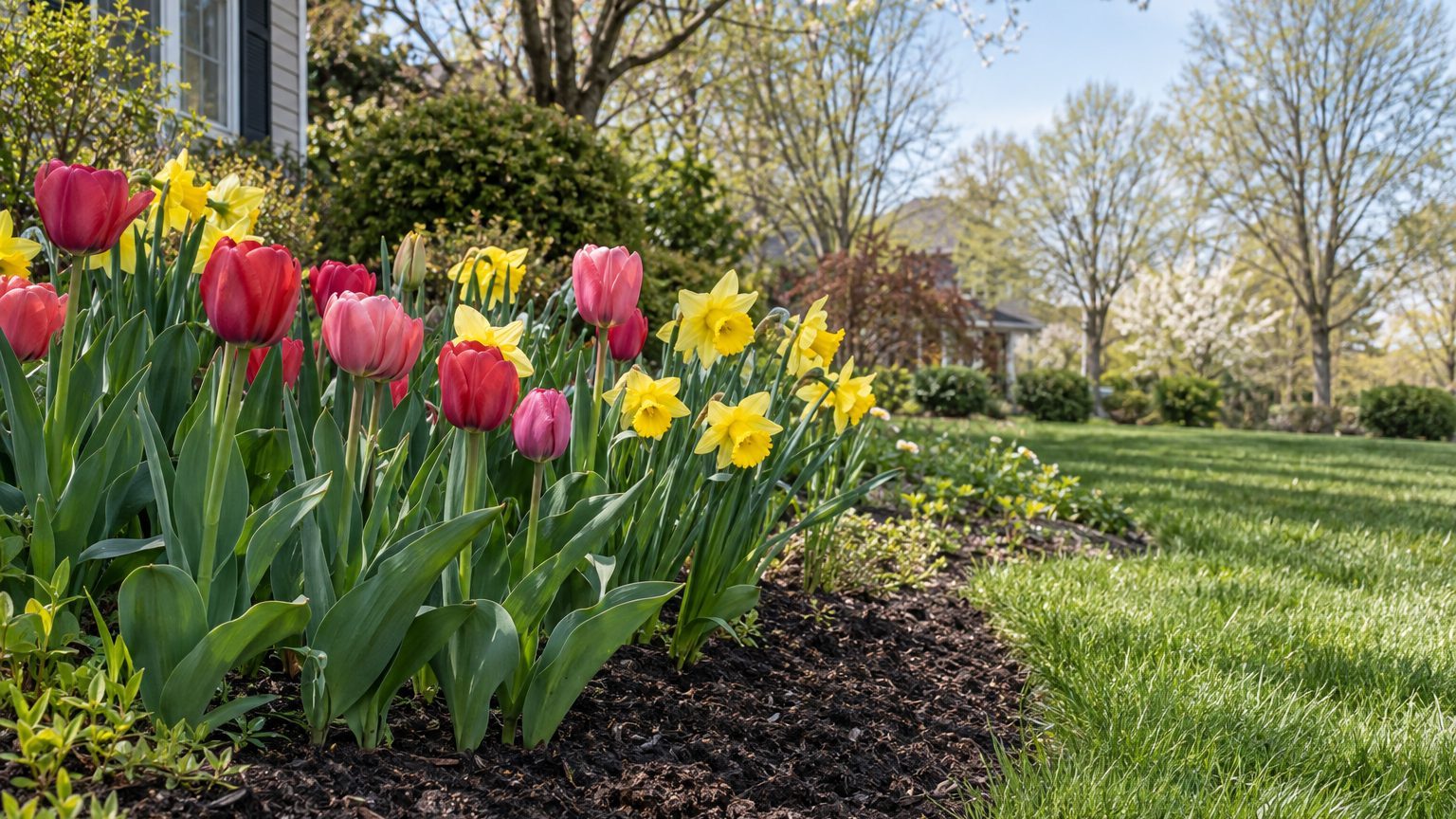
Daffodil leaves pushing through cold, damp ground are one of the first signs that a Mississippi winter is loosening its grip, and tulips follow behind them in the beds. Both bulbs flower on a warming spring rather than a fixed date. That makes the timing a matter of reading your own yard.
When Do Tulips and Daffodils Bloom in Mississippi?

Tulips and daffodils bloom when spring warms the soil and air, so no single month applies to every yard. A mild stretch brings flowers sooner and a cool, wet spring holds them back. Spring bulbs flower in a long succession, with alliums arriving near the end.
| Bulb | When it blooms in Mississippi | What sets the timing |
|---|---|---|
| Daffodils | Follows the warming of spring | Warmth after a winter chill, with jonquil, tazetta, poeticus and species types growing reliably in the South |
| Tulips | Follows the warming of spring | Enough winter cold, which mild winters often fail to give, so bulbs are chilled in the refrigerator first |
| Hyacinths | Follows the warming of spring | A cold period of roughly 12 to 16 weeks, supplied by refrigerator chilling when winters run mild |
| Alliums | Follows the warming of spring, near the end of the bulb season | Needs winter cold, plus spring warmth |
Crocus belongs with the daffodils in the early part of the season. Mississippi sits in USDA zones 7b to 9a, which is why the chill matters so much for tulips and hyacinths. Daffodils, jonquils and alliums cope better with mild winters than tulips do, so they are the safer bet in the southern half of the state.
Mississippi — the year and the numbers
- State
- Mississippi
- USDA zones
- 7b-9a
- Last spring frost
- March 6 to March 22
- First fall frost
- November 7 to November 22
- Annual rain
- 57 in
- Lawn zone
- warm-season
- Source
- NOAA NCEI 1991-2020 Climate Normals, 32F freeze probabilities · Jackson
How to Tell Your Bulbs Are About to Bloom
Your own beds give a better forecast than any calendar, and the signs are easy to spot once the cold eases.
- Green tips breaking the soil mean the bulb has rooted well and is awake, so pull back heavy mulch that might smother the shoots.
- Leaves that widen and grow taller tell you the bulb is drawing on its stored energy, and the flower is being carried up inside them.
- A fat bud showing between the leaves means bloom is close, which is the moment to enjoy it rather than fuss with the bed.
- Daffodil buds that swell and begin to turn from green to yellow or white are only days from opening, so cut a few for a vase if you like.
- Tulip buds that begin to color at the tip show that petals are filling out and the stem is about to finish stretching.
A cold snap after buds show color rarely harms the bulb itself, though it can slow the opening.
What to Do After Tulips and Daffodils Bloom in Mississippi
Snip off the faded flowers and leave everything else alone. The leaves stay on the plant until they turn brown, because they feed the bulb for next year. Never braid, tie or cut green foliage, however untidy it looks.
Tulips are often short-lived in the garden, and in the South they usually decline after the first year. Tulips are often short-lived in the garden, so many gardeners dig and discard them after bloom. Many Mississippi gardeners do the same and replant fresh bulbs each fall.
Daffodils last longer and are the more reliable perennial bulb. Those that settle in well return and spread for years. Tucking them among perennials hides the fading leaves while they finish their work.
How Bloom Time Shifts Across Mississippi
Mississippi stretches from the Gulf to the hills of the north, and spring arrives earlier in the south than in the north.
- Gulf Coast: Warm winters bring flowers sooner here than anywhere else in the state, but tulips and hyacinths rarely get enough chill without a spell in the refrigerator.
- Jackson and the Pine Belt: Central Mississippi sits between the extremes, so daffodils and alliums do well and tulips still gain from pre-chilling.
- North Mississippi hills: Colder winters give bulbs more natural chill, and blooms open later than along the coast.
A sheltered, sunny spot against a south wall will bloom ahead of a shaded corner in the same yard.
Where to Get Bulb Advice in Mississippi
Local help is easy to reach. Mississippi State University Extension publishes research-based gardening guidance, and a county office can speak to the conditions in your own part of the state.
- The extension website carries bulb and flower bed guidance you can read before you plan next fall’s order.
- Your county extension office can answer questions about local soil and chill, and a visit in late summer leaves time to order bulbs.
Common Questions
Do Squirrels, Voles and Deer Eat Tulips and Daffodils?
Voles, squirrels, rabbits and deer eat tulips and crocus. Daffodils are left alone, which makes them the safer choice for beds that animals visit.
Can You Plant Bulbs in January in Mississippi?
November and December are the usual months for planting spring bulbs, and refrigerated bulbs can even go in early in January. October and January also work. A bulb still in the bag is better planted late than stored over the winter, so plant as long as the ground can be dug.
Which Tulips Do Best in Warm Climates?
In Mississippi, Single Late tulips are among the best groups for warm climates, with long, strong stems and deep, cup-shaped blooms. A few species tulips come from warm regions and do not need a cold period to flower, and they naturalize in the South.