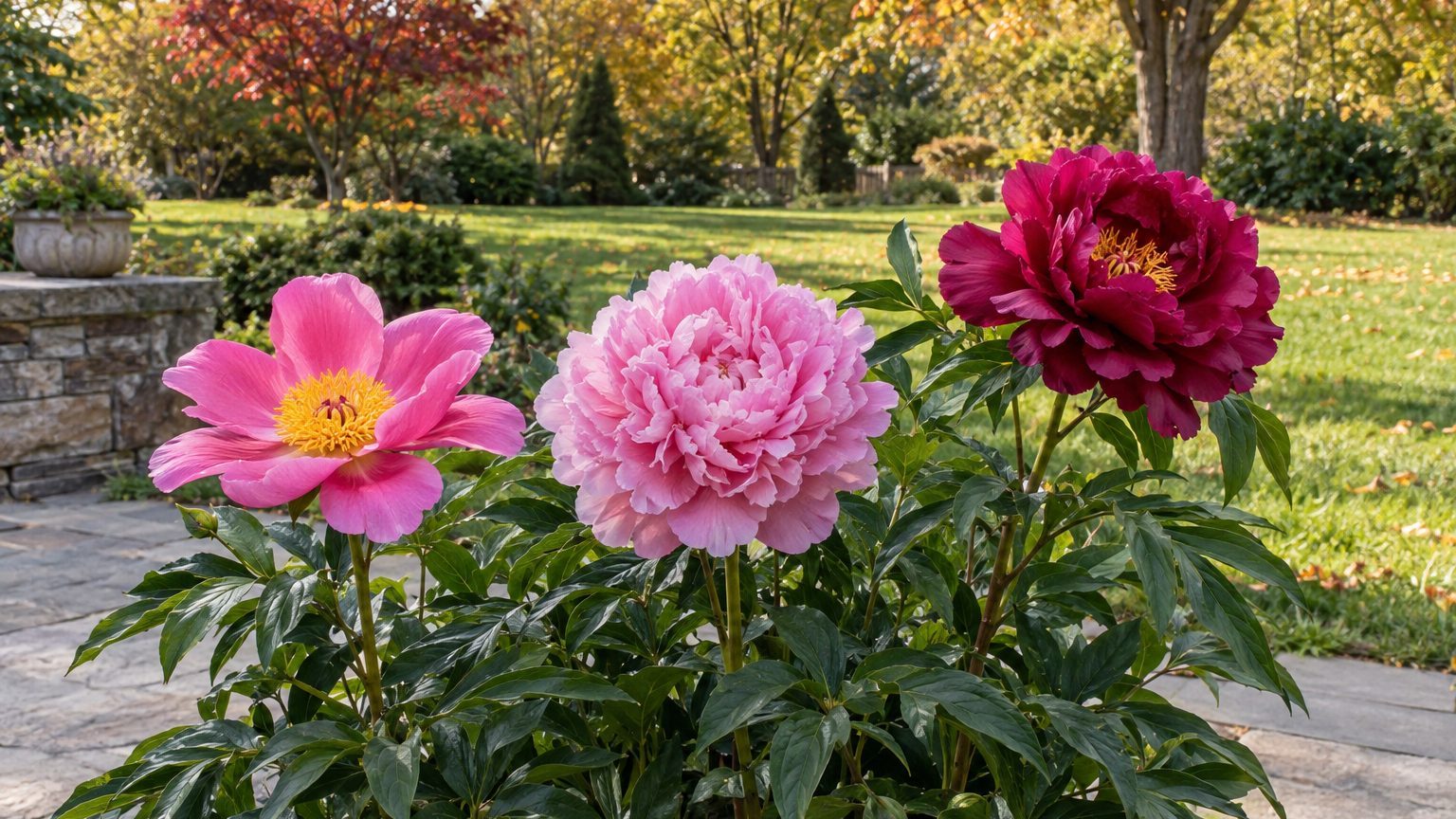
Red shoots pushing up through cold spring soil make a vivid start to the peony season. Peonies need a long cold rest before they will flower, which works in the state’s favor. Herbaceous peonies and tree peonies can suit Montana, with a wide range of flower forms to choose from.
Best Peonies to Grow in Montana

Herbaceous peonies and tree peonies suit Montana yards because peonies need a cold winter rest to flower. Peonies tend to flower poorly in mild-winter climates. Cold is an advantage in Montana, so the real choice is the shape, size and site you want.
Herbaceous Peonies

These are the classic garden peonies. They die back to the ground each year and return in spring with attractive foliage and showy blooms in pink, purple, red and white.
Herbaceous peonies grow better in full sun, so give them an open, bright bed rather than a shady corner.
Tree Peonies

Despite the name, a tree peony is a deciduous shrub with woody stems that stay put through winter. It tends to bloom earlier than herbaceous peonies, with larger flowers.
Mature tree peonies usually need no staking because their woody branches support the flowers. Choose light shade and a protected location for them.
Single and Double Forms
There are literally hundreds of varieties, and the flower forms run from single and double to bomb and anemone. Colors cover whites, pinks, reds, corals and yellows.
Some are fragrant and some are not, so check the flowers’ scent before you commit to a whole bed.
Early, Mid and Late Bloomers
Varieties differ in blooming date, and that is useful. Varieties differ in bloom timing, with early, mid and late choices.
Montana — the year and the numbers
- State
- Montana
- USDA zones
- 3a-6a
- Last spring frost
- April 29 to May 10
- First fall frost
- October 1 to October 14
- Annual rain
- 14 in
- Lawn zone
- transition-season
- Source
- NOAA NCEI 1991-2020 Climate Normals, 32F freeze probabilities · Billings
How to Choose a Peony for a Montana Garden
Start with the spot you have, then match the plant to it. Montana’s cold is not a problem for peonies, so the useful questions are about light, space and how much work you want to do.
Herbaceous peonies are cut back after frost, while tree peonies keep their woody stems.
| Your situation | What suits it in Montana | Why |
|---|---|---|
| Very cold winter | Herbaceous peony | It dies back each year and rests, and the winter chill is what makes it flower |
| Little time for fall chores | Tree peony | It keeps its woody stems and is never cut back |
| Small bed | Herbaceous hybrid | Plants stay compact |
| Room for a shrub | Tree peony | It reaches 3 to 5 feet and needs no staking once mature |
| Full sun | Herbaceous peony | It grows better in full sun |
| Light shade or a sheltered corner | Tree peony | It prefers light shade and a protected location |
| Bouquets for the house | Varieties recommended for cut flowers | Early, mid and late types stretch the harvest |
Whichever you pick, expect blooms in June, and blooms can also open in May.
Which Peonies Suit Different Parts of Montana
Montana’s valleys do not all behave alike, and the difference shows up in timing and in how much shelter a plant needs.
- Billings: One of the milder valleys, with the last spring frost falling between April 29 and May 10. Herbaceous peonies bloom in June and can also bloom in May.
- Mountain valleys can frost in any month. Tree peonies prefer light shade and a protected location.
Wherever you garden, peonies need a cold winter rest to flower.
Peony Buying Mistakes to Avoid in Montana
Tree Peony in an Open Spot
A tree peony in an exposed bed misses the protected location it prefers. It prefers light shade and a protected location.
Pick a sheltered corner before you buy, not after the shrub is in a pot on the patio.
Landscape Variety for Cut Flowers
Plants sold for general landscaping are not always good for bouquets. If you want stems for vases, look for varieties recommended for cut flower production.
Pot Plant with Unknown Size
A small potted peony hides its adult size. Check the mature size on the tag so the plant has room around it.
A newly planted or transplanted peony may not bloom the first spring, so moving it can delay flowers. Check the mature size on the tag and place it once.
Where to Get Peony Advice in Montana
Local growers know which varieties come through your valley’s winters. A short call or visit before you order can help you choose.
- Montana State University Extension offers plant guides and gardening answers, handy in winter when you are choosing varieties.
- Your county extension office can speak to conditions in your own valley, so ask before fall planting time.
- Take a photo of your planting spot and its light with you, then settle on a herbaceous or tree peony before you buy.
Common Questions
When Should You Plant or Divide Peonies in Montana?
Fall is the time, in September and October, before the ground freezes. Peonies respond best to fall planting, typically as a bare-root plant, which gives the roots time to settle before winter.
When Should You Cut Back Peonies in Montana?
Cut herbaceous peonies back in October and November, after a hard freeze has killed the foliage. Take the stems down to within a couple inches of the ground, and bag the old leaves rather than composting them to limit disease.
How Deep Should You Plant a Peony?
Keep the eyes, the pink buds on the root, near the soil surface. A peony planted too deep may bloom poorly or not come up, so keep the eyes near the soil surface.