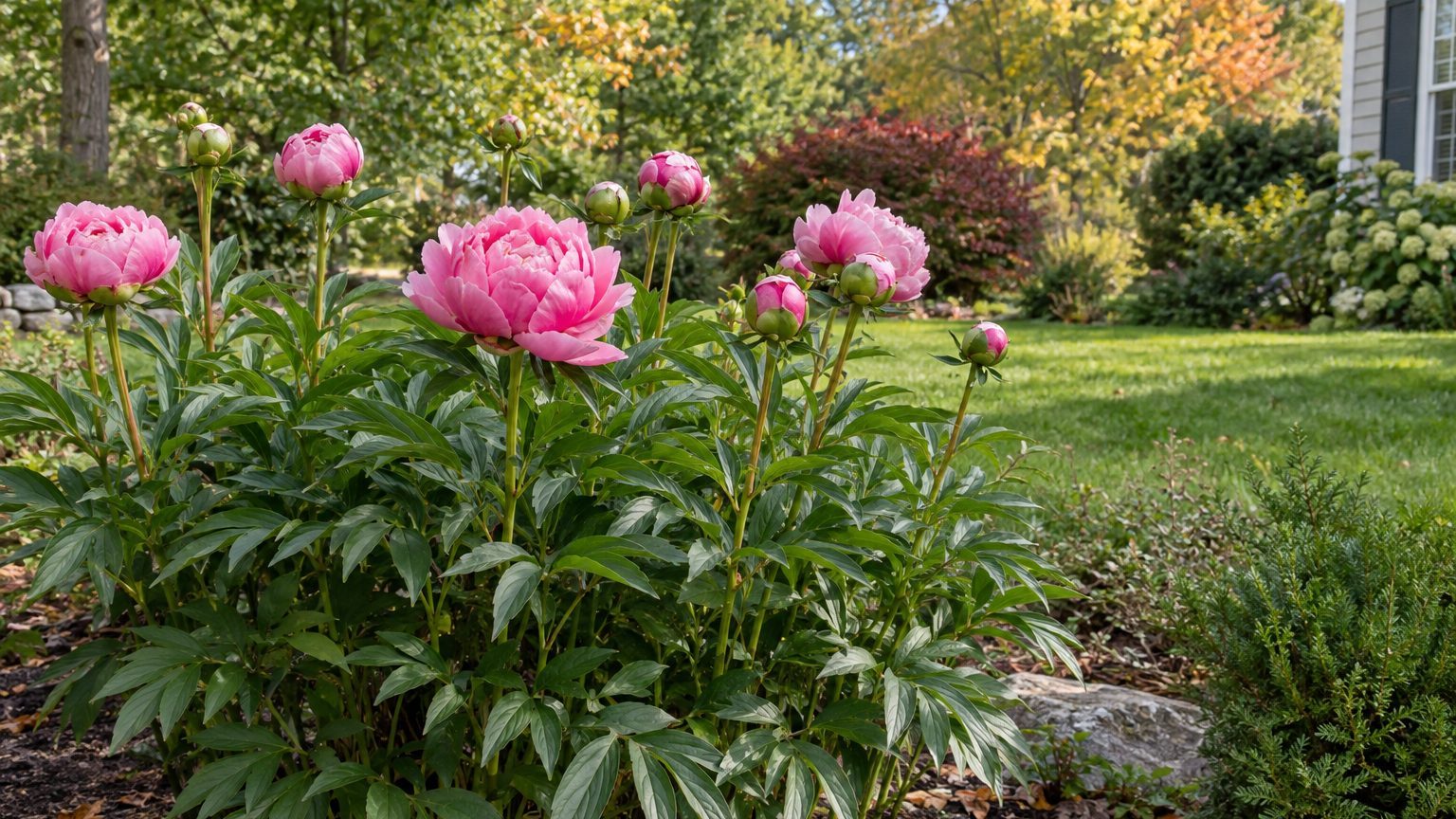
Peony buds the size of marbles on the stems, then fat, fragrant flowers weighing the stalks down: that is the sight of a Prince Edward Island yard once spring has settled in. The Island’s cool, sea-moderated season keeps that show to late spring and the start of summer.
When Do Peonies Bloom in Prince Edward Island?

Peonies bloom on Prince Edward Island from May into June, with the main flush in late spring and the last flowers opening in June. Each type takes its turn, so a mixed planting stretches the display over a good stretch of the season. Prince Edward Island has no local extension page on peony timing, so these dates follow the nearest comparable climate. Confirm local timing with a garden centre, a garden society or the provincial gardening groups.
| Type of peony | When it blooms in Prince Edward Island | What to know |
|---|---|---|
| Woodland peony (Paeonia japonica) | Late spring, opening first | White flowers that arrive ahead of the other types |
| Tree peony (Paeonia suffruticosa and relatives) | Late spring, after the woodland type | Keeps its woody stems through winter and is never cut to the ground |
| Herbaceous (garden) peony | Late spring into June, after the tree peonies | Dies back every year and is cut back after frost |
| Itoh (intersectional) peony | June, opening last | A hybrid of the garden and tree types |
Peonies need a cold winter rest to set flowers, and Island winters supply it. Charlottetown sits in Canadian hardiness zone 5b, a rating from Canada’s own system that does not convert to a USDA zone, and it suits all of these types.
Prince Edward Island — the year and the numbers
- State
- Prince Edward Island
- Hardiness zones
- 5b
- Last spring frost
- May 16
- First fall frost
- October 17
- Annual rain
- 46 in
- Lawn zone
- cool-season
- Source
- Environment and Climate Change Canada — Canadian Climate Normals 1981-2010, station CHARLOTTETOWN A · Charlottetown
How to Tell When Your Peonies Are About to Bloom
The plant itself gives better notice than any date, because spring conditions can shift bloom time. Watch the stems and buds as the weather warms.
- Red, pointed shoots pushing out of the soil mean the plant has broken dormancy, so clear last year’s mulch away from the crown.
- Shoots that turn green and unfold into leafy stalks tell you the plant is growing steadily and will soon form buds.
- Small, hard, green buds at the stem tips are flower buds, and this is the time to set cages or supports before the weight arrives.
- Buds that swell are close to opening, and a late frost at this point can still damage them.
- Buds that feel soft when you press them gently, like a marshmallow, and show a slit of color are close to opening and ready to cut for a vase.
On Prince Edward Island, the last spring frost falls on average around May 16 at Charlottetown, and in one year out of two it comes later than that. Keep an old sheet handy while the buds are swelling.
When to Cut Back Peonies in Prince Edward Island
Cut herbaceous peonies back in November or December, once a hard frost has blackened the foliage and the plant has died back. If that window slips by, March and April also work, as soon as the snow clears and before the red shoots grow tall.
Cut the stems to the ground with clean pruners and take away every scrap of leaf. Remove the cut foliage from the bed.
Tree peonies are the exception. They keep their woody stems through winter, so leave the framework standing. An Itoh peony dies back like a garden peony, so it follows the herbaceous schedule.
How Peony Bloom Time Shifts Across Prince Edward Island
Bloom time still shifts across the Island, and upland districts can run weeks behind Charlottetown. Peonies in different parts of the province open a little earlier or later depending on how much sea air reaches them.
- Charlottetown and the south shore: The frost date in this article comes from Charlottetown and should not be extended to the south shore. Sheltered and exposed yards can differ, so watch the plants rather than treating the frost date as a guarantee.
- North Shore: Cold air off the Gulf of St. Lawrence slows the spring warm-up, so buds usually open later than they do near the capital.
- West Prince and eastern Kings County: Open farmland and long water exposure keep spring breezy and cool, so bloom runs behind sheltered gardens, particularly where wind sweeps the beds.
A bed against a south-facing wall or fence can pull flowering forward in any of these places, while a windy open lawn pushes it back.
Where to Get Peony Advice in Prince Edward Island
Local help comes from the province and from people who grow peonies nearby. Start with the provincial agriculture pages and add local gardeners for timing in your own district.
- The Prince Edward Island agriculture pages are where to look for provincial gardening and plant-health guidance, useful before you plan any planting or dividing in August or September.
- A local garden centre can tell you which peony types and varieties thrive in your district, and spring is the time to ask when buds begin to show.
- A garden society or master gardener group will often know how bloom time runs in your part of the Island, so bring a photo of your plants to a meeting.
Common Questions
When Should You Plant or Divide Peonies on Prince Edward Island?
Plant or divide peonies in August or September, which gives the roots time to settle before the ground freezes. October can also work. Set the eyes, the pink buds on the root, close to the soil surface so the plant can flower.
Can You Plant a Peony in Spring?
Yes, as soon as the soil is workable, though a spring planting may delay flowers by a year. A newly planted or transplanted peony may not bloom the first spring, so patience is normal.
Why Is Your Peony Leafy but Not Flowering?
Check how long ago the plant went in and how deep the crown sits. A peony set in the ground recently may simply need time. If the plant is established, dig gently around the crown, and if the eyes are buried well below the surface, lift and replant them shallower in early fall.