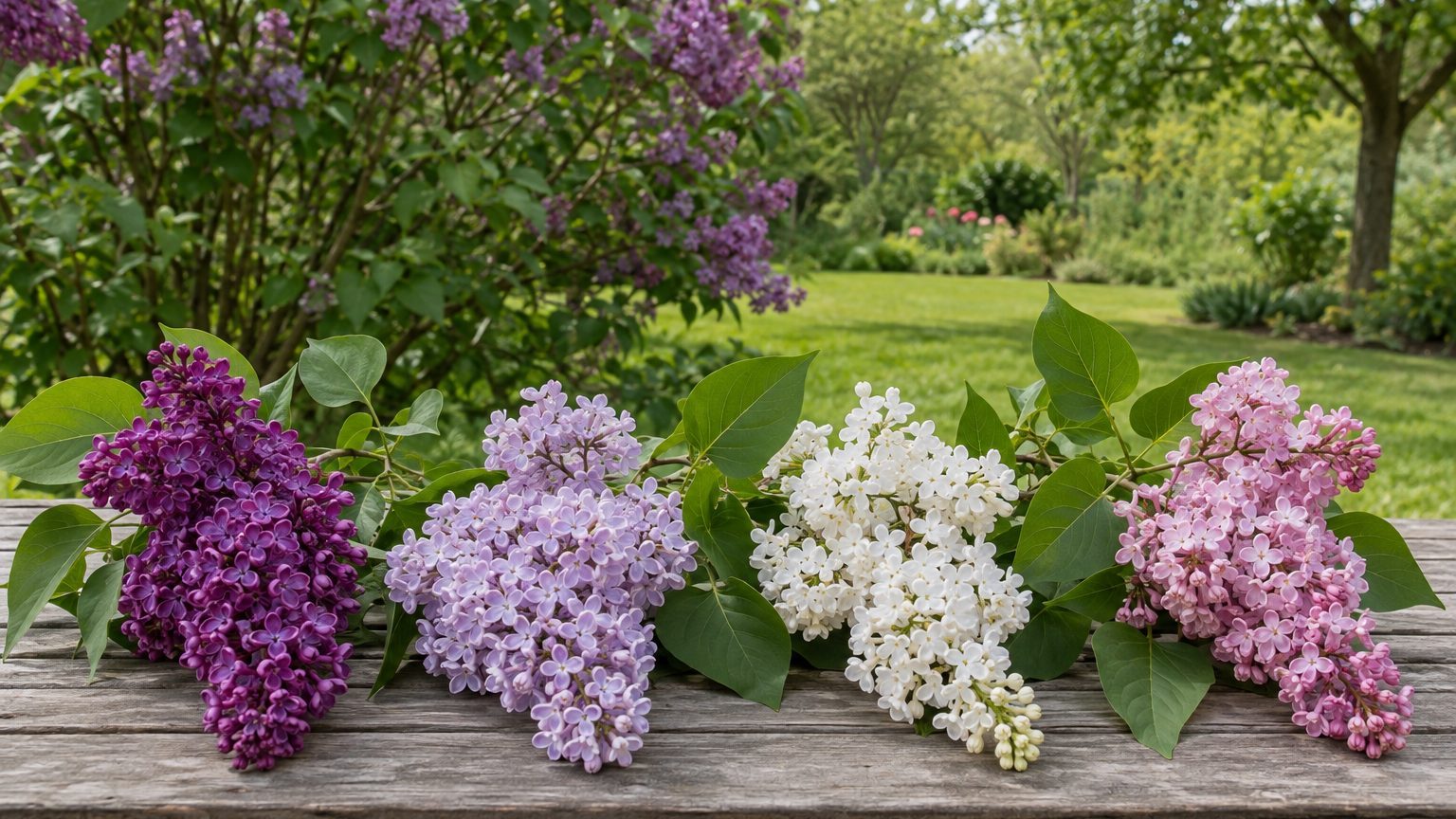
Lilac clusters open in late spring, and the scent carries across a front yard. In New Brunswick the shrub is at home because the winters give it what it asks for.
Best Lilacs to Grow in New Brunswick

French lilacs, the dwarf Korean lilac and the Bloomerang series all suit the province. Lilacs belong to cold climates, and the chill of winter is what matures their flower buds. Moncton sits in Canadian hardiness zone 5a, a Canadian rating that does not convert to a USDA zone; other parts of the province differ.
French Lilacs

French lilacs are the best known of the lilac family, and they are selections of the common lilac, Syringa vulgaris. Hundreds of cultivars exist, with many colors and floret shapes, so you can choose by scent and color rather than by hardiness.
Plant one in a sunny spot with good air circulation, and let the New Brunswick winter do its part.
Sensation
Sensation is a cultivar with purple flowers edged with white, easy to pick out in a nursery row. It gives the front yard a two-tone look that plain purple lilacs lack.
It asks for the same sunny, airy site as any common lilac, and the cold winters here keep its buds on track.
Dwarf Korean Lilac
Syringa meyeri, the dwarf Korean lilac, is also called the little-leaf lilac. It usually grows about 5 ft. tall and just as wide, though occasionally it reaches as much as 8 ft. tall and wide.
That compact shape suits a smaller bed, and the small violet flowers come in great profusion. Breeders have used it often because it is reasonably small and compact.
Bloomerang Series
The Bloomerang series is resistant to powdery mildew and reblooms. Mildew is the white dusting that shows up on lilac leaves when summers turn muggy, so a resistant series takes some of the worry out of a damp season.
It is a sensible pick if you want repeated flowering from a single shrub.
New Brunswick — the year and the numbers
- State
- New Brunswick
- Hardiness zones
- 5a
- Last spring frost
- May 23
- First fall frost
- October 2
- Annual rain
- 47 in
- Lawn zone
- cool-season
- Source
- Environment and Climate Change Canada — Canadian Climate Normals 1981-2010, station MONCTON · Moncton
How to Choose a Lilac for a New Brunswick Garden
Start with what your yard does, not with a color. Lilacs bloom best where winters are cold and summers are not hot and sticky, and New Brunswick mostly fits that description.
Different situations call for different types of lilac, so choose the one that suits your garden’s conditions.
| Your situation | What suits it in New Brunswick | Why |
|---|---|---|
| Very cold winter | French lilacs | Lilacs are well suited to cold climates, and winter chill matures their buds |
| Hot, humid summer spells | Bloomerang series | Resistant to powdery mildew and reblooms |
| Small space | Dwarf Korean lilac | Usually about 5 ft. tall and just as wide |
| Want dependable buds | Any lilac in a sunny, airy site | The cold winter rest is what sets the flower buds |
If you want something that stands out from the usual purple, Sensation with its white-edged petals is a fine place to begin. Colors in the common lilac range from lilac and purple to white, pink and a reddish hue.
Which Lilacs Suit Different Parts of New Brunswick
New Brunswick is not one climate, and the differences matter more for timing than for which lilac you choose.
- Moncton and the southeast: In Moncton, May 23 is the average date of the last spring frost, not a safe date. Treat it as the middle of a window and check local conditions before relying on it.
- Northern and upland districts: Spring runs later than in Moncton, so lilacs leaf out and bloom later. French lilacs and the dwarf Korean lilac are comfortable choices where winters bite hardest.
Wherever you garden in the province, choose a sunny, open site.
Lilac Buying Mistakes to Avoid in New Brunswick
Choosing a Type Meant for Mild Winters
Lilacs need winter cold to mature their buds, and French lilacs are well suited to cold climates.
Stay with French lilacs, the dwarf Korean lilac or a named cultivar sold for cold climates, since all lilacs depend on the chill of winter.
Ignoring Damp Summer Weather
Lilacs struggle in hot, humid summers, and a crowded, shaded planting invites powdery mildew. The cost is white-dusted leaves and a tired-looking shrub by late summer.
Pick a mildew-resistant series such as Bloomerang, and give the plant a sunny site with good air circulation.
Buying a Pot Without Knowing Its Size
A small pot hides what the plant will become. Hundreds of common lilac cultivars exist, and many will outgrow a narrow bed or a spot under a window.
A shrub that has outgrown its place has to be cut hard to fit, and that costs you flowers. Check the adult size on the tag before you buy. The dwarf Korean lilac usually stays near 5 ft. tall and just as wide, which suits tight spots.
Where to Get Lilac Advice in New Brunswick
New Brunswick has no local extension page on lilac timing, so advice comes from local growers and gardening groups. Confirm local timing with a garden centre, a garden society or the provincial gardening groups.
- Agriculture and Agri-Food Canada, at its national site, is a starting point for plant and pest information, and the provincial agriculture department can answer local questions.
- A garden centre near you can tell you which lilacs it sees thrive locally, so visit before you buy in spring.
- Ask a local garden society about lilac timing and varieties that suit the area.
Common Questions
When Do Lilacs Bloom in New Brunswick?
Most lilacs flower in April and May. Later species can carry the display into June. Northern and upland districts bloom later than the southeast.
When Should You Prune Lilacs in New Brunswick?
Prune in May and June, right after the flowers fade. Lilacs set next year’s flower buds in summer, soon after they bloom. Cutting in late summer, fall or winter removes the next spring’s flowers.
Can You Save an Overgrown Lilac?
Yes. In March or April, while the plant is still dormant, you can cut it hard back. Expect no flowers for a few years afterward, because lilacs bloom on last year’s wood.