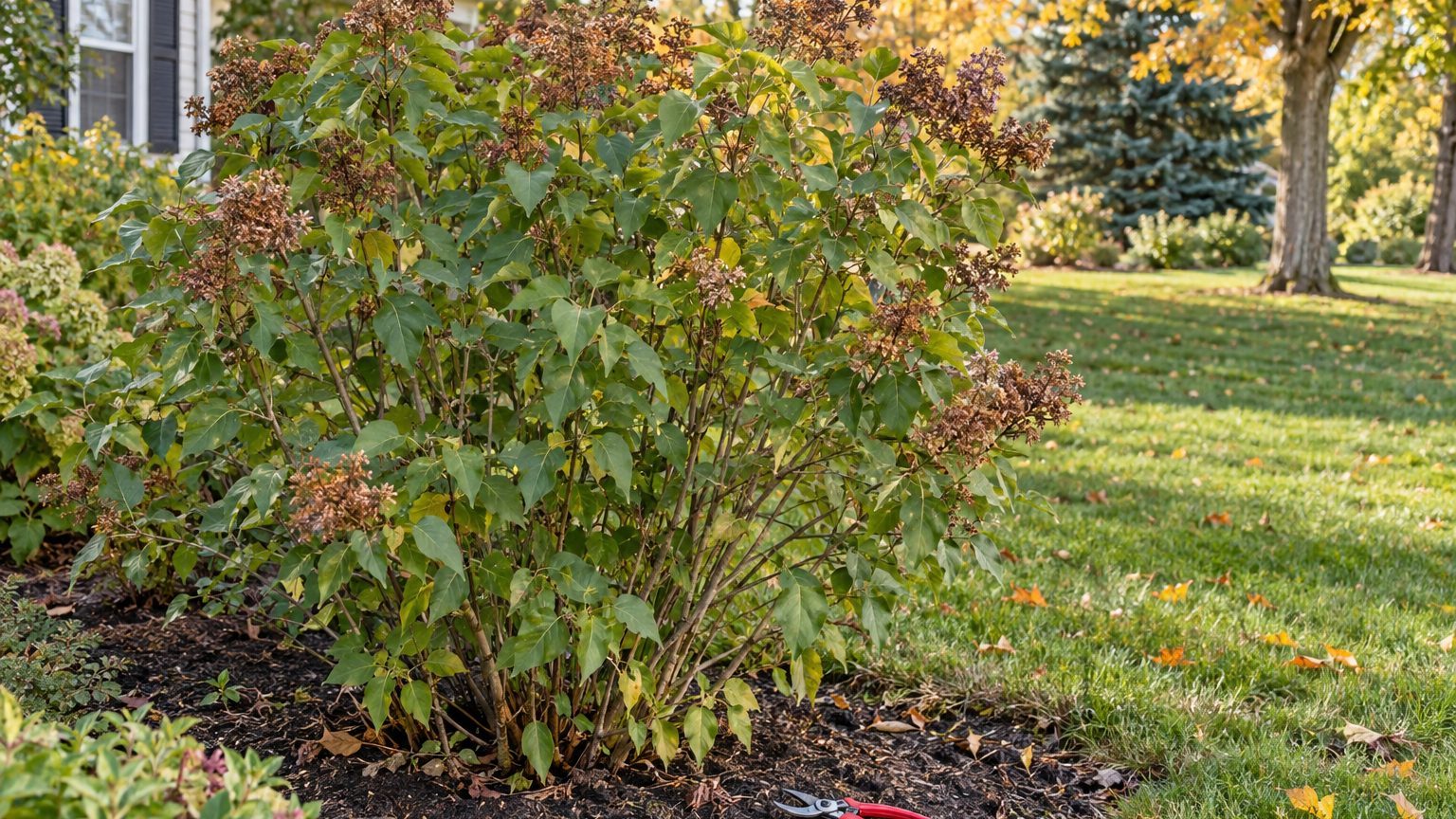
A lilac that suddenly drops its purple plumes in a Vermont yard is also quietly setting next year’s buds. The pruning saw belongs in your hands just after the last flowers brown, and not much later.
When to Prune Lilacs in Vermont

Prune lilacs in Vermont in May or June, right after the flowers fade. Lilacs bloom on last year’s wood and set next spring’s flower buds in summer, soon after flowering, so a cut made then costs you nothing and a later one costs you blooms.
| Type of pruning | When in Vermont | Why |
|---|---|---|
| Routine maintenance and shaping | May, June, right after the flowers fade | Next year’s buds have not formed yet, so nothing is lost |
| Hard renovation cut of an overgrown lilac | March, April, in late winter | The plant is dormant, but the cut costs the next flowers |
A hard renovation cut brings the whole shrub back low, and the lilac will not flower for a few years afterward. That trade is worth making for a leggy, tangled old plant that blooms only at the top. Reblooming lilacs follow their own spring pruning schedule.
Vermont — the year and the numbers
- State
- Vermont
- USDA zones
- 3b-5b
- Last spring frost
- April 30 to May 10
- First fall frost
- October 3 to October 13
- Annual rain
- 38 in
- Lawn zone
- cool-season
- Source
- NOAA NCEI 1991-2020 Climate Normals, 32F freeze probabilities · Burlington
How to Tell When Your Lilacs Are Ready to Prune
Vermont springs vary, so the plant itself is a better clock than the calendar page.
- The flower clusters turn brown and dry, which tells you the show is over and the pruners can come out.
- Petals litter the ground beneath the shrub, another sign that flowering is ending.
- Late-blooming lilacs may still be flowering into June, so wait for your own shrub’s flowers to finish rather than copying a neighbor’s.
- Fresh green growth pushes out below the spent blooms, and next year’s buds develop on that new wood through summer.
- If you can still see flower color on the shrub, hold off, because cutting early removes blooms you could enjoy.
Once the clusters are brown, cut soon, before the shrub sets its buds.
Should You Prune Lilacs in Fall or Winter in Vermont?
No. Cutting in late summer, fall or winter takes off the buds that would open next spring, and you end up with a healthy shrub and no flowers. Fall and winter are fine for looking, not for trimming.
The exception is the hard cut for an overgrown lilac. Late winter, in March or April, is the time for that, while the plant is still dormant. You accept the loss on purpose: the shrub will not bloom for a few years, but it returns with fresh, manageable stems.
Vermont winters suit lilacs well. The winter chill helps their buds develop and mature, which helps them grow reliably through the state’s cold zones. Hardiness zones in Vermont run from 3b to 5b in the USDA system, and lilacs are comfortable across that range.
How Lilac Pruning Time Shifts Across Vermont
The calendar months stay the same statewide, but spring arrives at different moments depending on where you live, so your flowers fade earlier or later.
- Burlington and the Lake Champlain shore: Spring arrives earlier along the lake, so lilacs here bloom and fade ahead of the rest of the state. Prune as soon as your own flowers brown.
- Green Mountains and the Northeast Kingdom: The growing season runs shorter at elevation and in the far north, so blooms come later and the pruning window slides toward June.
Wherever you are, the fading flower is the starting signal.
Where to Get Lilac Advice in Vermont
For questions about a stubborn shrub, University of Vermont Extension is the place to start, and your county office can point you to local help.
- The extension website carries plant care guidance for questions about pruning and bloom.
- Your county extension office can help with a lilac that never blooms.
Common Questions
Why Is My Lilac Not Blooming in Vermont?
Pruning at the wrong time is a frequent cause, since cuts in late summer, fall or winter remove the buds. A shrub that was cut back hard will also stay bare for a few years. Lilacs also want sunny sites with good air circulation, so a shady, crowded spot can reduce flowering.
Can You Prune a Lilac After It Blooms in June?
Yes. June is still within the window for lilacs that bloom late, as long as the flowers have faded. Prune soon after they brown so the shrub has time to form next year’s buds.
Do Lilacs Grow Well in Vermont?
They do. Lilacs belong to the olive family and are suited to cold climates, and they need winter cold to mature their flower buds. They struggle in hot, humid summers, which is rarely a concern in the Green Mountain State.