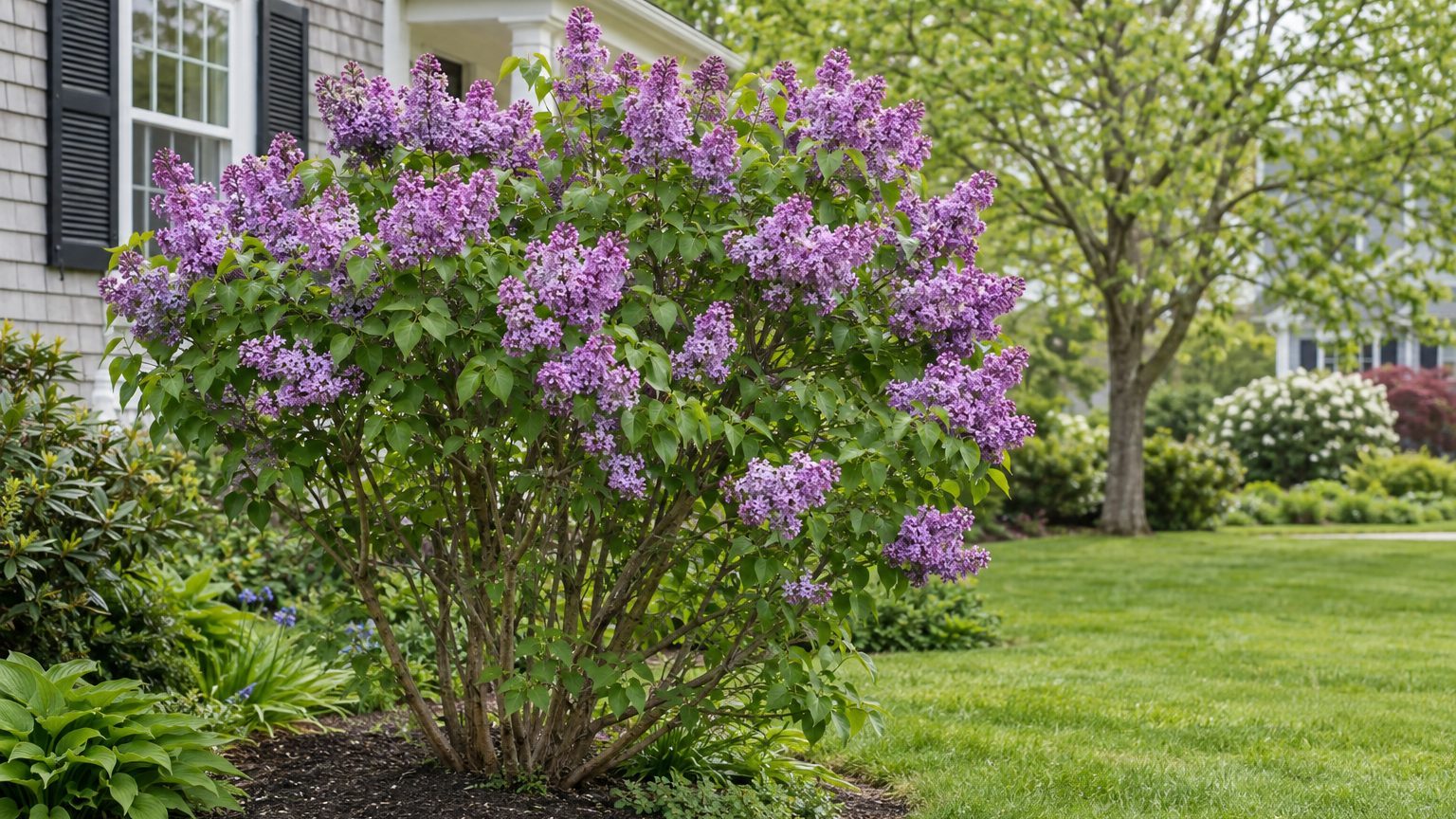
A lilac in full bloom announces itself from the sidewalk, a heavy sweetness that drifts across the yard on a warm spring afternoon. In Massachusetts, that scent belongs to spring, with the show building through April and May.
When Do Lilacs Bloom in Massachusetts?

Lilacs in Massachusetts bloom in April and May, and later species can carry flowers into June. The rest of the year follows from that bloom, because every job depends on where the flowers are in their cycle.
- In April and May, the flowers open, and this is the stretch when the shrub earns its place in the front yard.
- Right after the flowers fade, often in May and into June, you prune. The shrub starts setting next spring’s buds soon afterward, so a cut made now keeps them.
- Through summer, the lilac builds those flower buds on this year’s new growth, which is why late cuts cost you blooms.
- In fall, the shrub goes quiet and needs no pruning, since cutting now removes buds already formed.
- In winter, the cold rest helps mature the buds. In March and April, an overgrown lilac can take a hard cut-back, at the price of the next flowers.
At the Boston reference city, the last spring frost falls between April 1 and April 8, and the first fall frost between November 3 and November 14. Inland suburbs and the Berkshires frost later in spring and earlier in fall than Boston does. The state spans USDA hardiness zones 5a to 7b.
Massachusetts — the year and the numbers
- State
- Massachusetts
- USDA zones
- 5a-7b
- Last spring frost
- April 1 to April 8
- First fall frost
- November 3 to November 14
- Annual rain
- 44 in
- Lawn zone
- cool-season
- Source
- NOAA NCEI 1991-2020 Climate Normals, 32F freeze probabilities · Boston
Which Lilacs Grow Best in Massachusetts?
Lilacs suit Massachusetts well. They are cold-climate shrubs, and the chill of winter is essential to their bud development and maturation, so the state’s winters work in their favor.
Heat and humidity are what trouble them. A hot, humid summer is hard on lilacs, which is a reason to give them a sunny spot with good air circulation.
| Lilac type | How it does in Massachusetts | Why |
|---|---|---|
| Common lilac in a sunny, open spot | Does well through the cold-winter parts of the state | Winter chill matures its flower buds |
| Lilac in a crowded, shaded corner | Flowers poorly and stays vulnerable in humid summers | It needs sun and good air circulation |
| Later-blooming species | Extend the show into June | They open after the earlier types finish |
Zones 5a to 7b cover a wide spread, so the colder western and inland yards give lilacs the firmer winter rest. Closer to the warm end of the range, planting where air moves freely matters more.
When to Plant, Prune and Feed Lilacs in Massachusetts
Pruning timing deserves the most care, because a lilac blooms on last year’s wood. Cutting in late summer, fall or winter removes next spring’s flowers.
Overgrown shrubs are the exception, since a hard cut-back can renew them. Expect no flowers for a few years afterward.
| Task | Best timing in Massachusetts | Why then |
|---|---|---|
| Enjoy the bloom | April and May, with later species into June | Different types open at different times |
| Regular pruning | May and June, right after the flowers fade | Next year’s buds begin forming soon after bloom |
| Hard renovation cut | March and April, while the shrub is dormant | It renews an overgrown plant but costs the next flowers |
Planting and feeding are not tied to a month here. Plant when the soil is workable and the shrub can settle before hard cold, and feed lightly after flowering rather than pushing growth late in the season. Pruning is covered in more depth on the page about when to prune lilacs in Massachusetts.
How Lilac Bloom Time Changes Across Massachusetts
Bloom follows the local spring, so it opens sooner where spring arrives sooner and later where it lingers.
- Boston and the coast: Spring warms early here, and the waterfront city is warmer than inland and northern parts of the state, so lilacs tend to open sooner.
- Inland suburbs: Frost comes later in spring and earlier in fall than in Boston, so bloom usually follows a little later.
- The Berkshires: Higher ground stays cooler, which pushes the bloom later still and often into the later part of the season.
A lilac in a sheltered, sunny corner will often open ahead of one in an exposed, cold-air pocket just down the road.
Where to Get Lilac Advice in Massachusetts
When a shrub refuses to flower or looks unwell, local help can sort out the cause. UMass Extension offers plant and soil guidance for Massachusetts yards.
- The extension service answers questions about pests, disease and flowering problems, so bring a clear description or photos.
- Your county office can guide a soil test, which is worth doing before you feed a lilac that is not blooming.
- Ask for help while the symptoms are visible, and bring clear photos.
Common Questions
Why Is My Lilac Not Blooming?
Heavy shade or crowding points to a light problem, while a shrub that was cut in late summer, fall or winter has lost its buds to the pruning. Check the sun and the cutting history before changing anything else.
Can You Move a Lilac in Massachusetts?
Yes, though expect some setback. Move it while it is dormant, set it in a sunny spot with good air circulation, and water it regularly as the roots settle.
Do Lilacs Need Fertilizer?
Usually little. A soil test shows whether anything is missing, and a light feeding after flowering is gentler than heavy feeding, which can push leaves at the expense of blooms.