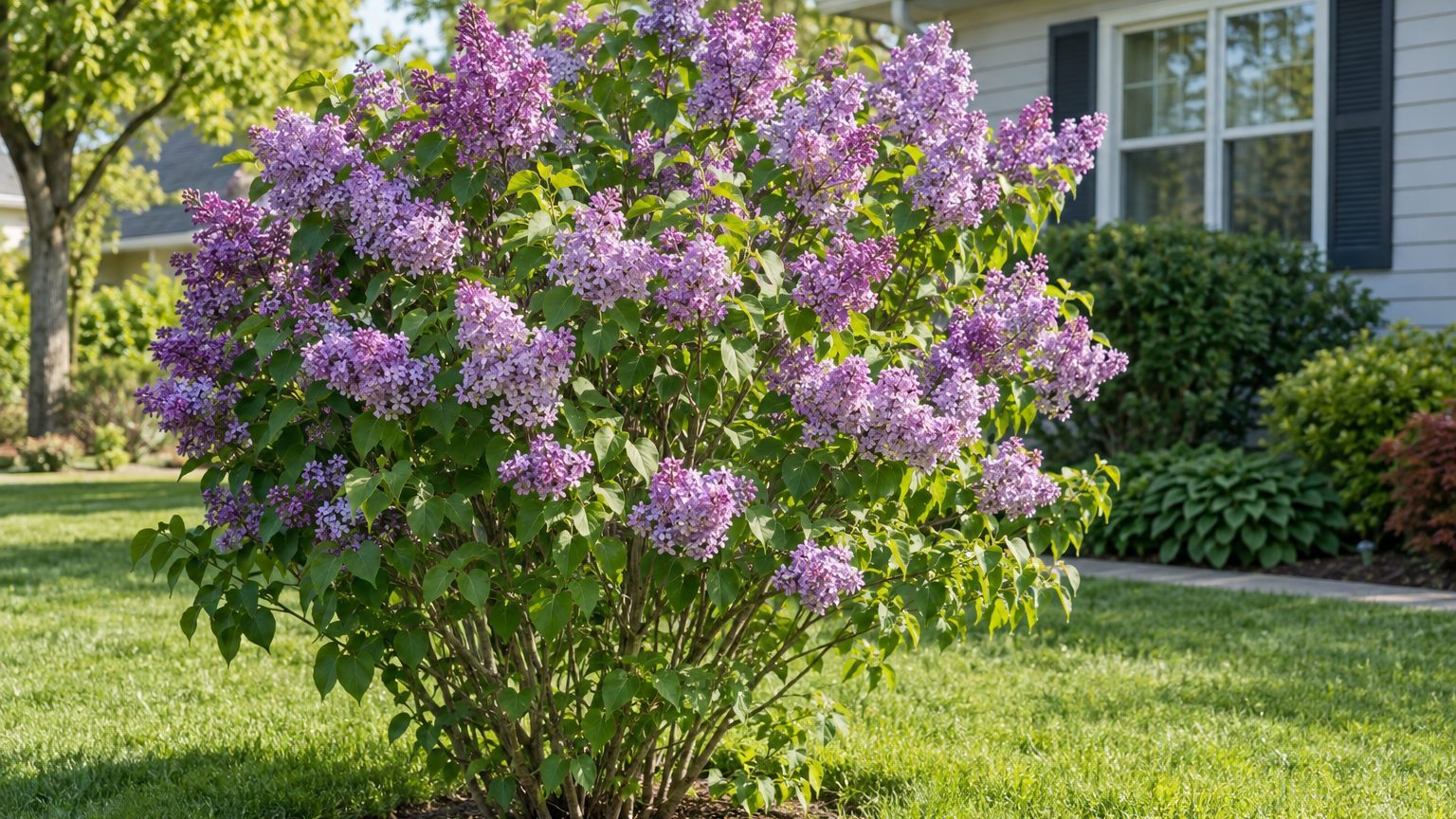
A lilac in a cold-winter yard greets spring with fat flower buds and a scent that carries across the lawn. Hawaii gardeners rarely see that. The islands are mild all year, and the common lilac depends on a winter chill the lowlands do not provide, so Hawaii calls for a different plan.
When Do Lilacs Bloom in Hawaii?

Lilacs bloom poorly or not at all in most of Hawaii, because the flower buds need a cold winter rest that the islands rarely give, and when a plant does flower, the bloom follows the local spring. Here is how a lilac’s year runs in this climate.
- In spring, a low chill type may open a modest set of flowers, while a common lilac in a warm lowland yard often produces leaves and little else.
- Right after the last flowers fade, prune to shape the shrub before next year’s buds form.
- Through summer, the plant sets next year’s flower buds on the new growth, and hot, humid spells in this season invite powdery mildew on the leaves.
- In the cool season, the shrub rests, but winter here is mild, so the chill the buds need is thin or missing.
- All year, no freeze arrives where people garden, because frost reaches only the summits of Mauna Kea, Mauna Loa and Haleakala.
Because there is no spring or fall frost to watch, no freeze date can set your calendar here. Rainfall, elevation and whether your yard sits on the windward or leeward side matter more. In the USDA hardiness system, which uses the average annual extreme minimum temperature, Hawaii spans zones 9a to 13a, so zone numbers vary widely among island yards.
Hawaii — the year and the numbers
- State
- Hawaii
- USDA zones
- 9a-13a
- Frost
- none in an average year
- Annual rain
- 16 in
- Lawn zone
- warm-season
- Source
- NOAA NCEI 1991-2020 Climate Normals: not-computable flag for every freeze percentile at 32F and 36F, zero days per year at or below 32F, station USW00022521 — https://www.ncei.noaa.gov/access/services/data/v1?dataset=normals-annualseasonal&stations=USW00022521 · Honolulu
Which Lilacs Grow Best in Hawaii?
Lilacs struggle here, and the honest answer is to choose carefully. The common lilac does not like high heat and humidity, and even types sold as heat tolerant often disappoint. The better odds belong to lilacs bred for mild winters.
Lilacs grow best where winter chilling is pronounced. Some varieties will still bloom with little chilling, which is why they are worth trying in Hawaii.
| Lilac type | How it does in Hawaii | Why |
|---|---|---|
| Common lilac (Syringa vulgaris) | Struggles, with weak or missing bloom | Needs a cold winter rest and dislikes heat and humidity |
| Early-blooming Southern lilacs | Usually grow and bloom | Suited to warm regions, though less fragrant |
| Low chill cultivars | Worth trying | Bloom with little chilling, yet still prefer a cold rest |
| Descanso hybrids | Worth trying | Developed for mild climates |
Among the Descanso hybrids, look for the white Angel White and the blue Blue Boy. Expect less perfume than a northern lilac gives, and expect even the tolerant types to flower better on cooler, higher ground.
When to Plant, Prune and Feed Lilacs in Hawaii
Without a freeze, local rainfall and exposure guide planting, while a soil test can guide feeding. The pruning window, however, is firm, and it runs by the plant rather than the calendar.
A lilac blooms on last year’s wood and sets next year’s flower buds in summer, soon after it flowers.
| Task | Best timing in Hawaii | Why then |
|---|---|---|
| Prune | Right after the last flowers fade | Next year’s flower buds form soon after bloom, so prompt pruning protects them |
| Hold the shears | Late summer, fall and winter | Cutting then removes the coming spring’s flowers |
| Check leaves for mildew | During hot, humid spells | Muggy heat brings powdery mildew to common lilacs |
Pick a spot with open air around the shrub so humid weather dries off the leaves quickly. The full pruning method lives on the When to Prune Lilacs in Hawaii page.
How Lilac Bloom Time Changes Across Hawaii
Winter chill is what a lilac wants, so anything that cools your yard helps. Elevation matters, along with how wet or dry your side of the island is.
- Upcountry Maui, on the slopes of Haleakala: cooler nights at that height give more winter chill than the coast, so a low-chill lilac is worth trying there.
- Waimea on Hawaii Island, below Mauna Kea: higher ground brings cooler winters than the beaches, and a Southern lilac is the sensible choice there.
- Hilo side versus Kona side: the windward Hilo side stays wet and humid, which favors mildew, while the leeward Kona side runs drier but warm.
- Honolulu and other warm lowlands: winters are too mild to rest the buds, so expect leaves more than flowers.
Frost stays on the summits in every case, so higher does not mean frosty in any yard where you would plant.
Where to Get Lilac Advice in Hawaii
A local expert can tell you what your elevation and rainfall will allow, and can test your soil before you buy a plant that may not thrive.
- The University of Hawaii CTAHR Extension offers plant diagnosis and gardening guidance suited to island conditions.
- Ask the extension office on your island about soil testing and leaf diagnosis before you visit.
Common Questions
Why Does My Lilac Have Healthy Leaves but No Flowers?
Look for a lush, green shrub together with a mild winter behind it, or pruning done after summer. Buds that never got their cold rest stay empty, and cuts made after the buds set remove them.
Can Higher Elevation Help a Lilac Bloom?
Cooler ground gives more winter chill than the coast, which is what the buds need. Even there, choose a low chill cultivar, since the plants still prefer an extended cold rest.
Is a White Coating on Lilac Leaves a Problem?
A powdery white film on the leaves that shows up during hot, humid weather points to powdery mildew. Common lilacs struggle in that kind of muggy heat, and good air flow around the shrub helps.