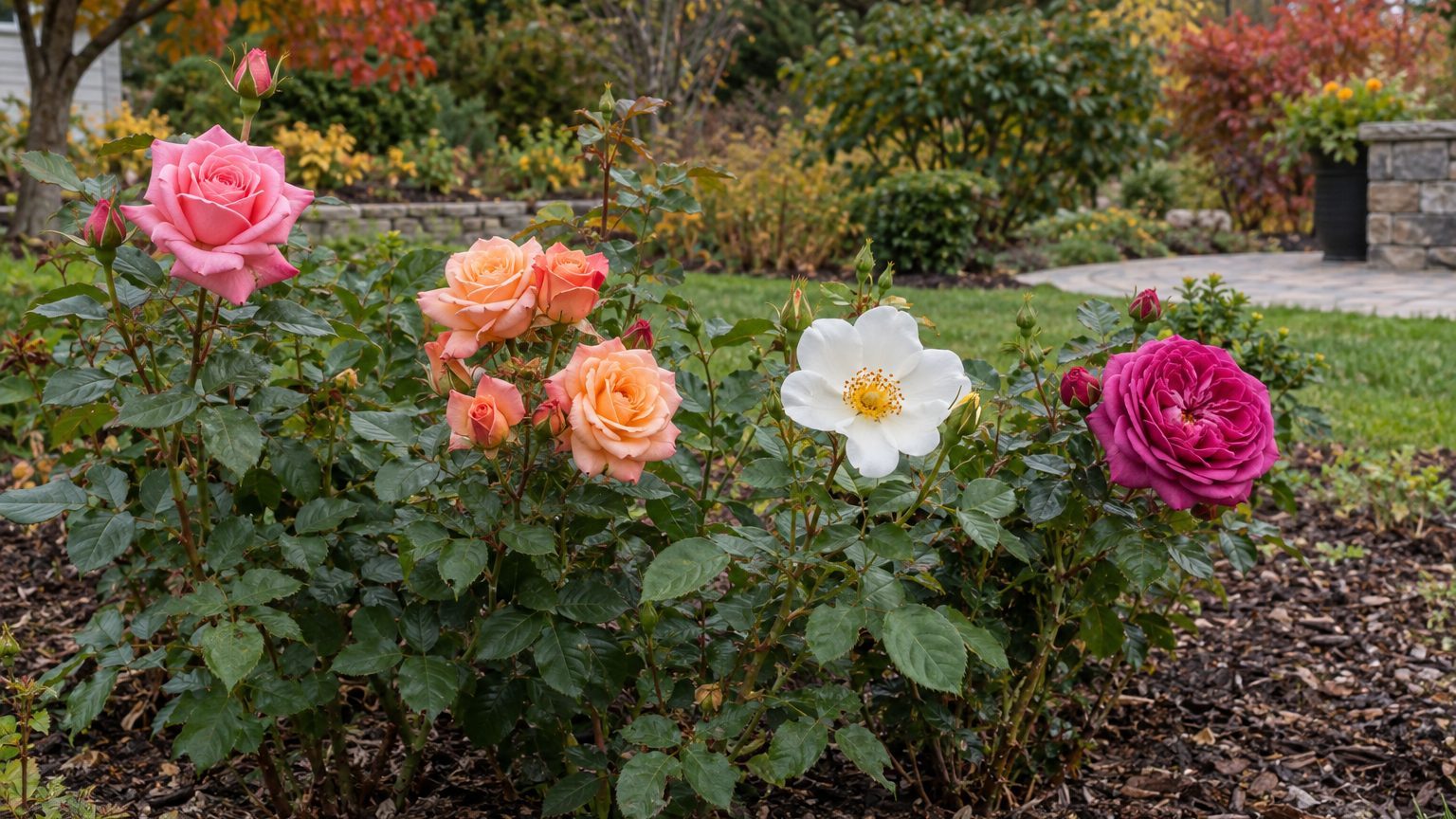
A hybrid tea that sailed through August can come out of a Wisconsin winter as a handful of black canes. Roses here are chosen as much for how they handle winter as for how they look in summer. The hardy types make the choice easy, and the tender ones can still be grown with some extra work.
Best Roses to Grow in Wisconsin

Hardy shrub roses, including Knock Out, the Explorer series and the Canadian Artist series, suit Wisconsin because winters here fall in USDA zones 3b to 6a and they come through without fuss. Hybrid teas, floribundas and grandifloras can work too, but they were bred for milder places and need your help.
Hardy Shrub Roses
If a rose that needs no winter protection sounds appealing, this is the group to shop in. Hardy shrub roses were bred to take cold winters in stride, so the canes are not mounded or wrapped each fall.
They bring front-yard color without the yearly work of protecting tender roses.
Knock Out
Knock Out is a hardy shrub rose that performs well without extra protection, which makes it a sensible starter for a first rose bed. It repeat-blooms, so prune it with other repeat-blooming roses in spring.
Explorer Series
The Explorer roses are another hardy shrub group that does well without extra protection in cold country. Look for the series name on the plant tag when you compare options at a garden center.
Canadian Artist Series
The Canadian Artist series was bred to be winter hardy and disease-resistant, a useful pairing for Wisconsin, where cold winters follow humid summers. Disease resistance helps against black spot, and resistance to other fungal diseases can also lessen the effects of rust.
Hybrid Teas, Floribundas and Grandifloras
These are the roses most people picture, and they cannot survive northern winters without protection. If you grow them, mound the canes after several hard freezes, once the plant is fully dormant. In Wisconsin, that means November.
Wisconsin — the year and the numbers
- State
- Wisconsin
- USDA zones
- 3b-6a
- Last spring frost
- April 16 to April 29
- First fall frost
- October 17 to October 29
- Annual rain
- 35 in
- Lawn zone
- cool-season
- Source
- NOAA NCEI 1991-2020 Climate Normals, 32F freeze probabilities · Milwaukee
How to Choose a Rose for a Wisconsin Garden
Start with how much winter work you are willing to do. Then think about how damp your summers feel in the yard, because wet leaves are where black spot and rust get going.
| Your situation | What suits it in Wisconsin | Why |
|---|---|---|
| Very cold winter | Canadian Artist series, Explorer series | Bred to be winter hardy |
| Humid summer | Canadian Artist series, disease-resistant varieties | Resistance to black spot also lessens the effects of rust |
| Little time | Knock Out, hardy shrub roses | No winter protection required |
| Love of hybrid teas | Hybrid teas, floribundas, grandifloras with a winter mound | Bred for warmer climates, so they need protection |
Pruning follows the type of rose. Repeat-blooming roses such as hybrid teas, floribundas and modern shrub roses are pruned in April or May, once the winter mound is off and the chance of a hard freeze has passed. Once-blooming roses (old garden roses, ramblers, many climbers) flower on last year’s wood, so prune them right after they bloom, never in early spring. For advice on heat and drought tolerance and on small-space picks, ask your county office.
Which Roses Suit Different Parts of Wisconsin
Winter cold varies across the state, so the same rose can be an easy keeper in one yard and a gamble in another.
- Lake Michigan shoreline: The lake delays the first fall freeze, which gives roses a longer stretch of growth and bloom. Tender roses still need winter protection here.
- Southern Wisconsin inland: Freezes arrive sooner than on the lakeshore, but wait until the plants are fully dormant after several hard freezes before protecting tender roses. Hardy shrub roses simplify the work.
- Northern Wisconsin: Freezes come far earlier and winters are colder. Hardy shrub roses, such as the Canadian Artist and Explorer series, are the sounder choice, and tender types are a long shot.
Your own yard matters too, since a sheltered spot near a house wall behaves differently from an open lot.
Rose Buying Mistakes to Avoid in Wisconsin
Tender Roses Without a Plan
Hybrid teas, floribundas and grandifloras can lose canes over winter if they are left unprotected. Before buying, decide whether you will mound them every fall. If not, choose a hardy shrub rose that needs no winter protection.
Disease-Prone Varieties
Humid summers favor black spot and rust, and a susceptible variety means spotted, dropping leaves and repeated cleanup. Inspect new plants for symptoms of rust before you buy. Then favor varieties labeled disease resistant, because resistance to black spot and other fungal diseases also lessens the effects of rust.
Covering Too Early
Mounding a rose before it is fully dormant traps warmth around canes that are still active. Wait until after several hard freezes, then put the protection on in November. That timing lets the rose enter winter fully dormant and protected.
Where to Get Rose Advice in Wisconsin
Local growers see which varieties thrive in your area, and useful help is close at hand.
- Browse the service’s research-based rose and garden guidance before you buy plants in spring. The link is on the name: University of Wisconsin Extension.
- Your county Extension office can tell you which roses do well locally and can help identify leaf problems, so bring a sample in summer when spots appear.
Common Questions
When Should You Stop Feeding Roses in Wisconsin?
Feed roses in late April and again at peak bloom, then stop after July. Late feeding pushes soft new growth that has little time to mature before winter.
Can You Plant a Rose in June?
Yes. Bare-root roses go in best during April and May, but a potted rose can also go in during June, once severe frost is well past.
When Should You Take Winter Protection Off Roses?
April is the time, with the mound removed in stages. If spring stays cold, it can also be done in May.