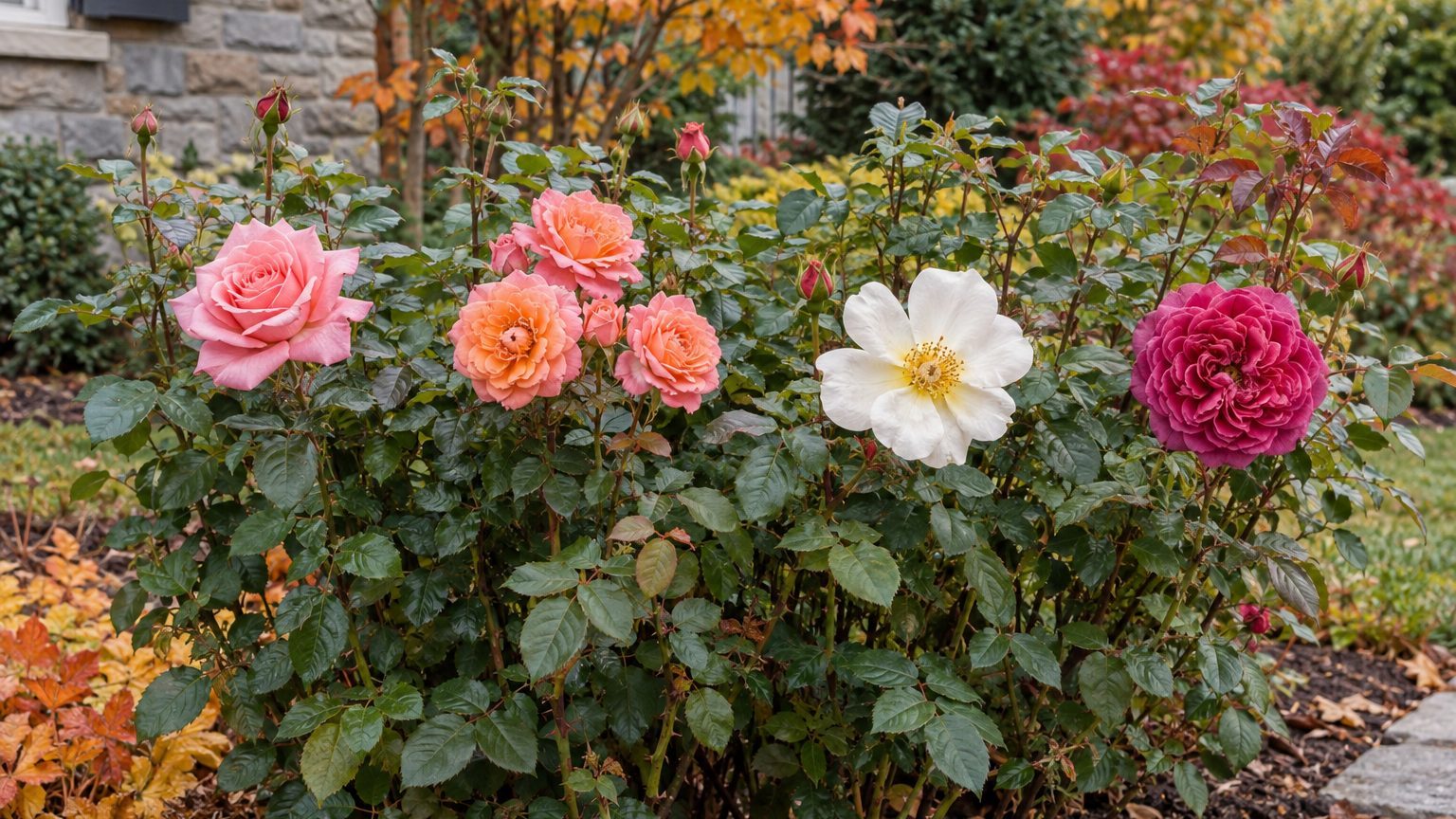
Inspect the canes for winter damage: green wood at the base is encouraging, while black and brittle canes may be dead. Vermont roses face real cold, so the ones that return year after year are chosen for hardiness first and flower type second. Shrub roses, floribundas and the Explorer series earn their place here.
Best Roses to Grow in Vermont

Hardy, tough types hold up well, because Vermont winters decide which roses survive. Under the USDA hardiness system the state runs from zone 3b to 5b, so a rose that suits one town may struggle in the next valley. Summer heat is rarely the limit. Cold is, so choose for the winter first.
Floribundas and Polyanthas
Floribundas and polyanthas prove more winter hardy than hybrid teas and grandifloras. They bloom in clusters and handle a cold snap with less fuss, which makes them a sensible step up if you want color without a heavy winter routine.
Hybrid Perpetuals
Hybrid perpetuals share that extra hardiness over hybrid teas. They are an older style of rose with full, fragrant flowers, and they suit a gardener who likes the look of classic roses but not the losses.
Shrub Roses
Modern shrub roses sit in the same hardier group, and they are a practical place to start. Knock Out is one that performs well without extra protection. Give them a spot with 6 to 8 hours of direct sun and loose, well-drained soil, and they will be off to a sound start.
Meidiland Series
The Meidiland series is hardy to at least zone 5. In zone 4, hardiness varies by variety, so colder gardens should be cautious before committing to a hedge.
Canadian Explorer Series
Named for explorers such as Champlain, Cabot and Kelsey, these shrub and climbing roses mostly live in zone 4. That makes them a practical choice for colder Vermont yards, and they need no extra protection.
Hybrid Teas
Hybrid teas give the classic cut flower, with long stems and a single sweet-scented bloom. They are also vulnerable to winter loss. Hybrid teas, floribundas and grandifloras need winter protection in cold winters, so plan for that before you buy one.
Vermont — the year and the numbers
- State
- Vermont
- USDA zones
- 3b-5b
- Last spring frost
- April 30 to May 10
- First fall frost
- October 3 to October 13
- Annual rain
- 38 in
- Lawn zone
- cool-season
- Source
- NOAA NCEI 1991-2020 Climate Normals, 32F freeze probabilities · Burlington
How to Choose a Rose for a Vermont Garden
Start with where you garden and how much time you want to spend. Roses want 6 to 8 hours of direct sun and rich, loose soil with plenty of organic matter and a pH of around 6.5. Past that, the choice comes down to your winter and your patience.
Planting bare-root roses goes best in April or May, and potted roses can go in later. Hardiness varies widely by variety, so read the plant tag against your own zone.
| Your situation | What suits it in Vermont | Why |
|---|---|---|
| Very cold winters, zone 3b | Hardy shrub roses rated for zone 3b | Choose only types that survive your coldest average winter |
| Zone 4 garden | Explorer series, Meidiland by variety | Explorers mostly live here, Meidiland is marginal by variety |
| Little time | Knock Out or Explorer series | They perform well without extra protection |
| Small space | Climbing roses on a trellis or arbor | They grow up instead of out |
| Cut flowers | Hybrid teas | Long stems and fragrance, but they need winter protection |
| Mild spot near the lake, zone 5 | Meidiland series | Hardy to at least this zone |
Pruning follows the type. Repeat-blooming roses such as hybrid teas, floribundas and modern shrub roses bloom on new wood and are pruned in April or May, once shoots are several inches long. March can work if growth has started. Once-blooming roses, including old garden roses, ramblers and many climbers, flower on last year’s wood, so prune them right after they bloom and never in early spring.
Which Roses Suit Different Parts of Vermont
Vermont’s climate shifts with elevation and distance from the lake, and that moves the line between a safe rose and a gamble.
- Champlain Valley: this area is milder than much of the rest of the state, and Burlington’s last spring frost falls between April 30 and May 10. Meidiland roses and even a protected hybrid tea are reasonable options here.
- Green Mountains: the growing season runs shorter and winters bite harder. Stay with Explorer roses and hardy shrub roses, and place them where snow gathers and covers the base.
- Northeast Kingdom: cold settles in early and stays long, so check the plant tag against your own zone and favor hardy shrub roses. Treat a Meidiland rose as an experiment.
- Southern Vermont valleys: slightly easier than the high country, though hills still bring cold pockets. Hardy shrub roses are a safe choice, with room to try floribundas.
Where your yard sits on a slope matters nearly as much as which town you live in.
Rose Buying Mistakes to Avoid in Vermont
Buying by Flower, Not Zone
Hybrid teas and grandifloras are lovely, but they are vulnerable to winter dieback. Buying one without planning for winter costs you the plant. Pick hardier types first, and if you still want a hybrid tea, treat the winter cover as part of the purchase.
Covering Too Early or Uncovering Too Late
Protection goes on in late November, after hard frosts have killed the leaves, because covering a living, leafy rose invites trouble. It comes off in May, early in the month before new growth begins, and April works if spring runs early. Leave deep mulch on too long and the buds suffer.
Pruning Too Soon
A warm spell in late winter tempts you out with the shears, but the advice is to wait until shoots are several inches long. Cutting early removes wood that might have lived. Repeat bloomers are cut in April or May, while once-bloomers wait until their flowers fade.
Feeding Past Summer
Feeding runs from April through July, and August can still work. Pushing growth later than that produces soft new shoots that may not harden off before winter, and those are the first to die back in cold.
Where to Get Rose Advice in Vermont
University of Vermont Extension publishes rose guidance written for Vermont conditions, including hardiness trials run in the state. Local offices can answer questions about a particular yard.
- The extension website has articles on planning a rose bed and choosing varieties, and spring is a good time to read them before ordering.
- The local extension office can help with a specific problem, and a visit in late winter lets you plan before planting season.
- Master gardener volunteers connected to extension can answer questions about your area’s winters.
Common Questions
When Can You Plant Bare-Root Roses in Vermont?
April and May are the months for bare-root roses. Potted roses can go in later, which suits you if you miss the early window.
When Should You Feed Roses in Vermont?
Start in April and keep feeding regularly through July. August is the outer limit, and after that you should stop.
When Should You Take Winter Protection Off Roses in Vermont?
Early May is the usual time, before new growth begins. In a mild spring it can come off in April.