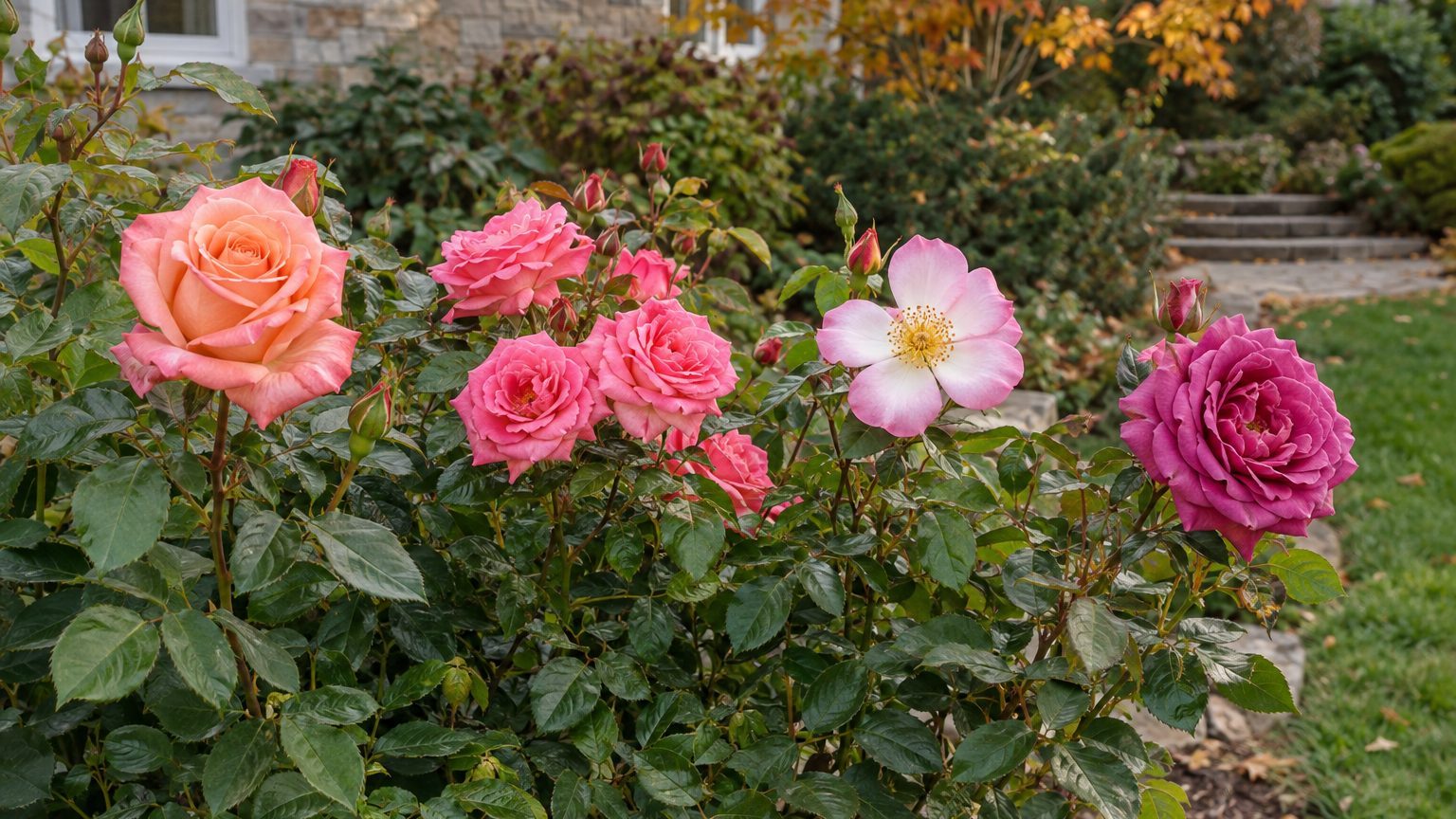
Hybrid teas and floribundas fill most New Mexico rose beds, and they earn the space with steady color from late spring into fall. In most areas of the state, winter cold does not severely injure roses, while summer heat and the choice of type decide how well a bush performs.
Best Roses to Grow in New Mexico

Hybrid teas, floribundas, polyanthas, miniatures and climbers all do well here, because in most areas of New Mexico roses are not severely injured by cold winter temperatures. Only the high mountains call for some protection. The real limit is summer heat, since many varieties stop blooming once temperatures climb above 90°F.
Hybrid Teas
Hybrid teas are grown more often than almost any other type in New Mexico gardens, and they bloom continuously. Many are resistant to powdery mildew, which helps when leaves stay dry for much of the year. Prune them in late winter, in February or March, once the worst cold has passed.
Floribundas
Floribundas sit right beside hybrid teas in popularity across the state. They carry flowers in clusters, so a bed looks full even when individual blooms pause in the heat. Prune and feed them on the same schedule as hybrid teas.
Polyanthas
Polyanthas make good borders and small hedges, and they do well in containers. That suits a patio, a gravel bed or a narrow strip along a walk. Many are hardy and resistant to powdery mildew, which can make them easier to care for.
Miniatures
Miniature roses are on the list of popular types for New Mexico, and their small size makes them easy to tuck into pots or a sunny corner. A pot can be moved if a spot gets too hot or too cold. Feed them regularly through the growing season like any repeat bloomer.
Climbers
Climbers are among the popular choices in the state, and they cover a fence, a wall or an arbor. Many climbers bloom once a year on last year’s wood, so prune them right after they flower, never in early spring. Cutting them in late winter removes the buds that would have opened.
Old Garden Roses
Old garden roses of European origin are cold hardy and bloom once a year. Gardeners who grow old garden and modern roses often find that old garden roses need less maintenance, especially in hot summer months. Prune them after they bloom.
New Mexico — the year and the numbers
- State
- New Mexico
- USDA zones
- 4b-9a
- Last spring frost
- March 31 to April 12
- First fall frost
- October 29 to November 9
- Annual rain
- 9 in
- Lawn zone
- transition-season
- Source
- NOAA NCEI U.S. Climate Normals 1991-2020, 32F freeze probabilities · Albuquerque
How to Choose a Rose for a New Mexico Garden
Start with how much work you want to do, then look at the weather your garden actually gets. The state spans high mountains and warm lowlands, so a rose that thrives in one yard may sulk in another.
Whichever type you pick, bare-root bushes go in during February or March, and potted roses can go in later.
| Your situation | What suits it in New Mexico | Why |
|---|---|---|
| Very cold winter, high mountains | Old garden roses of European origin, with some winter protection for any bush | European types are cold hardy, and the high mountains are where roses need some protection |
| Hot, dry summer | Old garden roses | Old garden roses need less upkeep in summer heat, and many hybrid teas resist powdery mildew |
| Little time to spare | Old garden roses | Many polyanthas are hardy and mildew resistant, and old garden roses ask for less maintenance |
| Small space or patio | Polyanthas, miniatures | Polyanthas do well in containers and make small hedges, and miniatures stay compact |
Blooms stall when summer temperatures are above 90°F, so expect a pause in the hottest weeks rather than a failed plant. Thrips are said to prefer light-colored blossoms such as yellow and white, so those colors may need a closer look in a bad year.
Which Roses Suit Different Parts of New Mexico
Elevation does most of the sorting, with cold nights and winter protection on one side and summer heat on the other.
- The high mountains: Roses need some protection through winter here, so favor cold hardy types such as old garden roses of European origin.
- The lower, warmer valleys and plains: Winter cold rarely injures roses, so hybrid teas and floribundas are the usual choice, and the question becomes how they handle summer heat.
Check your own county’s conditions before buying, since local frost timing differs from town to town.
Rose Buying Mistakes to Avoid in New Mexico
Planting in Fall or Early Winter
Bushes planted in the fall and early winter usually die back more than those planted in late winter. Buy bare-root roses to plant in February or March instead, and look for healthy, dormant bushes if you plant a little later.
Choosing Mildew-Prone Varieties
Powdery mildew is controlled best by planting resistant varieties or by a preventive fungicide spray. Ask for roses described as mildew resistant, and note that many hybrid teas and polyanthas are.
Ignoring Summer Heat
Many varieties pause flowering in high heat, which can leave a bed bare in the hottest weeks. Check a variety’s heat tolerance before buying. A national rating of named varieties can help match a rose to your location and preferences.
Where to Get Rose Advice in New Mexico
Local advice settles questions about your own soil, elevation and frost timing, which vary a great deal across the state.
- New Mexico State University extension publishes rose guidance written for the state, and it is worth reading before the late winter planting and pruning season.
- Your county extension office can tell you how cold your area gets and which varieties local gardeners grow, so call in winter, before ordering bare-root bushes.
Common Questions
Do Roses Need Winter Protection in New Mexico?
In most areas of New Mexico, roses are not severely injured by cold winter temperatures. In the high mountains they need some protection.
Why Did My Roses Stop Blooming in Summer?
High summer temperatures can pause flowering. Keep feeding them on schedule, from March through September, and blooms usually return as the weather cools.
When Should You Feed Roses in New Mexico?
Feed every four to six weeks, starting just before bud break in early spring. Continue until three weeks before the first fall frost.