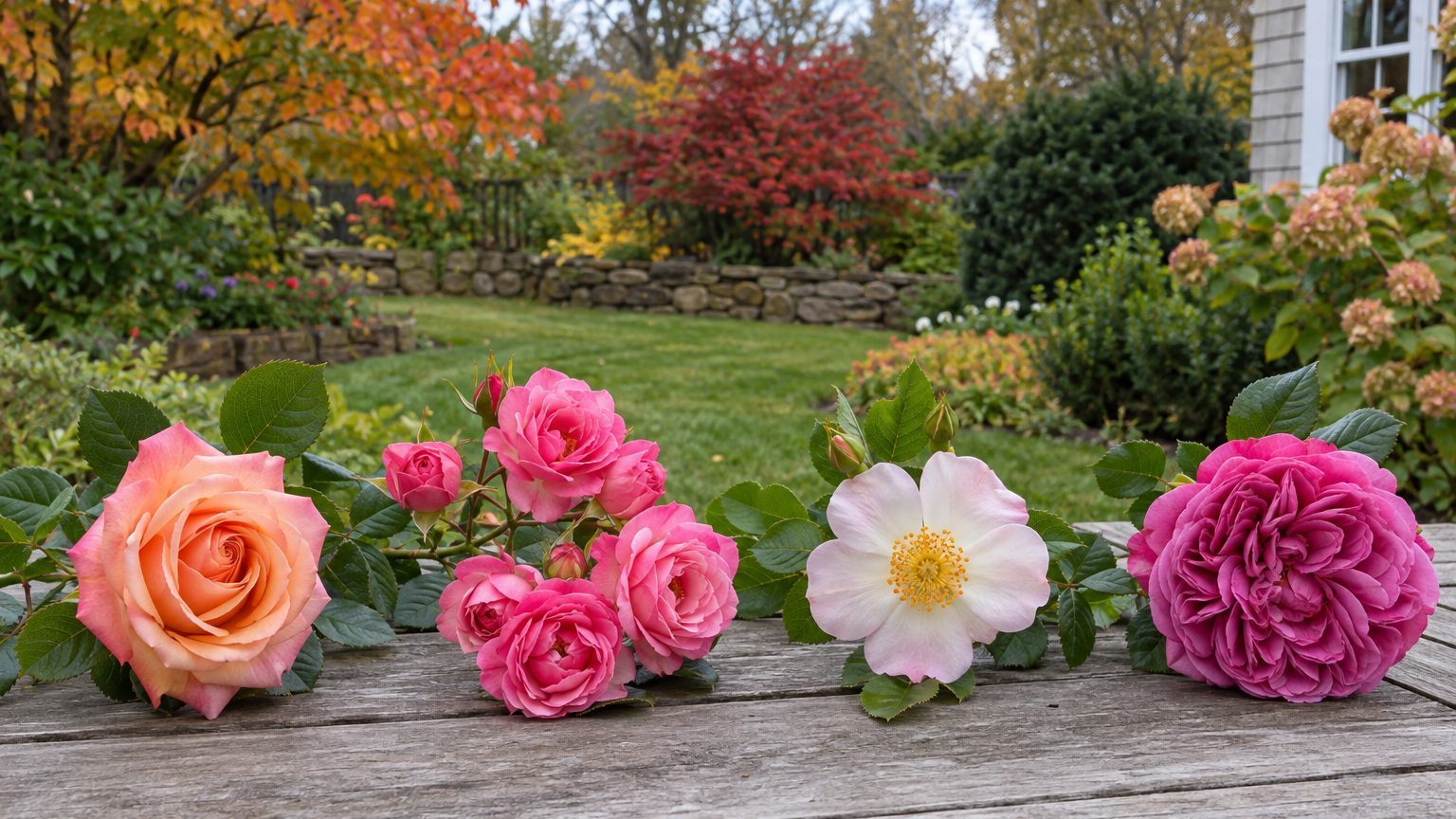
Roses that hold up in Delaware are the ones bred to shrug off black spot and a cold snap: disease-resistant shrub roses, cold-hardy bred roses, old garden roses and own-root plants. Hybrid teas can still earn a place if you choose carefully and accept a little more work.
Best Roses to Grow in Delaware

Delaware roses face humid summers that invite black spot, and winters that can still burn tender canes in an exposed spot. Delaware gardens span USDA zones 7a to 8a, but winter exposure still varies by site. Disease-resistant and cold-tolerant types are practical choices for the state.
Knock Out Shrub Roses

Disease resistance matters in a humid summer, and Knock Out cultivars are a practical choice. Their high resistance to black spot makes them useful where that disease is a concern.
Plant one where air moves freely and it will bloom with far less spraying than a typical hybrid tea. Feed from April through August, then stop so late growth can harden before winter.
Cold-Hardy Bred Roses
A rose bred for a much colder zone needs little to no added protection in a mild-winter garden like Delaware’s. That makes hardy-bred shrubs and climbers a sensible choice for windy corners and open lots.
Check the plant tag for the hardiness it was bred to. A big gap between its rating and your zone is your margin of safety.
Old Garden Roses
Many old garden roses are extremely tolerant of cold, while hybrid teas often take considerable damage. Heirlooms, meaning roses in existence before 1867, do not need the hard annual cutback used on many modern roses, because heavy pruning ruins their graceful shape and sharply reduces flowering.
Once-blooming old garden roses flower on last year’s wood. Prune them right after they bloom, never in early spring, or you remove the coming season’s flowers.
Own-Root Roses
Own-root roses are grown from cuttings rather than grafted onto a different rootstalk. They may still need protection depending on how their hardiness compares with your zone, but they carry a useful safety net.
If the canes die back in a hard winter, new ones often emerge from the deep roots. What comes back is the same rose you bought.
Hybrid Teas and Floribundas
Hybrid teas, grandiflora and floribundas are the classic modern roses, along with shrub and miniature types. They repeat bloom on new wood; hybrid teas in particular can suffer disease and winter damage.
Prune them in March, when the forsythia blooms and the buds swell. February and April also work. Cut harder than you would a shrub rose, since they need a heavy annual pruning.
Delaware — the year and the numbers
- State
- Delaware
- USDA zones
- 7a-8a
- Last spring frost
- April 3 to April 14
- First fall frost
- October 26 to November 7
- Annual rain
- 45 in
- Lawn zone
- cool-season
- Source
- NOAA NCEI 1991-2020 Climate Normals, 32F freeze probabilities · Wilmington
How to Choose a Rose for a Delaware Garden
Start with the problem your yard presents rather than the flower you love. A windy open lot, a damp corner and a busy schedule each point to a different rose.
Disease resistance deserves the first look, since hundreds of hybrids and cultivars exist and they vary in how susceptible they are.
| Your situation | What suits it in Delaware | Why |
|---|---|---|
| Cold, exposed site | Cold-hardy bred roses or old garden roses | Bred-hardy roses need little added protection, and old garden roses tolerate cold well |
| Humid summer | Knock Out shrub roses | They are highly resistant to black spot |
| Little time | Old garden roses or disease-resistant shrub roses | Old roses skip hard pruning, and resistant types need less spraying |
| Winter dieback worries | Own-root roses | New canes often rise from deep roots after dieback |
| Repeat bloom to frost | Hybrid teas, floribundas or modern shrub roses | They flower on new growth after pruning in spring |
For a small space, miniature roses belong to the same modern group as the others, so the same rules on disease resistance apply. Bare-root roses go in during March or April, and it can also be done in February. Potted roses can go in later.
Which Roses Suit Different Parts of Delaware
Delaware sits in USDA zones 7a to 8a, so the north and south differ a little in how much winter your roses must survive.
- Wilmington and northern New Castle County: Compare each rose’s hardiness rating with your garden’s USDA zone, especially on open, windy sites.
- Dover and Kent County: Match each rose’s hardiness rating to your garden, and prioritize disease resistance. Hybrid teas can work here if you choose resistant varieties and watch for winter damage.
- Sussex County and the beaches near Lewes and Rehoboth: Check each rose’s hardiness against your garden’s USDA zone before deciding whether it needs winter protection. Disease resistance is also worth prioritizing when you choose a shrub rose.
Gardens away from the airport often see frost later in spring than the reference city, so check the timing with your own county office before you plant.
Rose Buying Mistakes to Avoid in Delaware
Buying a Type Too Tender
Hybrid teas can suffer considerable damage in a hard winter, especially on exposed sites. A cane that dies back costs you the season’s early blooms and some rebuilding.
Choose a rose rated well below your zone, or put tender types where buildings or fences give shelter.
Skipping Disease Resistance
Humid Delaware summers are black spot weather, and susceptible varieties lose leaves and vigor. Resistance varies widely among the hundreds of hybrids on offer, so a pretty flower on the tag tells you little.
Look for plants described as black spot resistant, and give them space so leaves dry quickly after rain.
Choosing Grafted Over Own-Root
A grafted rose sits on a different rootstalk, so a winter that kills the graft can leave you with the rootstock instead of the variety you bought.
An own-root rose can send up new canes from its deep roots and come back as the same variety. For borderline spots, that is the safer purchase.
Where to Get Rose Advice in Delaware
Local advice sorts out which varieties perform in your soil and microclimate. Start with the state’s land-grant university and then your own county.
- The University of Delaware Cooperative Extension offers rose guidance written for Delaware gardens, useful before you shop.
- The extension office in your county (New Castle, Kent or Sussex) can answer questions about local frost timing and disease problems, so call it before planting.
Common Questions
Can You Plant a Potted Rose After Spring?
Yes. Bare-root roses have a narrow planting window, while potted roses can go in later because their roots are already established. Water them regularly until they settle.
When Should You Stop Feeding Roses?
Stop after August. Feeding later pushes soft new growth that may not harden off before winter. Resume in spring once the first leaves open.
How Can You Tell Whether a Rose Blooms Once or Repeatedly?
Repeat bloomers such as hybrid teas, grandiflora and floribundas flower almost continuously from early summer until frost. Once-blooming roses, including old garden roses and many ramblers and climbers, flower in a single flush on last year’s wood.