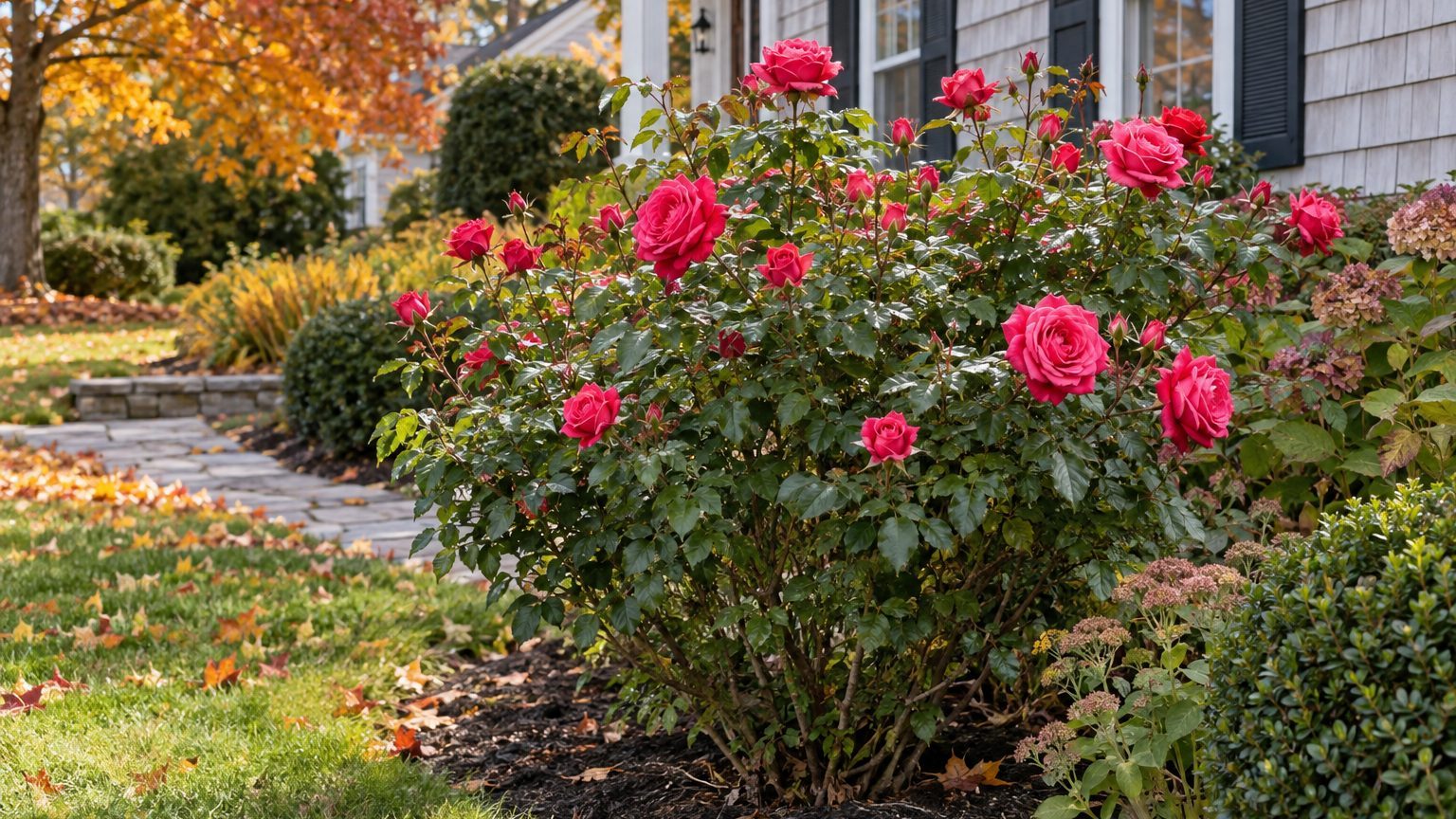
Bare-root roses arrive in late winter and early spring as bundles of dormant canes, and the soil is still cold when they go into the ground. In Rhode Island that means March and April for bare-root plants, with potted roses going in later.
When to Plant Roses in Rhode Island

Rhode Island sits in USDA hardiness zones 6a to 7b, and the frost dates below describe Providence, so check your own county for a later spring and an earlier fall.
- In Providence, the last frost in early spring falls between April 7 and April 17. Dormant bare-root roses go in during March and April, before buds push out tender growth.
- Once the soil can be worked, container roses can follow in April and continue through midsummer, and bare-root plants can still go in during May, June or July if you missed the early window.
- Feeding begins in April after pruning and continues through July, helping new plantings build roots and canes before the heat peaks.
- Through summer, roses planted from containers need regular watering, since young plants have little root to draw on when the weather turns dry.
- In Providence, the first frost in late fall arrives between October 24 and November 3, and in November you cover tender roses once several hard freezes have passed.
A young rose fears frost on new leaves, while a bare-root rose is planted asleep, so the calendar months matter more than any single date.
Rhode Island — the year and the numbers
- State
- Rhode Island
- USDA zones
- 6a-7b
- Last spring frost
- April 7 to April 17
- First fall frost
- October 24 to November 3
- Annual rain
- 48 in
- Lawn zone
- cool-season
- Source
- NOAA NCEI U.S. Climate Normals 1991-2020, 32F freeze probabilities · Providence
Which Roses Grow Best in Rhode Island?
Rhode Island winters are cold enough to injure tender roses, and coastal humidity invites leaf disease. Hardy shrub roses handle these conditions with little fuss, while hybrid teas, grandifloras and floribundas want winter protection.
Old garden roses are generally tolerant of cold, so they suit a yard where you would rather not wrap canes every November.
| Rose type | How it does in Rhode Island | Why |
|---|---|---|
| Hybrid teas, grandifloras, floribundas | Rewarding, but they need winter protection | They are not reliably winter hardy and can suffer considerable damage in cold |
| Shrub and landscape roses | Reliable with little extra care | Most are winter hardy and need no extensive preparation |
| Old garden roses | Dependable in cold winters | Many are extremely tolerant of cold temperatures |
| Climbing roses | Variable, so choose carefully and protect the tender ones | Some are not reliably winter hardy |
Knock Out and the Explorer series are examples of hardy shrub roses that perform well without extra protection. Miniature and polyantha roses vary by type, so check the plant tag before buying.
When to Prune, Feed and Protect Roses in Rhode Island
Rose work here follows a short yearly rhythm. Pruning and uncovering come in early spring, feeding runs through the growing season, and protection goes on after the cold has set in.
Repeat-blooming roses, which flower on new wood, are pruned in spring. Once-blooming roses such as old garden roses, ramblers and many climbers flower on last year’s wood, so prune them right after they bloom, never in early spring.
| Task | Best months in Rhode Island | Why then |
|---|---|---|
| Pruning repeat-blooming roses | March and April, or February if needed | Winter protection is off and forsythia is blooming |
| Feeding | April through July | After pruning, at first bloom, and again in mid-July, with none after mid-August |
| Putting on winter protection | November, or December | Wait until several killing freezes, from mid-November on |
| Taking protection off | March and April | Between mid-March and mid-April, once the ground thaws |
Stopping feeding in late summer keeps soft new growth from forming just before winter. The full pruning method has its own page for Rhode Island.
How Rose Care Dates Change Across Rhode Island
Rhode Island is small, yet the water and the land still tilt the season a little, so adjust the calendar months by what your own yard does.
- The coast, including Newport and the shoreline towns: Ocean air softens winter cold, but planting and uncovering should follow conditions in your own yard. Protection matters less here for tougher roses.
- Providence and the inner Narragansett Bay area: The frost dates describe Providence, so check local conditions before using them to time planting or uncovering.
- The northwest hills, including Burrillville and Foster: Elevation and distance from the water mean frost lingers later in spring and returns earlier in fall, so wait toward the later end of each window.
A rose in a sheltered, south-facing spot wakes earlier than the same variety in an open, windy yard, whatever the county.
Where to Get Rose Advice in Rhode Island
The state’s land-grant service, University of Rhode Island Cooperative Extension, offers local guidance on roses, soil and plant problems. Its staff and Master Gardener resources can help with diagnosis.
- Extension resources can help you identify leaf spots, pests and winter damage, so bring a sample or clear photos when problems show.
- A soil test through the extension office tells you what your bed needs before you plant bare-root roses in March or April.
Common Questions
Can You Plant a Rose in July in Rhode Island?
Yes, a container rose can go in through midsummer, and bare-root plants can also be set in July if needed. Water regularly while the roots settle.
When Should You Stop Feeding Roses in Rhode Island?
Feeding runs from April through July, with the last application in mid-July. Nothing should go on after mid-August.
Do Roses Need Winter Protection in Rhode Island?
Hybrid teas, floribundas and grandifloras do, and tender climbers may too. Hardy shrub roses generally manage without it.