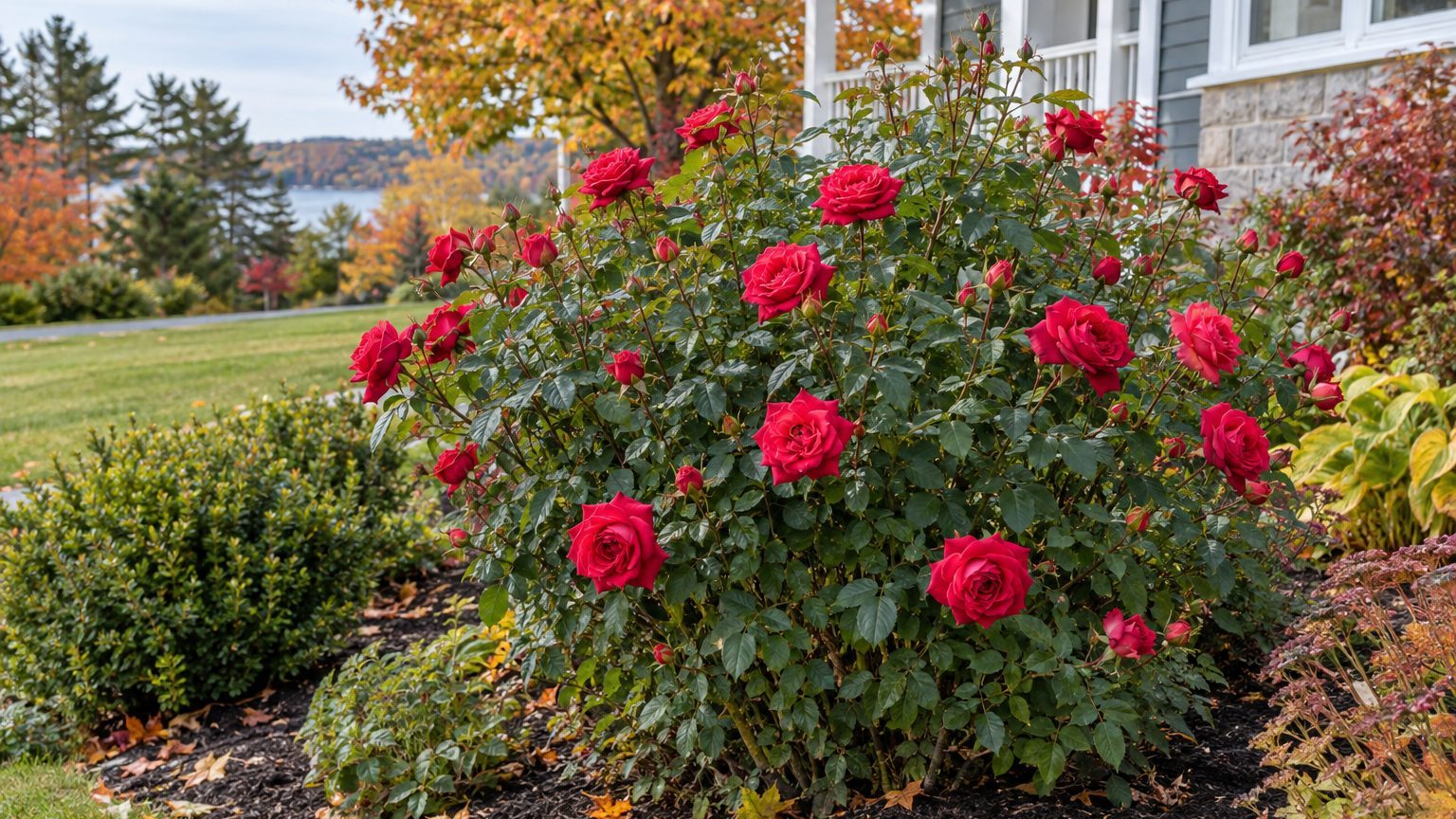
In early spring, bare-root roses show up at garden centres, bundled and still asleep, and that is the moment Nova Scotia gardeners plant them. Roses in Nova Scotia go in with the spring thaw, grow through summer, and get tucked in once the leaves have been killed by frost. Which kinds to choose matters as much as the date.
When to Plant Roses in Nova Scotia

Bare-root roses go into the ground in April and May while they are still dormant, and potted roses follow later, once the soil has warmed. Halifax sits in Canadian hardiness zone 6b, a Canadian system that does not convert to a USDA zone, so treat it as a local guide only.
- In April and May, plant bare-root roses while the canes are still dormant, because a rose with no roots in the soil cannot cope with leaves it has to feed.
- As spring growth begins, prune repeat-blooming roses such as hybrid teas, floribundas and modern shrub roses, in April or May, or in March if you wait for growth to wake up.
- In May, take off the winter protection before new growth starts, and in April if the spring has been mild.
- Through the warm months, feed from April into July, and potted roses can go in later than bare-root ones, after the soil has warmed.
- In November, after hard frosts have killed the leaves, put the winter protection on, and let August be the last month you feed.
At Halifax the last spring frost falls on average around May 7, which is a midpoint, so in half of years a frost comes later and a young rose in leaf may need a cover. The first fall frost averages October 18, and northern or upland districts run behind Halifax.
Nova Scotia — the year and the numbers
- State
- Nova Scotia
- Hardiness zones
- 6b
- Last spring frost
- May 7
- First fall frost
- October 18
- Annual rain
- 55 in
- Lawn zone
- cool-season
- Source
- Environment and Climate Change Canada — Canadian Climate Normals 1981-2010, station HALIFAX STANFIELD INT'L A · Halifax
Which Roses Grow Best in Nova Scotia?
Roses bred for cold winters do best here. Winter is the limit, so the hardiest types are shrub roses, old-fashioned roses, polyanthas, floribundas and hybrid perpetuals, all of which come through winter more reliably than hybrid teas and grandifloras.
Choose only types that can survive the average winter in your own growing zone. Zone 6b describes Halifax, and the number can shift as you move around the province, so check the plant tag against your own district before you buy.
| Rose type | How it does in Nova Scotia | Why |
|---|---|---|
| Hybrid teas and grandifloras | Possible, with more care | Less winter hardy than the other types, so they need protection |
| Floribundas and polyanthas | A sturdier choice | More winter hardy than hybrid teas |
| Shrub roses such as Knock Out | Reliable | Hardy enough to perform well without extra protection |
| Explorer series | Reliable, as shrubs or climbers | Bred in Canada and named for explorers such as Champlain, Cabot and Kelsey |
| Hybrid perpetuals and old-fashioned roses | Sturdy | More winter hardy than hybrid teas and grandifloras |
Climbing roses are best chosen from the Explorer series, which includes climbers. Hybrid teas are still worth growing if you like the long, classic blooms, as long as you accept the extra work every November.
When to Prune, Feed and Protect Roses in Nova Scotia
Nova Scotia has no local page on rose timing, so the months here follow the nearest comparable climate. Confirm local timing with a garden centre, a rose society or the provincial gardening groups.
Hybrid teas, floribundas and grandifloras need winter protection in cold winters. Once-blooming roses flower on last year’s wood, so prune them right after they bloom, never in early spring.
| Task | Best months in Nova Scotia | Why then |
|---|---|---|
| Plant bare-root roses | April, May | The canes are dormant and the soil is thawing |
| Prune repeat-blooming roses | April, May (March if growth has started) | They bloom on new wood, so wait for active growth |
| Feed roses | April to July (August is the last month) | Feeding stops in August so new growth can harden before winter |
| Put on winter protection | November | Wait until hard frosts have killed the leaves |
| Take off winter protection | May (April in a mild spring) | Remove it in early May before new growth begins |
Pruning in more detail has its own page for the province. Here, the key dates are enough to keep the year in order.
How Rose Care Dates Change Across Nova Scotia
Halifax is the reference point for the dates above, and the rest of the province moves earlier or later around it depending on the land.
- Halifax and the Atlantic coast: the dates above fit here best, so plant in April or May and uncover in May.
- Cape Breton Highlands: upland districts run behind Halifax, so hold off planting and unwrapping until the ground has warmed in your own yard.
- Cumberland County and the Northumberland Shore: northern districts also run behind Halifax, so let the buds, not the calendar, tell you when to prune.
Wherever you garden, a rose in leaf that gets caught by a late frost is better covered than left exposed.
Where to Get Rose Advice in Nova Scotia
Canada has no county extension offices, so help comes from the province and from local gardeners. A diagnosis or a soil test is easiest to arrange through these sources.
- The Nova Scotia Department of Agriculture is the place to start for questions about soil, pests and plant health.
- A local garden centre or rose society can tell you which varieties have survived winters in your district, so ask before buying in spring.
- Before the first April planting, take a soil sample so you know what the bed needs.
Common Questions
How Do You Know a Rose Is Hardy Enough for Nova Scotia?
Look for a plant tag with a hardiness zone at or below your own district’s Canadian zone. Shrub roses and the Explorer series are bred to cope with cold, while hybrid teas are the type most likely to need cover.
Can You Plant Potted Roses After May?
Yes. Potted roses can go in later than bare-root ones because they already have roots, so wait until the soil has warmed and frost risk has passed.
What Should You Do If a Frost Hits After Roses Have Leafed Out?
Cover the plant on cold nights with an old sheet or a bucket, and take the cover off in the morning. New leaves are tender, and the frost date for your district is only a midpoint, so some years run later.