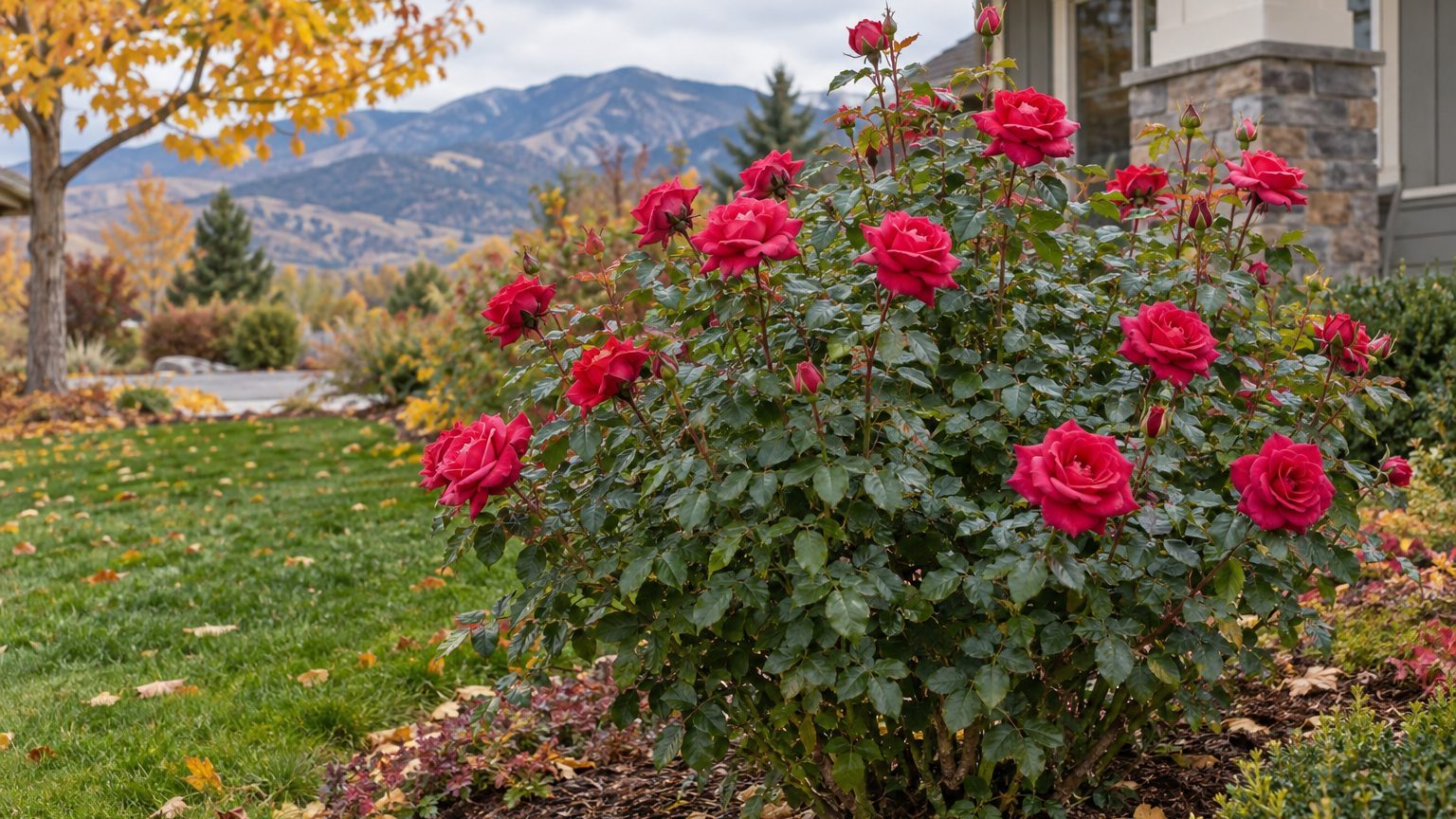
The rose year in Montana starts in spring, when the soil mound comes off the crowns and the first red shoots appear. Bare-root roses go into the ground then, and the kinds you choose decide how much winter work follows.
When to Plant Roses in Montana

Bare-root roses go in first, during April and May, and potted roses follow once the weather settles. In Billings, the last spring frost falls between April 29 and May 10, which is why a freshly planted rose still needs a cover on hand for cold nights.
- In early spring, as soon as the ground can be worked, plant bare-root roses while they are still dormant, which means April through May.
- In April, prune repeat-blooming roses such as hybrid teas, floribundas and modern shrub roses, and gradually take off winter protection. May works too if spring runs late.
- Once the danger of hard frost has passed, potted roses can go in later than bare-root ones, because green growth is far more tender than a dormant cane.
- From May through July, feed roses regularly with an all-purpose fertilizer while they grow.
- By mid-August, stop feeding so new shoots have time to toughen before cold arrives.
- In November, mound soil over the crowns for winter. October and December also work if the weather pushes the job earlier or later.
In Billings, the first fall frost arrives October 1 to October 14, and mountain valleys elsewhere in Montana can frost in any month.
Montana — the year and the numbers
- State
- Montana
- USDA zones
- 3a-6a
- Last spring frost
- April 29 to May 10
- First fall frost
- October 1 to October 14
- Annual rain
- 14 in
- Lawn zone
- transition-season
- Source
- NOAA NCEI 1991-2020 Climate Normals, 32F freeze probabilities · Billings
Which Roses Grow Best in Montana?
Hardy shrub roses suit Montana’s severe winters best, because they are vigorous and ask for little care. Tender types such as hybrid teas and grandifloras can grow here, but they need extra winter protection.
USDA hardiness zones across Montana run from 3a to 6a, so a rose that thrives in a milder valley may struggle in colder places.
| Rose type | How it does in Montana | Why |
|---|---|---|
| Hardy shrub roses | Vigorous, low-fuss, some tolerate winter lows of -45°F | Bred and selected for severe winters |
| Explorer series and Knock Out | Perform well without extra protection | Hardy shrub roses that carry themselves through cold |
| Alpine and Nootka roses | Do better in warmer areas, survive on protected sites | Less cold-tolerant than other shrub roses |
| Hybrid teas | Need extra winter protection | Tender canes and crowns in hard winters |
| Grandifloras | Need extra winter protection | Same tenderness as hybrid teas |
Old garden roses, ramblers and many climbers bloom once a year, so they fit a garden where you want one big flush rather than repeat flowers. Their care differs from the repeat bloomers, as the pruning notes below explain.
When to Prune, Feed and Protect Roses in Montana
Each rose task has a month that matches what the plant is doing. Prune too early and new growth meets killing frost. Feed too late and soft shoots reach winter unprepared.
Once-blooming roses flower on last year’s wood, so prune them right after they bloom, never in early spring. Details on cutting live on the page for when to prune roses in Montana.
| Task | Timing in Montana | Why then |
|---|---|---|
| Pruning repeat-blooming roses | April (May also works) | Cuts made too early leave new growth open to a killing frost |
| Feeding | May, June, July (April and August also work) | Feeds the plant while it is actively growing |
| Putting on winter protection | November (October or December also work) | Soil goes over the crown once nights turn properly cold |
| Taking winter protection off | April (May also works) | Soil comes off gradually once the danger of hard frost has passed |
Hybrid teas, floribundas and grandifloras gain the most from the November mound, while hardy shrub roses usually go without.
How Rose Care Dates Change Across Montana
Frost timing shifts with the landscape, and the months above are a guide to adjust by what your own yard does in spring and fall.
- Mountain valleys elsewhere in the state: Frost can come in any month, so cover young roses on cold nights and plant toward the later end of the spring window.
- Milder valleys: Spring work can start closer to the early end of the April and May windows, and protected sites are where the less cold-tolerant shrub roses, such as Alpine and Nootka, have survived.
Watch your own beds, because a sheltered south wall can run milder than an open lawn nearby.
Where to Get Rose Advice in Montana
For questions about local conditions, Montana State University Extension and the county extension office are the places to ask. They can look at a sick plant or test your soil.
- County extension offices can identify a problem from a cane or leaf sample, and spring is a good time to take a sample to the office.
- A soil test before planting shows what the bed needs, so book it ahead of the April and May planting window.
- Take a soil sample from the rose bed this spring before the bare-root plants go in.
Common Questions
Can You Plant Roses in Montana in the Fall?
The planting months for bare-root roses are April and May, while the plants are still dormant. Spring is the window to use, since that is when the ground can be worked and roots have a full season to settle.
Can You Plant a Potted Rose After May?
Potted roses can go in later than bare-root ones, once the danger of hard frost has passed. Young plants still fear frost, so keep a cover handy for cold nights.
How Much Soil Should You Mound Over a Rose for Winter?
Mound about eight inches of soil over the bush to protect it against late frost. Take the mound off gradually once the danger of frost has passed.