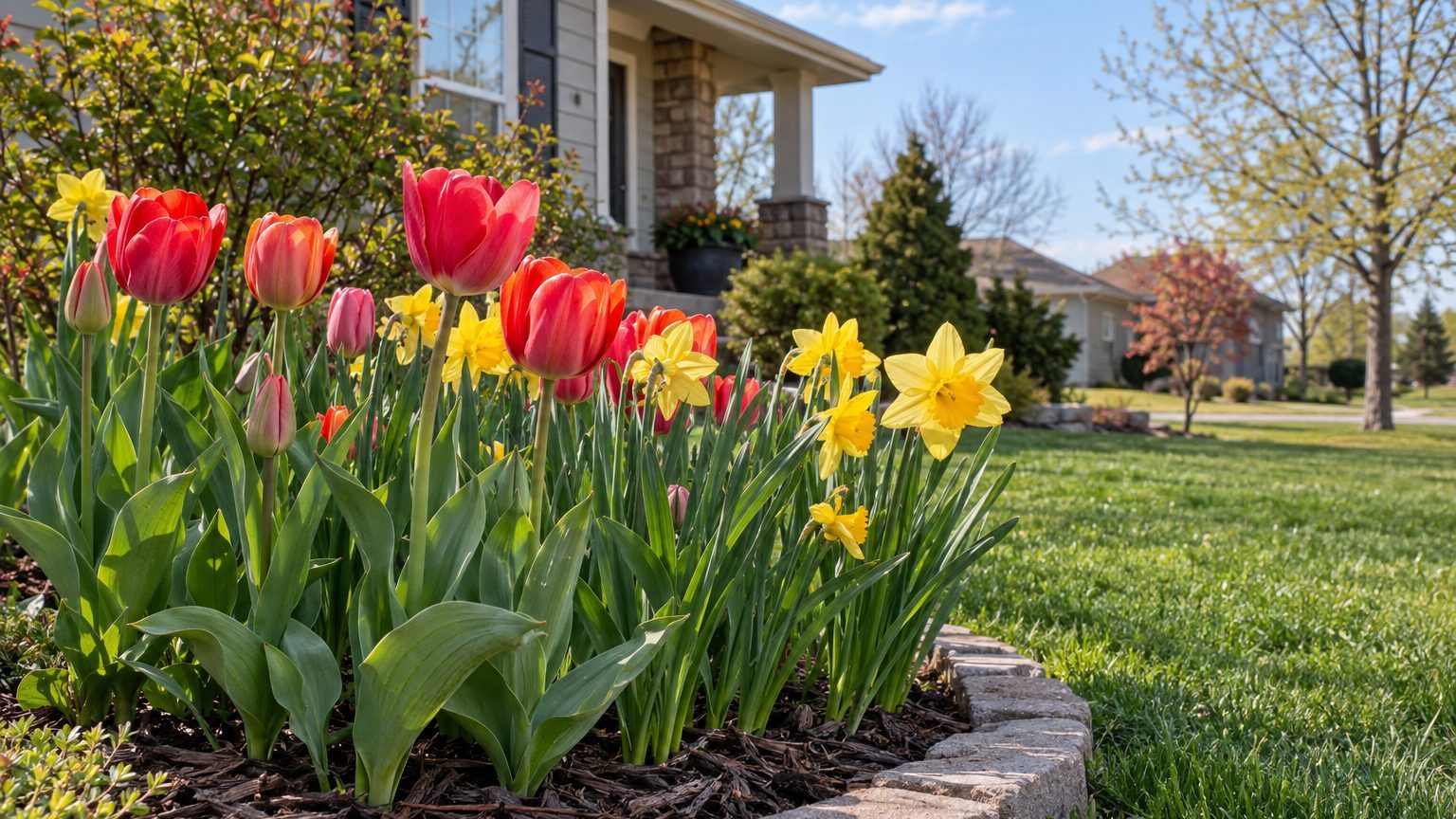
A clump of daffodils standing up through cold ground is a familiar sight in South Dakota yards each spring. Those flowers start the autumn before, when the bulbs go in the soil. Daffodils and alliums are the dependable choices for a South Dakota yard, while tulips need more realistic expectations.
Best Spring Bulbs to Grow in South Dakota

Daffodils and alliums do well in South Dakota, and species tulips can work if you like tulips. Winters here are cold enough to give hardy bulbs the chill they need, so the real question is which ones come back year after year. Most spring bulbs evolved in desert or Mediterranean climates, and heavy, wet soil shortens the life of many of them.
Daffodils
Daffodils tend to live longer than tulips in garden soil, which makes them the more reliable perennial bulb. Voles, squirrels, rabbits and deer leave them alone, so they survive in yards where other bulbs get eaten.
After the flowers fade, remove only the spent blooms. Leave the leaves until they turn brown, because they feed the bulb for next spring.
Alliums
Alliums are not as picky as some bulbs. In South Dakota they can go in the ground a little closer to hard frost than other bulbs, which helps if the planting season slipped past you.
They carry a slight skunky odor that repels rodents and deer. They are also spring bulbs that can bloom without a cold period.
Species Tulips
Species tulips are the shorter types with smaller flowers. They may work better than the big hybrids in a yard where tulips struggle to return.
Plant them in fall like any other bulb, and keep them away from beds that get frequent watering, since wet soil around the bulbs shortens their life.
Hybrid Tulips
Tulips are perennials on paper, but through years of hybridizing the bulbs have lost some of their ability to come back. Many gardeners treat hybrid tulips as annuals and replant them each fall for a dependable show.
Voles, squirrels, rabbits and deer also eat tulips, which is one more reason to expect fewer returns.
South Dakota — the year and the numbers
- State
- South Dakota
- USDA zones
- 3b-5b
- Last spring frost
- April 29 to May 9
- First fall frost
- September 24 to October 4
- Annual rain
- 28 in
- Lawn zone
- cool-season
- Source
- NOAA NCEI 1991-2020 Climate Normals, 32F freeze probabilities · Sioux Falls
How to Choose Spring Bulbs for Your South Dakota Garden
Start with the planting rule, since it applies to every bulb. Plant in fall once the soil has cooled below about 60°F, so roots form before the ground freezes but the bulbs do not sprout early.
In South Dakota that means mid-September through mid-October. The right bulb then depends on your yard and how much attention you want to give it.
| Your situation | What suits it in South Dakota | Why |
|---|---|---|
| Very cold winters | Daffodils and alliums | Daffodils outlast tulips in garden soil, and alliums are not picky |
| Little time to spare | Daffodils and alliums | Animals leave them alone, and alliums tolerate later planting |
| Small space | Species tulips | They are shorter with smaller flowers and may return better |
| Love of big tulips | Hybrid tulips treated as annuals | Hybridizing has weakened their ability to come back |
| Need for winter cold | Any hardy spring bulb | Winters supply the chill, and alliums need that cold to bloom |
Crocus and hyacinths follow the same fall planting window as the others. Crocus, like tulips, is a favorite of rodents, so plant it where you can accept some losses.
Which Spring Bulbs Suit Different Parts of South Dakota
Winter cold and the arrival of spring shift across the state, and that changes how much risk you take with tulips.
- Black Hills: Higher ground has a later spring, so bloom comes later than on the plains. Stick with daffodils and alliums, and plan to protect early growth from late frosts.
- Sioux Falls and the southeast: This is the milder part of the state, with the last spring frost falling between April 29 and May 9 at the airport. Suburban and rural gardens nearby usually see it later, so check your own county.
- Aberdeen and the north: Winters are colder here, which favors the hardiest choices. Daffodils and alliums are the safer bet, and tulips are best treated as annuals.
Wherever you live, the planting window in fall stays the same, and local conditions mainly decide how much you gamble on tulips.
Spring Bulb Buying Mistakes to Avoid in South Dakota
Counting on Hybrid Tulips
Buying a bag of showy hybrid tulips and expecting them to return for decades usually ends in disappointment. They often fade after a few years in heavy soil, especially beside thirsty annuals that get a lot of water.
Plant species tulips if you want longevity, or replace hybrids each fall and call them a seasonal splurge.
Leaving Bulbs in the Bag
A bag of bulbs forgotten in the garage can feel like a reason to wait until next year. Do not store them over the winter. A bulb still unplanted does better in the ground as long as you can dig, even if the planting window has closed.
Cutting the Leaves Too Soon
Tidy beds tempt you to cut or tie back the foliage once the flowers fade. That cuts off the energy supply the bulb needs to flower again. Remove the faded blooms and leave the leaves until they turn brown, even if they look messy for a while.
Where to Get Spring Bulb Advice in South Dakota
South Dakota State University Extension publishes fall bulb guidance written for the state, and your county Extension office can answer questions about your own soil and microclimate.
- The university’s website has articles on fall bulb planting and tulips, useful in late summer before you order or shop.
- Your county office can tell you how local conditions shift timing, so call in early fall before planting.
Common Questions
When Do Tulips and Daffodils Bloom in South Dakota?
Peak tulip bloom falls from late April to mid-May. Location and spring temperatures move it earlier or later from one year to the next.
Do Spring Bulbs Need to Be Chilled in the Refrigerator?
Most spring-flowering bulbs need about 12 to 16 weeks of cold to flower. South Dakota winters supply that in the ground, so refrigerating is unnecessary.
What Hardiness Zone Is South Dakota In?
In the USDA system, which is based on the average annual extreme minimum temperature, the state runs from 3b to 5b. Your own county may sit at either end, so check before choosing bulbs.