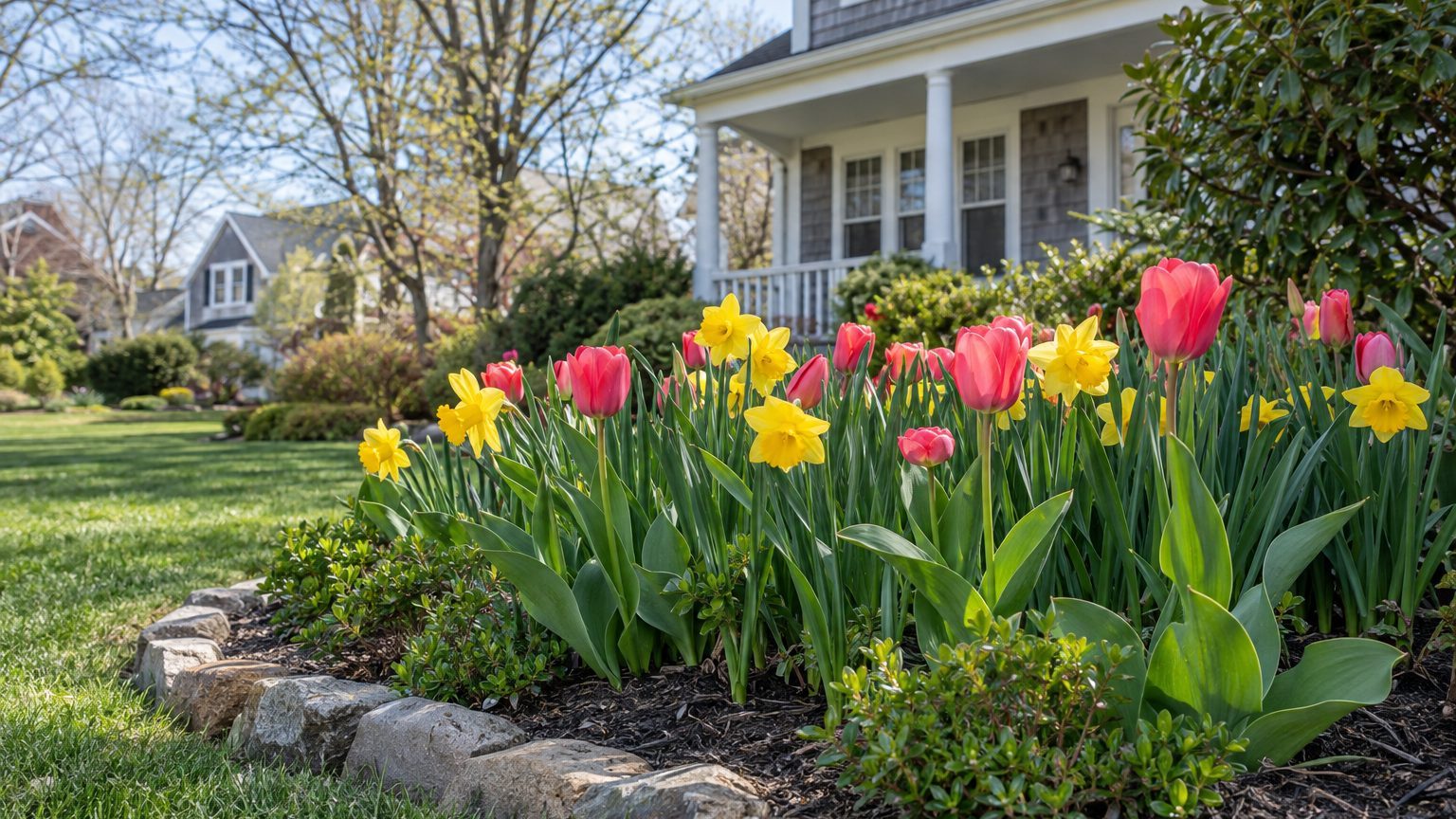
Daffodils opening beside a stone wall while the lawn is still brown are the payoff for work done the autumn before. Spring bulbs go in the ground in fall and flower after a winter of cold. Daffodils, Fosteriana tulips, crocus and alliums suit Rhode Island yards, and the choice among them depends on hungry animals, shade and how much upkeep you want.
Best Spring Bulbs to Grow in Rhode Island

Daffodils, Fosteriana tulips, crocus and alliums all suit Rhode Island, where USDA hardiness zones run from 6a to 7b and winters supply the cold bulbs need to flower. Daffodils are the dependable core of a planting, and the others fill in around them.
Daffodils
Most daffodils are hardy to zone 3, so a Rhode Island winter is well within their comfort. Voles, squirrels, rabbits and deer leave them alone, and they last longer than tulips, which makes them the more reliable perennial bulb.
They also naturalize well in partly shady areas, such as under deciduous trees or along a woodland edge. Plant them once and let them spread.
Fosteriana Tulips
Tulips are often short-lived in the garden, and many hybrids fade after a few seasons. Fosteriana tulips perennialize well, so they are the group to pick if you want tulips that keep returning.
Because animals go after tulips, plant them where you can watch them, or set daffodils close by as a buffer.
Crocus
Crocus bring color to the yard on small stems, but voles, squirrels, rabbits and deer eat them along with tulips. If animals are regular visitors, expect losses unless you plant crocus near the house or among daffodils.
Daffodils can act as deer training plants, protecting more tempting plants nearby from browsing.
Alliums
According to Iowa State University Extension, alliums, the ornamental onions, need the cold of winter to bloom. That makes them forgiving after a mild winter, and they carry the bulb display toward the end of the season.
Rhode Island — the year and the numbers
- State
- Rhode Island
- USDA zones
- 6a-7b
- Last spring frost
- April 7 to April 17
- First fall frost
- October 24 to November 3
- Annual rain
- 48 in
- Lawn zone
- cool-season
- Source
- NOAA NCEI U.S. Climate Normals 1991-2020, 32F freeze probabilities · Providence
How to Choose Spring Bulbs for Your Rhode Island Garden
Start with what your yard throws at a bulb. Cold is rarely the problem here, since most daffodils and many other bulbs are hardy to zone 3. Animals, shade and the time you want to spend matter more.
Match the bulb to the most pressing problem, then add a few extras for variety.
| Your situation | What suits it in Rhode Island | Why |
|---|---|---|
| Very cold winter spot | Daffodils | Most are hardy to zone 3, well below Rhode Island’s winters |
| Little time for upkeep | Daffodils | They last longer than tulips and come back reliably |
| Deer, rabbits, voles or squirrels | Daffodils | Animals leave them alone, while tulips and crocus get eaten |
| Partly shaded bed | Daffodils | They naturalize well in partial shade |
| Tulips that return | Fosteriana tulips | They perennialize well, unlike many short-lived tulips |
| Worry about winter chill | Alliums | They need winter cold to bloom. |
Small spaces get no special row here, but a few daffodils tucked between perennials give the longest return for the room they use.
Which Spring Bulbs Suit Different Parts of Rhode Island
The state is small, yet the zone range from 6a to 7b shows that growing conditions do shift between shore and inland hills, and the choice of bulbs shifts a little with them.
- Newport County and the Narragansett Bay shore: Winters run milder near the water, so tulips and alliums face less risk from deep cold. Daffodils still carry the planting.
- Providence and the inner bay: In Providence, the last spring frost typically falls April 7 to April 17, so open flowers can meet a late frost. Suburban yards usually see it later still.
- Northwest Rhode Island, around Burrillville and Foster: Winters are colder and frost lingers longer at elevation, which favors hardy daffodils over tulips.
Check your own town’s conditions before planning a showy tulip bed, since a yard a few miles inland can run a week or two behind the coast.
Spring Bulb Buying Mistakes to Avoid in Rhode Island
Planting Only Tulips
Tulips are often short-lived, and voles, squirrels, rabbits and deer eat them. A bed of nothing but tulips can thin out fast or vanish overnight.
Mix in daffodils, which animals ignore, or choose Fosteriana tulips if you want tulips that keep returning.
Leaving Bulbs in the Bag
Bulbs bought and left in a garage over the winter dry out and lose their chance to flower. A bulb still in the bag is better planted late than stored.
Put it in the ground as long as the soil can be dug, even into early winter.
Planting While the Soil Is Warm
Bulbs set in warm September soil can sprout in the fall, and that tender growth gets hit by winter. Wait until the soil has cooled below about 60°F.
In Rhode Island, October is the planting month, so roots form before the ground freezes. If the ground is not yet frozen, November or December still works.
Where to Get Spring Bulb Advice in Rhode Island
The University of Rhode Island Cooperative Extension gives local advice on bulbs, soil and animal damage, and the extension office nearest you can answer questions specific to your town.
- Extension staff and the extension website cover bulb planting, soil questions and animal problems for Rhode Island yards.
- Contact the nearest extension office before planting day, when you still have time to change what goes in the bed.
Common Questions
When Do Tulips and Daffodils Bloom in Rhode Island?
Most flower in April and May, and the earliest hardy bulbs can start in March. Later varieties carry the display into late April and May.
Should You Cut the Leaves After Spring Bulbs Bloom?
No. Remove only the faded flowers and leave the leaves in place until they turn brown, because they feed the bulb for next year’s bloom.
How Much Cold Do Spring Bulbs Need to Flower?
Most spring-flowering bulbs need about 12 to 16 weeks of cold. Rhode Island winters usually supply that, so refrigerating tulips or hyacinths before planting is not needed.